
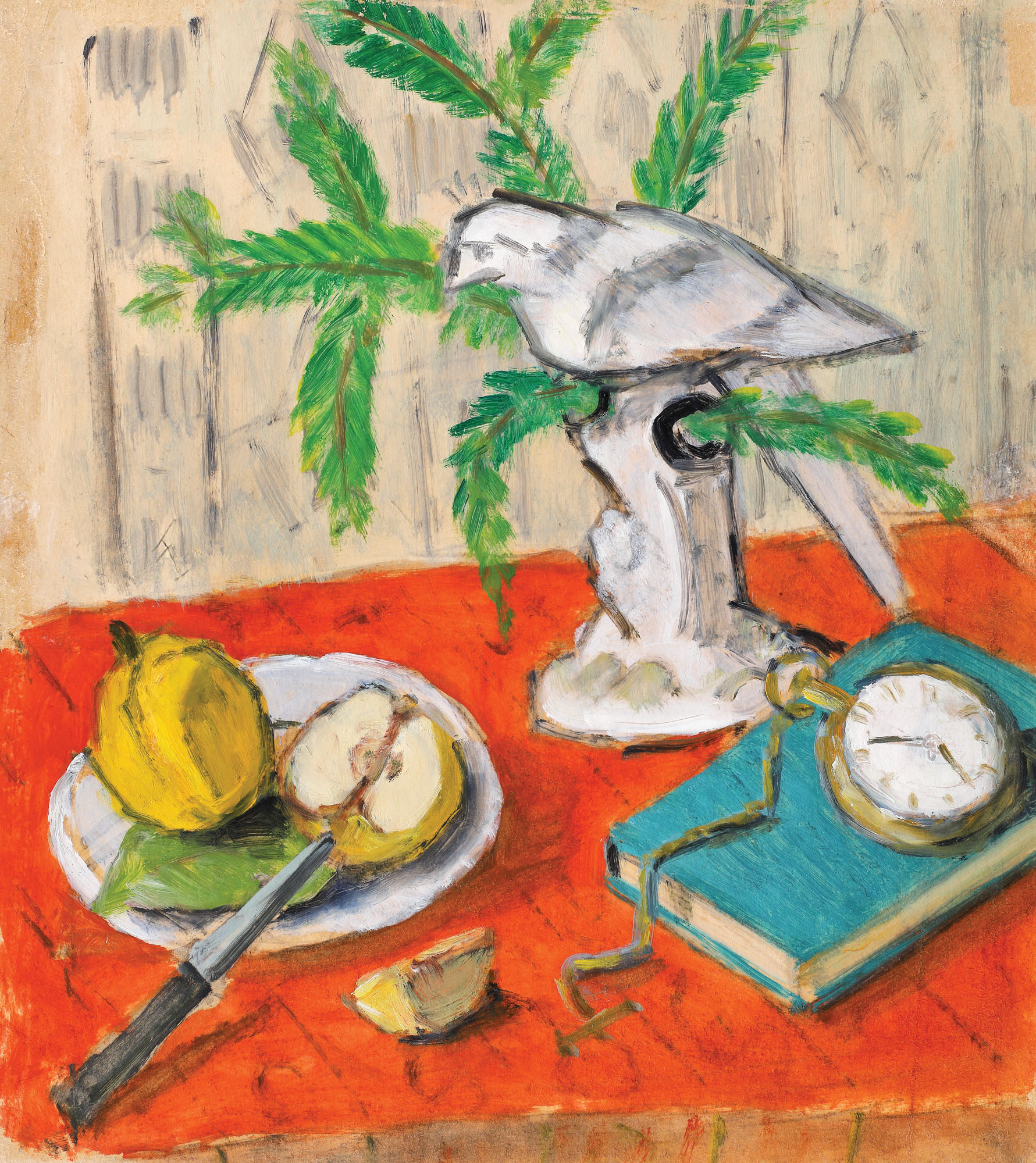
110. Still Life with Dove and Pocket Watch
Procjena
EUR 20.000 - 30.000
Prodano
EUR 19.000
Sesija
Čet., 21 ožujka 2024 19:00
Literatura
"Drawings by Theodor Pallady from the Collection of the Museum of Crisana", in "Biharea", 1980, pp. 291-322. Florin Rogneanu, "Theodor Pallady and the Temptation of the Absolute", in "Oltenia. Studies and Communications", no. V-VI, 1986, pp. 205-209. SORBAN, Raoul, "Theodor Pallady", Ed. Meridiane, Bucharest, 1975. CEBUC, Alexandru, "Pallady", Ed. Official Monitor R. A., Bucharest, 2008.
Dimenzije
width 41.5 cm, height 47 cm
Opis
oil on paper glued to cardboard, signed on the left side, in pencil, "TP"
DODATNE INFORMACIJE
Za pojašnjenja u vezi s postupkom licitiranja, troškovima kupnje, uvjetima jamstva, plaćanja i preuzimanja osvojenog lota preporučujemo da pažljivo pročitate/ponovno pročitate Pravilnik o licitiranju.
Za dodatne informacije o lotu i aukciji kontaktirajte Odjel umjetničkih savjetnika.
Detalii
DODATNE INFORMACIJE
Za pojašnjenja u vezi s postupkom licitiranja, troškovima kupnje, uvjetima jamstva, plaćanja i preuzimanja osvojenog lota preporučujemo da pažljivo pročitate/ponovno pročitate Pravilnik o licitiranju.
Za dodatne informacije o lotu i aukciji kontaktirajte Odjel umjetničkih savjetnika.
Literatura
"Drawings by Theodor Pallady from the Collection of the Museum of Crisana", in "Biharea", 1980, pp. 291-322. Florin Rogneanu, "Theodor Pallady and the Temptation of the Absolute", in "Oltenia. Studies and Communications", no. V-VI, 1986, pp. 205-209. SORBAN, Raoul, "Theodor Pallady", Ed. Meridiane, Bucharest, 1975. CEBUC, Alexandru, "Pallady", Ed. Official Monitor R. A., Bucharest, 2008.
Dimenzije
width 41.5 cm, height 47 cm
Opis
oil on paper glued to cardboard, signed on the left side, in pencil, "TP"
Alternativni lotovi