Fotografije parcele su informativne i indikativne te ne mogu pružiti vrlo detaljan prikaz objekta iz svih kutova. Preporučujemo pažljiv fizički pregled parcele prije licitiranja.
Fotografije parcele su informativne i indikativne te ne mogu pružiti vrlo detaljan prikaz objekta iz svih kutova. Preporučujemo pažljiv fizički pregled parcele prije licitiranja.
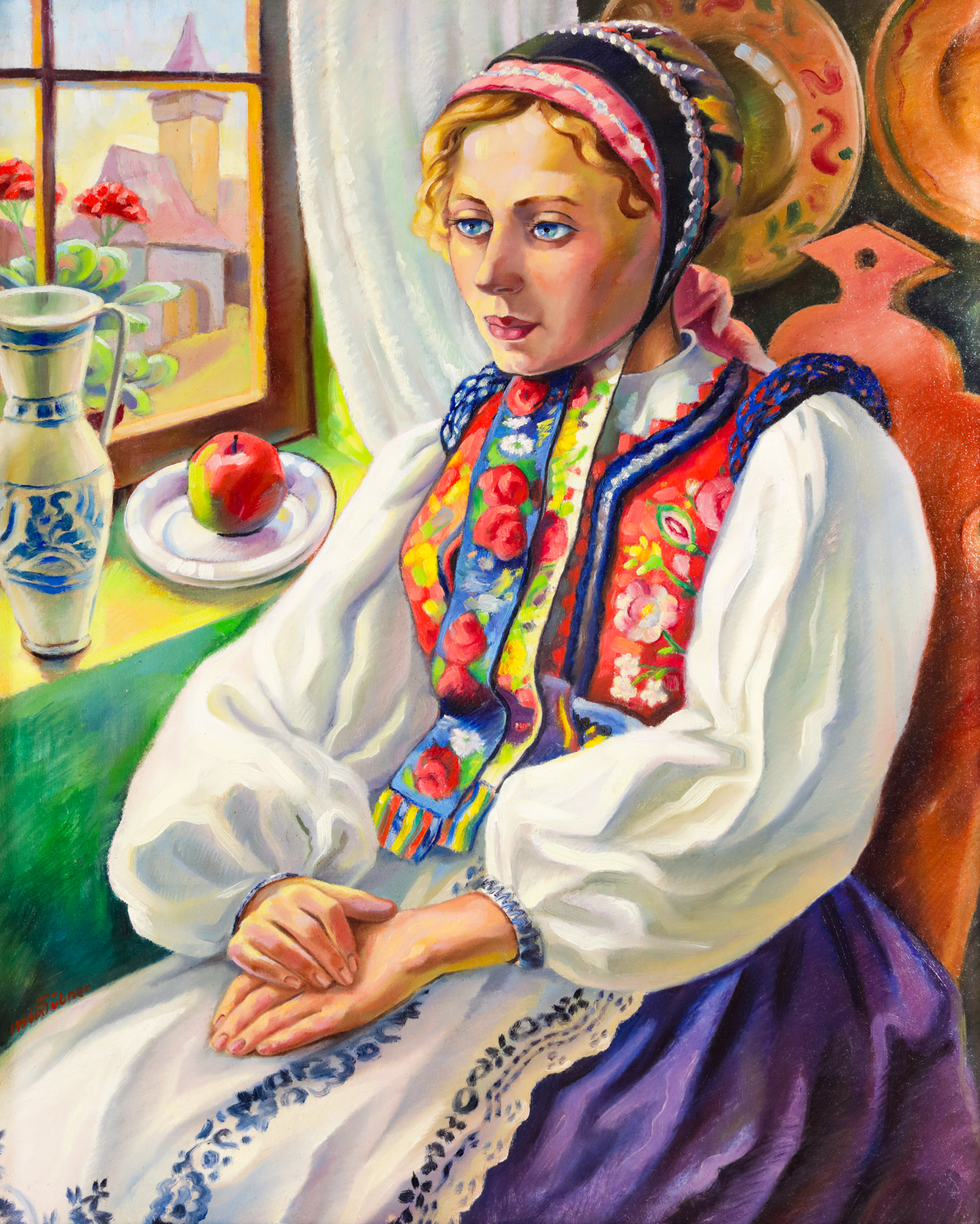
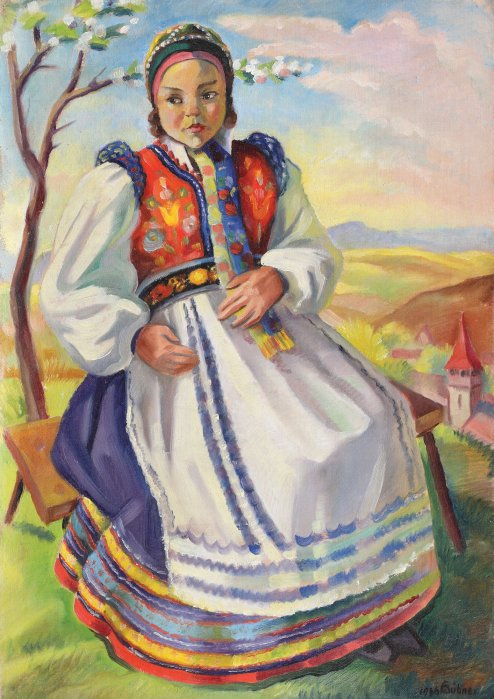
He was born in Sighisoara in 1902, the son of Richard Hübner – a financial officer, and Rosa Honigberger – a music teacher. His vocational line would be steeply maternal, thus his aunts, Selma and Helene, would also work in the music field; while his uncles Ernst and Emil Honigberger were also scholars in the field of music and painting. In 1906, Carol Hübner moved to Brasov along with his family, thus in the epicenter of German cultural life of the early 20th century. He begins to show his first artistic inclinations in gymnasium, being encouraged by his drawing teacher. In 1926, he would go to Berlin, at the invitation of his aunt Selma. He arrives in Germany in the full swing of expressionism and New Objectivity. Upon his return to Romania, he will continue his studies in Bucharest, where, with the help of a scholarship, a decorator's work and illustration work, he will manage to regulate his financial situation. Inspired by everyday reality, Hübner builds his work from portraits, landscapes or still lifes with flowers. He would return to Brasov in 1932, and in 1933 he would open his first solo exhibition here. The echoes of his endeavors would be felt through laudatory reviews in publications like Kronstadter Zeitung. The present work emerges from the cycle of ethnographic portraits, visibly stylized, with a slight geometric character. Traditional dress, a powerful element of identity, is used by the artist as an artifice through which we are offered details about the personality and social status of the protagonist. Of Saxon origin, this stands out through the sumptuousness of the garments, through the richness of embroideries, accessories and jewelry. With an intense chromatic, very well tailored, the costume indicates the young age of the girl, through the crown of colored ribbons and white beads attached to the head accessory. Hübner's protagonist wears a white shirt with large sleeves, decorated with a few blue inserts. The long skirt borrows from the blue shades of the shirt, and the white apron, which respects the same chromatic details, harmoniously complements the outfit. The curved vest proposes a rich floral pattern, with hand-made embroideries. Sitting on a wooden chair, in which are carved traditional motifs, the pensive young woman becomes representative of the distancing effect proposed by new realism. We also notice the traditional vessels hanging on the wall, but also the ceramic jug, decorated with traditional motifs, in the same shades of blue. With a recurring presence in the artist’s work, the window becomes the leitmotif of creation and offers us a view of the city, most of the times allowing us to observe places of worship and the sunset sky. In another work dating from the same year, 1936, we find the same costume: the shirt with wide sleeves, gathered at wrists, the vest with details in relief on the shoulders, the black belt, the long skirt and model apron, the head accessory, decorated with beads and tied with long ribbons, with floral motifs. Hübner studies his models for a long time, managing to capture, beyond the clothing or decorative details, and the psychological depths of his models.
Literatura
Catalog of the retrospective exhibition Karl Hubner, Publishing House of the Art Museum Brasov, 2012.
Dimenzije
width 62.5 cm, height 77 cm
Opis
oil on cardboard, signed and dated bottom left, in red, K. Hübner, 1936
Izlasci
1936
DODATNE INFORMACIJE
Za pojašnjenja u vezi s postupkom licitiranja, troškovima kupnje, uvjetima jamstva, plaćanja i preuzimanja osvojenog lota preporučujemo da pažljivo pročitate/ponovno pročitate Pravilnik o licitiranju.
He was born in Sighisoara in 1902, the son of Richard Hübner – a financial officer, and Rosa Honigberger – a music teacher. His vocational line would be steeply maternal, thus his aunts, Selma and Helene, would also work in the music field; while his uncles Ernst and Emil Honigberger were also scholars in the field of music and painting. In 1906, Carol Hübner moved to Brasov along with his family, thus in the epicenter of German cultural life of the early 20th century. He begins to show his first artistic inclinations in gymnasium, being encouraged by his drawing teacher. In 1926, he would go to Berlin, at the invitation of his aunt Selma. He arrives in Germany in the full swing of expressionism and New Objectivity. Upon his return to Romania, he will continue his studies in Bucharest, where, with the help of a scholarship, a decorator's work and illustration work, he will manage to regulate his financial situation. Inspired by everyday reality, Hübner builds his work from portraits, landscapes or still lifes with flowers. He would return to Brasov in 1932, and in 1933 he would open his first solo exhibition here. The echoes of his endeavors would be felt through laudatory reviews in publications like Kronstadter Zeitung. The present work emerges from the cycle of ethnographic portraits, visibly stylized, with a slight geometric character. Traditional dress, a powerful element of identity, is used by the artist as an artifice through which we are offered details about the personality and social status of the protagonist. Of Saxon origin, this stands out through the sumptuousness of the garments, through the richness of embroideries, accessories and jewelry. With an intense chromatic, very well tailored, the costume indicates the young age of the girl, through the crown of colored ribbons and white beads attached to the head accessory. Hübner's protagonist wears a white shirt with large sleeves, decorated with a few blue inserts. The long skirt borrows from the blue shades of the shirt, and the white apron, which respects the same chromatic details, harmoniously complements the outfit. The curved vest proposes a rich floral pattern, with hand-made embroideries. Sitting on a wooden chair, in which are carved traditional motifs, the pensive young woman becomes representative of the distancing effect proposed by new realism. We also notice the traditional vessels hanging on the wall, but also the ceramic jug, decorated with traditional motifs, in the same shades of blue. With a recurring presence in the artist’s work, the window becomes the leitmotif of creation and offers us a view of the city, most of the times allowing us to observe places of worship and the sunset sky. In another work dating from the same year, 1936, we find the same costume: the shirt with wide sleeves, gathered at wrists, the vest with details in relief on the shoulders, the black belt, the long skirt and model apron, the head accessory, decorated with beads and tied with long ribbons, with floral motifs. Hübner studies his models for a long time, managing to capture, beyond the clothing or decorative details, and the psychological depths of his models.
DODATNE INFORMACIJE
Za pojašnjenja u vezi s postupkom licitiranja, troškovima kupnje, uvjetima jamstva, plaćanja i preuzimanja osvojenog lota preporučujemo da pažljivo pročitate/ponovno pročitate Pravilnik o licitiranju.