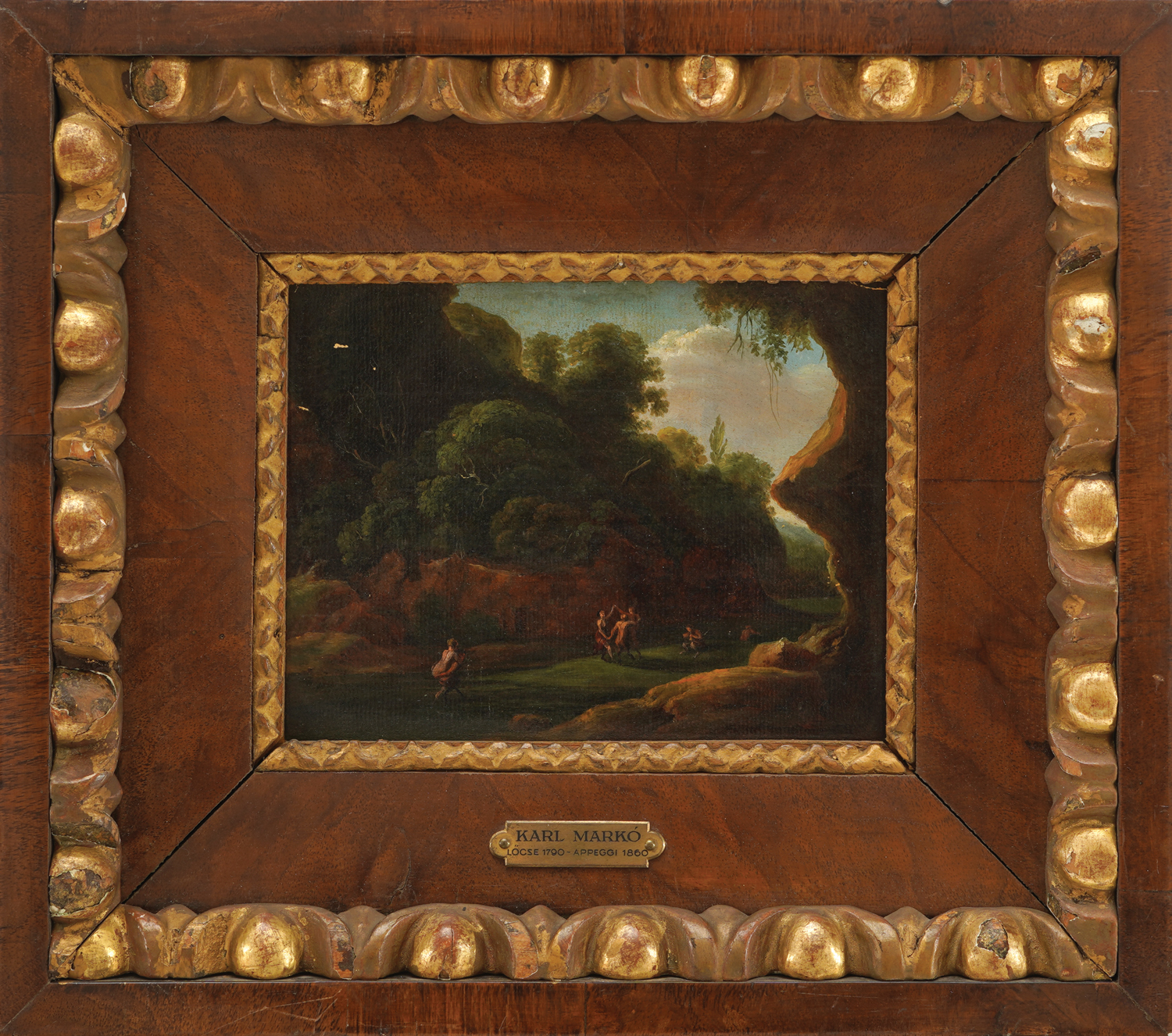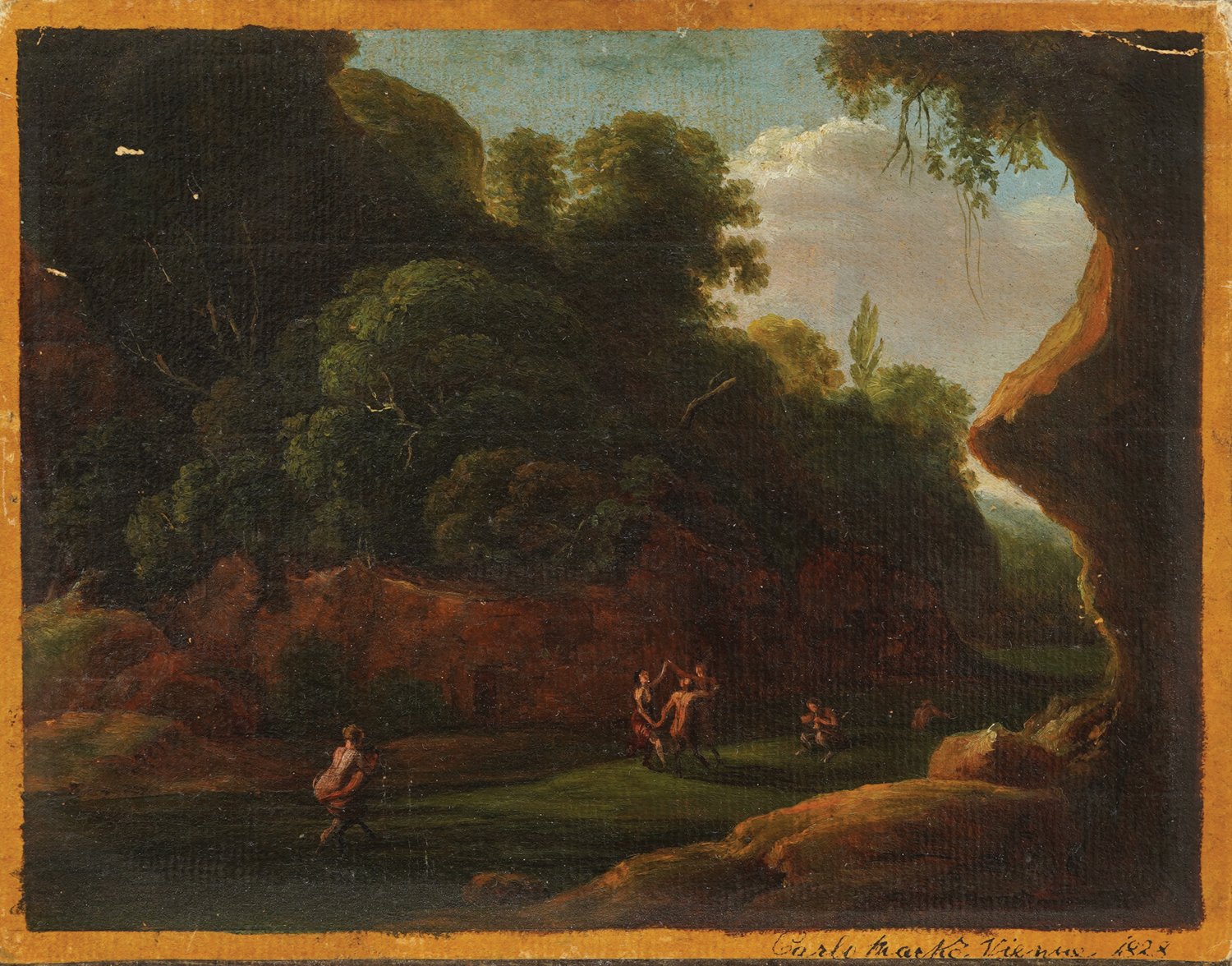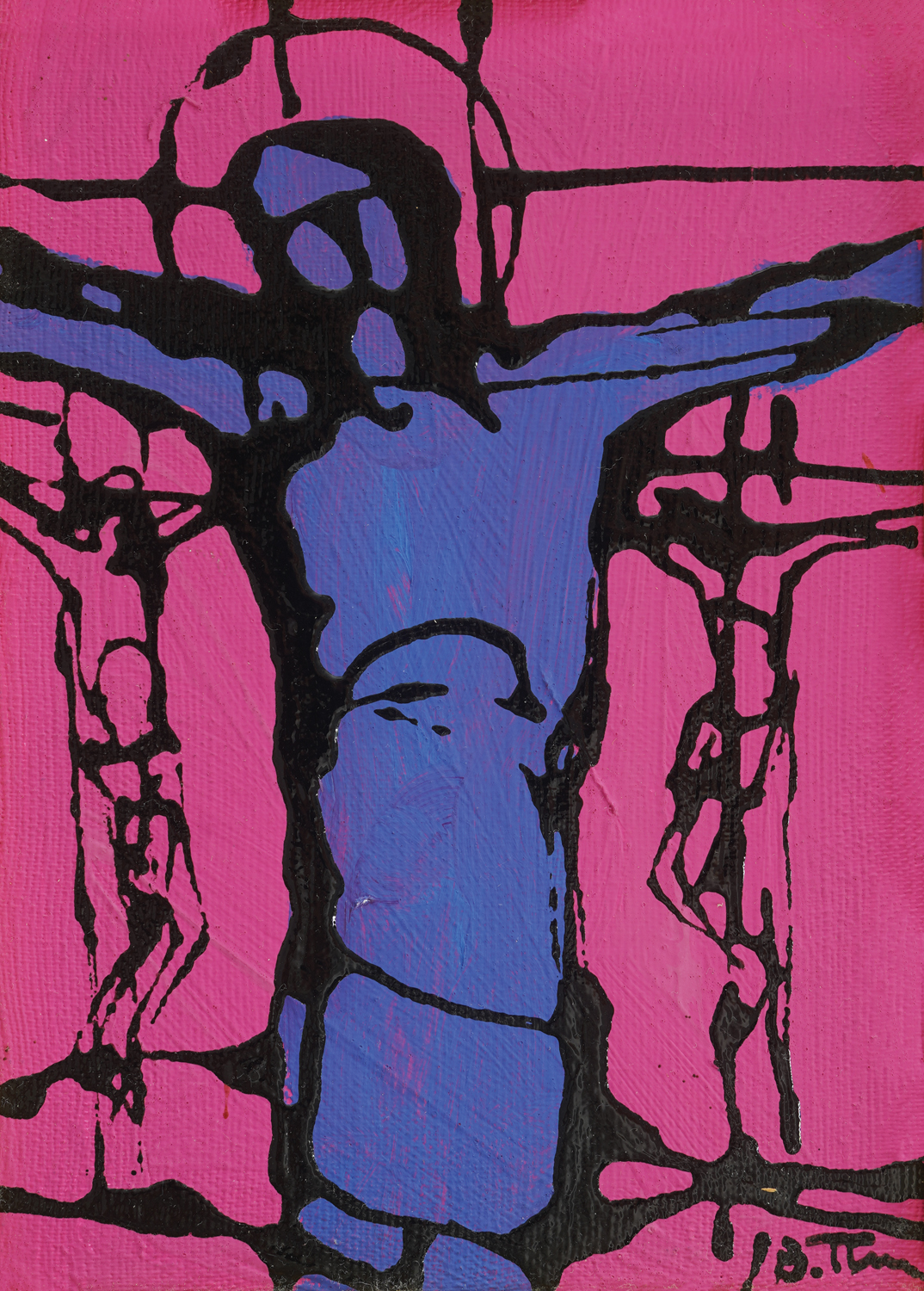

167. Satyrs Dancing in the Forest

1791 - 1860

Estimate

EUR 1.000 - 2.000

Sold

EUR 900

Session

Wed, 10 December 2025 20:00

As one of the first Hungarian landscape painters, Károly Markó (1791-1860) left a deep impression on Hungarian painting, becoming a model for many Hungarian landscapists. His style was strongly inspired by French classicism and the works of Claude Lorrain and Gaspard Poussin, as well as romantic landscapes, and because of the combination of technical skill and emotional depth, he was often called the 'Hungarian Claude Lorrain'. Károly Markó was born on September 25, 1791 in Lőcse (now Levoča, Slovakia). After technical education for an engineer in Kolozsvár (now Cluj, Romania) and Pest, Markó turned to art and in 1818 began studying drawing in Pest, and then continued his education at the Academy of Fine Arts in Vienna. In the mid-1830s, with the support of the banker Geymüller, he went to Italy, where he stayed for most of his life. In Italy, he worked in cities such as Rome, Pisa and Florence, developing his own landscape expression - idealized, heroic landscapes that often include mythological or folkloric figures. Markó's opus encompassed nostalgic, idealized landscapes - ancient vedutas, Tuscan rivieras, pastoral scenes or landscapes with fishermen, characterized by fine colorism and poetic ambiance. After years of stay in Italy, Markó finally settled in the Villa Appeggi near Florence, where he died on November 19, 1860. His artistic legacy was continued by his sons, among whom Károly Markó Jr., also a well-known landscape painter, particularly stands out. ''Landscape with Bacchanal'' compositionally and coloristically deviates from most of Markó's landscapes and evokes Baroque Flemish and Italian landscapes, which is why it appears as an anachronistic addition to his opus. The reason for this lies in the fact that this work by Károly Markó is actually a copy, namely of a painting by the Dutch painter Herman van Swanevelt (1603-1655). The original, titled ''Mountain Valley'', is now kept in the collection of the National Gallery in Prague and is one of a series of van Swanevelt's depictions of the same motif - steep mountain valleys covered in forest vegetation and populated with small human figures. This copy was probably made between 1826 and 1830, when Károly Markó stayed in Kismarton (today's Eisenstadt in Austria) and made copies of paintings for art dealers.

Dimensions

width 19 cm, height 14 cm

Description

oil on canvas, signed, located and dated, bottom right, in black, "Carlo Marko, Vienna, 1828"

PROVENANCE

Until the late 1940s: the historical collection of Ervin Weiss (1884.–1966.) and Branka Weiss (1902.–1975.); 1947.: The Ministry of Culture of the People's Republic of Croatia declares the Weiss collection a private collection of public significance; after 1949.: the collection is inventoried by the communist regime, followed by confiscation; 1955.: it comes under the care of the Modern Gallery, where it is kept for the next 70 years; after 2021.: the collection transfers to the ownership of the Weiss family heirs, after almost 30 years of legal proceedings for restitution.

ADDITIONAL INFORMATION

For clarifications regarding the bidding procedure, hammer price costs, guarantee, payment, and collection terms for the winning lot, we recommend carefully reading/re-reading the Bidding Regulations.

For additional information regarding the lot and the auction, please contact the Art Consultants Department.

Similar lots