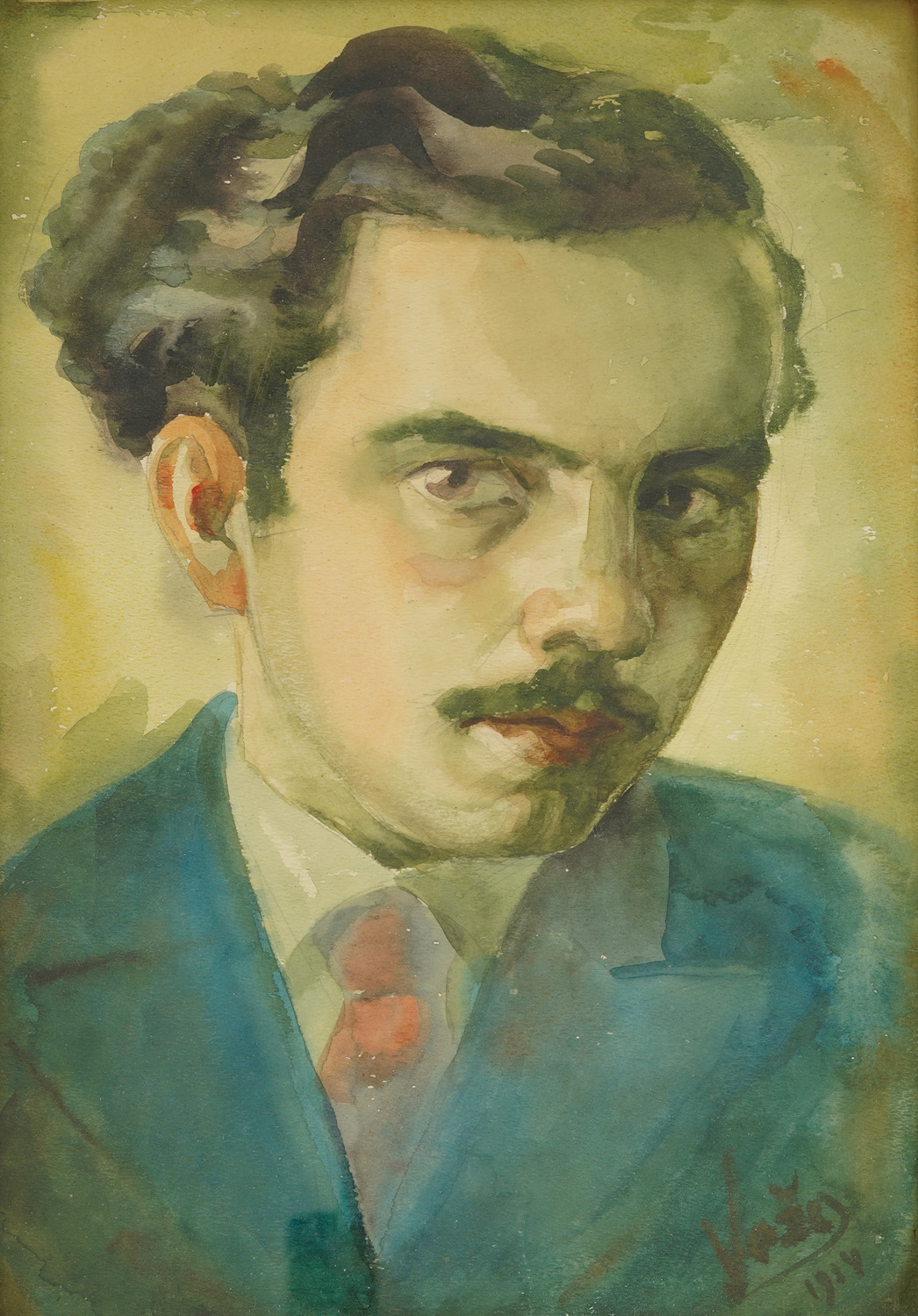

The photos of the lot are informative and indicative, and cannot provide a highly detailed view of the object from all angles. We recommend a careful physical inspection of the lot before bidding.
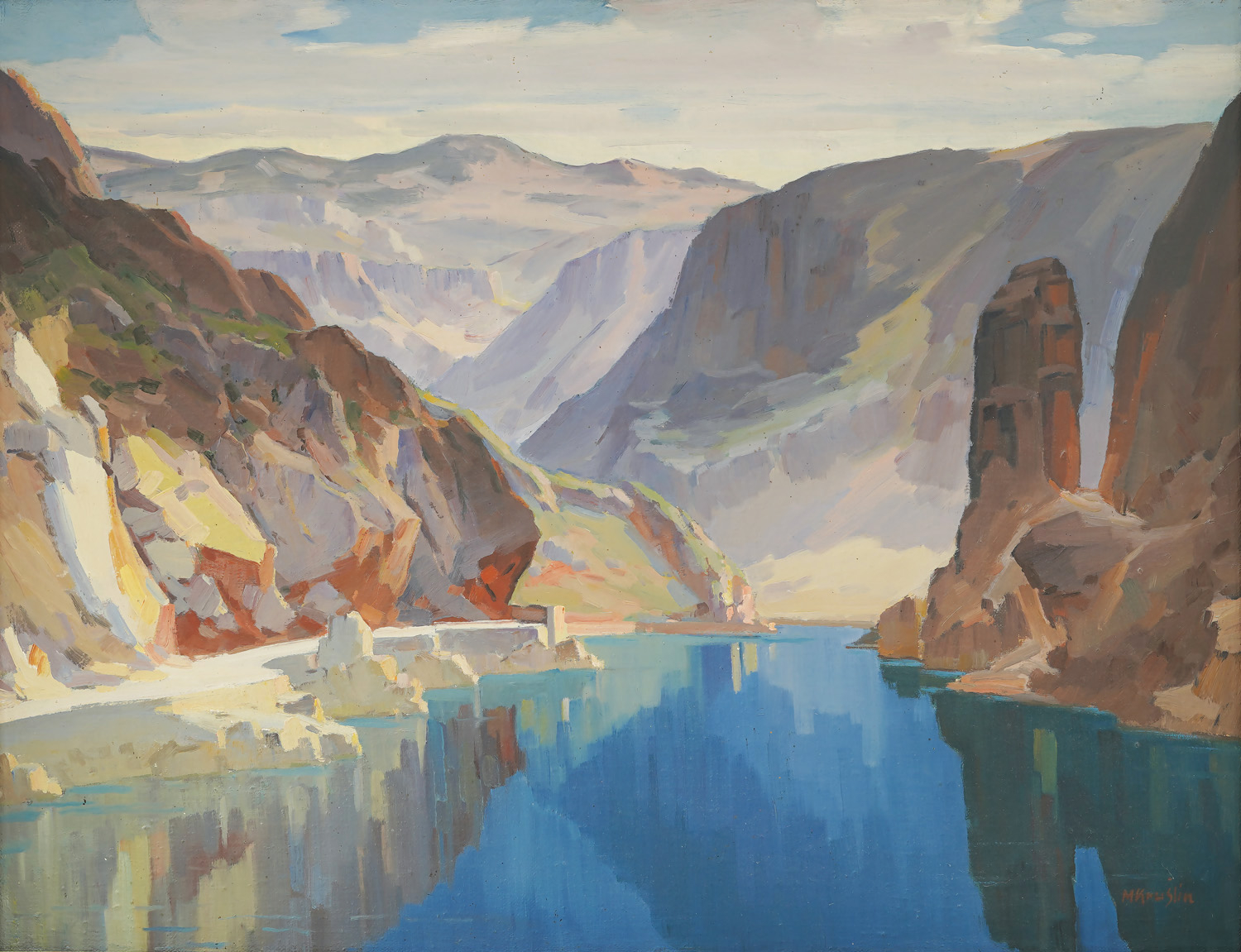
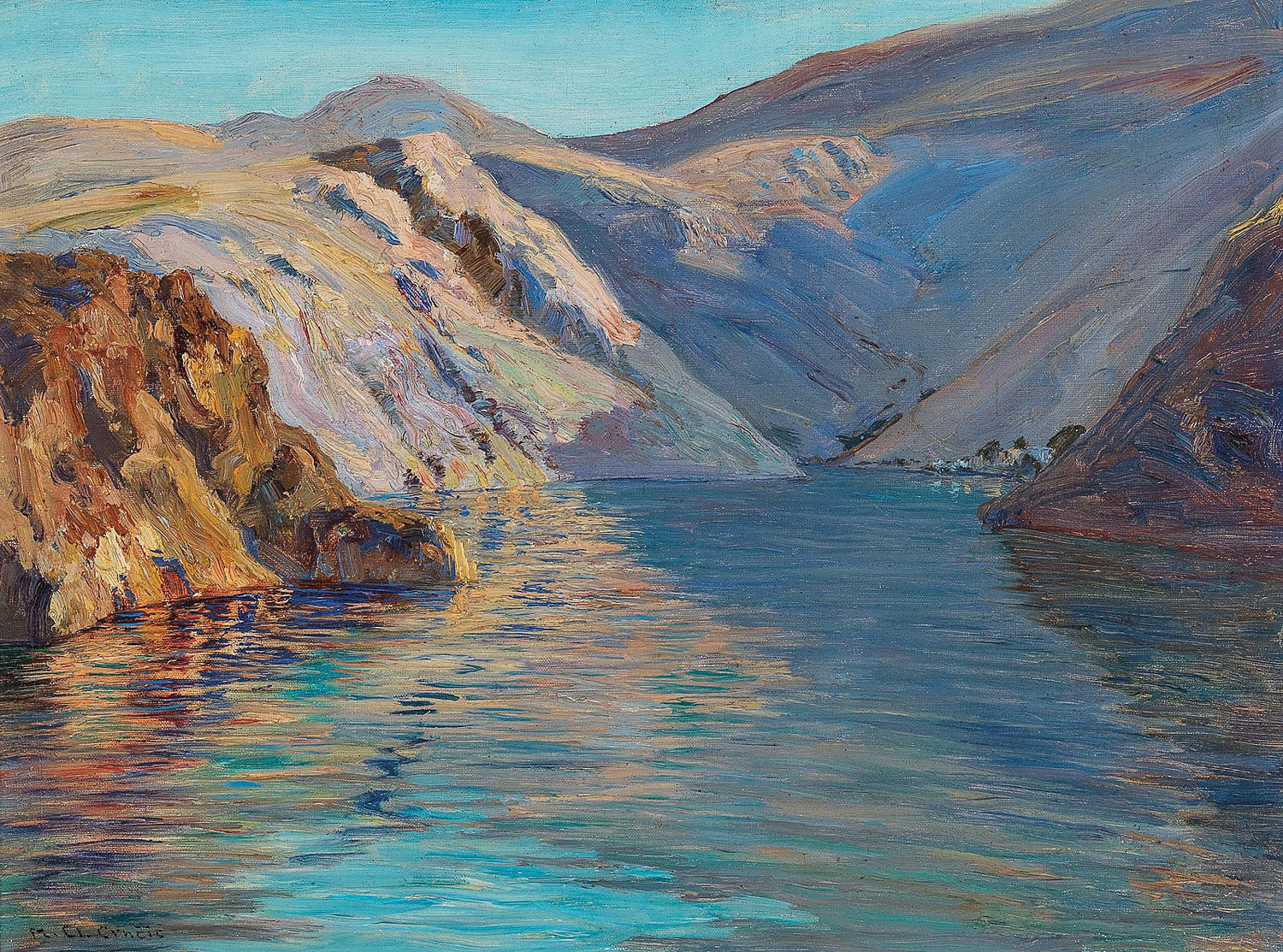
Many, including the most eminent Croatian painters of the 20th century such as Menci Cl. Crnčić, a pronounced marinist and one of the founders of the Zagreb Art Academy, or multi-disciplinary Ljubo Babić, an undisputed professor of the same Academy with half a century of teaching experience, have painted the Zavratnica Bay due to its magical beauty. Contemporary painters also turned to this unique landscape of protected nature, such as Eugen Kokot and others. This painting elite must include Mihovil Krušlin, who painted his painting ode to the beautiful sub-Velebit bay in the mid-1920s, in three versions, this first one offered at auction, and two considerably smaller versions painted from lower perspectives. All three paintings are reproduced in the monograph "Krušlin" published in 2010. What distinguishes the painting "Jablanac - Zavratnica Bay" is the high skill with which Krušlin in the manner of poetic, almost magical realism, transfers to the canvas the clash of sea blue with gray and ochre shades of Velebit stone. This particularly refers to brilliantly painted reflections of bare cliffs on the sea surface that reach all the way to the deep blues of the shaded side of the canyon.
Mihovil Krušlin received his first painting instruction in the private school of Menci Cl. Crnčić and Bella C. Sesija. When the school in 1907 was transformed into a Higher School for Art and Art Craft, Krušlin easily passed the entrance exam and became a student of painting in Crnčić's class. With his colleague Ljubo Babić, he helped Professor Crnčić during 1909 prepare a large triptych "View from Plasa". During 1910, he held his first solo exhibition, sold most of his paintings, and it can be said that he very successfully stepped onto the Zagreb art scene as a student. After graduating in 1911, he boldly went to Paris, where he stayed for eight months, learning from the source of modern art and befriending Miroslav Kraljević. Upon returning to his homeland, he accepted portrait painting and increasingly watercolored the nature of the Sava and Sutla valleys, from ascetic winter to lush spring. During the summer holidays, he stayed in Novi Vinodolski at Crnčić's place several times, from where he went on cruises along the coast all the way to Jablanac or the Kvarner Islands. In 1926, he travelled to a far and different nature. Via Italy, he reached North Africa, whose landscapes he painted with an expressively changed palette. Prior to the war, he returned to his native Ključ, where he continued to paint landscapes of soothing surroundings until the end of his creative age, which he regularly exhibited and successfully sold in the Ullrich Salon. BRP
References
Biserka Rauter Plančić & Nikola Albaneže & Maja Hunjak, Mihovil Krušlin (monograph), Moderna galerija and Mona Liza Gallery, Zagreb, 2010, p. 10-13, 130-131, 159
Dimensions
width 76 cm, height 60 cm
Description
ulje na platnu, signed lower right, in red, "M Krušlin"
Dating
1920-ih
ADDITIONAL INFORMATION
For clarifications regarding the bidding procedure, hammer price costs, guarantee, payment, and collection terms for the winning lot, we recommend carefully reading/re-reading the Bidding Regulations.
For additional information regarding the lot and the auction, please contact the Art Consultants Department.
Detalii
Many, including the most eminent Croatian painters of the 20th century such as Menci Cl. Crnčić, a pronounced marinist and one of the founders of the Zagreb Art Academy, or multi-disciplinary Ljubo Babić, an undisputed professor of the same Academy with half a century of teaching experience, have painted the Zavratnica Bay due to its magical beauty. Contemporary painters also turned to this unique landscape of protected nature, such as Eugen Kokot and others. This painting elite must include Mihovil Krušlin, who painted his painting ode to the beautiful sub-Velebit bay in the mid-1920s, in three versions, this first one offered at auction, and two considerably smaller versions painted from lower perspectives. All three paintings are reproduced in the monograph "Krušlin" published in 2010. What distinguishes the painting "Jablanac - Zavratnica Bay" is the high skill with which Krušlin in the manner of poetic, almost magical realism, transfers to the canvas the clash of sea blue with gray and ochre shades of Velebit stone. This particularly refers to brilliantly painted reflections of bare cliffs on the sea surface that reach all the way to the deep blues of the shaded side of the canyon.
Mihovil Krušlin received his first painting instruction in the private school of Menci Cl. Crnčić and Bella C. Sesija. When the school in 1907 was transformed into a Higher School for Art and Art Craft, Krušlin easily passed the entrance exam and became a student of painting in Crnčić's class. With his colleague Ljubo Babić, he helped Professor Crnčić during 1909 prepare a large triptych "View from Plasa". During 1910, he held his first solo exhibition, sold most of his paintings, and it can be said that he very successfully stepped onto the Zagreb art scene as a student. After graduating in 1911, he boldly went to Paris, where he stayed for eight months, learning from the source of modern art and befriending Miroslav Kraljević. Upon returning to his homeland, he accepted portrait painting and increasingly watercolored the nature of the Sava and Sutla valleys, from ascetic winter to lush spring. During the summer holidays, he stayed in Novi Vinodolski at Crnčić's place several times, from where he went on cruises along the coast all the way to Jablanac or the Kvarner Islands. In 1926, he travelled to a far and different nature. Via Italy, he reached North Africa, whose landscapes he painted with an expressively changed palette. Prior to the war, he returned to his native Ključ, where he continued to paint landscapes of soothing surroundings until the end of his creative age, which he regularly exhibited and successfully sold in the Ullrich Salon. BRP
ADDITIONAL INFORMATION
For clarifications regarding the bidding procedure, hammer price costs, guarantee, payment, and collection terms for the winning lot, we recommend carefully reading/re-reading the Bidding Regulations.
For additional information regarding the lot and the auction, please contact the Art Consultants Department.
References
Biserka Rauter Plančić & Nikola Albaneže & Maja Hunjak, Mihovil Krušlin (monograph), Moderna galerija and Mona Liza Gallery, Zagreb, 2010, p. 10-13, 130-131, 159
Dimensions
width 76 cm, height 60 cm
Description
ulje na platnu, signed lower right, in red, "M Krušlin"