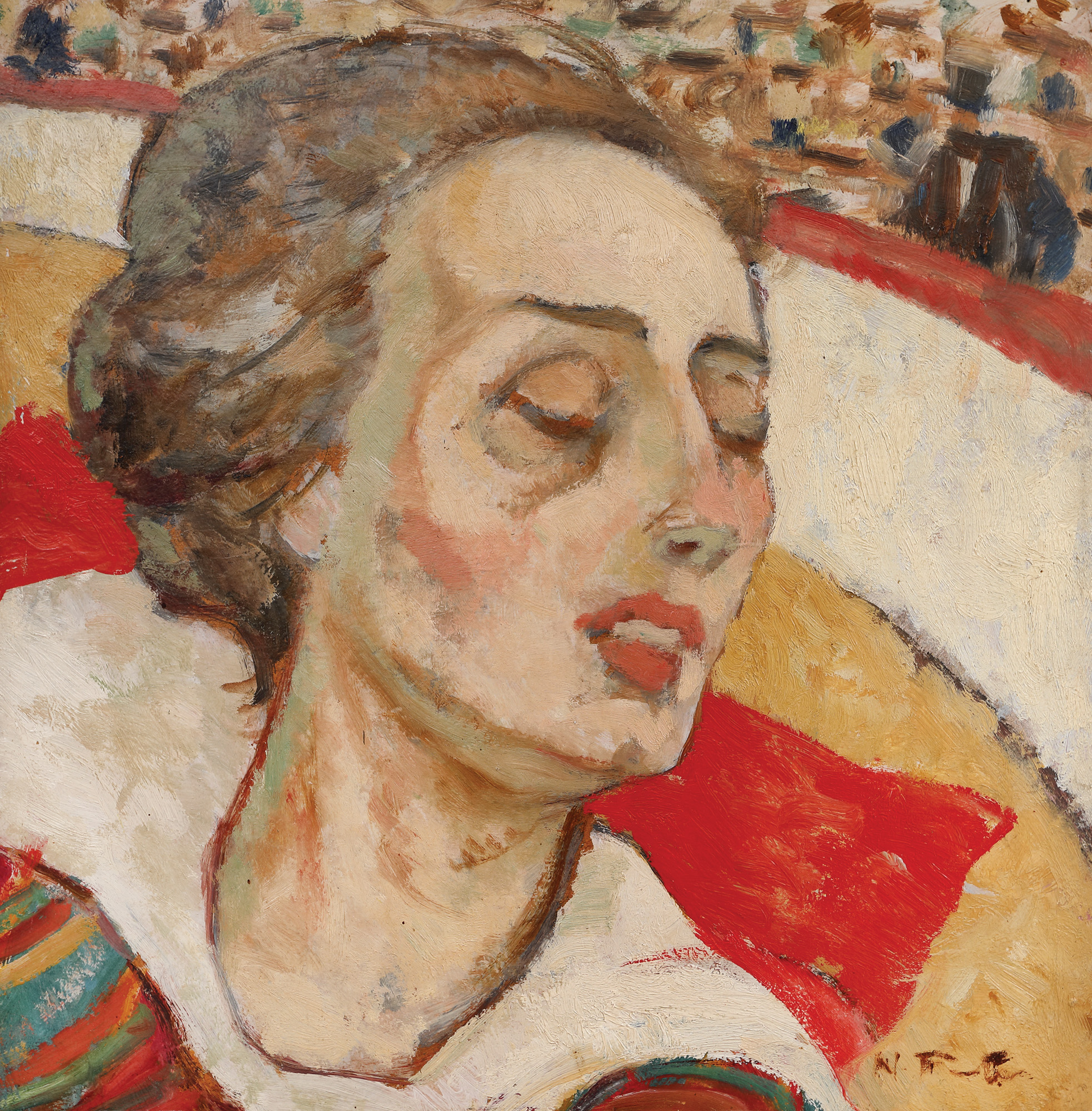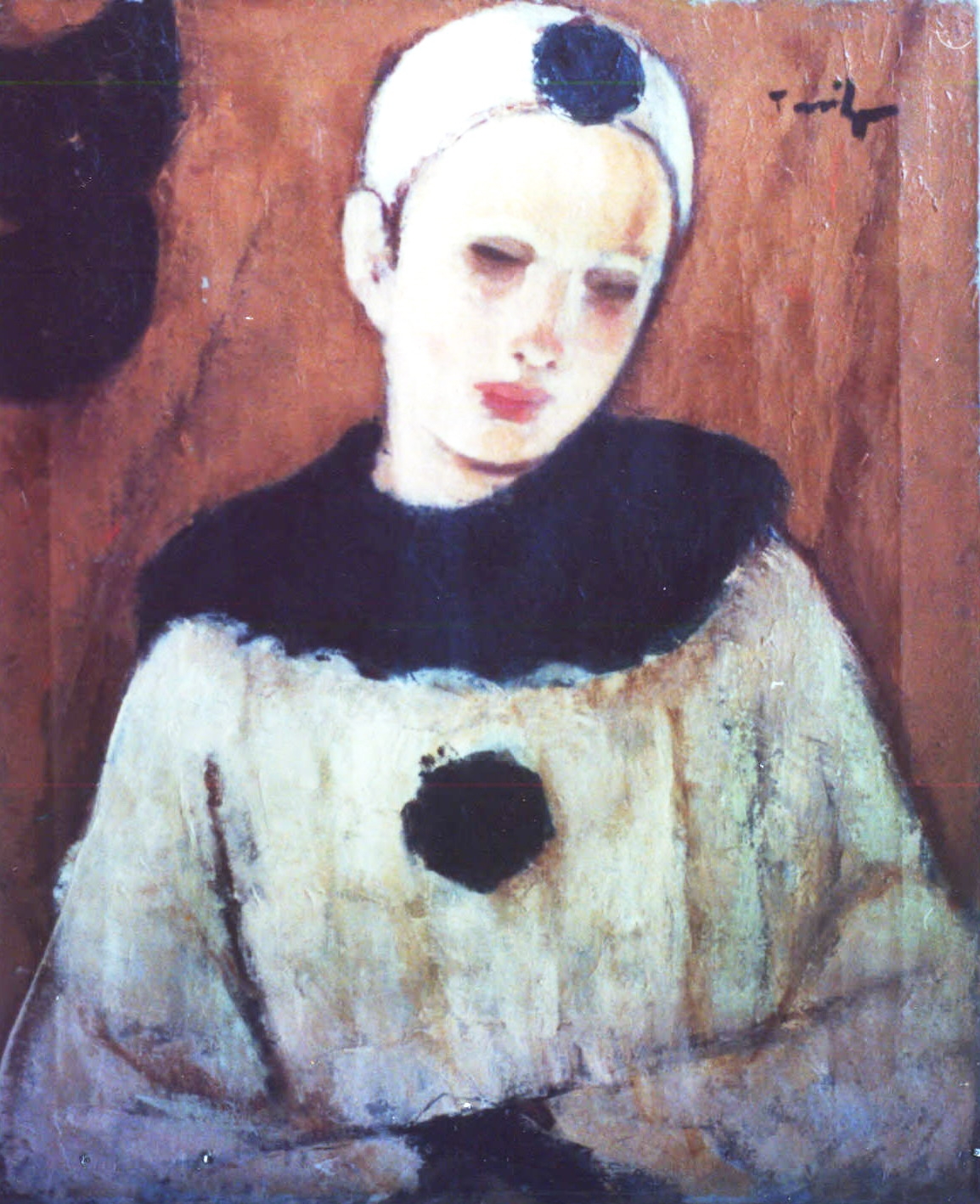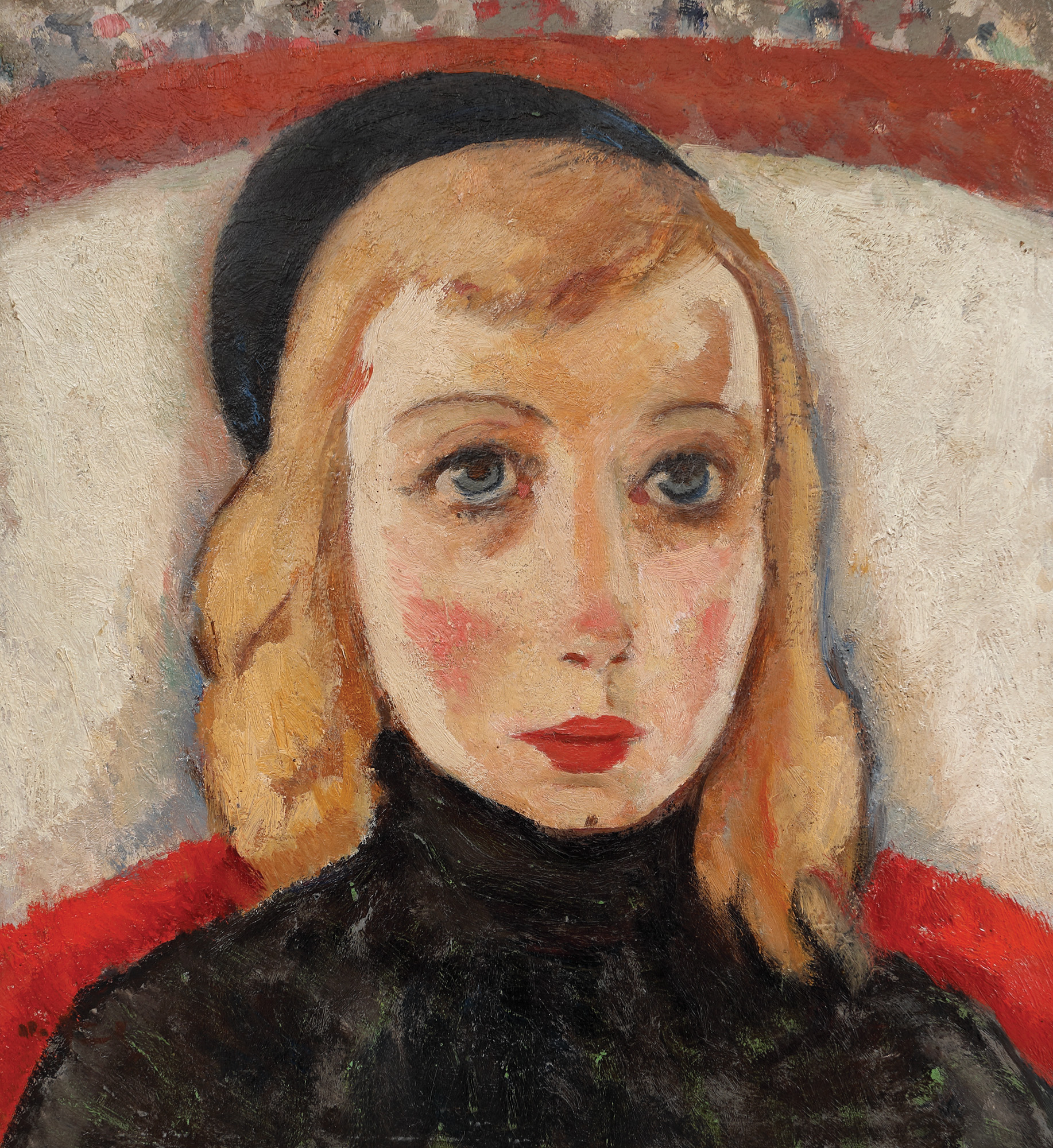

81. Circus World [1925]

1886, Bârlad - 1940, Bucureşti

Selling price

EUR 210.648

Session

Wed, 29 March 2023 19:00

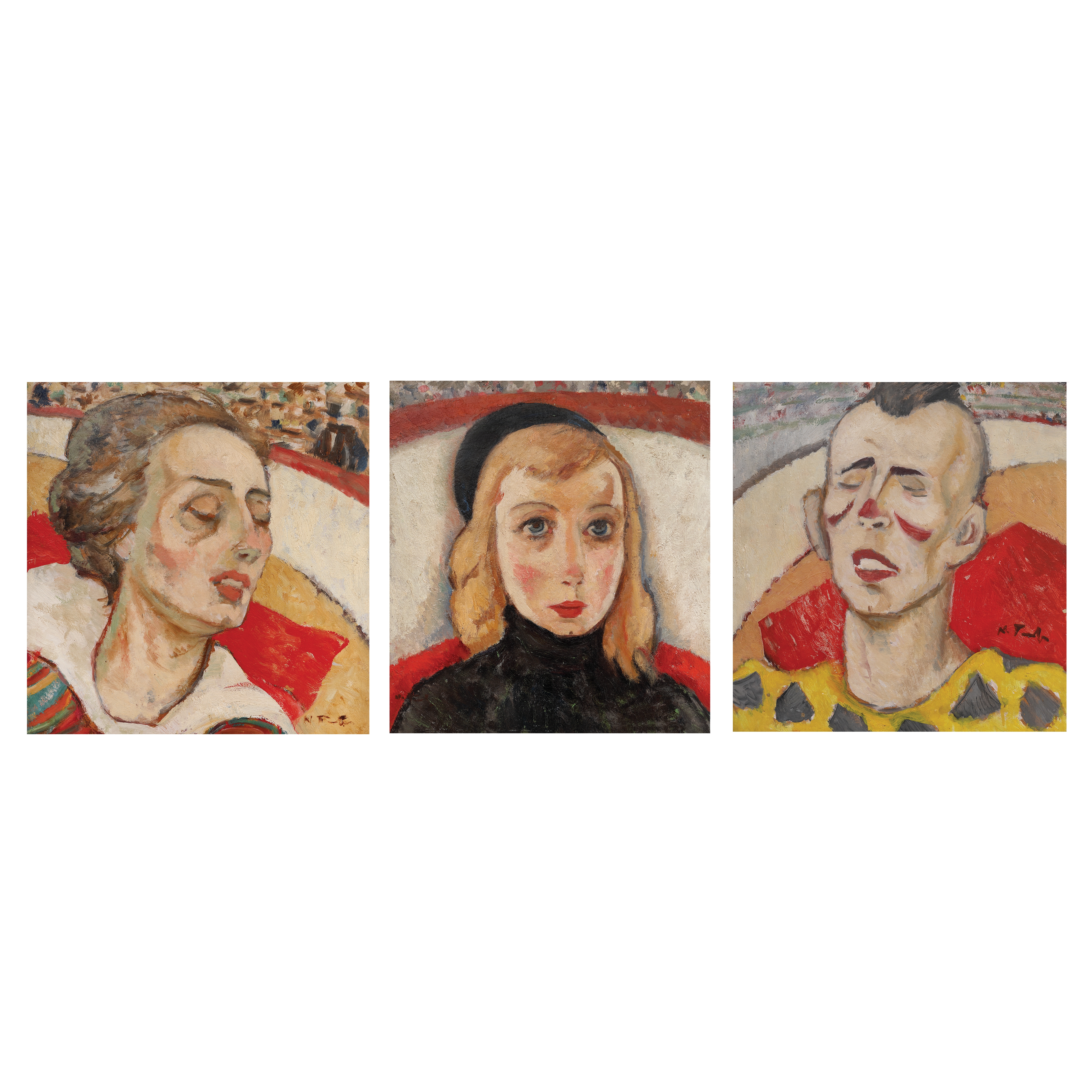
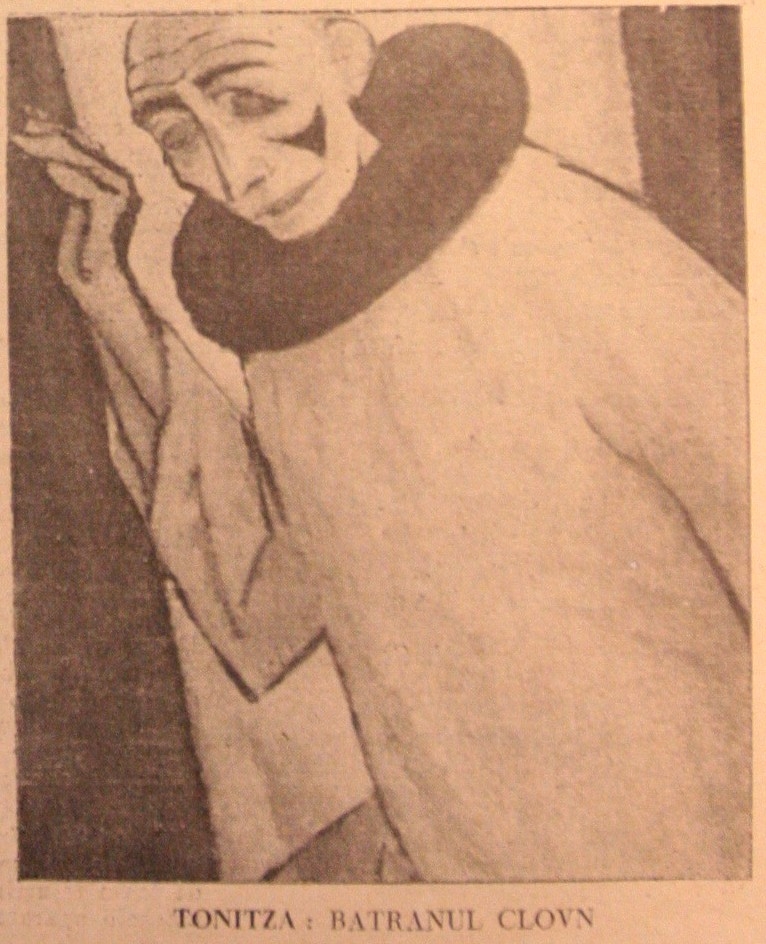
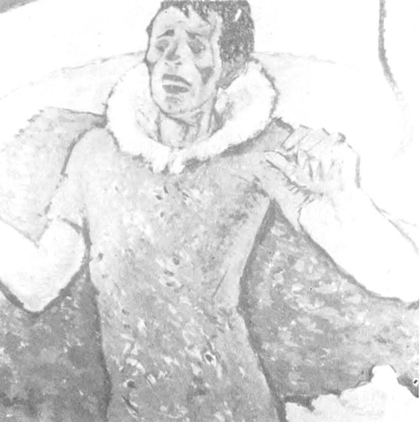
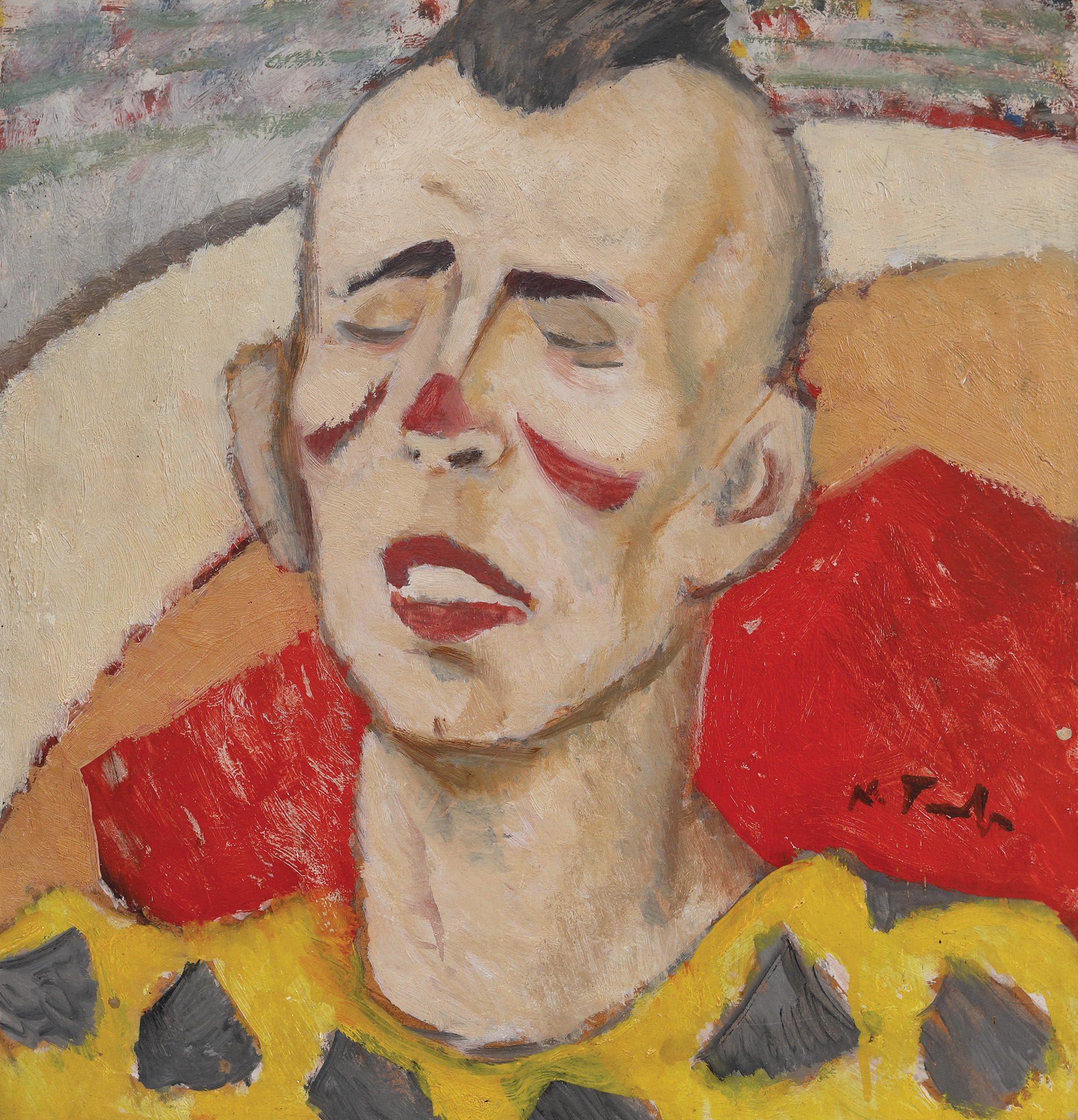
Nicolae Tonitza's versatile talent unfolds notably in painting, but the artist also activated as a drawer, a church painter, an art critic, a journalist or a teacher. "The Genius of Luxuriantly Coloured Sadness", who demonstrates strong humanistic beliefs, is particularly renowned as portrait creator. Children, feminine models or different human archetypes which he synthesises in his creation, all merge towards shaping a deeply sentimental iconographic repertoire. He aims towards perfecting a contemporary form of pictorial expression, which would help him discover new meanings of the matter, he uses the social function of the image, and identifies new ways to express the tragic. In a similar fashion as Daumier or Georg Grosz, he illustrates man as a direct expression of society, in a specific historical and political moment. The histrion, the mime or the fool, often despised and manifesting a deeply humble attitude, serve the artists as representatives of ephemeral pleasures, entertaining and pleasing the public, ignoring their own person. The artist would resume this motif within the "Clowns" triptych, completed in 1925. Street artists offer him the opportunity to understand himself from the moral point of view, to reflect the illusion and to project his whole inner turmoil on the depicted characters. Among the works opening the cycle illustrating the circus world, we mention "Pagliaccio", towards which Tonitza directed his paintbrushes since 1924, In this work, he identifies and harnesses the double nature of the mask. The mask motif would particularly return within the first of the three paintings representing the histrionic cycle. If, whilst depicting the "Clown" and "The Clown's Woman", he starts from the idea of a mask meant to hide all traces of humanity, in "The Clown's Daughter" he rather emphasizes the features of the human portrait, blurring the metaphoric connotations, which are so strong in the other two paintings. "The Clown's Daughter" has a much clearer expression, proving that the painter no longer plays with the illusion, but instead he tends to simplify the codes from the first works of the series. In the initial paintings, he captures the mother's emotional exhaustion as well as the father's excruciating suffering. He creates a real human documentary, introducing us to the three clowns as if they were actors who have to perform and to mesmerise the public, regardless of their own emotional turmoil ripping them apart during the performance. The three characters imagined by Tonitza are transposed into merchants of illusions, captured either with their eyes closed, either with a blank stare, gazing into oblivion, grimacing with pain and tormented by obvious inner drama. He uses the line to draw face contour and to interpret movements; the curved or interrupted line suggest the facial expressions or the creases in the coloured clothes. Clowns function like a journal which Tonitza makes available to us, in his attempt to unleash his own inner turmoil. The artist presents the world of entertainment as seen through an artist's eyes. He presents sad clowns, worried clowns, suffering clowns, clowns who are alone on their own stage, clowns ignored by society, or who experience a deep intimate distress. While executing the triptych, Tonitza also painted "The Young Clown", He presents himself to us as highly styled, more rational and with a clearer mind. However, in the triptych, Tonitza focused on the detailed illustration of frustration and helplessness, through an excessive geometry of details. Chromatic is, perhaps, his talent's strongest vein. He elevates colour to art status, offering it all the necessary attributes for an accomplished means of expression. He defines his humanistic belief through the chromatic he uses, and he chooses colours expressing rebellion or emotional distress. Ștefan Luchian's creation helps him build a much more specific pictorial vision. He overpasses the boundaries of imitation, taking over from the chromatic sources of popular art, consequently linking his work to national tradition. The present works are dramatically dominated by shades of red and yellow. "The colour depends on what you want to express; it must clearly reflect the main feeling on which the entire painting is built", stated Tonitza in his writings. This way, he would concentrate on the vibrating paintbrush move, on the broad and quickly juxtaposed strokes, as well as on the shapes sketched in modernist ways. The histrionic characters would be assigned expressions suggesting a muted monologue, by using feeble contours and an intense colouring. All these choices made by the artist converge towards harnessing thematic originality through the broad chromatic expressiveness and the skilful organisation of the compositional space.

References

JIANU, Ionel, "Tonitza", Căminul Artei Publishing House, Bucharest, 1945. ȘORBAN, Raul, "Nicolae Tonitza", Meridiane Publishing House, Bucharest, 1965.

Dimensions

custom A: 34.5 x 34.5; B: 34 x 33.5; C: 34 x 31.5

Description

oil on cardboard, signed bottom right, with brown, "N. Tonitza"; signed bottom left, with brown, "N. Tonitza"

Research information

The artwork is reproduced in the monograph "Nicolae Tonitza, Ionel Jianu, Căminul Artei Publishing House, Bucharest, 1945, cat. 11-13. The artwork is reproduced in "Amintiri despre Tonitza", K. H. Zambaccian, L.C., no. 2, Dec. 1946, pp. 15-17. The artwork is reproduced in "N. Tonitza", 1955, repr. pl. XIX-XX. The artwork is reproduced in "Umanismul lui Tonitza", A.P., no. 2, 1961, p. 14. The artwork is reproduced in "N. N. Tonitza", P. Comarnescu, 1962, p. 254. The artwork was part of the exhibition "Nicolae N. Tonitza", Art Museum of the People's Republic of Romania, in 1963, under the title "Femeia clovnului", "Clovnul", "Fiica clovnului", at cat. 94, 95, 96. The artwork is reproduced in the monograph "Tonitza", Raul Șorban, Meridiane Publishing House, Bucharest, 1973, under the title "Femeia clovnului", "Clovnul", at cat. 23, 24. The artwork was part of "Expoziția de pictură și grafică", Art Museum of the Socialist Republic of Romania, in 1979, under the title "Saltimbancii - Femeia clovnului", "Saltimbancii - Fata clovnului", at cat. 58, 59. The artwork was part of the exhibition "Ruse", Art Museum of the Romanian People's Republic, under the title "Femeia clovnului", "Clovnul", "Copilul clovnului". The artwork was part of the exhibition "Tonitza și geniul copilăriei", Art Safari, Bucharest, in 2019 and is reproduced in the catalogue "Tonitza și geniul copilăriei", Art Safari, 2019, at pp. 254-256.

Dating

1925

PROVENANCE

interwar period, the collection of engineer Leon Laserson; after 1945, the collection of F. L. Filip; Ilie Mirea collection; Otilia Schaffer collection.

ADDITIONAL INFORMATION

For clarifications regarding the bidding procedure, hammer price costs, guarantee, payment, and collection terms for the winning lot, we recommend carefully reading/re-reading the Bidding Regulations.

For additional information regarding the lot and the auction, please contact the Art Consultants Department.

Similar lots
Nightfall

58. Nightfall [1942]

Rudolf Schweitzer-Cumpăna

    Estimate EUR 1.800 - 2.500
    Sold EUR 2.000
Lilac

40. Lilac

Octav Băncilă

    Estimate EUR 3.500 - 4.500
    Sold EUR 4.500
Reading on the Couch

34. Reading on the Couch [1934]

Dan Ialomiţeanu

    Estimate EUR 900 - 1.500
    Sold EUR 2.000