The photos of the lot are informative and indicative, and cannot provide a highly detailed view of the object from all angles. We recommend a careful physical inspection of the lot before bidding.
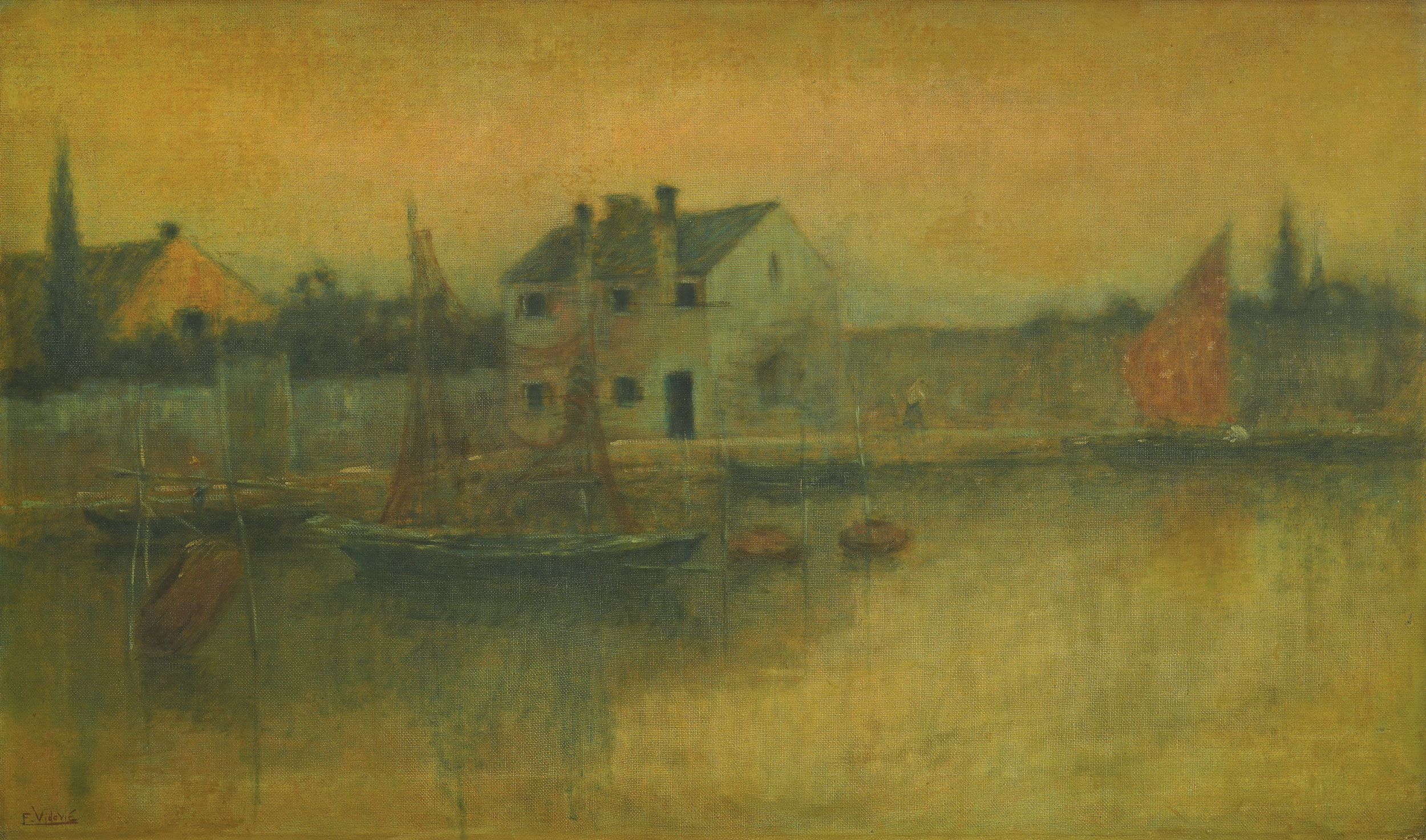
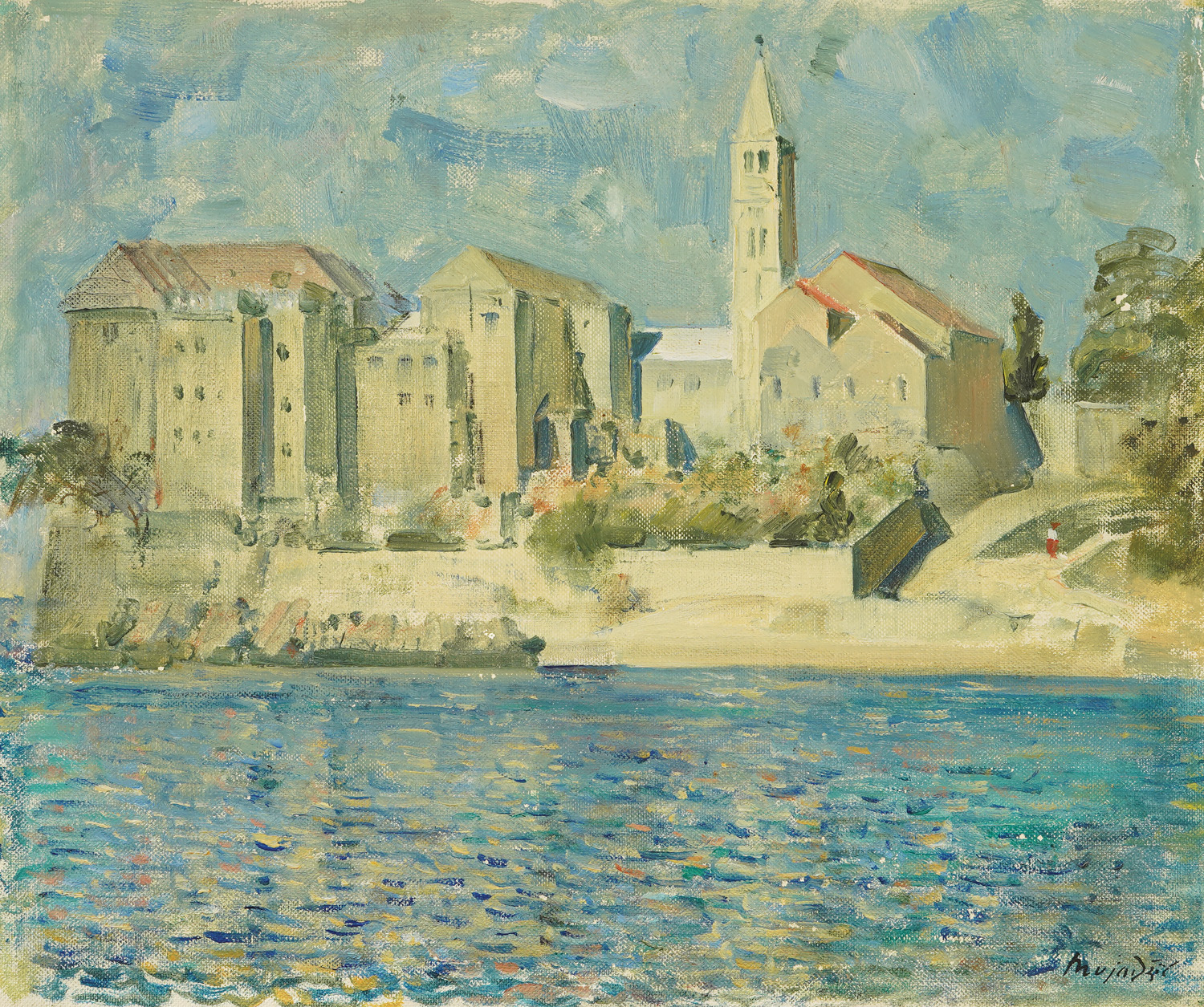
oil on canvas, 60.5 x 101 cm, signed bottom left, in brown, "E. Vidović"
Research information
The work is inventoried and presented in the online database of Emanuel Vidović under the title "Fishing houses near Venice". The work is documented and inventoried in Petra Vugrinec's doctoral thesis, "Symbolism in Croatian painting" University of Zagreb, Faculty of Philosophy, 2020, on page 289.; 461.
Emanuel Vidović (Split, 1870 – Split, 1953) was a Croatian painter whose artistic career began as an amateur in Split, and professionally in Venice at the sculpture department of the Accademia delle Belle Arti. He soon left his sculpture studies and began studying painting, which he also abandoned to live in Milan. There he did restoration work and worked as a draughtsman in a furniture factory. He soon left for Chioggia, a fishing town near Venice that will often appear in his paintings. In Chioggia, he met his wife Amalia Baffo, with whom he had nine children. He lived in several locations with his family in Chioggia, Venice, and Split, and exhibited his work in Vienna, Milan, London, Sofia. Despite various exhibitions, he could not ensure a secure life, so due to financial difficulties, the Vidović family moved to Solin. In Solin, Vidović created his monochromatic masterpiece Angelus. It was only in 1909 that he secured financial stability by getting a job as a drawing professor at a vocational school. At 80, he fell during a walk and broke his thigh bone, limiting his mobility. After three years of illness, he died and was buried without major ceremonies. In his hometown of Split, a park in the Lovret area is named after Emanuel Vidović.
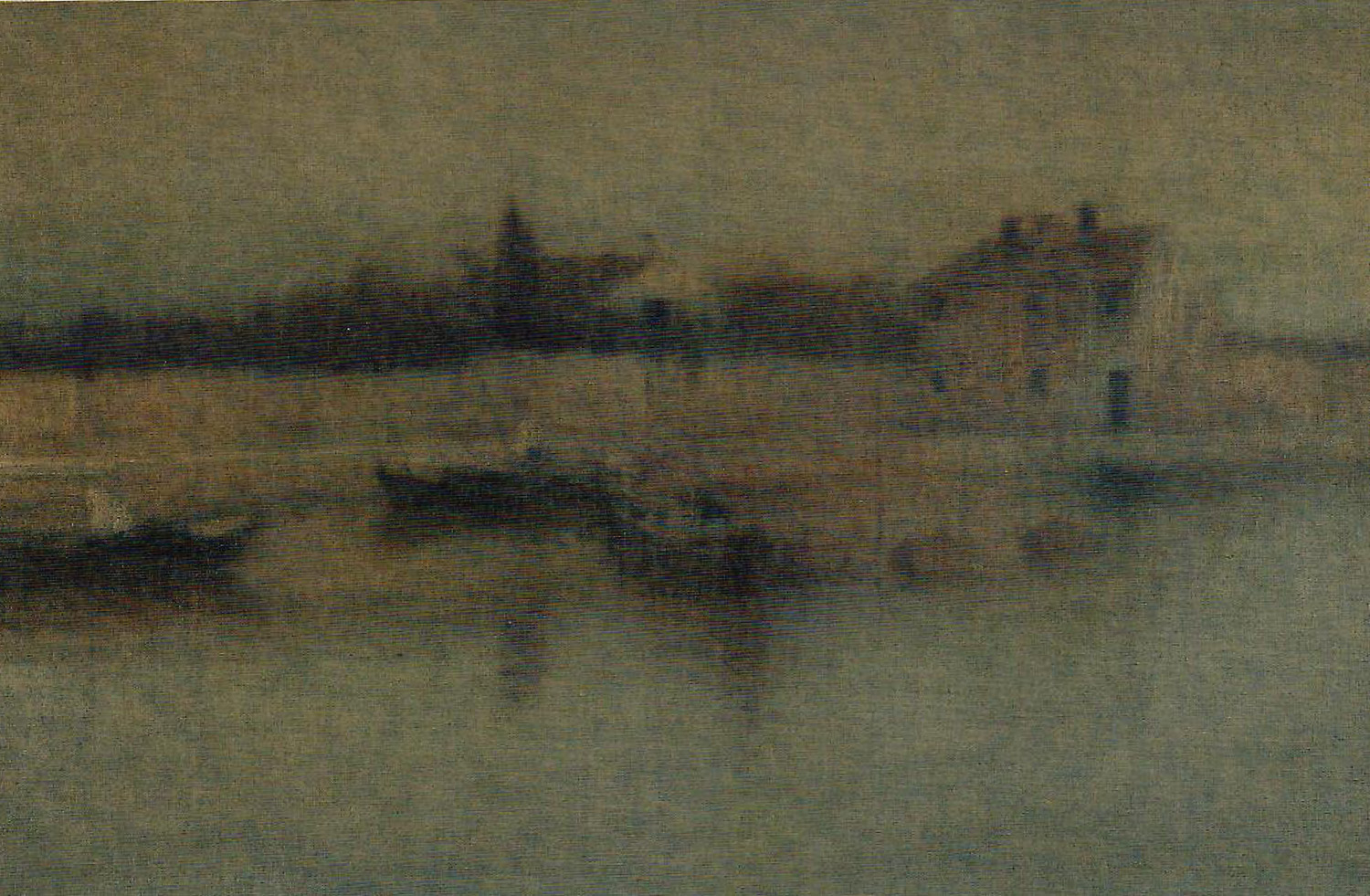
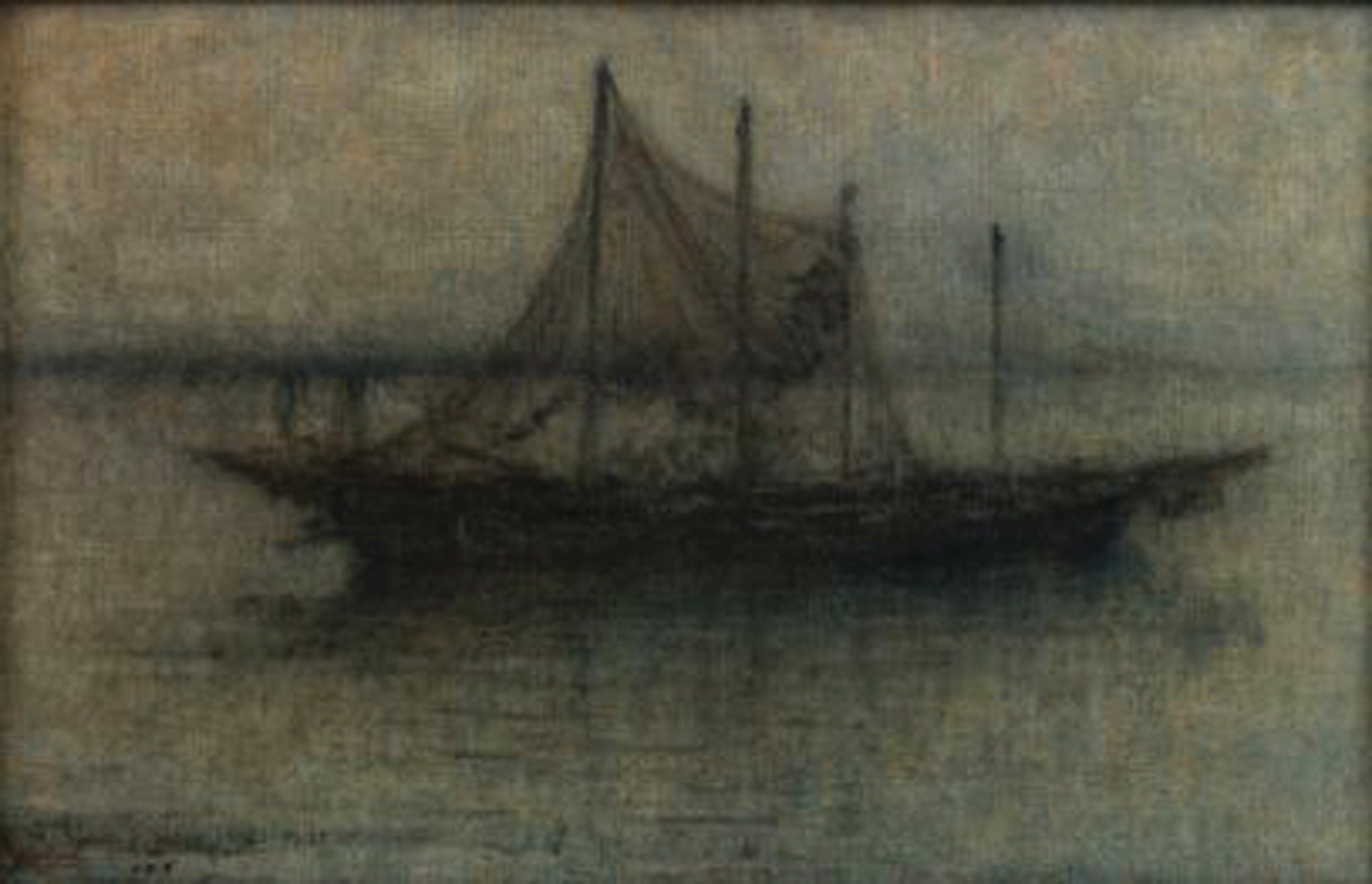
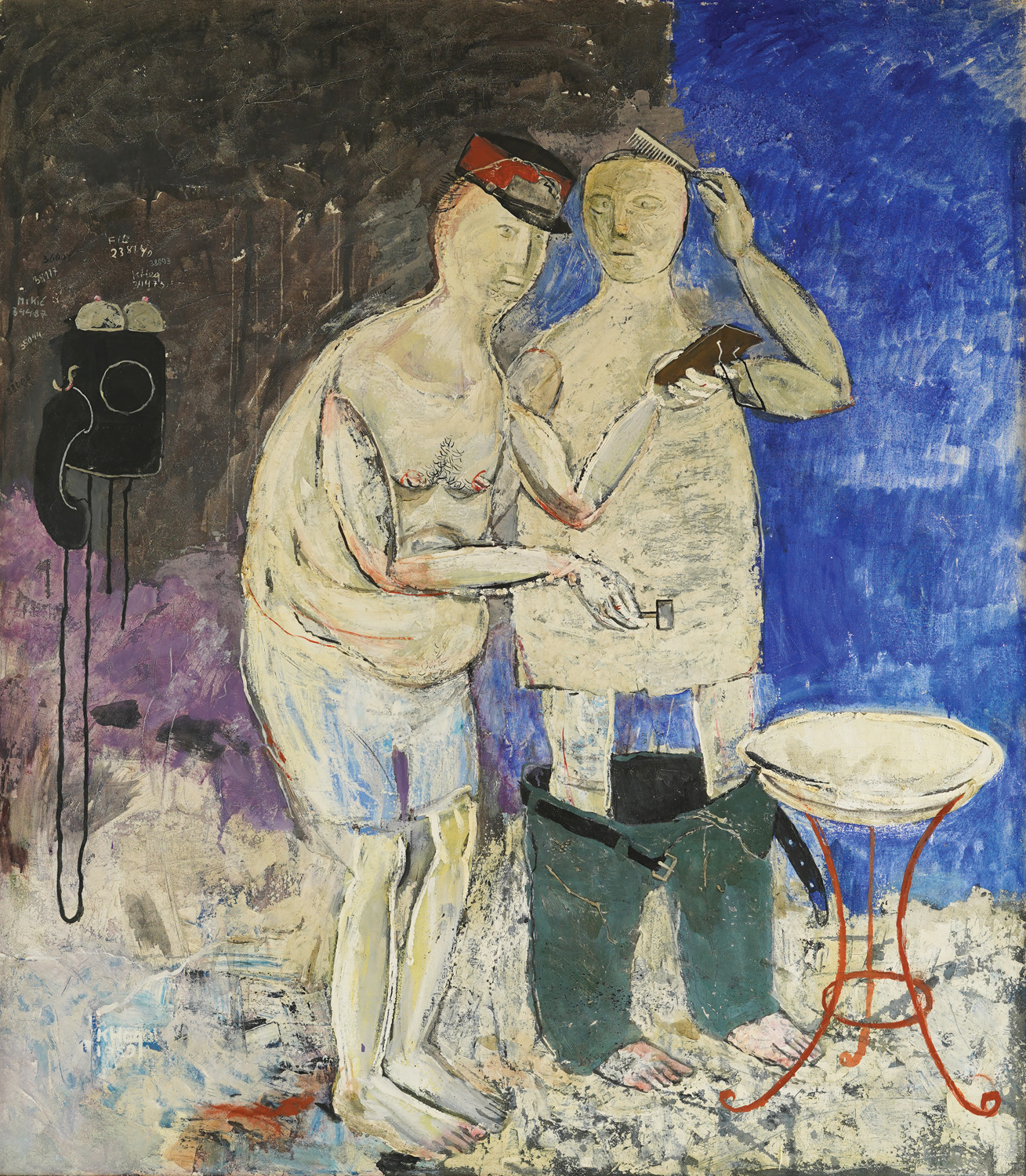
Vidović lived at numerous addresses in Dalmatia (Split, Trogir) and northern Italy (Venice, Milan, Chioggia), and those areas left an indelible imprint on his work. The earliest works created in Venice during his studies have not been preserved. From the later preserved paintings, the influence of Italian macchiaioli who painted landscapes is visible. Departing for Chioggia, rainy day and sunset scenes began to attract him. From 1897 to 1906, he painted realistic landscapes of Split, Solin, and Vranjic, while impressionistic details can be found in his paintings of Venice. A valuable work from this period is Little World (Mali svijet, 1904), created using the technique of divisionist twisting brush strokes. The aforementioned painting Angelus (1906/07) marks a turning point in Vidović's work, initiating a period of symbolism and twilight pictures of reduced chromatics. In the period after World War I, closed in his studio, he painted motifs from his surroundings - the port of Split, still life, studio interior - using a darkened palette and with expressionist features. At that time, his prematurely deceased son Igor also began to appear in his paintings. In the 1930s, he began painting the interiors of Split's churches, and slowly lightened his palette. This was followed by a period of Impressionist details, again dark interiors, still lifes, and a phase in old age in which he continued to be productive, although due to severe injury, he could only paint from memory. Throughout his life, he did not limit himself to canvas - he also made caricatures for Duje Balavac's satirical magazine.
In his twenties, whenever Vidović would save some money, he would spend the autumns in Chioggia, a small fishing village near Venice. Chioggia attracted him more than Venice and Milan. He would walk around the village and find motifs for short nature studies that he would further work on in his rented studio. From this period, important works with a pure Impressionist palette were created for Croatian painting. He was attracted by the dark tones of autumn and rainy days, not the summer sun that is typical and recognizable for seaside settlements. The oil painting that depicts peasant houses was very likely created at the turn of the 19th to the 20th century. A blurred vision, as in the mist of water vapor, of the calm life of a fishing village is typical of Vidović. The melancholic view is divided into three parts. The lower third of the image is reserved for the sea in which fishing boats are reflected. The center of the painting is dominated by man-made objects – boats, sails, fishing stone houses, but even one harder-to-notice fisherman. In the upper third of the painting, on the outer wall of a house, the rising sun is reflected. The sky is the brightest part of the painting. The three parts of the composition blend the colors into soft contours.
For clarifications regarding the bidding procedure, hammer price costs, guarantee, payment, and collection terms for the winning lot, we recommend carefully reading/re-reading the Bidding Regulations.
For additional information regarding the lot and the auction, please contact the Art Consultants Department.
By choosing "Accept all cookies" you agree to the use of cookies to help us provide you with a better user experience and to analyse website usage. By clicking "Adjust your preferences" you can choose which cookies to allow. Only the essential cookies are necessary for the proper functioning of our website and cannot be refused
Cookie settings
Our website stores four types of cookies. At any time you can choose which cookies you accept and which you refuse. You can read more about what cookies are and what types of cookies we store in our Confidentiality Policy.
are necessary for technical reasons. Without them, this website may not function properly.
are necessary for specific functionality on the website. Without them, some features may be disabled.
allow us to analyse website use and to improve the visitor's experience.
allow us to personalise your experience and to send you relevant content and offers, on this website and other websites.