Fotografije parcele su informativne i indikativne te ne mogu pružiti vrlo detaljan prikaz objekta iz svih kutova. Preporučujemo pažljiv fizički pregled parcele prije licitiranja.
Fotografije parcele su informativne i indikativne te ne mogu pružiti vrlo detaljan prikaz objekta iz svih kutova. Preporučujemo pažljiv fizički pregled parcele prije licitiranja.
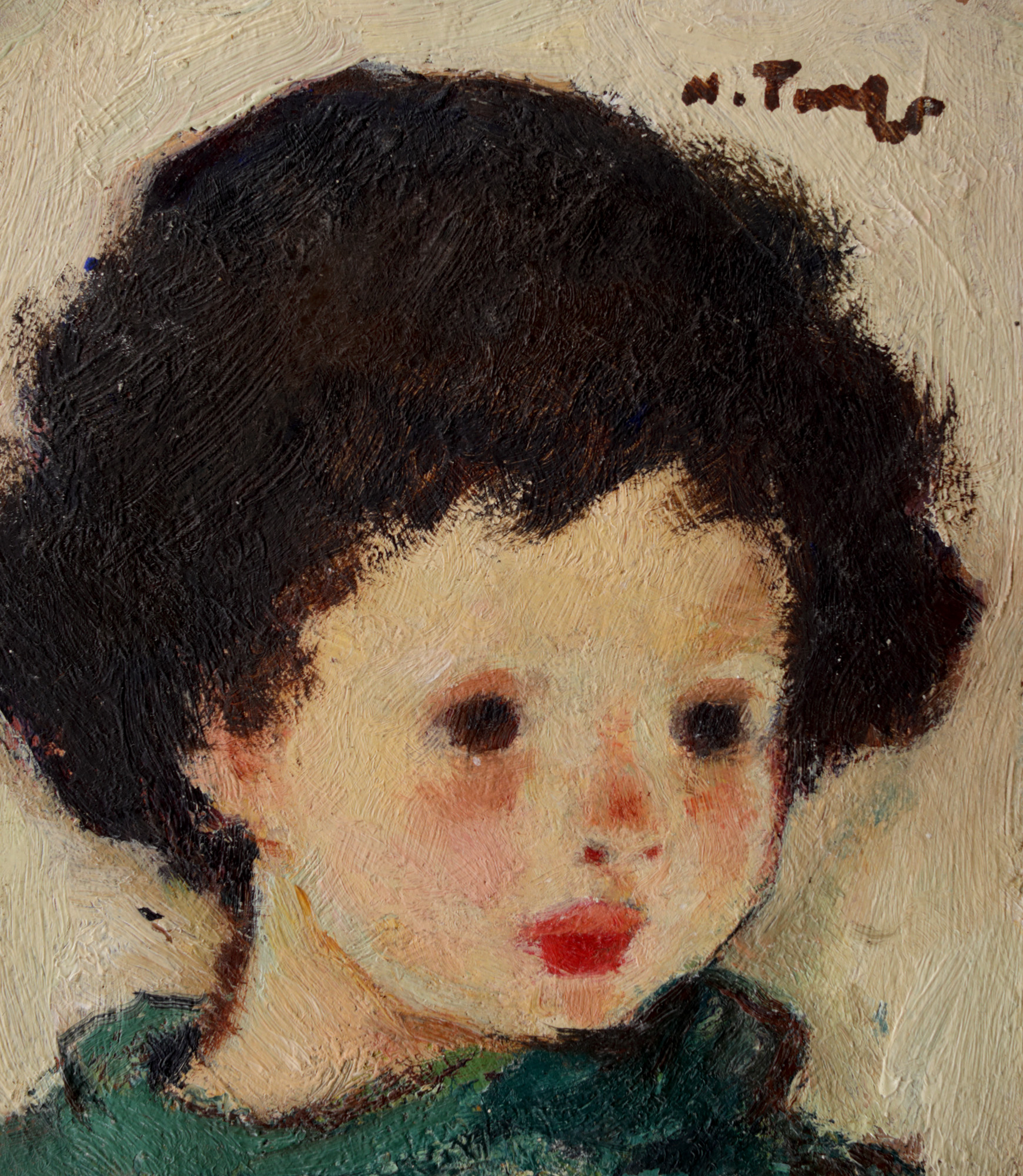
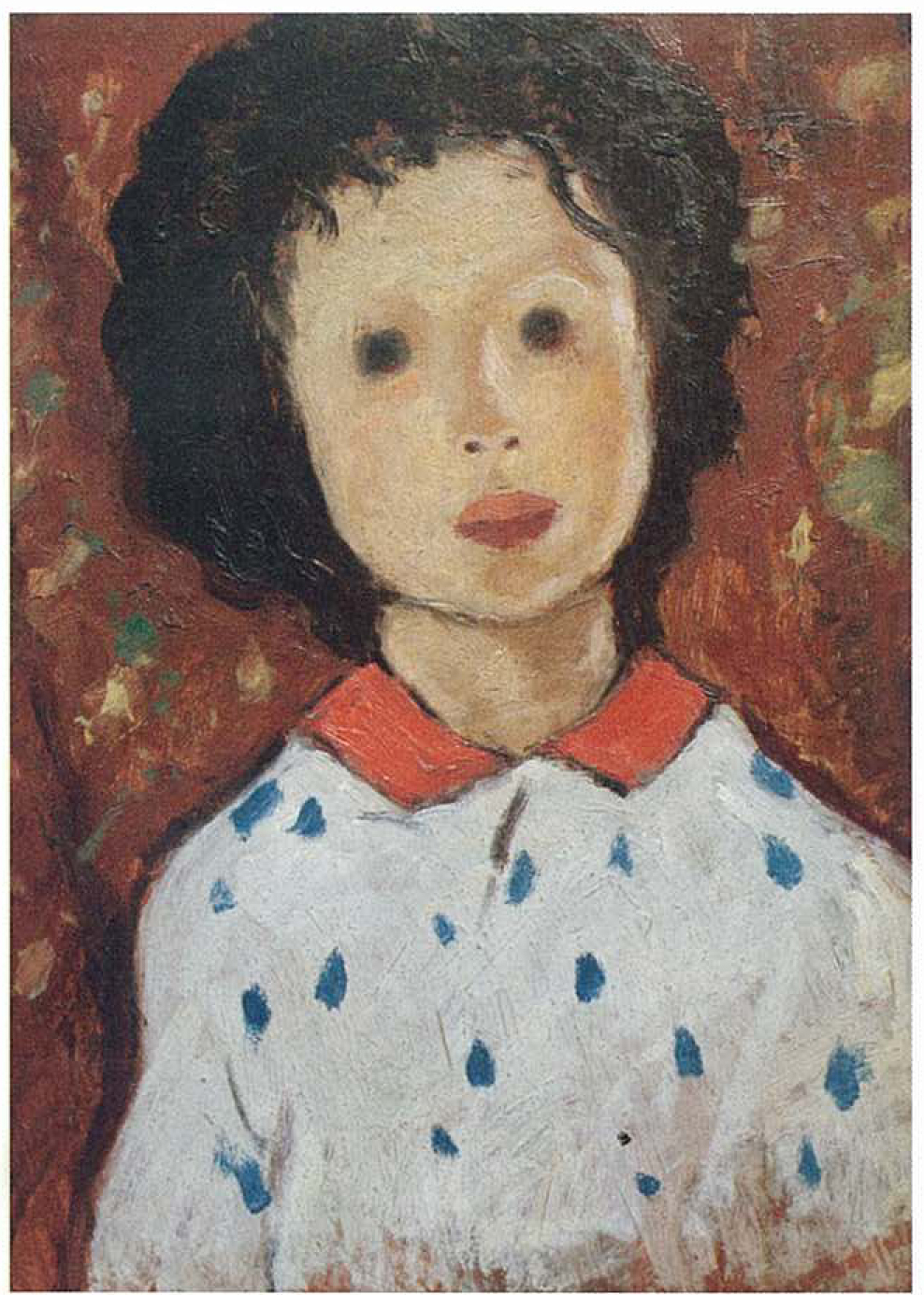
A perfectly accomplished master of children's portraits, Nicolae Tonitza penetrates the souls of his very young models, skilfully managing to expose their whole psychology within his work. His creation is loaded with paternal feeling, which would dominate his pictorial choices. The three year period which he spends with his family in Vălenii de Munte enhances the persistence of the playful in his creation even more. Thus, the main source of inspiration will be his children. Thanks to an exercise which started at the same time with the birth of his first child and continued throughout the entire growing up process of all his children, he manages to capture an entire merry-go-round of ages, as well as the whole emotional turmoil covering each stage of coming-of-age. Feminine faces are dominant, especially those of his daughters: Catrina and Irina Tonitza. We will also sometimes come across portraits of Nineta Gusti, the adopted daughter of Nicolae and Ecaterina Tonitza. She was his wife's relative, who came from the Climescu-Gusti family. Nineta served as his role model from an early age until later, in his teens, when she moved to Bucharest to enrol at the Conservatory. Passionate about art and especially the art of acting, Nineta Gusti will take the Conservatory exam at the age of 16, when she manages to get a place in the class of the great actress Lucia Sturdza-Bulandra after interpreting a poem by Lucian Blaga. Her teacher will help her forget her Moldovan dialect and improve her diction to become a successful actress. During her studies, the student debuted on the stage of the Bulandra Theatre and played various roles, some more demanding than others. After graduation, she will have the opportunity to play roles on the stage of the Comedy Theatre or the Nottara Theatre. She made her film debut in 1959 in the film 'Two Neighbours', but she also appeared in screenings such as 'The Bumpkins', 'Tonight we dance as a family' and 'Me, you and Ovidiu'. She will be the first wife of the actor Radu Beligan, whom she met at the Maria Filotti Theatre, and in 1970, she will move to the countryside, in Crevedia, where she will take care of the house and garden. As we can observe in his work, Nicolae Tonitza will focus an entire universe in the gaze of his muses. He paints inexpressive faces, whose mute monologue he locks entirely within the eyes. He captures those eyes gazing with nostalgic innocence, or those eyes that are full of melancholy and purity. He sketches the perfectly round pupils, sometimes placing a small dark patch, other times a green or a blue patch. He presents the face as a microcosm on which he intervenes, when necessary, with specific details and a protective lucidity. In the playful theme he finds musical correspondences to the colours he places on the canvas. He mostly uses decorative and scenographic backgrounds, pointing on the contrast between the dark background and the muse he depicts in lively colours. His literary interests would make themselves felt also in the visual art he creates, so that several writers - amongst which we mention Eugen Ionescu and Barbu Brezianu - would praise his ambivalent talent. What is worth mentioning in this context is the friendship that Tonitza would build with 'mythologist' childhood writer Ionel Teodoreanu. Just like his friend Teodoreanu, who sometimes adopts a playful perspective in his novels, Tonitza would try to transpose himself into the imaginary of his very young models, in order to lay on paper a series of fictional letters, in which he exposes a child's perspective on various deeper themes, often difficult to comprehend even by adults. Together with Ionel Teodoreanu, he would work on 'The Living Alphabet', a project aiming to attract the complicity of very young souls in uncovering the secrets of transposing letters into images. Therefore, he dedicates both his visual and literary creation to discovering the secrets of childhood.
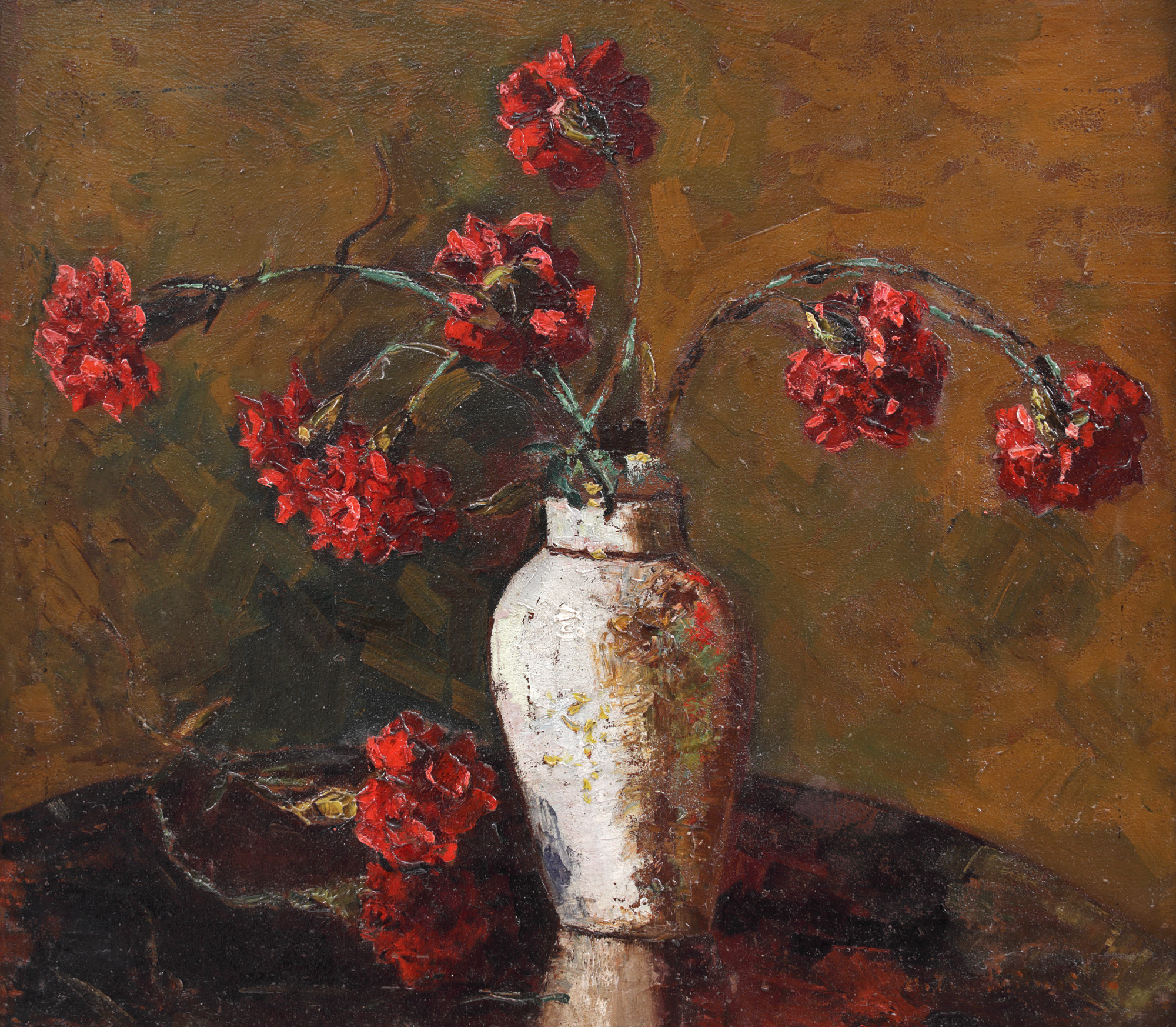
oil on cardboard, signed upper right, in brown, 'N. Tonitza'
Izlasci
1924-1926
DODATNE INFORMACIJE
Za pojašnjenja u vezi s postupkom licitiranja, troškovima kupnje, uvjetima jamstva, plaćanja i preuzimanja osvojenog lota preporučujemo da pažljivo pročitate/ponovno pročitate Pravilnik o licitiranju.
A perfectly accomplished master of children's portraits, Nicolae Tonitza penetrates the souls of his very young models, skilfully managing to expose their whole psychology within his work. His creation is loaded with paternal feeling, which would dominate his pictorial choices. The three year period which he spends with his family in Vălenii de Munte enhances the persistence of the playful in his creation even more. Thus, the main source of inspiration will be his children. Thanks to an exercise which started at the same time with the birth of his first child and continued throughout the entire growing up process of all his children, he manages to capture an entire merry-go-round of ages, as well as the whole emotional turmoil covering each stage of coming-of-age. Feminine faces are dominant, especially those of his daughters: Catrina and Irina Tonitza. We will also sometimes come across portraits of Nineta Gusti, the adopted daughter of Nicolae and Ecaterina Tonitza. She was his wife's relative, who came from the Climescu-Gusti family. Nineta served as his role model from an early age until later, in his teens, when she moved to Bucharest to enrol at the Conservatory. Passionate about art and especially the art of acting, Nineta Gusti will take the Conservatory exam at the age of 16, when she manages to get a place in the class of the great actress Lucia Sturdza-Bulandra after interpreting a poem by Lucian Blaga. Her teacher will help her forget her Moldovan dialect and improve her diction to become a successful actress. During her studies, the student debuted on the stage of the Bulandra Theatre and played various roles, some more demanding than others. After graduation, she will have the opportunity to play roles on the stage of the Comedy Theatre or the Nottara Theatre. She made her film debut in 1959 in the film 'Two Neighbours', but she also appeared in screenings such as 'The Bumpkins', 'Tonight we dance as a family' and 'Me, you and Ovidiu'. She will be the first wife of the actor Radu Beligan, whom she met at the Maria Filotti Theatre, and in 1970, she will move to the countryside, in Crevedia, where she will take care of the house and garden. As we can observe in his work, Nicolae Tonitza will focus an entire universe in the gaze of his muses. He paints inexpressive faces, whose mute monologue he locks entirely within the eyes. He captures those eyes gazing with nostalgic innocence, or those eyes that are full of melancholy and purity. He sketches the perfectly round pupils, sometimes placing a small dark patch, other times a green or a blue patch. He presents the face as a microcosm on which he intervenes, when necessary, with specific details and a protective lucidity. In the playful theme he finds musical correspondences to the colours he places on the canvas. He mostly uses decorative and scenographic backgrounds, pointing on the contrast between the dark background and the muse he depicts in lively colours. His literary interests would make themselves felt also in the visual art he creates, so that several writers - amongst which we mention Eugen Ionescu and Barbu Brezianu - would praise his ambivalent talent. What is worth mentioning in this context is the friendship that Tonitza would build with 'mythologist' childhood writer Ionel Teodoreanu. Just like his friend Teodoreanu, who sometimes adopts a playful perspective in his novels, Tonitza would try to transpose himself into the imaginary of his very young models, in order to lay on paper a series of fictional letters, in which he exposes a child's perspective on various deeper themes, often difficult to comprehend even by adults. Together with Ionel Teodoreanu, he would work on 'The Living Alphabet', a project aiming to attract the complicity of very young souls in uncovering the secrets of transposing letters into images. Therefore, he dedicates both his visual and literary creation to discovering the secrets of childhood.
DODATNE INFORMACIJE
Za pojašnjenja u vezi s postupkom licitiranja, troškovima kupnje, uvjetima jamstva, plaćanja i preuzimanja osvojenog lota preporučujemo da pažljivo pročitate/ponovno pročitate Pravilnik o licitiranju.