
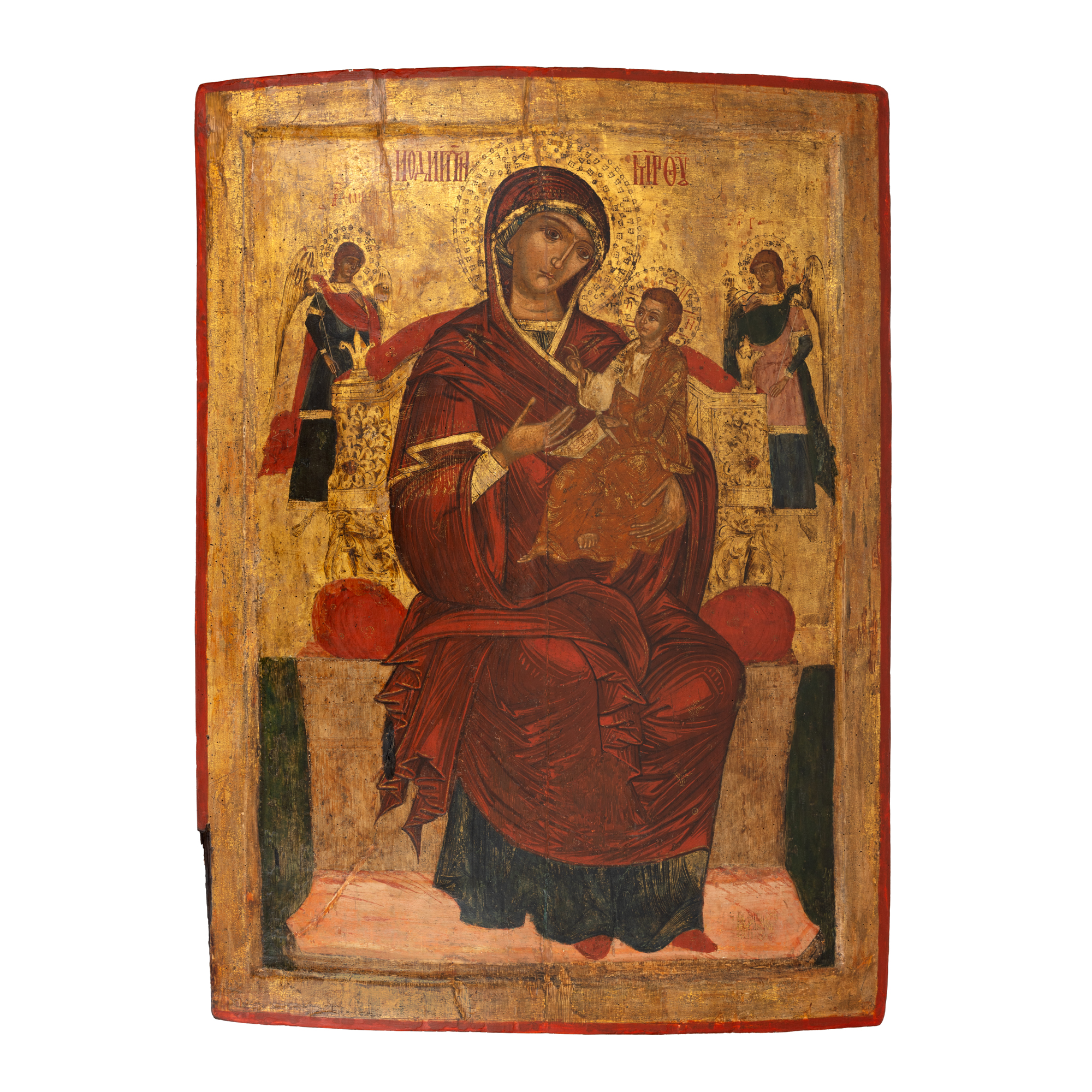
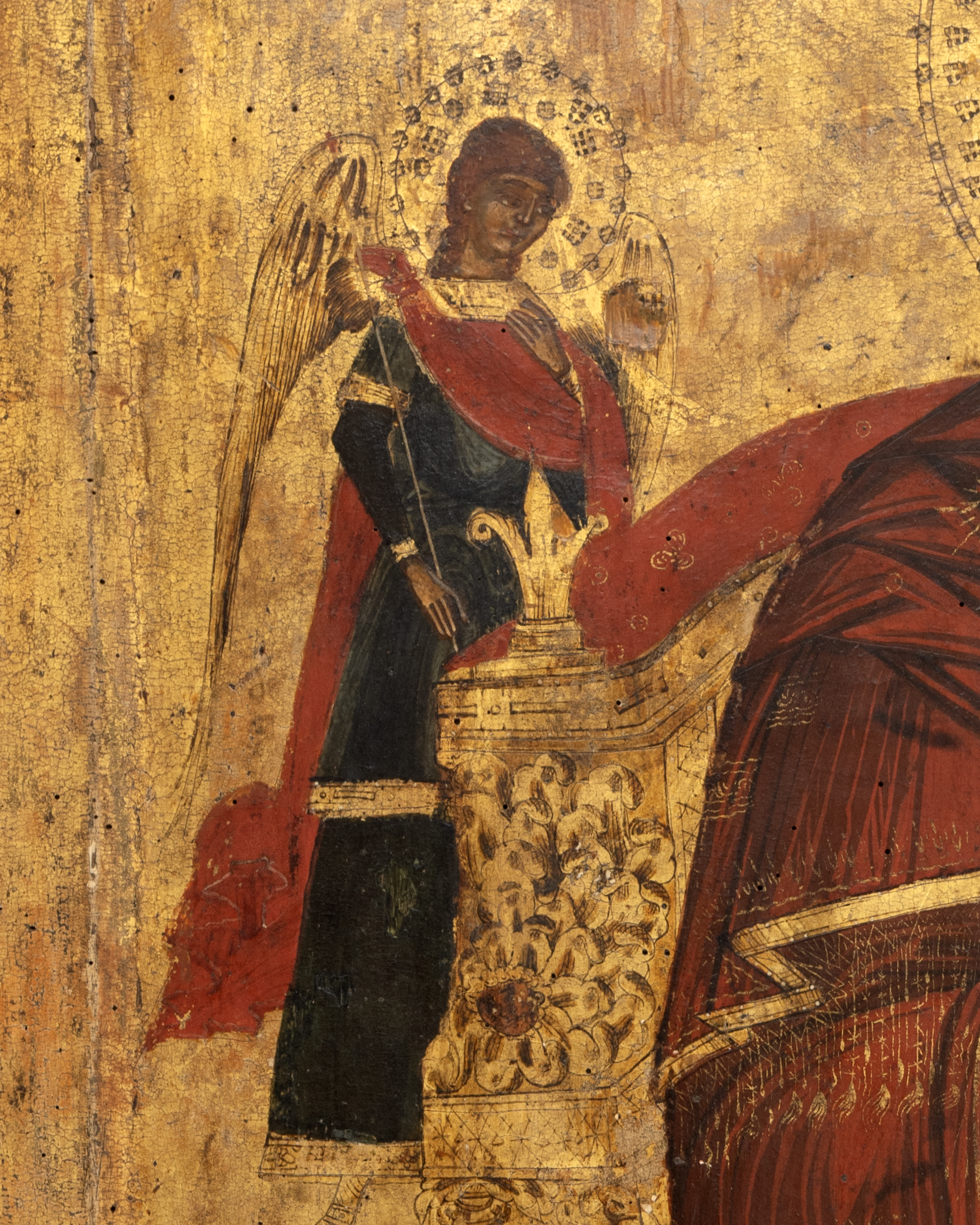
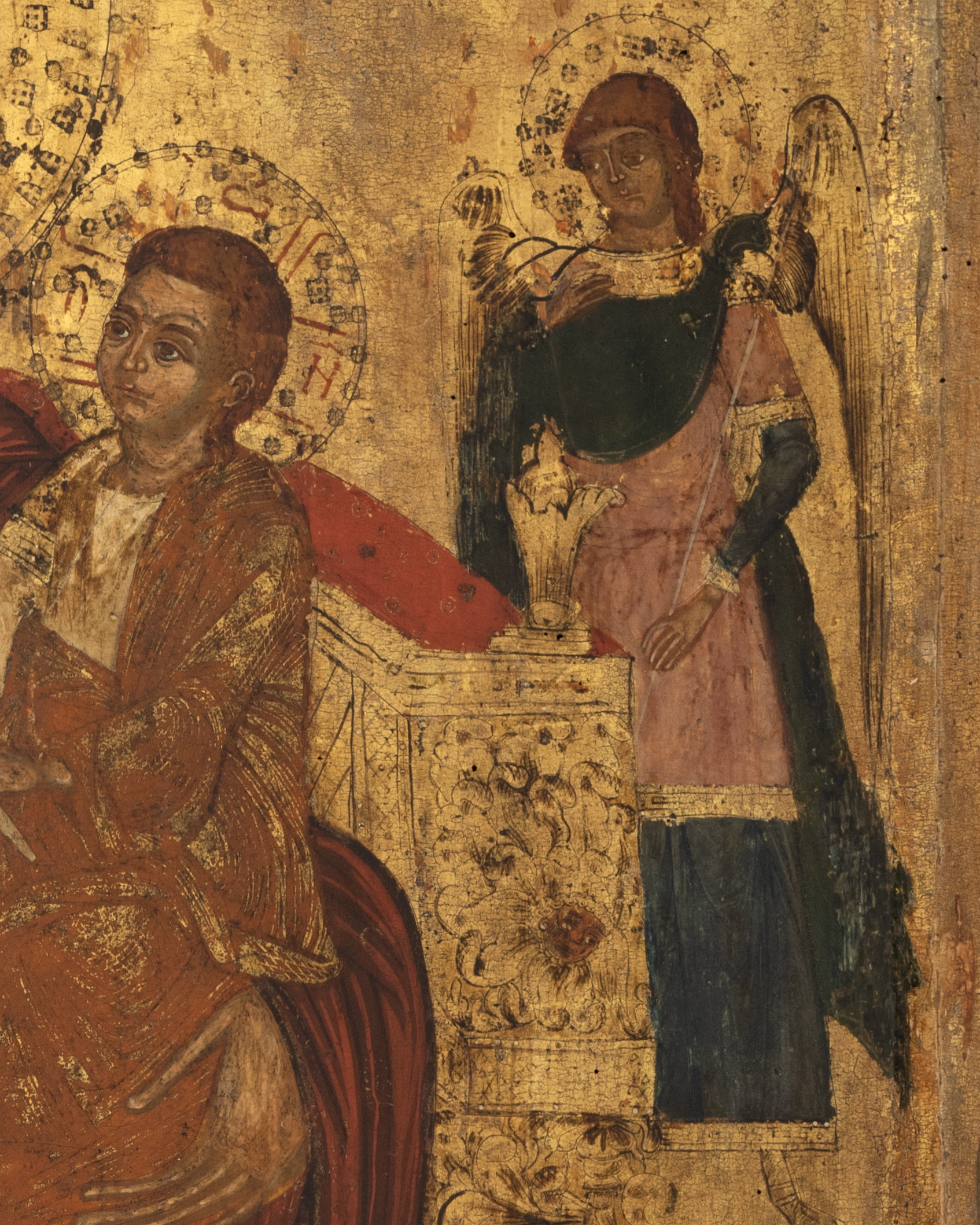
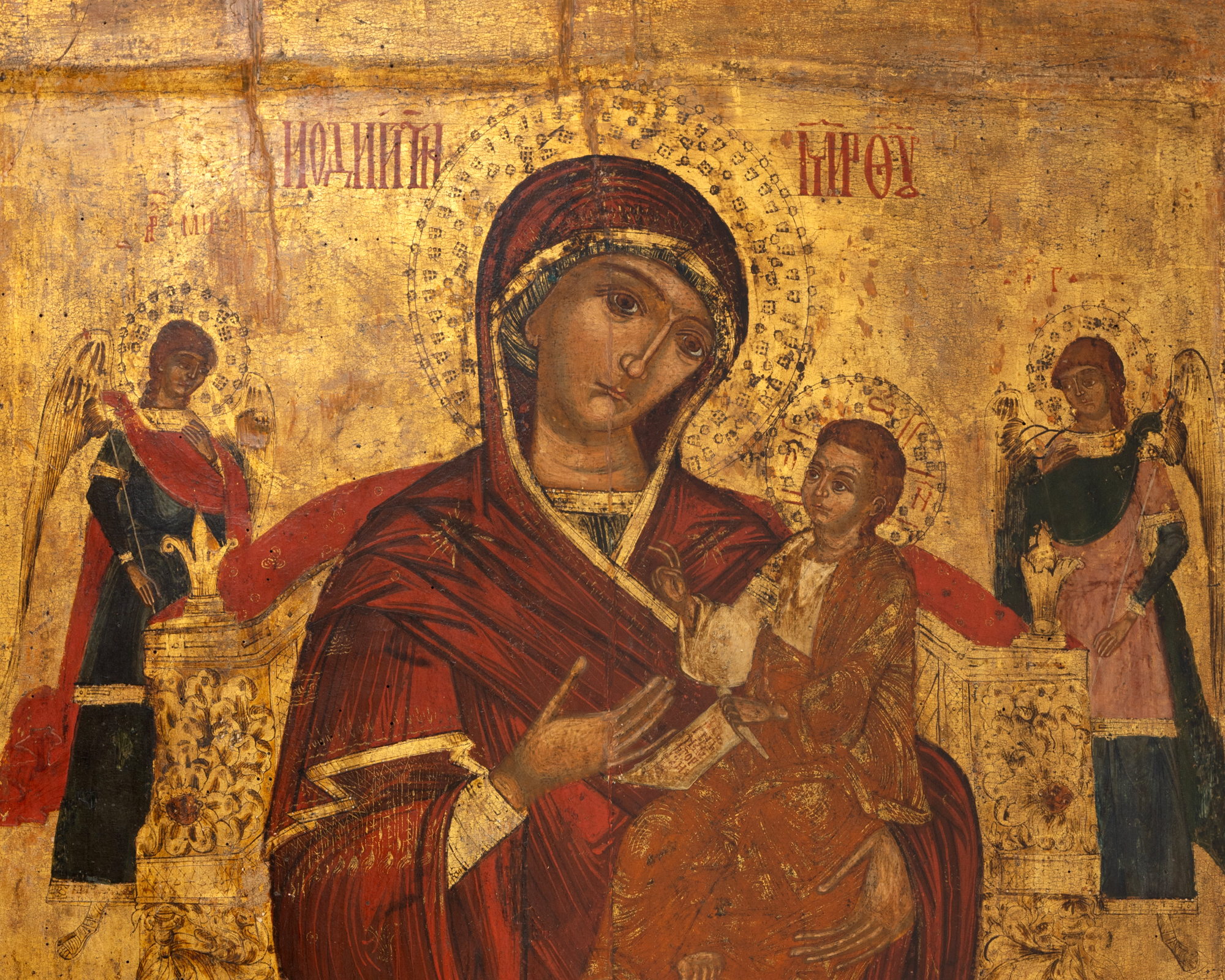
23. Imperial Icon on Wood, "The Mother of God with the Infant - The Lady of Angels", by Costandin Zugravul, Wallachia, Brâncovenesc school, during the era of Constantin Brâncoveanu, last decade of the 17th century, museum piece
Početna cijena
EUR 20.000
Prodano
EUR 40.000
Sesija
Sri., 16 travnja 2025 19:00
Dimenzije
width 74.5 cm, height 102 cm
Opis
tempera and gold foil on wood
Informacije o istraživanju
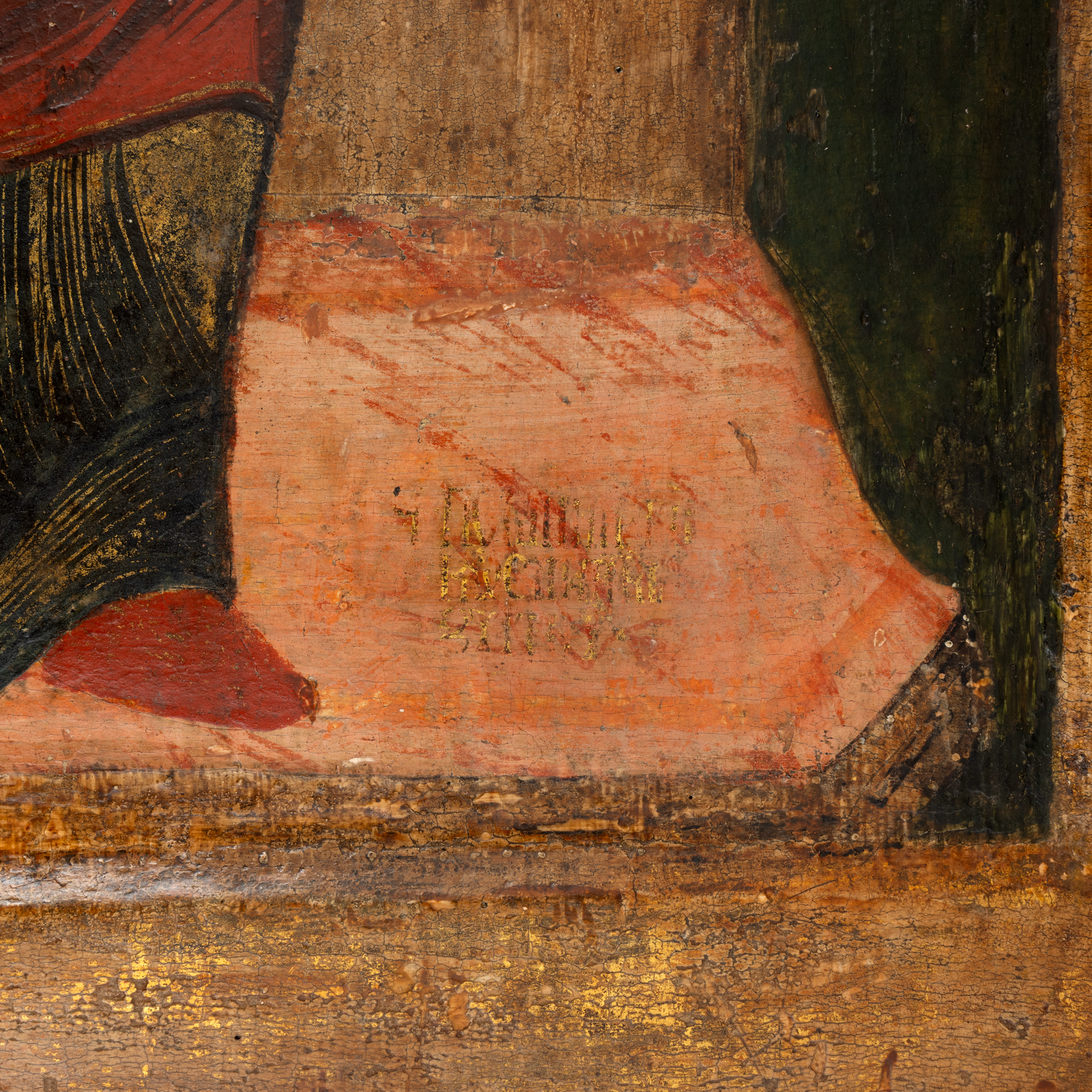
Of high artistic value, the icon painting fits within the stylistic coordinates of the Brâncovan painting, and through its entire demeanor, which expresses wealth, luxury, and opulence, it can be considered a princely command. Constantinos, a painter of Greek origin active in Wallachia between 1658 and 1720, played an essential role in the development of the Brâncovan art. Brought by Șerban Vodă Cantacuzino to paint the Lady's Church in Bucharest in 1683, his talent was quickly recognized, which led Constantin Brâncoveanu to appoint him "master of painters" at Hurezi Monastery in 1692, where he created one of the most accomplished pictorial ensembles in all Romanian medieval art. Among his most important works are the frescoes at the Court Church of Târgoviște (the first monument painted by the painters of the "Hurezi School" outside the Hurezi Monastery ensemble, in 1698), the Wood-in-one Monastery (founded by Preda Brâncoveanu in 1635), the Ostrov Hermitage from Călimănești (1701), Polovragi Monastery (1703) and the Church within the Brâncovan ensemble of Mogoșoaia (1705). Regarding icon painting, so far only six icons belonging to Constantinos are known, of which only one is signed, the rest being attributed to him. His distinctive style represents a synthesis between Byzantine tradition art and late Renaissance and Baroque echoes. Thus, Constantinos significantly contributed to shaping the visual identity of the Brâncovan period, which gave birth to the first national style. There are specialists who discuss the hypothesis that the painter Constantinos, towards the end of his career, appreciating the art of Russian iconographers, shows interest in their painting style and also creates icons close to the Russian spirit and stylistics of the period.
DODATNE INFORMACIJE
Za pojašnjenja u vezi s postupkom licitiranja, troškovima kupnje, uvjetima jamstva, plaćanja i preuzimanja osvojenog lota preporučujemo da pažljivo pročitate/ponovno pročitate Pravilnik o licitiranju.
Za dodatne informacije o lotu i aukciji kontaktirajte Odjel umjetničkih savjetnika.
Detalii
DODATNE INFORMACIJE
Za pojašnjenja u vezi s postupkom licitiranja, troškovima kupnje, uvjetima jamstva, plaćanja i preuzimanja osvojenog lota preporučujemo da pažljivo pročitate/ponovno pročitate Pravilnik o licitiranju.
Za dodatne informacije o lotu i aukciji kontaktirajte Odjel umjetničkih savjetnika.
Dimenzije
width 74.5 cm, height 102 cm
Opis
tempera and gold foil on wood
Informacije o istraživanju
Of high artistic value, the icon painting fits within the stylistic coordinates of the Brâncovan painting, and through its entire demeanor, which expresses wealth, luxury, and opulence, it can be considered a princely command. Constantinos, a painter of Greek origin active in Wallachia between 1658 and 1720, played an essential role in the development of the Brâncovan art. Brought by Șerban Vodă Cantacuzino to paint the Lady's Church in Bucharest in 1683, his talent was quickly recognized, which led Constantin Brâncoveanu to appoint him "master of painters" at Hurezi Monastery in 1692, where he created one of the most accomplished pictorial ensembles in all Romanian medieval art. Among his most important works are the frescoes at the Court Church of Târgoviște (the first monument painted by the painters of the "Hurezi School" outside the Hurezi Monastery ensemble, in 1698), the Wood-in-one Monastery (founded by Preda Brâncoveanu in 1635), the Ostrov Hermitage from Călimănești (1701), Polovragi Monastery (1703) and the Church within the Brâncovan ensemble of Mogoșoaia (1705). Regarding icon painting, so far only six icons belonging to Constantinos are known, of which only one is signed, the rest being attributed to him. His distinctive style represents a synthesis between Byzantine tradition art and late Renaissance and Baroque echoes. Thus, Constantinos significantly contributed to shaping the visual identity of the Brâncovan period, which gave birth to the first national style. There are specialists who discuss the hypothesis that the painter Constantinos, towards the end of his career, appreciating the art of Russian iconographers, shows interest in their painting style and also creates icons close to the Russian spirit and stylistics of the period.
Alternativni lotovi
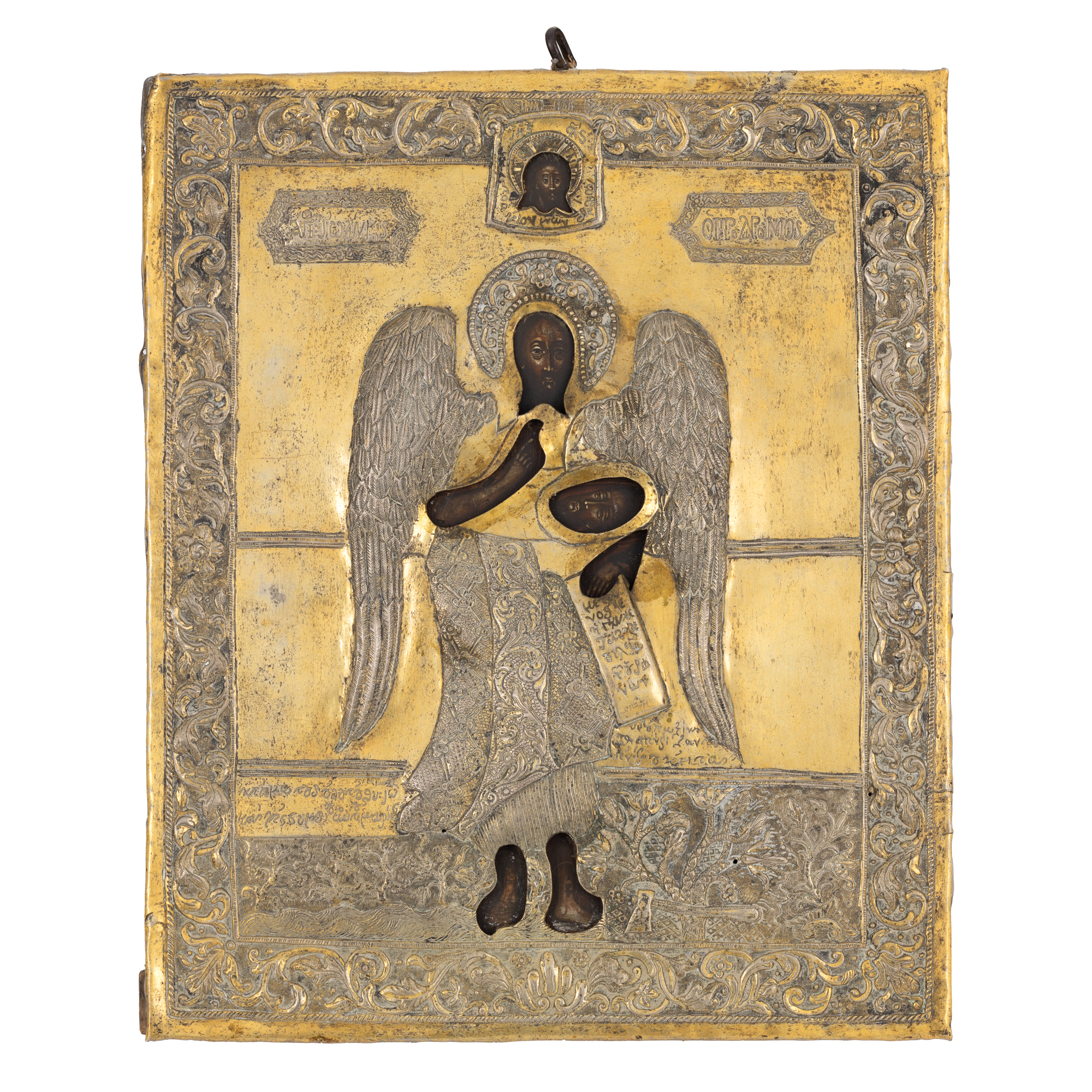
64. Icon on wood, with silver gilded carving, "Saint John the Baptist - Angel of the Desert", Russian school, 18th century, collector's item
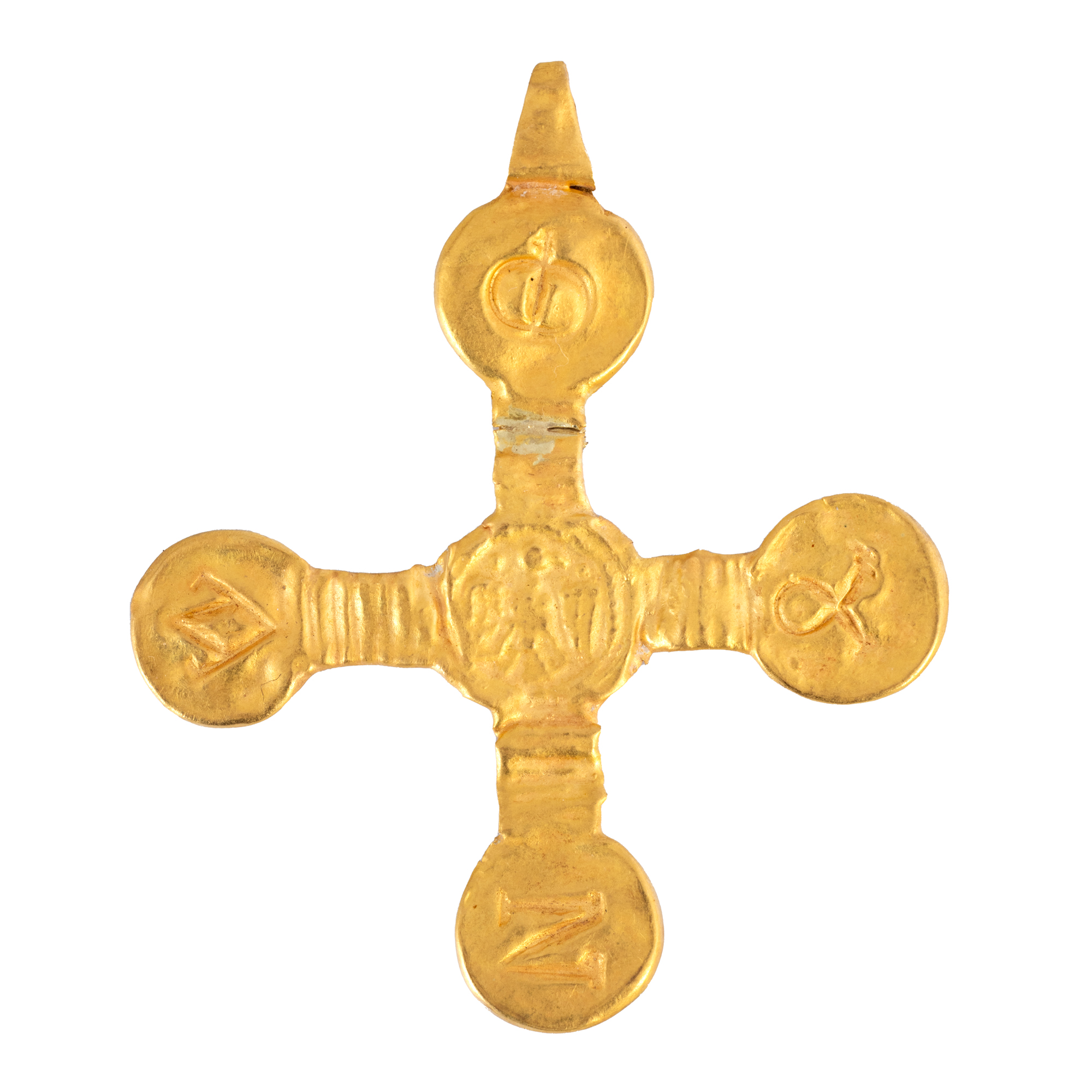
68. Byzantine Cross, made of gold, 8th-12th century, accompanied by a certificate of authenticity