
Meniu

Hrvatski

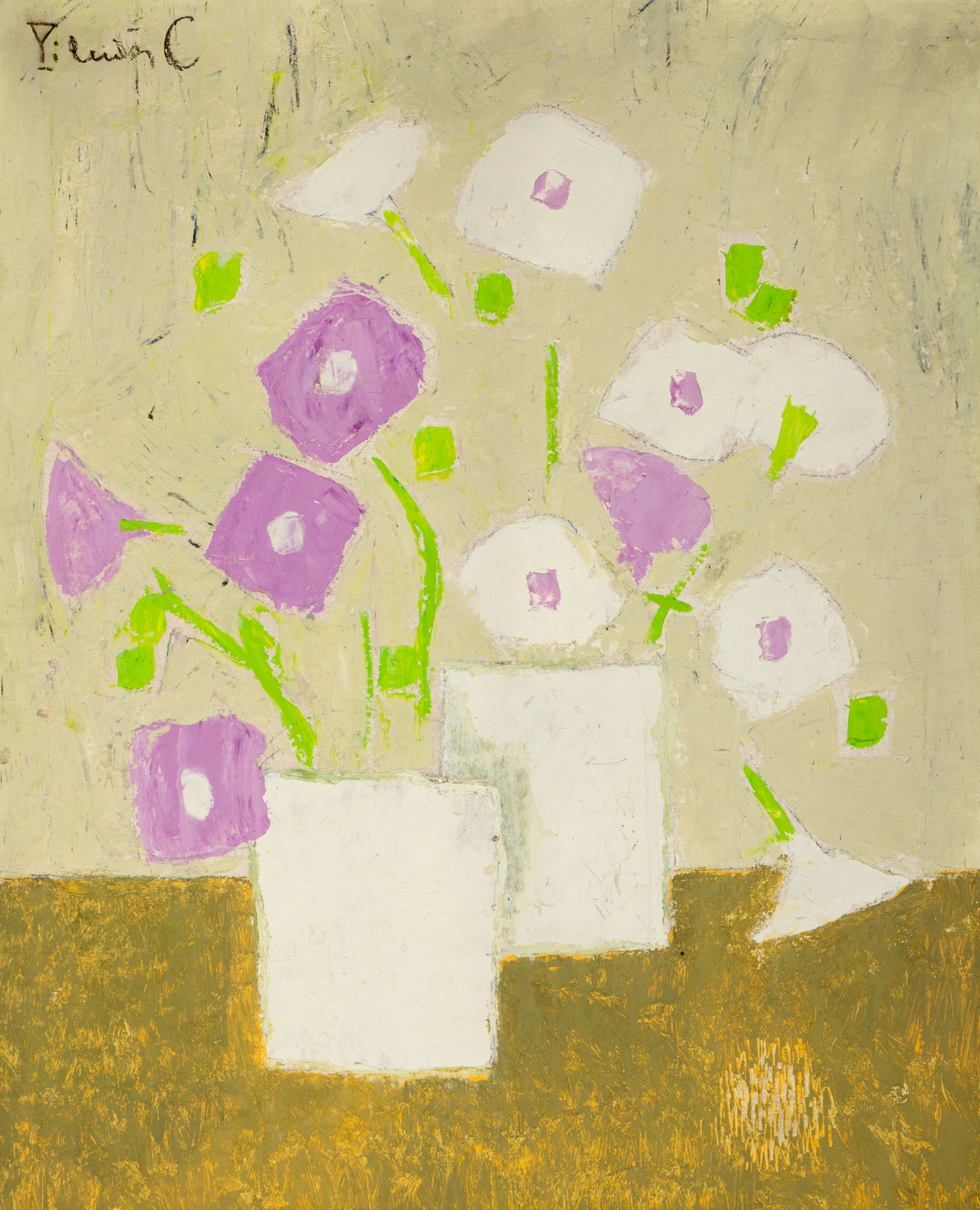
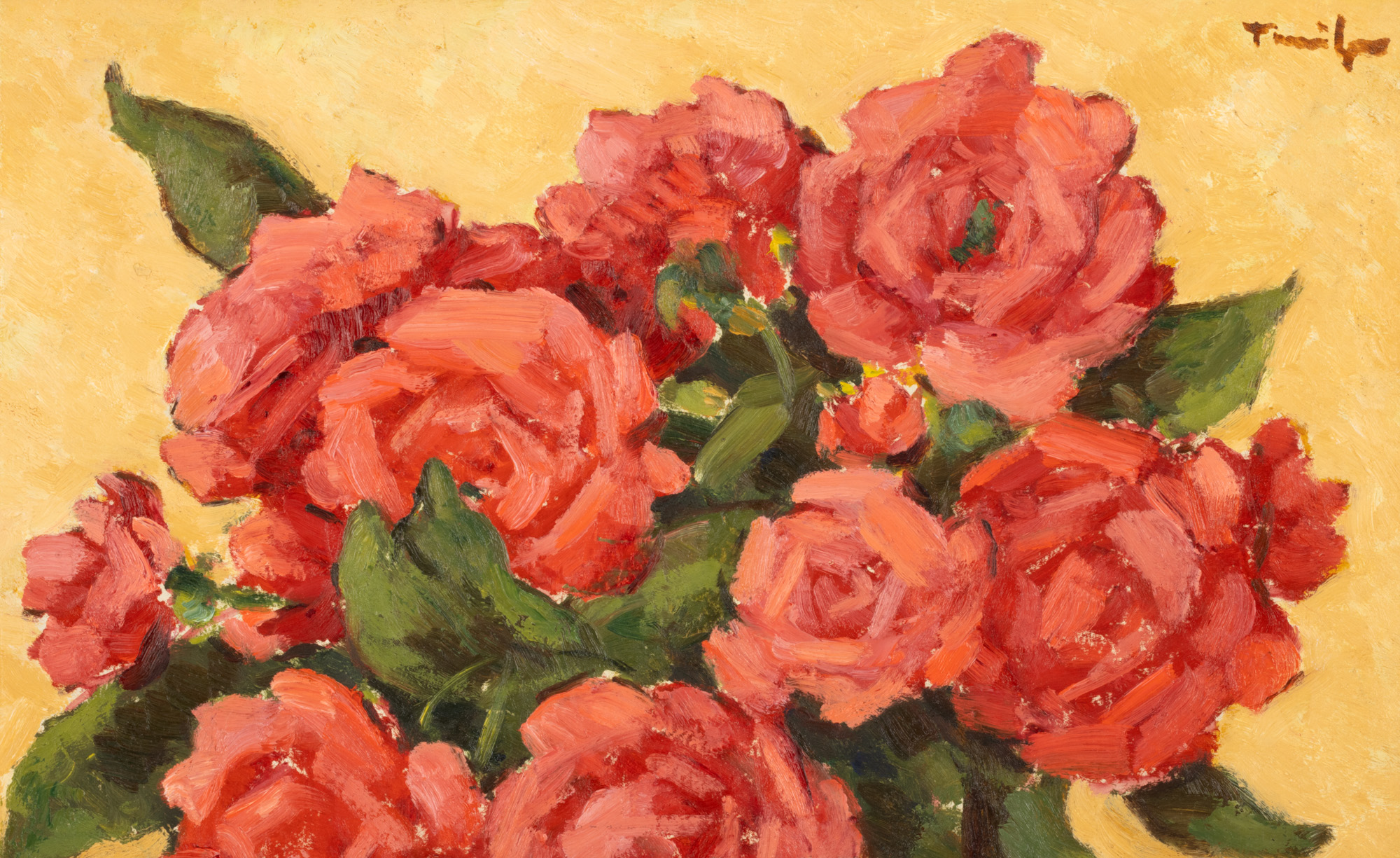
61. Red Roses [1920-1930]

1886, Bârlad - 1940, Bucureşti

Procjena

EUR 30.000 - 50.000

Prodano

EUR 50.000

Sesija

Uto., 16 prosinca 2025 17:00

In the 1930s, Tonitza began to focus on still life with flowers. This period in his artistic career saw a gradual shift towards the intimacy of daily life and decorative compositions, such as "The Rose Garden," "White Roses," "Daffodils and Peonies," and "Marigolds and Irises.” His floral pieces from this period are renowned for their vibrant chromatic harmony and balanced compositions, such as "Gladioli," "Carnations and Mallows." This work belongs to the mature phase of Tonitza's career during the 1920s-1930s. He had achieved significant sensitivity in expressing emotions through simple artistic means at that time, combining delicacy with spiritual depth to depict his feelings for the inner life of small things. In this context, the bouquet can also be viewed as a visual meditation on the delicate beauty of flowers. Roses symbolize love, beauty, and elegance, but their meaning can vary based on their color. Each color signifies a specific message - red symbolizes passion, deep love, and respect; pink implies grace, gratitude, and admiration; white symbolizes purity, and yellow denotes joy and friendship. Tonitza’s way of painting them reflects his deep feelings and attention to details. He acquired his painterly qualities from studying at the Paris Academy of Art, where he learned to use color to his advantage and gained the knowledge to assign space and form in terms of chromatics. To Tonitza, flowers are not just decorative subjects, but also a meditation on ephemeral beauty. His work captures the fragility of life and sensitivity of light in a composition that exudes peace and tenderness. In the broader context of his artwork, the theme of flowers complements his focus on intimacy, emotion, and purity. In the mature phase of his career from 1920-1930, this work showcases a bouquet of pink roses on a table. The background uses warm shades dominated by yellow and beige, highlighting the flowers' delicacy. The colors Tonitza used during his mature phase began to incorporate warm tones like ochre, brick-red, golden yellow, pink, and raw green. He painted with oil, applying colors in thin layers to achieve lightness in painting. He captured the soft, natural light falling on the flower petals, rendering their texture and transparency with delicate, short, vibrant strokes. The composition is balanced, with an emphasis on the simple, ephemeral beauty of the flowers and leaves. (S.S)

Literatura

BREZIANU, Barbu, "Tonitza", Academy Publishing House of the Socialist Republic of Romania, Bucharest, 1967. ȘORBAN, Raoul, "Tonitza", Meridiane Publishing House, Bucharest, 1973.

Dimenzije

width 40 cm, height 24.5 cm

Opis

oil on cardboard, signed upper right, with brown, "Tonitza"

Izlasci

1920-1930

DODATNE INFORMACIJE

Za pojašnjenja u vezi s postupkom licitiranja, troškovima kupnje, uvjetima jamstva, plaćanja i preuzimanja osvojenog lota preporučujemo da pažljivo pročitate/ponovno pročitate Pravilnik o licitiranju.

Za dodatne informacije o lotu i aukciji kontaktirajte Odjel umjetničkih savjetnika.

Alternativni lotovi