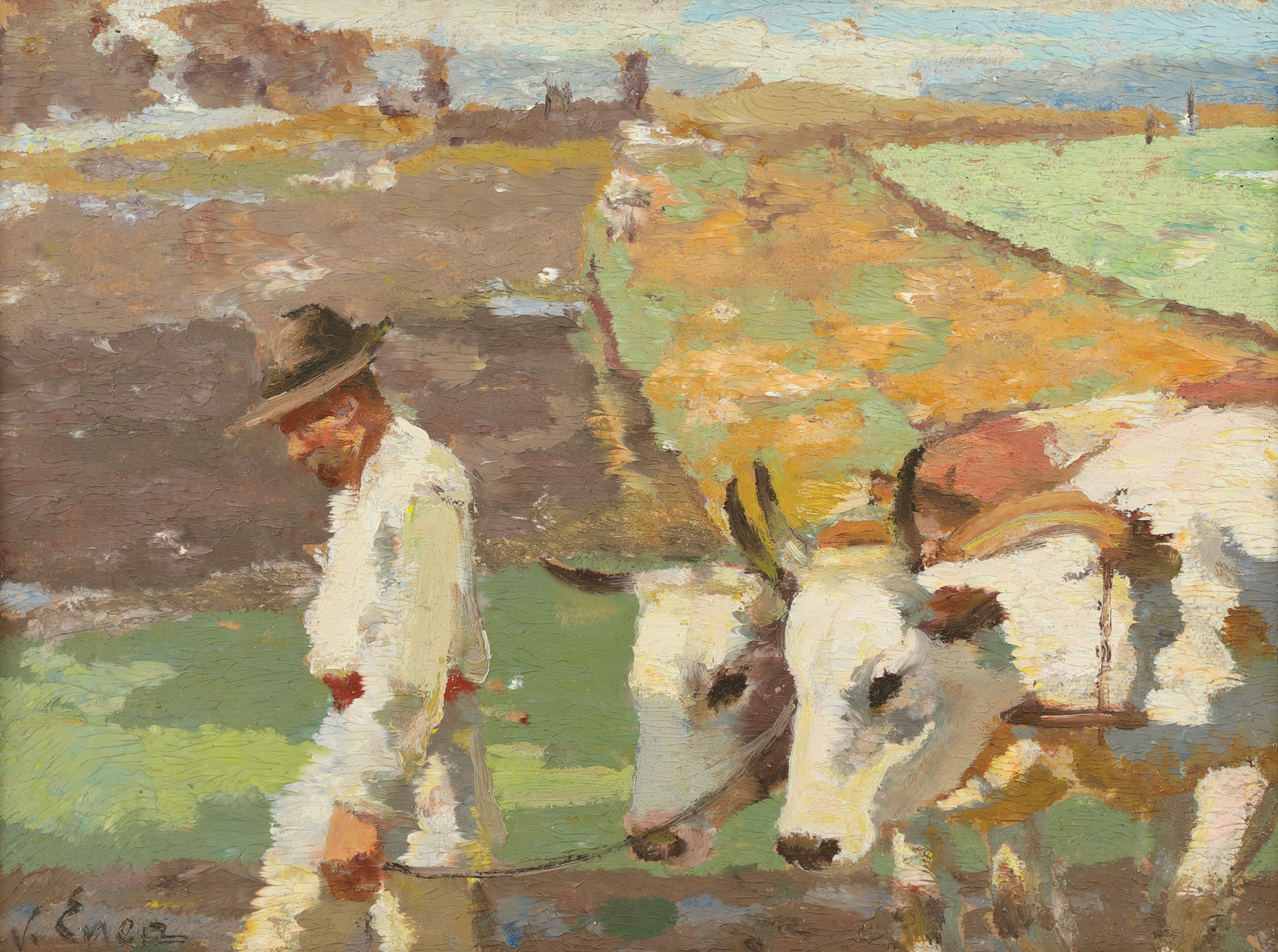

126. Return from Plowing [1927-1930]

1897, Lucăceşti, Bacău - 1960, Bacău

Estimate

EUR 900 - 1.600

Sold

EUR 900

Session

Tue, 22 October 2024 19:00

Nicolae Enea creates a painting with a profound documentary character, marked by the objectivity of the viewer who passively attends what is happening in front of him. The open color palette and light insertions reveal the middle of a summer day. The exhausted peasant carries the two oxen behind him; the moment probably marks the return from field work. The rural panorama reveals the endless expanse of agricultural land, which meets the open blue sky in the upper part of the work. The stylistic expressiveness of the artist will draw its lifeblood from realism and classicism, with Nicolae Enea also focusing his attention on idealization. Highlights are primarily placed on the human character or the animals. The sun breaks out on the worker's shirt and on the cattle's fur, allowing shadow areas to be glimpsed. A fervent admirer of rural life, Nicolae Enea incorporates this theme in his work in the form of landscapes or genre scenes that, through subjects, brushstrokes, and color, incorporate its main characteristics. The oxen wagon remains one of the most representative themes in the history of Romanian art. Although it assumes the acceptance of a leitmotif by its recurring appearance in the works of the majority of artists already included in the canons of our indigenous art, the subject always reveals itself to us as a unique appearance, relevant for the context proposed by each individual creator. The common basis of all artists who have elevated village life to the rank of art is represented by the love for rural life and the people of the village, surrounded by nature and the gentle image of the animals. From classics to contemporaries, they all become the creators of pictorial scores dedicated to the country, using a plastic language through which they describe, as accurately as possible, man's communion with nature. Thus, we have the chance to admire the genuine panoramas of the Romanian rural space. Therefore, the oxen wagon remains an ambassador of Romanian village life, encompassing its entire philosophy.

References

The catalog of the retrospective exhibition "Nicu Enea", Bacau County Museum of History and Art, 1978.

Dimensions

width 43 cm, height 33 cm

Description

ulei pe carton, signed bottom left, in black, "N. Enea"

Dating

1927-1930

ADDITIONAL INFORMATION

For clarifications regarding the bidding procedure, hammer price costs, guarantee, payment, and collection terms for the winning lot, we recommend carefully reading/re-reading the Bidding Regulations.

For additional information regarding the lot and the auction, please contact the Art Consultants Department.

Similar lots