
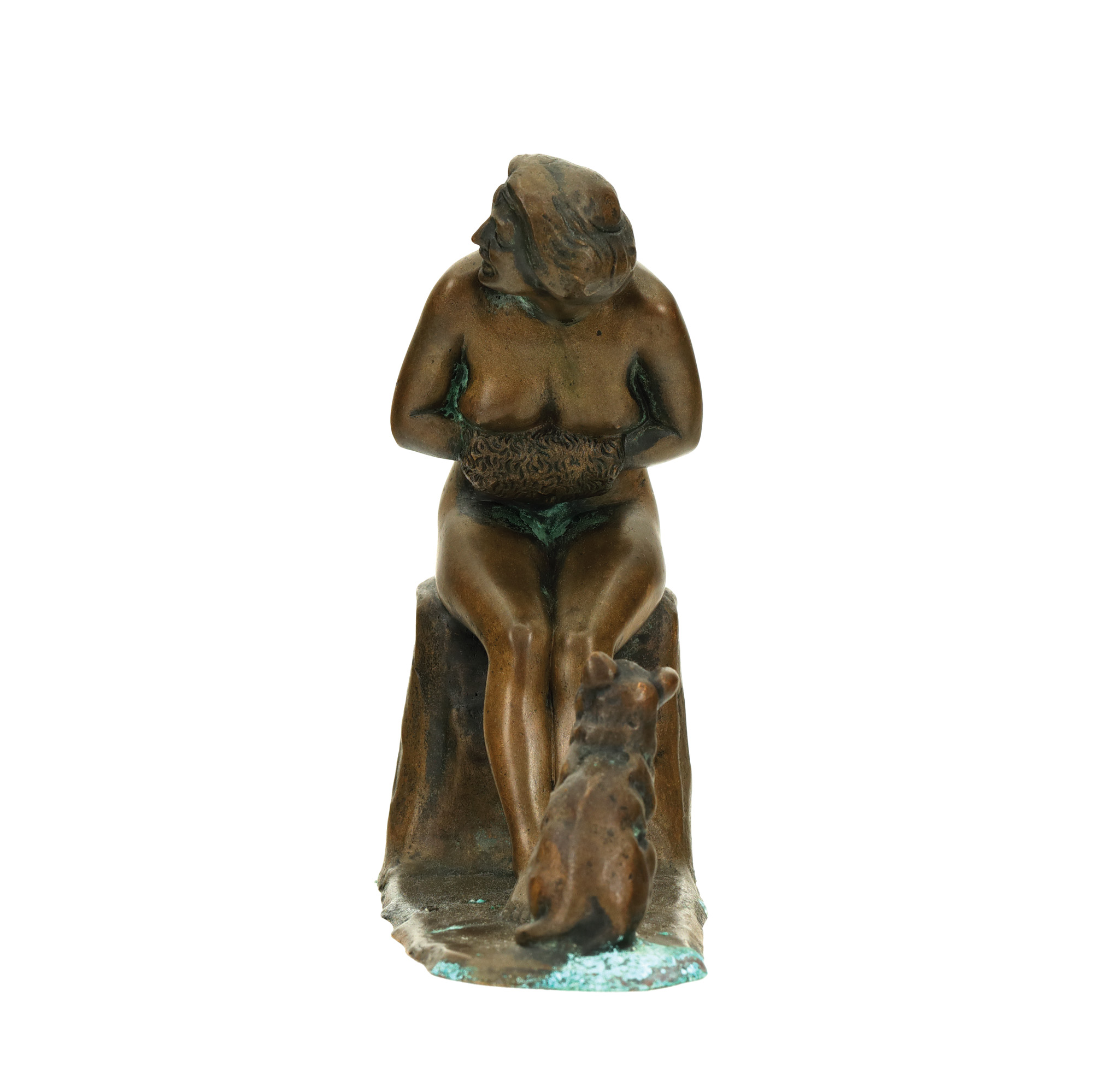
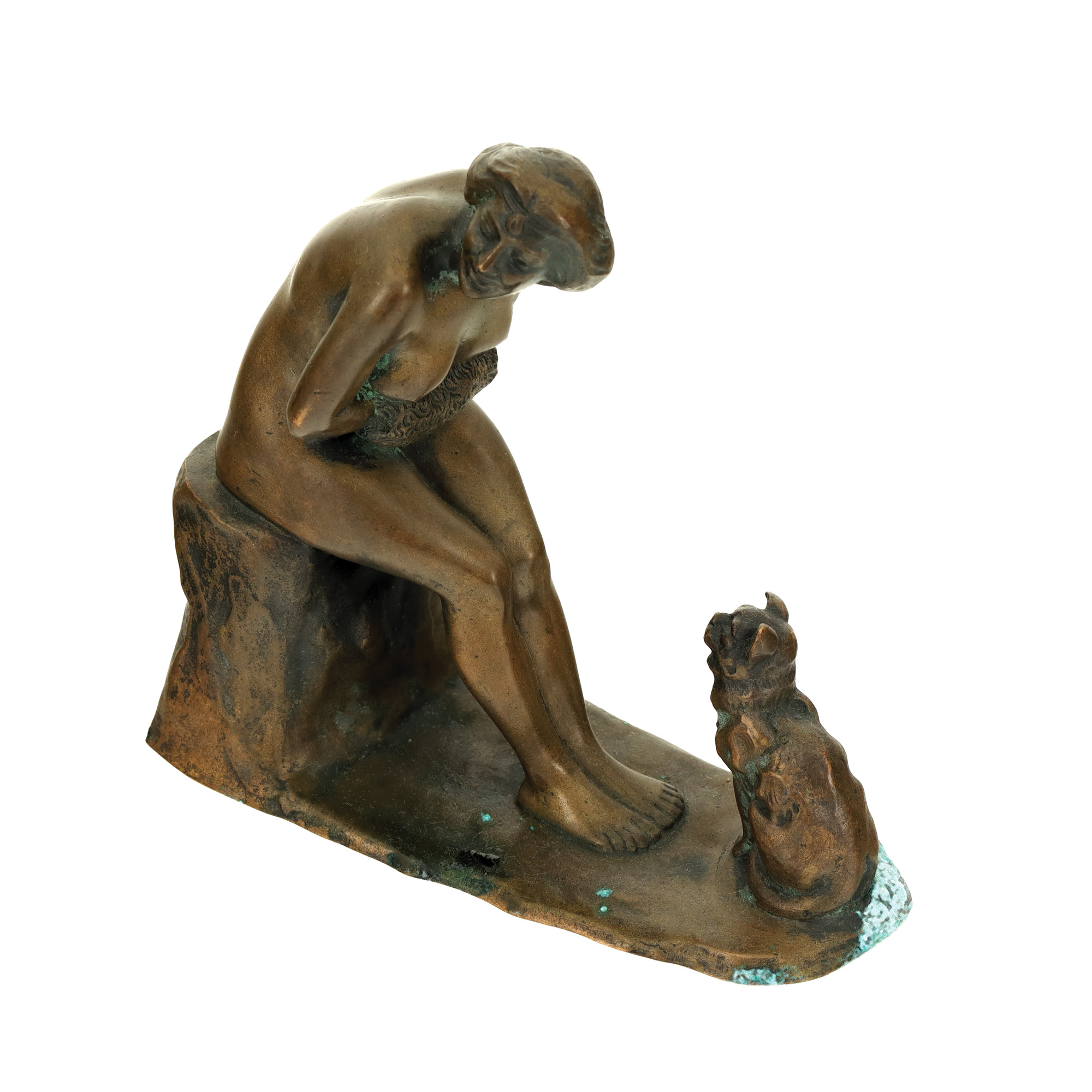
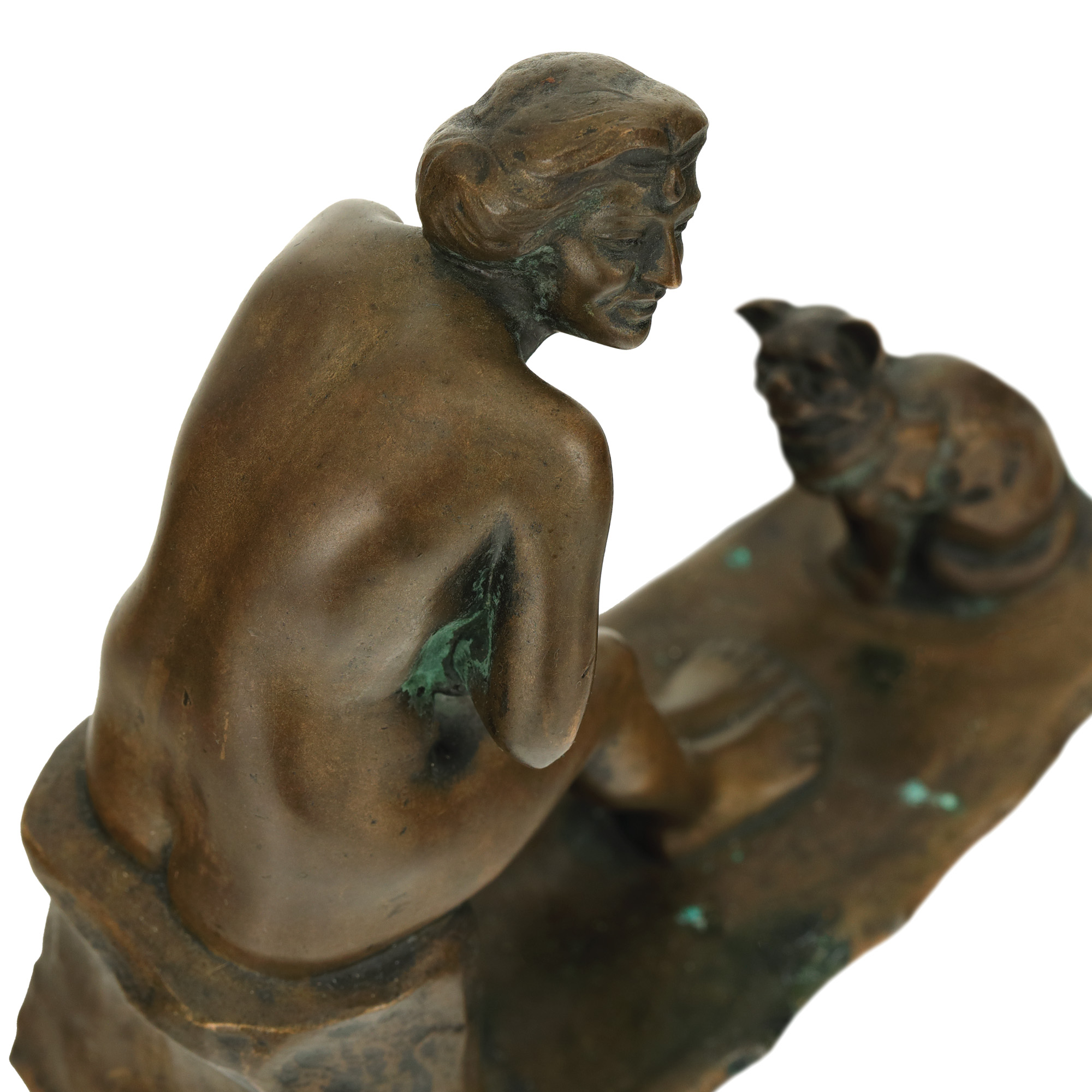
199. After the Bath

The photos of the lot are informative and indicative, and cannot provide a highly detailed view of the object from all angles. We recommend a careful physical inspection of the lot before bidding.

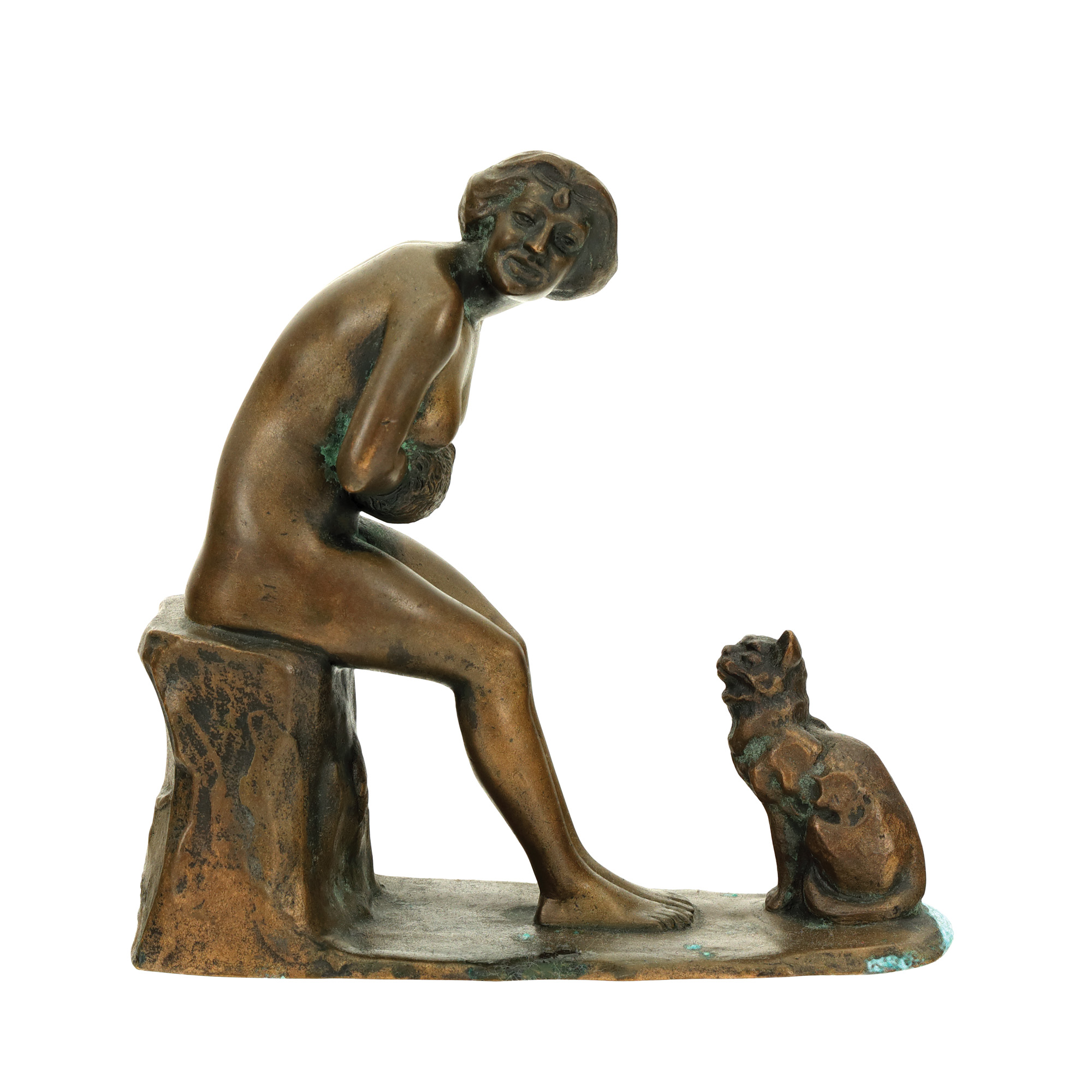
199. After the Bath

1872, Bucureşti - 1942, Bucureşti

Estimate:
EUR 600 - 900
Sold
EUR 1.400

References

OPRESCU, Gheorghe, "Fritz Storck", State Publishing House for Literature and Art, Bucharest, 1955.

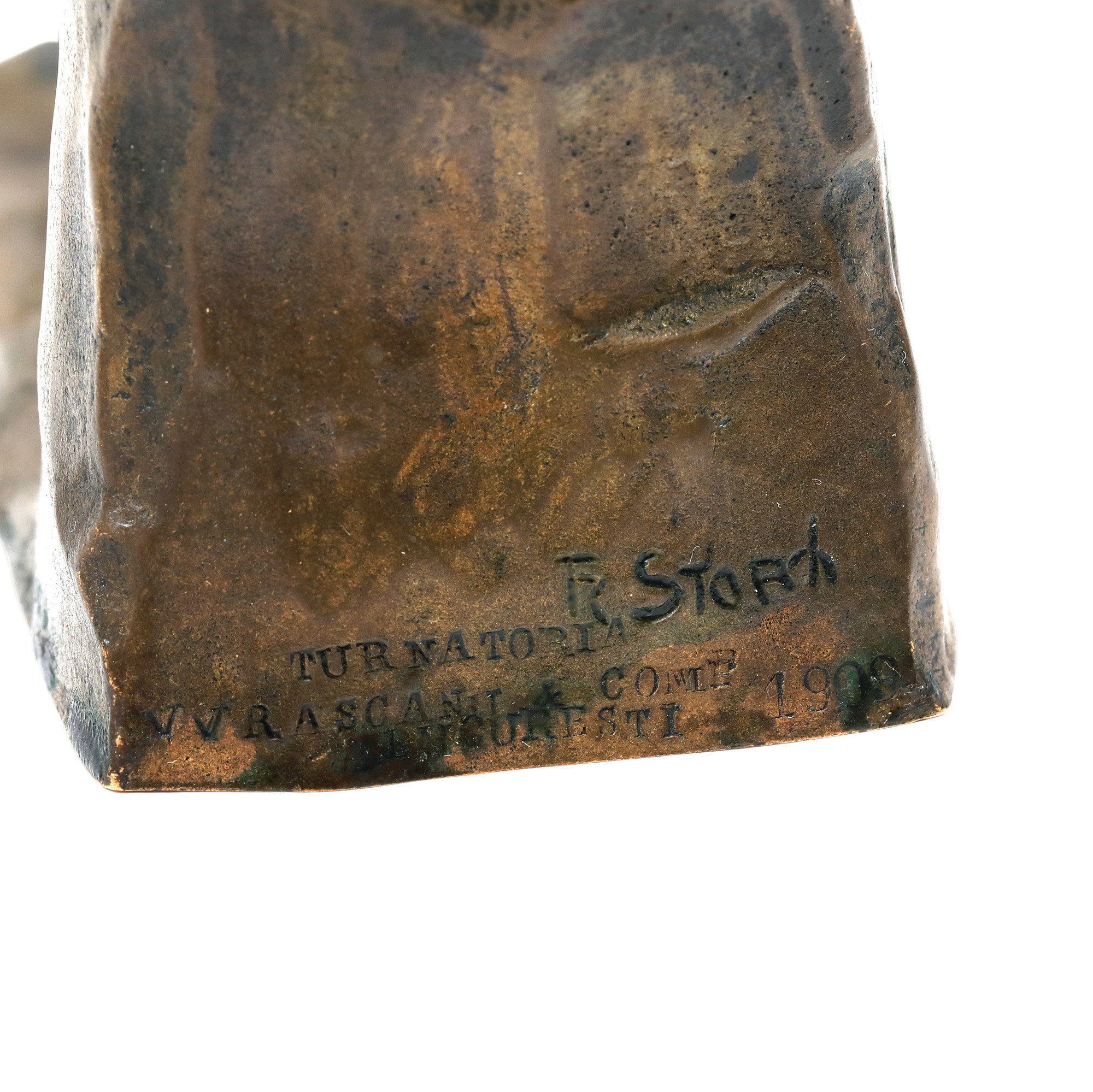
bronz patinat, 13.5 x 5 x 13 cm, signed, dated and the foundry mentioned on the back, "F. Storck, V. Pașcani Commercial Foundry, Bucharest, 1908"

Research information

A version of the work is in the collection of the "Frederic Storck and Cecilia Cuțescu-Storck" art museum.

Frederic Storck's work is paradoxically noteworthy for its unity as well as its diversity. The artist possesses a unique understanding of the material he works with, which allows him to experiment successfully across various mediums. Frederic Storck comes from a family of artists; his father (Karl Storck) and brother (Carol Storck) were also sculptors. He spent his childhood among his father's sculptures in his studio. He grew up amongst two established artists and began his artistic journey by deciphering drawing mysteries. He attended the School of Fine Arts in Bucharest, where he was a classmate of Stefan Luchian. Afterwards, he joined the academic environment in Munich and participated in the Glaspalast exhibition, where he won an award. In Bavaria, he realized the importance of anatomical study and working from live models, leading to a series of sculptures intended to enable the artist to experiment with accurate reproduction of bodily details. Interested in mastering the properties of his chosen material, he would personally cut stone or marble, bringing him closer to his materials. After returning to his home country, he received several orders for busts, of which we can mention those of Heliade Radulescu and Spiru Haret, as well as peasant heads made outside of commissions. From 1906, he became a professor at the School of Fine Art, introducing students to the world of drawing and modeling. He chose a classical approach, distancing himself from academic tendencies and dedicated a whole series of his efforts to smaller works where he focused on the human subject. A version of his work "Lady with the Cat" can be found in the collection of the "Frederic Storck and Cecilia Cutescu-Storck" art museum, while another version is part of the National Cotroceni Museum collection. We note the female character, nude and seated on a pedestal, her torso slightly turned to the right, her hands in a muff. The cat sits before the woman, looking at her intently. The cat's presence evokes Egyptian art - Egyptians revered cats as magical, luck-bringing creatures that also represented the power of the gods. The cat, therefore, becomes a symbol of divinity and protection. The appearance of cats in art spans the furthest reaches of time: from cave paintings centered on this subject, to tomb drawings, to sculptures of the goddess Bastet - Bastet, the daughter of the sun god (Ra), was the goddess of the moon and fertility, the protector of cats, often depicted as a cat - dating back to 600 BC.

For clarifications regarding the bidding procedure, hammer price costs, guarantee, payment, and collection terms for the winning lot, we recommend carefully reading/re-reading the Bidding Regulations.

For additional information regarding the lot and the auction, please contact the Art Consultants Department.

SESSION
Tue, 22 October 2024 19:00

Similar lots

Blue Pot

76. Blue Pot [1996]

Ştefan Câlţia

    Estimate: EUR 5.000 - 7.000
    Sold EUR 6.500
Landscape from Huși

167. Landscape from Huși [anii '60]

Adam Bălţatu

    Estimate: EUR 2.000 - 3.000
    Sold EUR 2.000