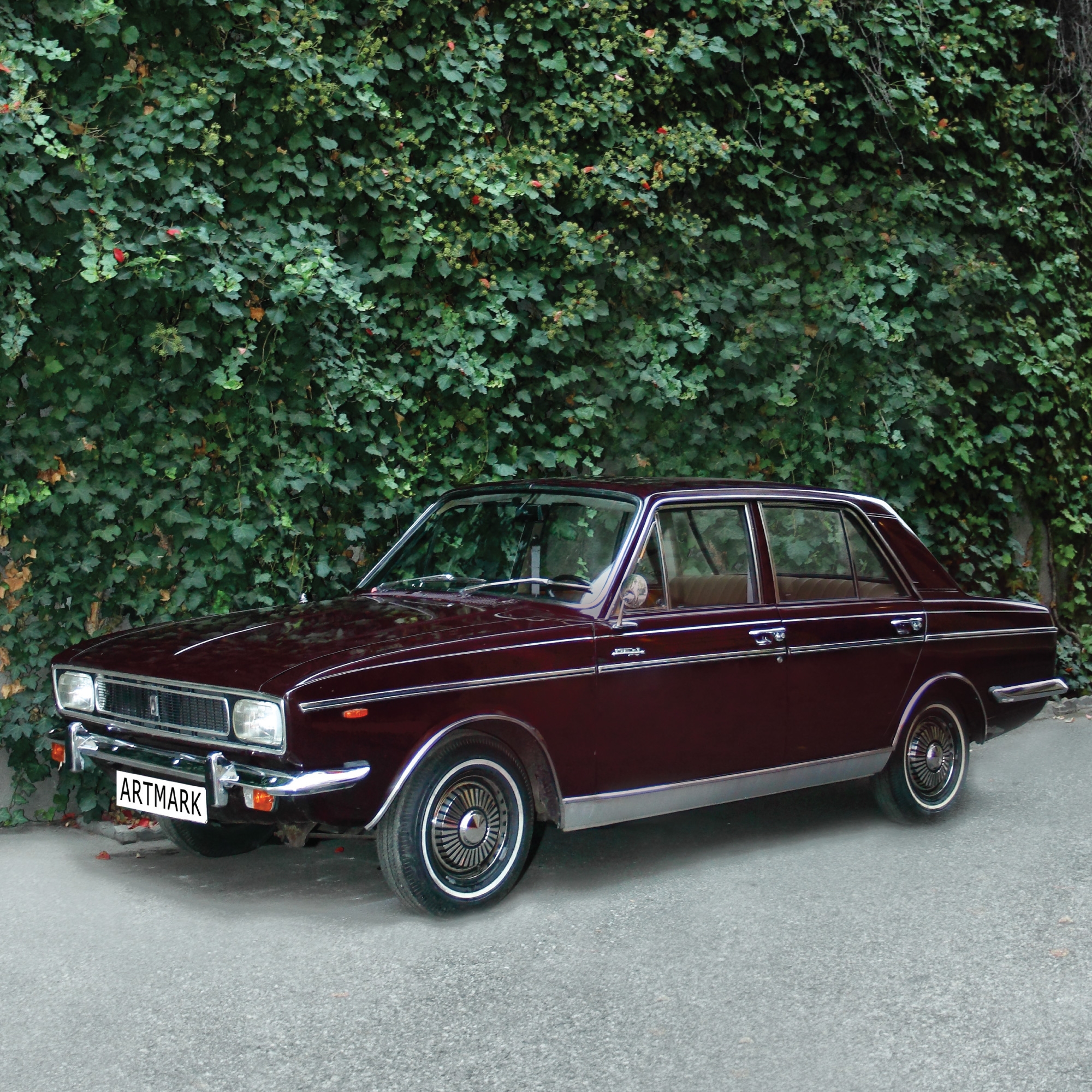
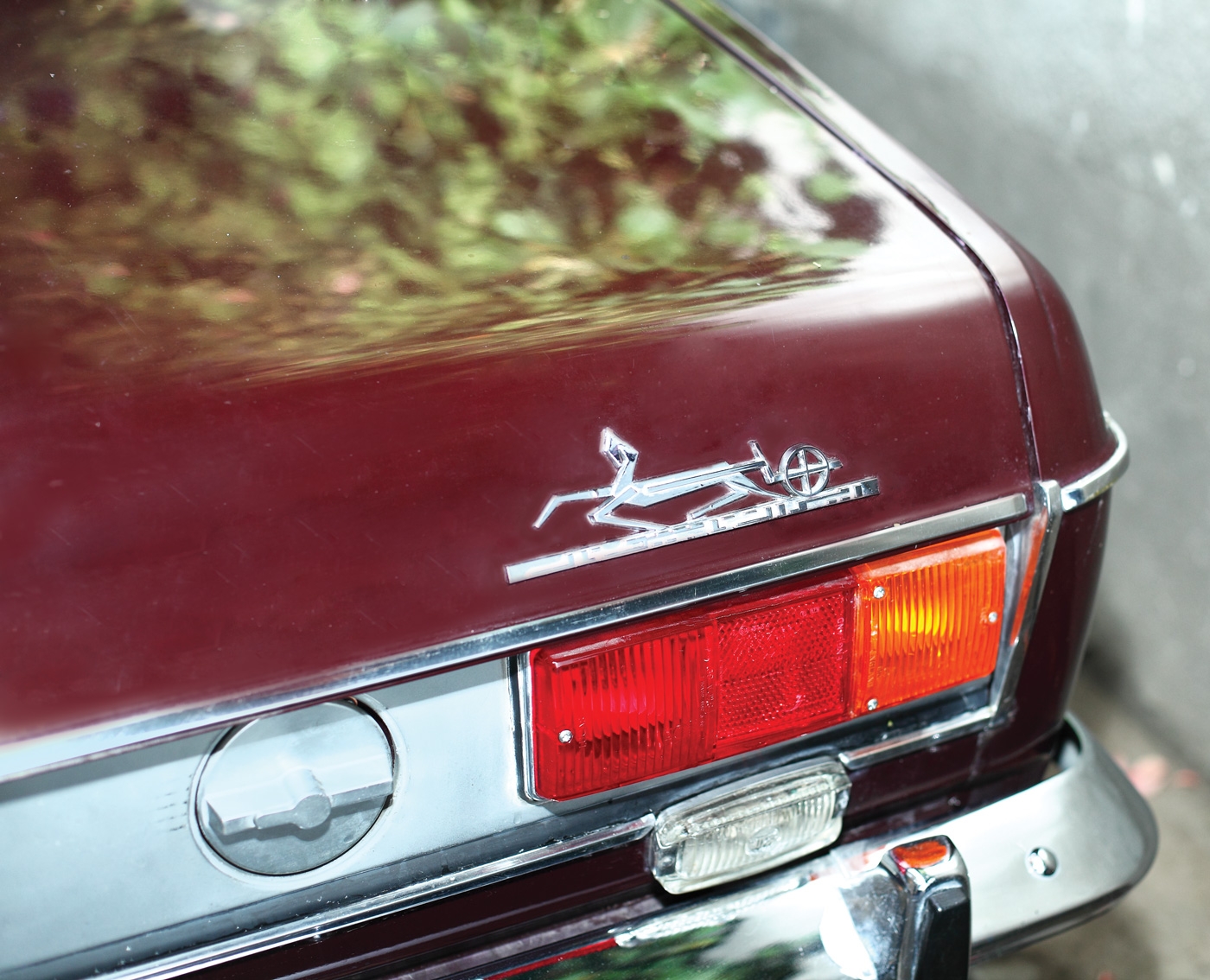
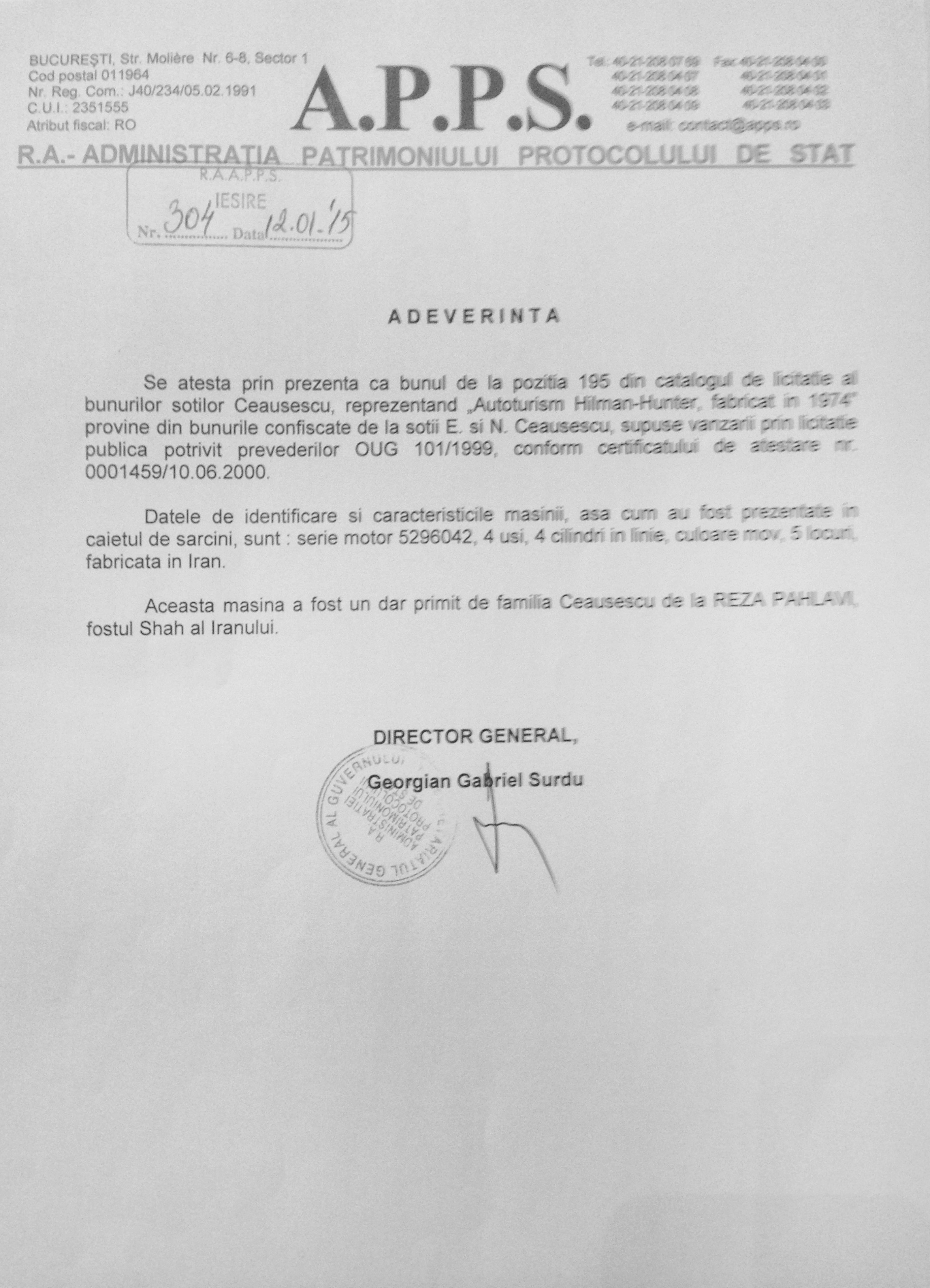
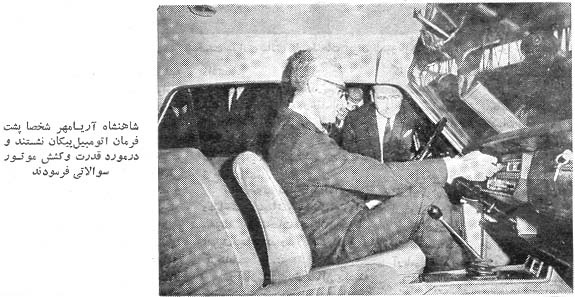
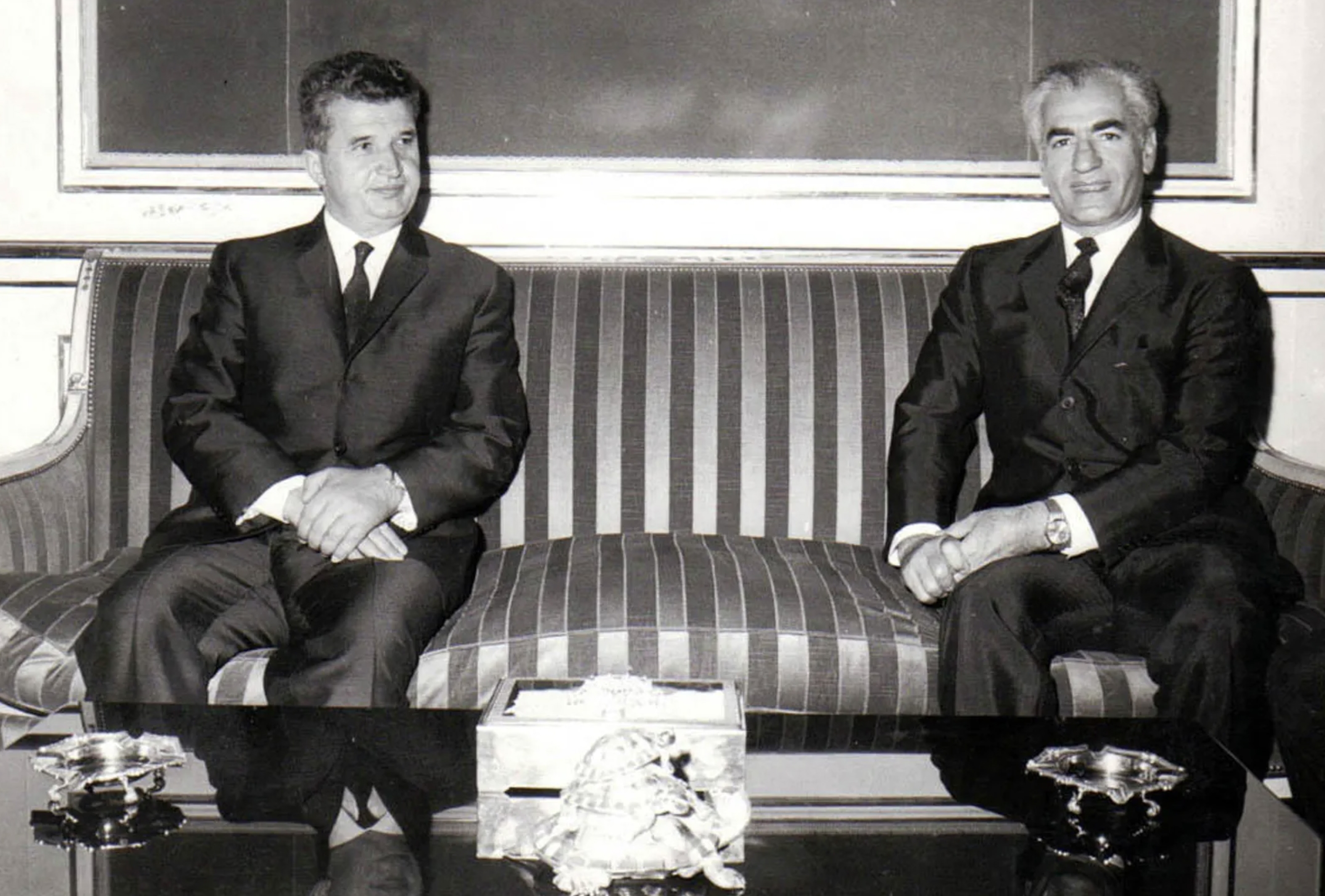
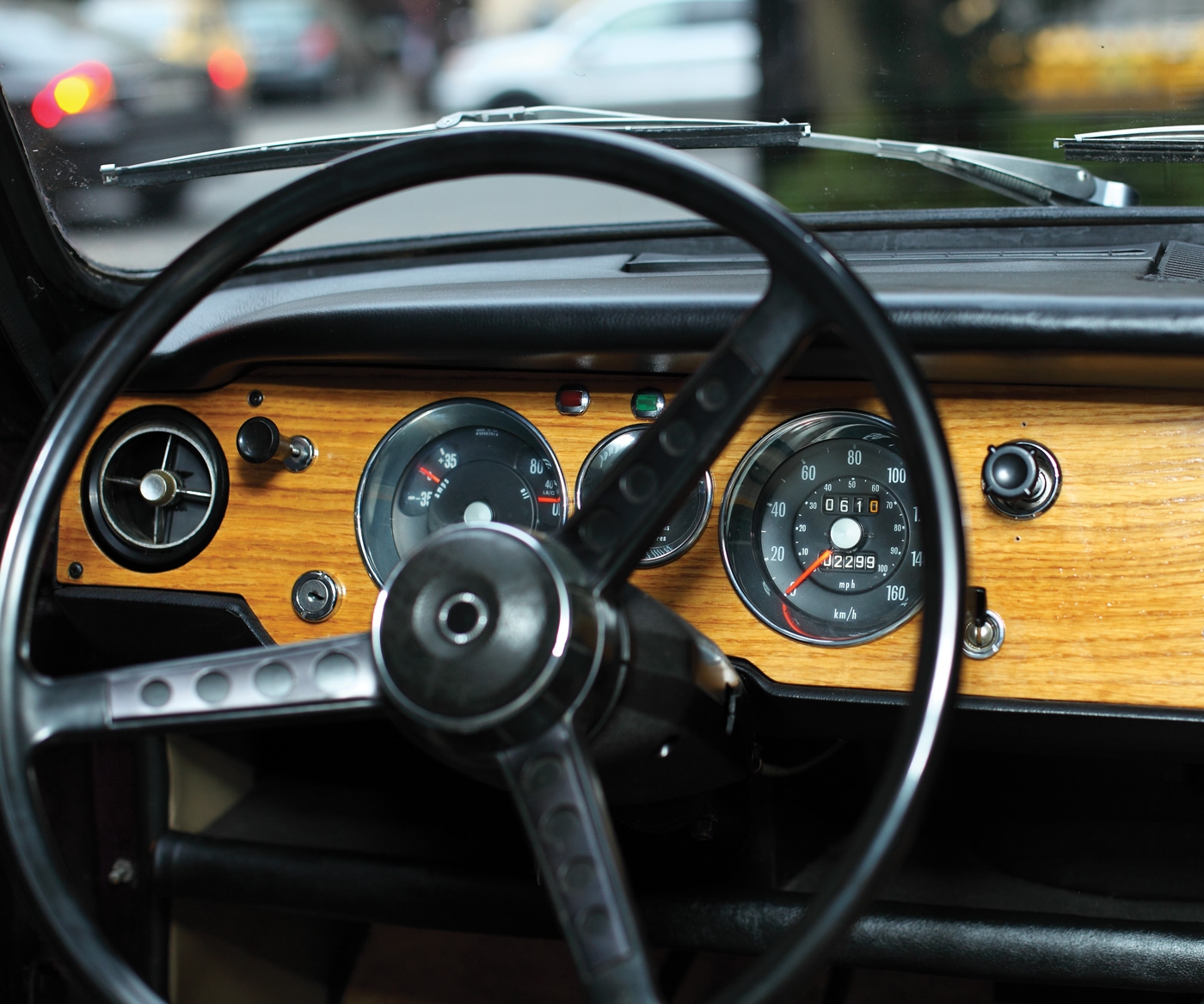
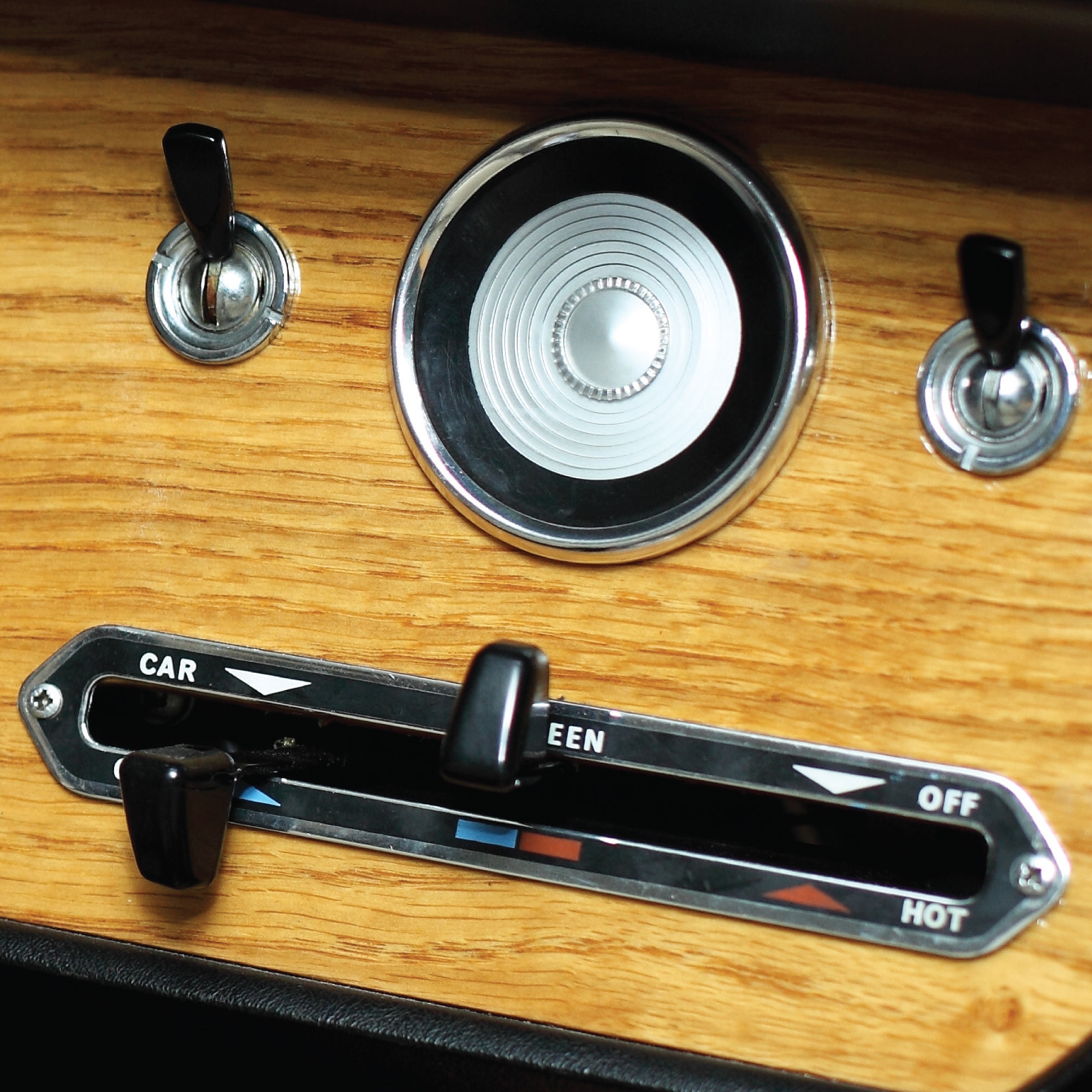
85. Paykan Hillman-Hunter limousine, 1974, from Nicolae Ceaușescu's collection, received by him from the shah Mohammad Reza Pahlavi, on the occasion of the election of Nicolae Ceaușescu as President of the R.S.R .; accompanied by the RAPPS certificate

Starting price

EUR 4.000

Sold

EUR 95.000

Session

Thu, 27 May 2021 18:30

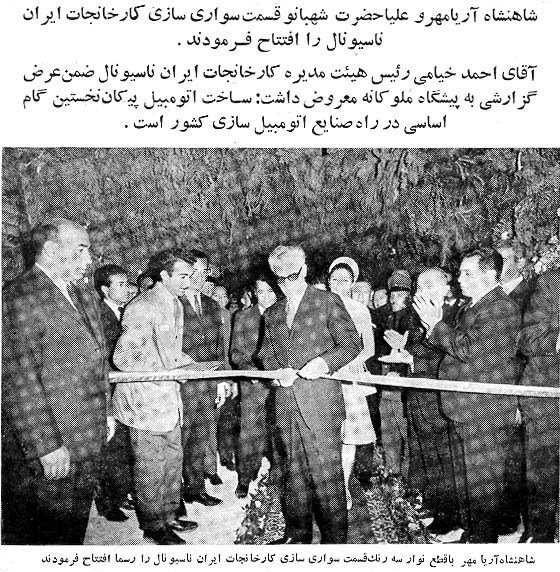
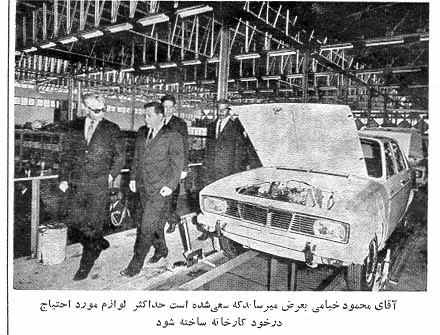
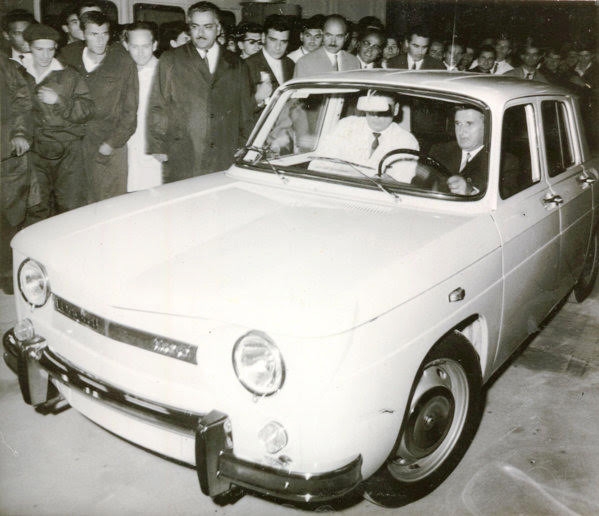
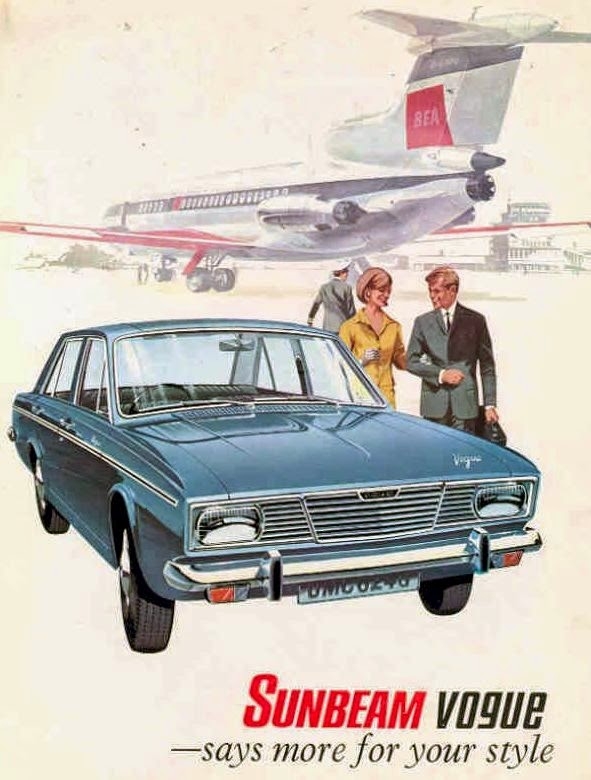
Hillman is one of the oldest and most prolific auto-moto-velo brands in the UK. Originating in Coventry, William Hillman patented bicycle models such as Ariel (1870) and Kangaroo (1885), becoming a millionaire by the end of the 19th century. The ambition to build cars materialized with the establishment of the Hillman Motor Car Company in 1907. The first cars produced were large and cumbersome, but with the onset of the war, Hillman turned to the production of smaller and cheaper cars. With the withdrawal of William Hillman, the company was taken over by Humber, also taken over by Rootes. In the post-war years, Hillman remained an important brand in the UK in the family car segment. With the takeover by Chrysler in 1967, the brand's most successful model, the Hunter, was launched. Hunter was, in fact, a platform on which countless models were built: Arrow, Sunbeam, Hunter, Vogue, Scepter are some of the names under which Chrysler promoted the small British car. A new page in the history of the car was to be written in the mid-1960s, when Chrysler took over the British company, the Iranian car industry developed on the basis of the most famous Hillman-Hunter model. After failed attempts to build Fiat models, the Iranian National Company (later transformed into Iran Khodro), founded in 1962, produced in 1967 its first model, Paykan, under the Hillman license. The model would revolutionize the new automotive industry, the longevity of the Paykan model being unique and the car being built for more than 30 years - until 2005. The capacity of the Tehran plant was significant, because shortly after the launch of the first two models in 1967 - Delux and Standard, the factory introduced Paykan Pickup and Taxi on the production line. By 1972, the four models would be joined by two more, Automatic and GT, highlighting once again the success of this car. In just a few years of production, the Iranian market was dominated by Paykan models, and even though the factory produced only the body and finishes - the engine being imported - production advanced in a continuous, upward trend. Starting with 1978, after the takeover of the parent company Rootes by Peugeot, the factory became relatively independent, producing the engines as well. A national symbol, Paykan became an icon for the entire Iranian industry, being, in 1974, a suitable gift for the new President of the Socialist Republic of Romania. Relations between Romania and Iran had been initiated starting as early as 1966, when, recently installed at the head of the state, Ceauşescu opened economic relations with the Middle Eastern state. The first meetings and commercial contracts were initiated in 1966, when the Shah visited Romania, opening a close relationship both personally and diplomatically.

Description

saloon, 1974, top speed: 145 km/h, 4-cylinder in-line engine, 1,496 cc, 54 hp, 4-speed manual transmission, excellent condition, can be driven on the road, chassis series B052962042, 4310 x 1610 x 1420 mm , 924 kg

ADDITIONAL INFORMATION

For clarifications regarding the bidding procedure, hammer price costs, guarantee, payment, and collection terms for the winning lot, we recommend carefully reading/re-reading the Bidding Regulations.

For additional information regarding the lot and the auction, please contact the Art Consultants Department.

Similar lots

Hublot Classic Fusion wristwatch, steel and rose gold, unisex
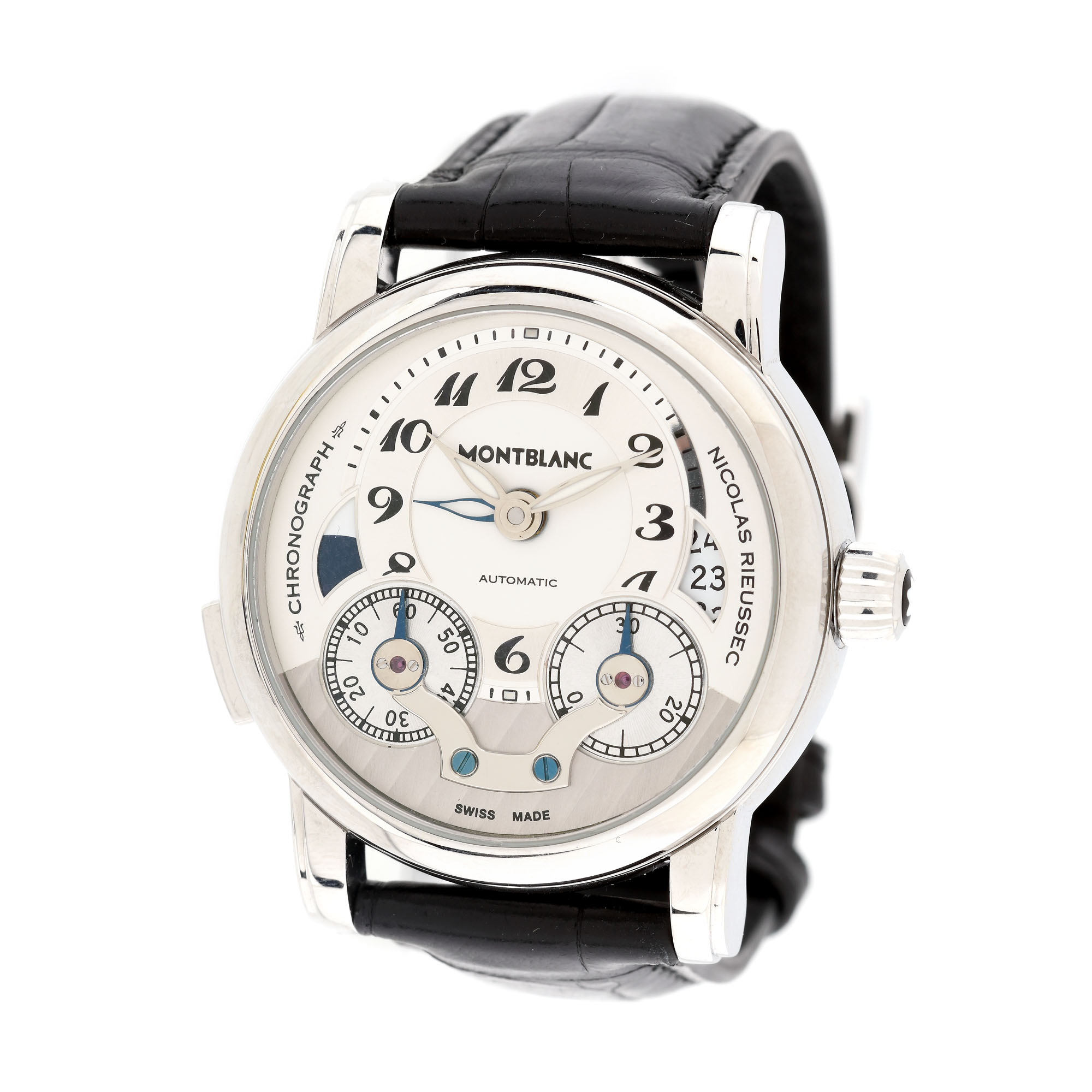
69. Hublot Classic Fusion wristwatch, steel and rose gold, unisex

    Starting price EUR 2.500
    List price EUR 7.500
    Sold EUR 4.250
Montblanc Nicolas Rieussec wristwatch, men
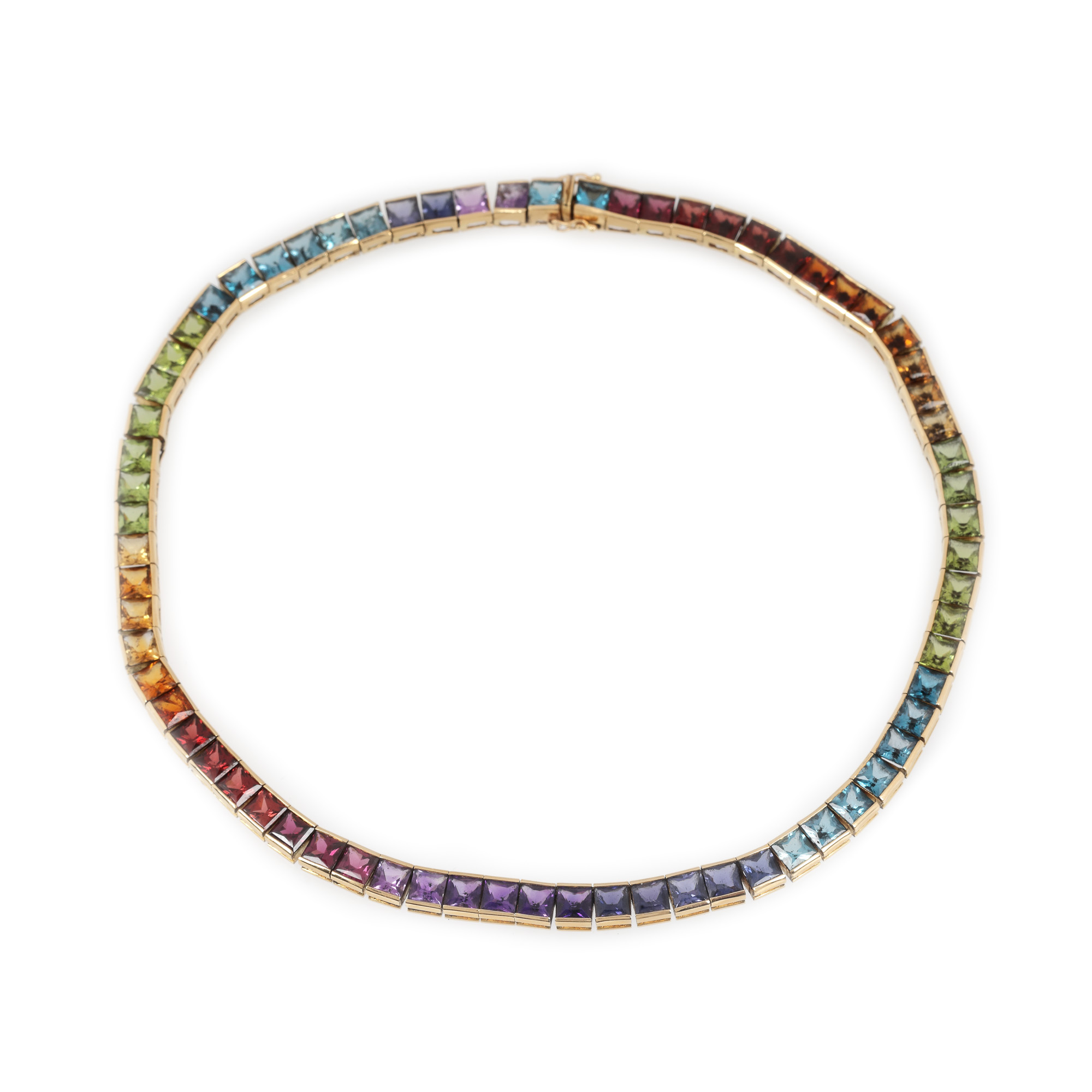
119. Montblanc Nicolas Rieussec wristwatch, men

    Starting price EUR 2.500
    List price EUR 14.000
    Sold EUR 3.000