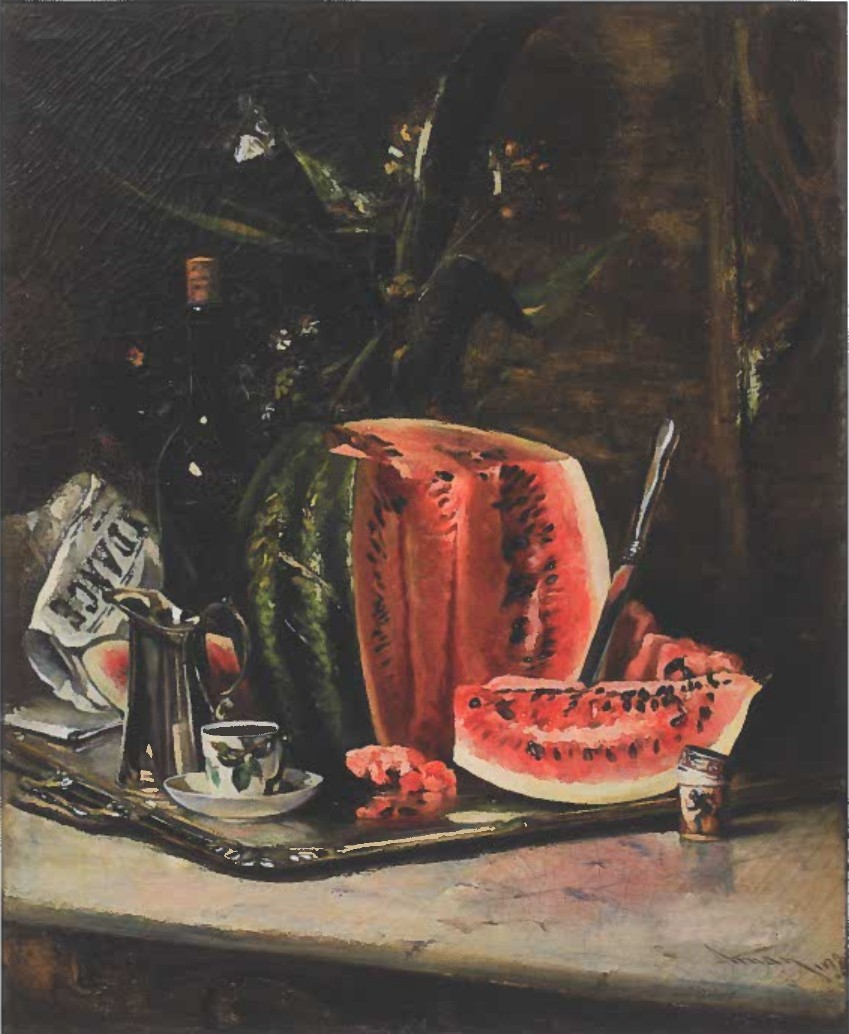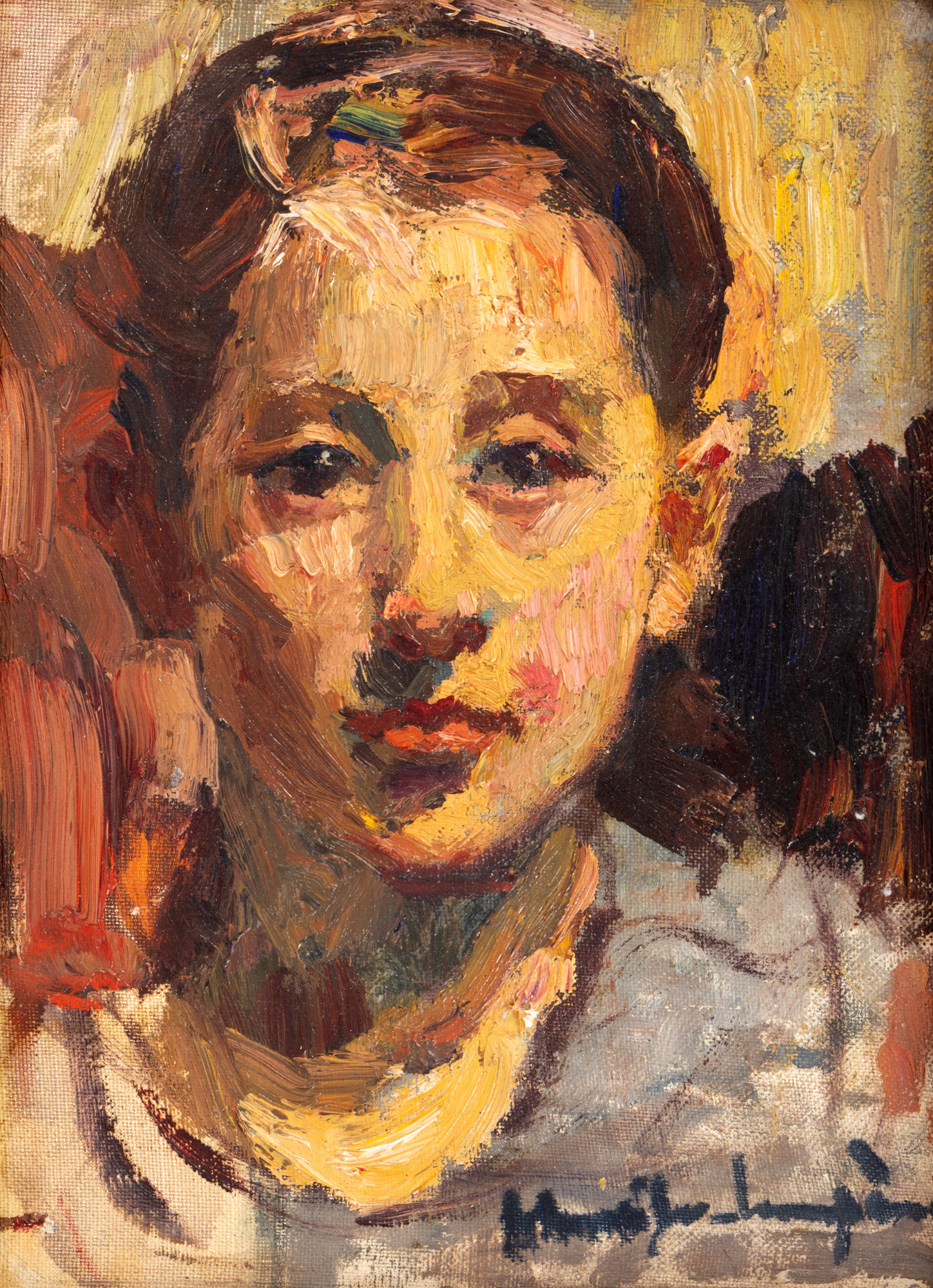

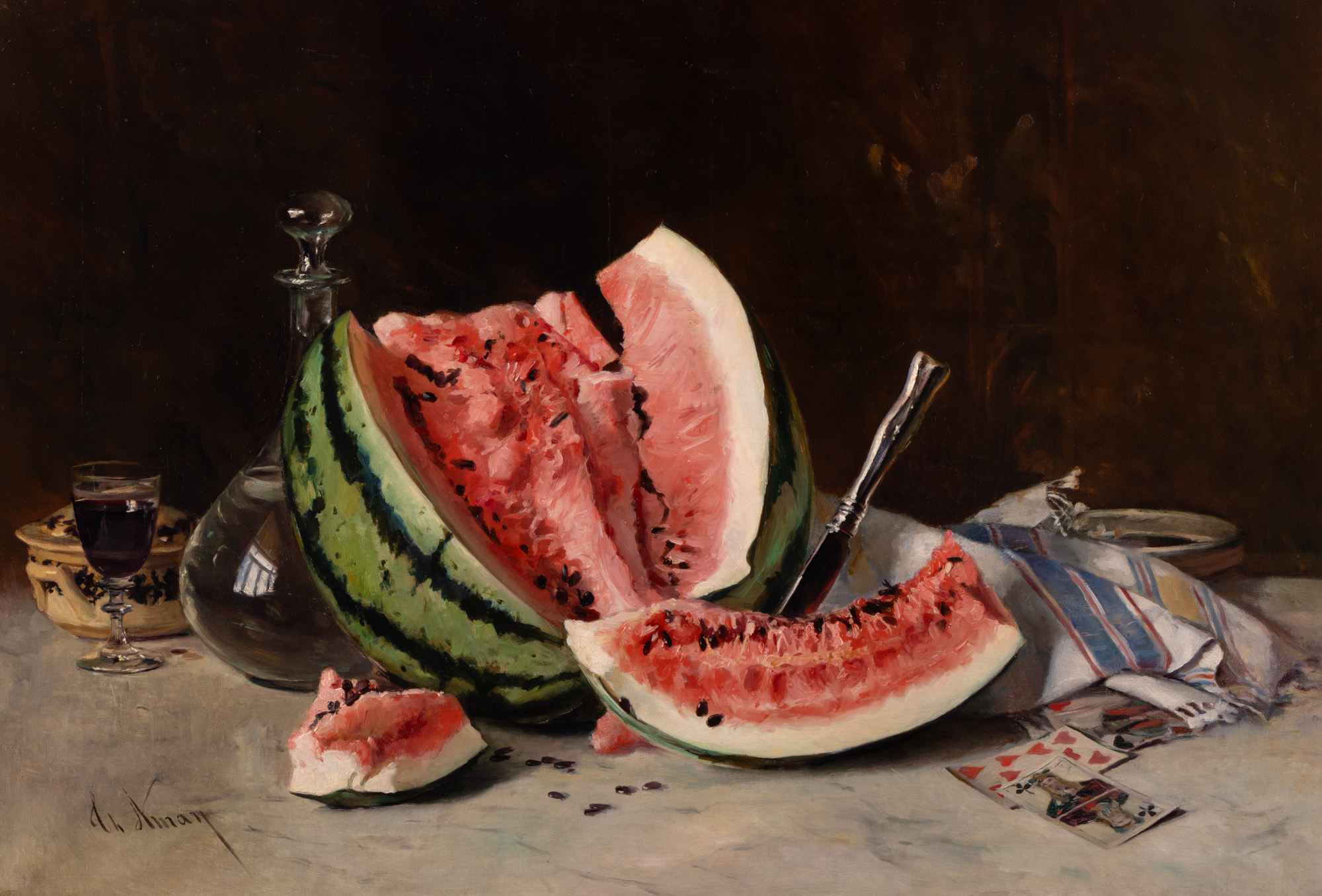
51C. Watermelon and Playing Cards [cca. 1880-1885]

The photos of the lot are informative and indicative, and cannot provide a highly detailed view of the object from all angles. We recommend a careful physical inspection of the lot before bidding.

51C. Watermelon and Playing Cards [cca. 1880-1885]
1831, Câmpulung Muscel, Argeş - 1891, Bucureşti

Estimate:
EUR 100.000 - 200.000
Not sold

References

IONESCU, Adrian-Silvan, "Centenar. Theodor Aman", Venus Publishing House Bucharest, 1991 SUTEU, Greta, "Aman - The Painter", Museum of the Municipality of Bucharest Publishing House, 2017

oil on canvas, 61 x 90 cm, signed lower left, in black, "Th. Aman"

Research information

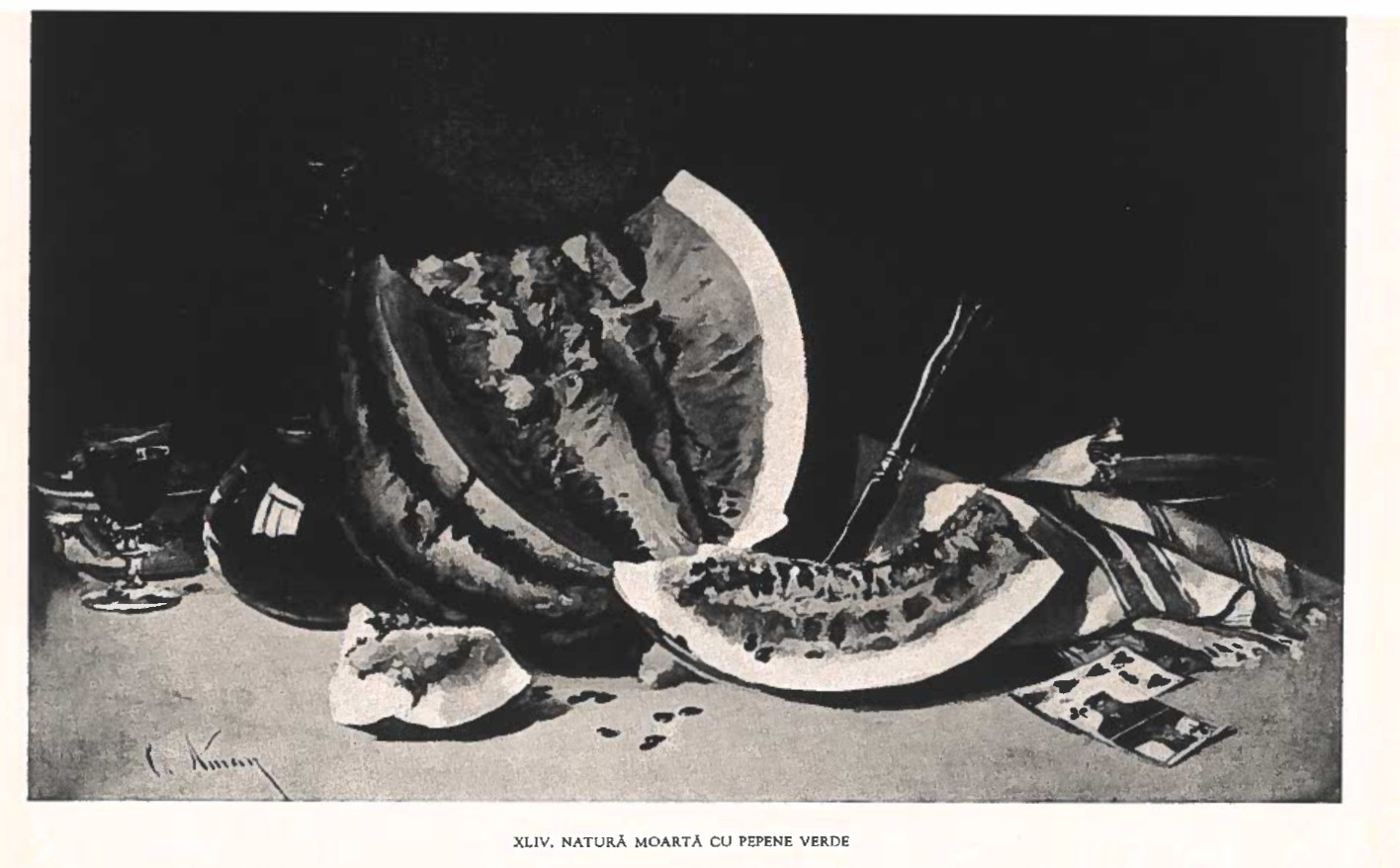
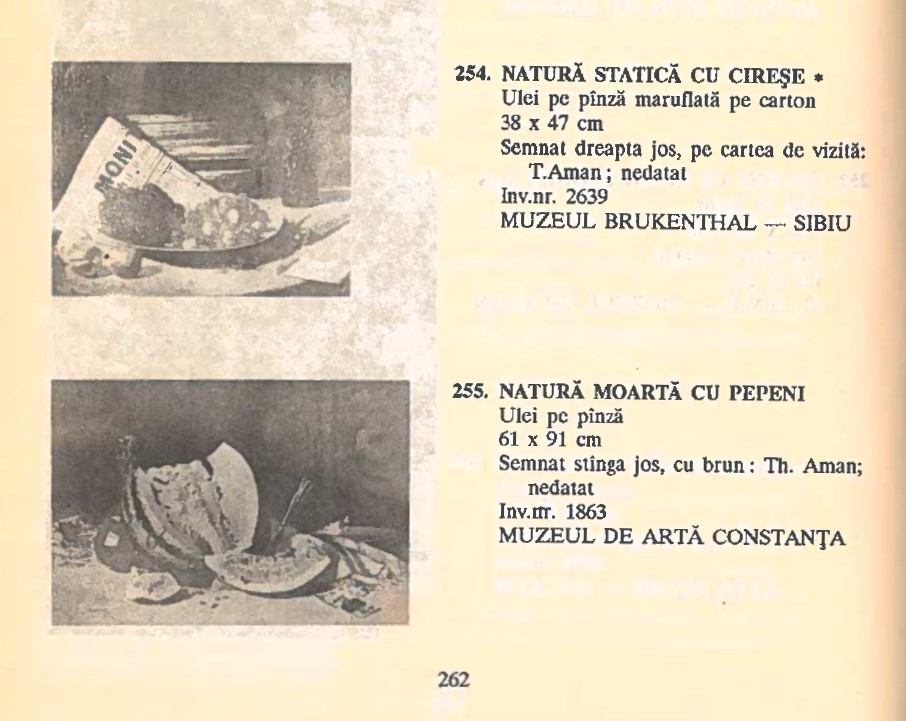
The work is reproduced in "Theodor Aman", Radu Bogdan, State Publishing House for Literature and Art, cat. no. XLIV, under the title "Still life with watermelon". A version of the work is reproduced in "Aman - The Painter. The painting repertoire of the Theodor Aman Museum", Greta Șuteu, Bucharest City Museum, 2017, cat. no. 95, under the title "Red watermelon". A version of the work is reproduced in "Centenary Theodor Aman", Venus Publishing House, Bucharest, 1991, cat. no. 255, under the title "Still life with watermelons". A version of the work is exhibited at the Constanța Art Museum, inv. no. 1863.

Notes

on the back, authenticated by Eustațiu Stoenescu, "Original by Aman, E. Stoenescu"

PROVENANCE

the artist Ritta Boemm's collection

Constantly evolving, Theodor Aman managed to form his unmistakable style, going through several stages of creation, which were to reveal the nature of a versatile artist. Described as the "first modern Romanian artist" by critics, Aman managed to integrate the native artistic core into vast Western art. Theodor Aman outlined in his paintings a diegesis that generated emotions, sculpting ephemeral moments in time. Thus, going through several artistic stages throughout his activity, Aman sought intrinsic depth in every landscape, portrait, or still nature made. The artist often approached still natures, predominantly standing out through his compositions with flowers and fruits. All still natures signed by Theodor Aman are characterized by meticulous technique, as well as by truthful reporting to the model. Aman paid particular attention to this genre of painting, working on a series of works in the 1870-1880 period, including works such as "Grapes and Apples", "Basket with Strawberries", "Cherries". In the initial phase, Theodor Aman betrayed the desire to discover the object in its entirety, without outlining a broad story that would go beyond the framework of materiality. In the second phase dedicated to still natures, the artist began to add other objects to the center of interest, aiming to transform the compositional exercise into a more detailed narrative. Thus, after understanding materiality and introducing the message in the reading of the painting, Aman adds reflections and specific encounters with light, to which he also adds the play of reflection in the compositional space. The work at hand, "Watermelon and Playing Cards" stands out through the precision of technique and visual perception, but also through the construction of a palpable narrative thread at the level of the work. In this work, Aman refers to the vanitas theme, including in his static nature elements of the ephemerality of life and the eternity of death. The King of Clubs, which depicts Alexander the Great, reinforces the idea of the passage of time, referring to the Latin expression "vanitas vanitatum, omnia vanitas". With the help of the other elements, we can intuit the heat of a summer day, looking at the sun in the clear eye of the water that rests on the table. Thus, through the presence of the window reflected in the glass, Aman captured the interdependence between the macrocosm and the microcosm. The watermelon is the nucleus of the work, both through its transient symbolism and the vibrant colours chosen. The artist also included remnants of a card game that seems to be suspended in time, waiting for the players. All the objects represented on the canvas seem to be facets of daily reality, to which Aman added his own way of capturing light and shadowing. Using a chromatic palette that abounds in shades of red, brown and green, Theodor Aman depicted the naturalism of the half-cut fruit, that stands open in front of the viewer like a recurring invitation to participate in the endless cycle of life.

For clarifications regarding the bidding procedure, hammer price costs, guarantee, payment, and collection terms for the winning lot, we recommend carefully reading/re-reading the Bidding Regulations.

For additional information regarding the lot and the auction, please contact the Art Consultants Department.

SESSION
Thu, 18 June 2026 19:00

Similar lots

Vase with Lilac

91. Vase with Lilac [anii '30]

Octav Băncilă

    Estimate: EUR 4.000 - 7.000
    Sold EUR 6.000
Vase with flowers

121. Vase with flowers [1999]

Constantin Piliuţă

    Estimate: EUR 4.000 - 7.000
    Sold EUR 4.250
Water Lilies

50. Water Lilies [1903-1905]

Nicolae Grigorescu

    Estimate: EUR 20.000 - 35.000
    Sold EUR 41.000