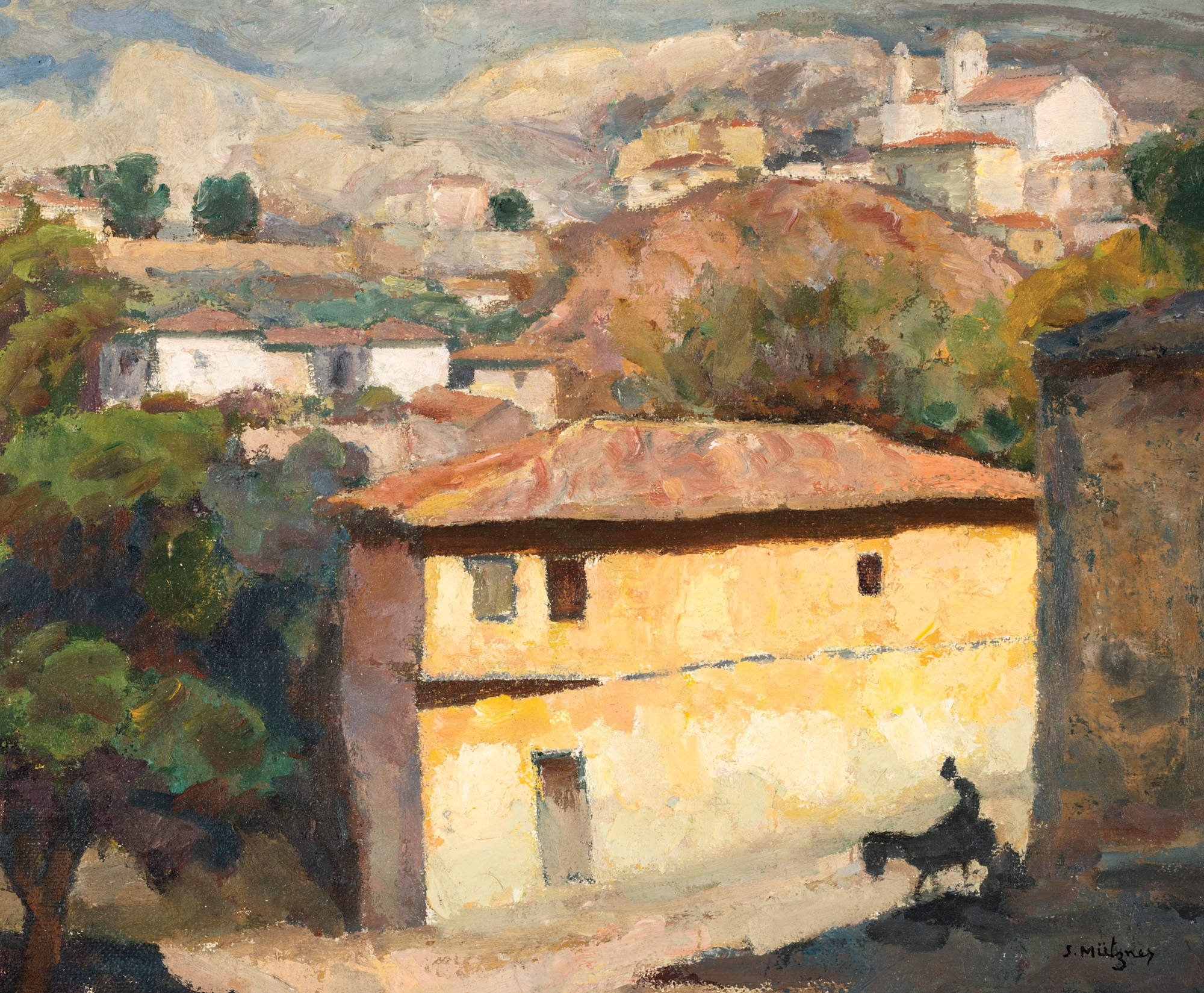
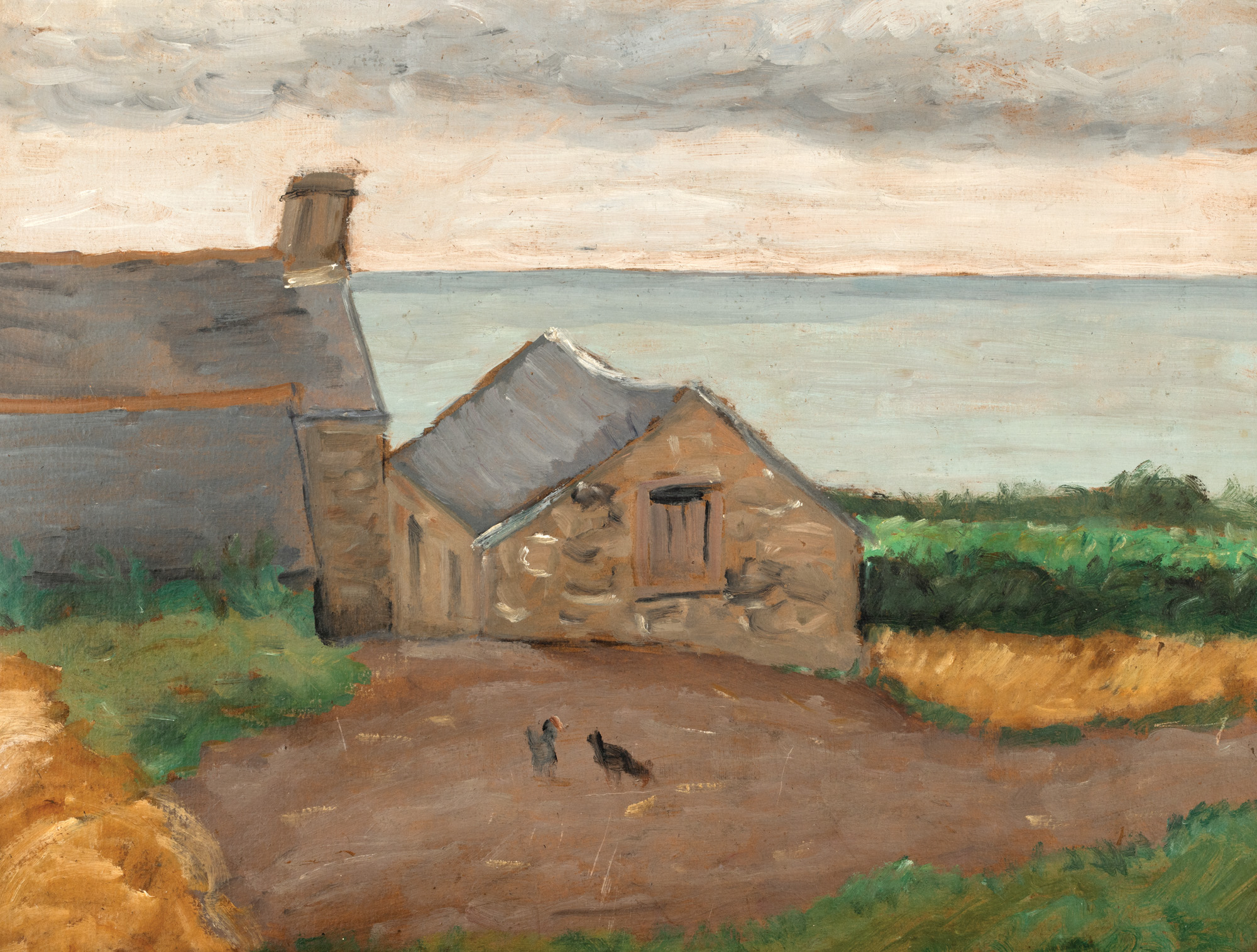
The photos of the lot are informative and indicative, and cannot provide a highly detailed view of the object from all angles. We recommend a careful physical inspection of the lot before bidding.
VLASIU Ioana, "Tonitza images of childhood", Târgu Mureș, 2019
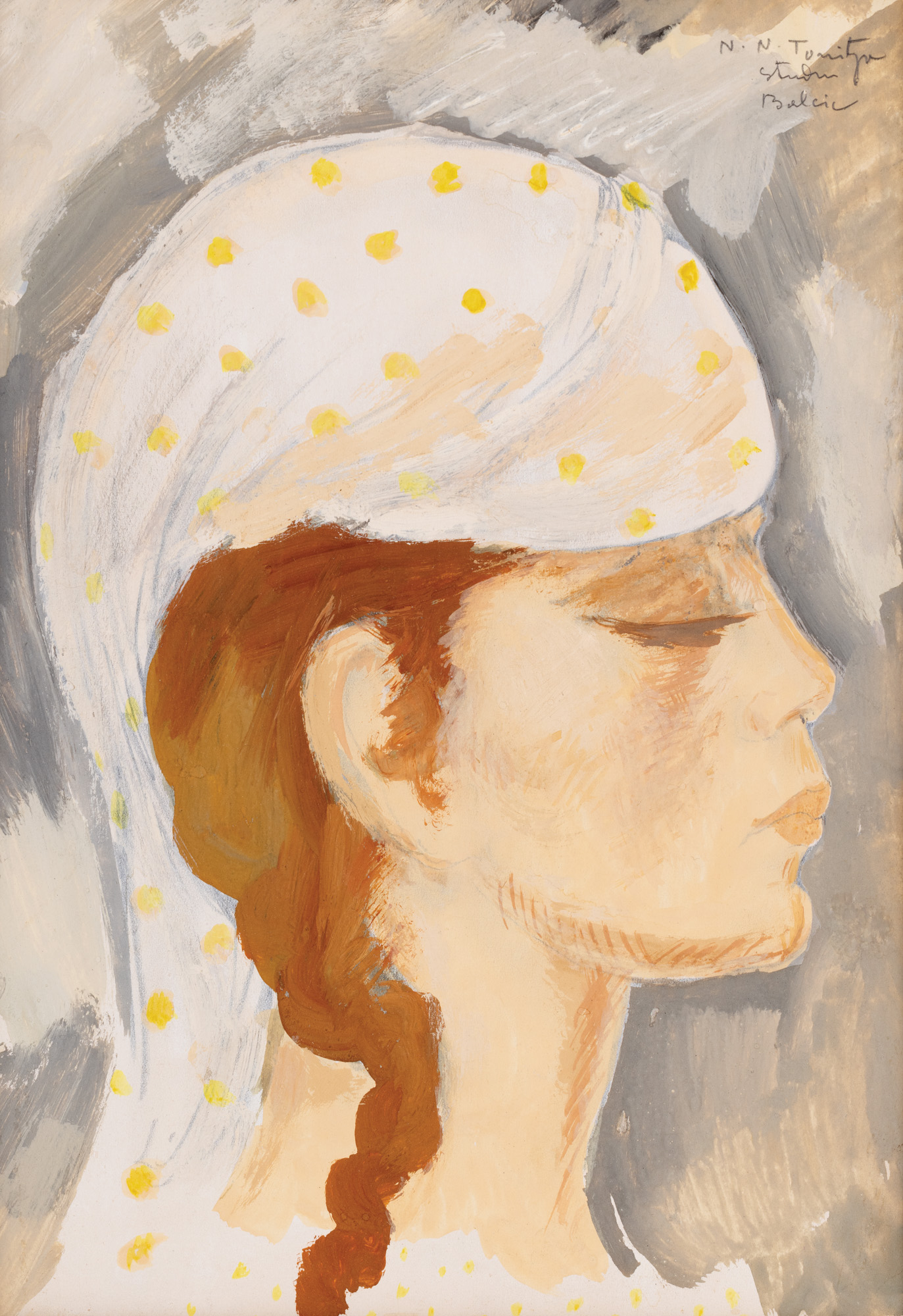
gouache and oil on paper, 27 x 23 cm, signed, noted and located upper right, in pencil, "N. N. Tonitza, Study, Balchik"
Research information
The artwork was part of the exhibition "Tonitza and the Genius of Childhood", Art Safari, Bucharest, 2019.
Painter, graphic artist, and art professor, Nicolae Tonitza is one of the emblematic personalities of modern Romanian art. His preference for drawing is deepened during his studies in Munich, but he acquires his painting qualities as a result of his enrolment at the Paris Art Academy, where he learns to use color to his advantage and acquires the necessary knowledge to help him attribute space and form in terms of color.
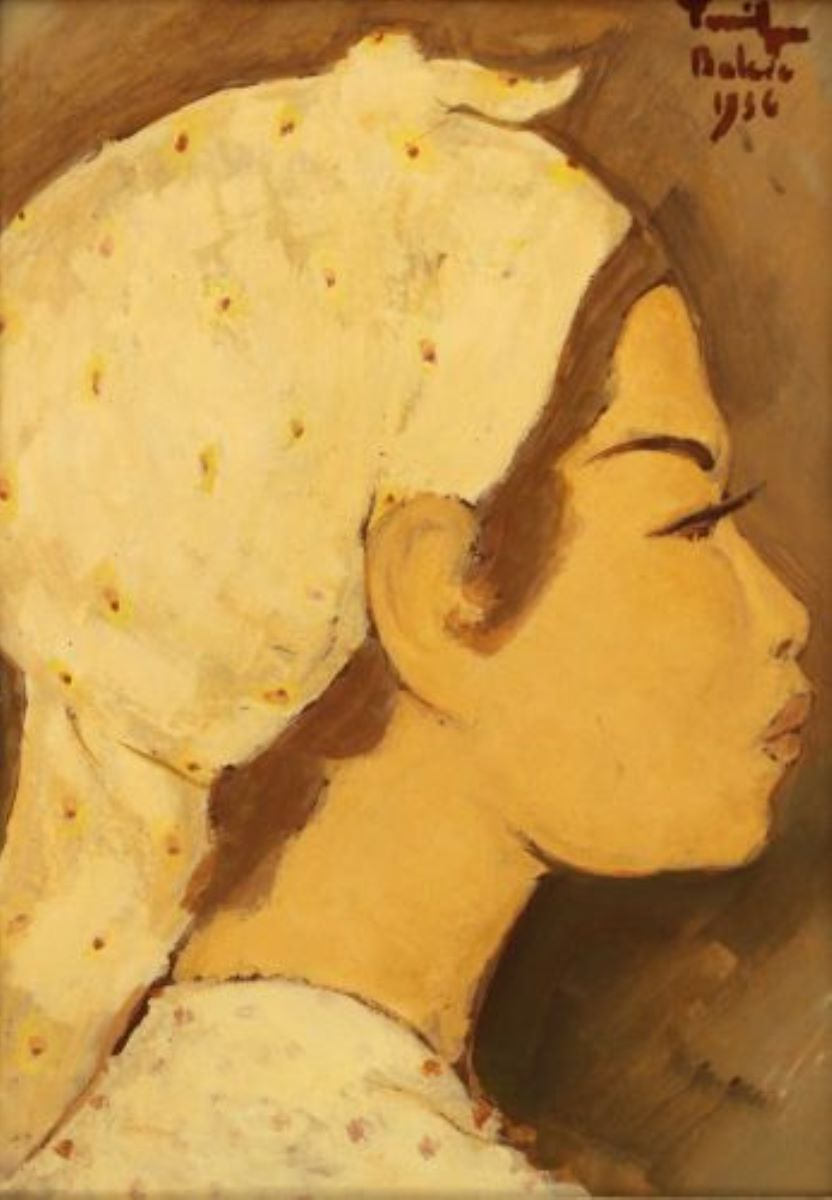
Between 1933 and 1934, he began to focus on painting portraits of women, especially Tatar women, when he began to travel to Balchik and Dobruja with Francisc Șirato, where he created a series of works inspired by the Black Sea area. Alongside the remarkable landscapes he captures, he also encounters the beloved Tatar women who he portrays in his paintings and where he is fascinated by their faces, sometimes seen in profile, other times in semi-profile, covered in turbans, scarves and specific garments, such as: "Tatar Woman Looking at the Sea (1934)", "Head of Tatar Woman", "Tatar Woman (1938)" or "Tatar Women from Balchik (1940)".
He uses a few brightly colored accents and assigns them, sometimes, to his small characters various accessories such as a colored bow, a patterned ribbon or a kerchief that refers directly to the period spent in the Dobruja and Balchik area. Also during the period of the works created there, Tonitza will interpret the Tatar women close up, capturing their features and essences, like the one at hand, at other times, however, the feminine silhouette will be seen from afar, represented summarily or fleetingly.
Regarding the completion of the work at hand, which we can place in the period of years spent in Balchik, we can observe the portrait of a young Tatar woman with a kerchief in profile. The young woman's features are carefully drawn, especially in outlining her physiognomy, where compared to Tonitza's other works in which he portrayed children with small, black almond-like eyes, ("Child's Portrait," "Woodman's Daughter (1924-1926)" or "Dutch Girl") in this representation, the young woman is in profile, her eyes are closed, her eyelids slightly lowered in a state of daydreaming, of melancholy, with a prominent nose, full lips and a well-defined chin. The young woman portrayed wears on her head a white kerchief with yellow accents, specific to the Tatar women from the Balchik area, which covers her forehead, tied at the top.
Another element introduced by Tonitza in his works and also visible in this case is the brown or brick-red, reddish color of the hair that emanates from under the grip of the Tatar women's headscarf. This element introduced by Tonitza in his works may be related to the period spent in Balchick, where he could observe the young women's clothing, the accessories used, the scarves and turbans arranged on the head as well as the tied hair.
For clarifications regarding the bidding procedure, hammer price costs, guarantee, payment, and collection terms for the winning lot, we recommend carefully reading/re-reading the Bidding Regulations.
For additional information regarding the lot and the auction, please contact the Art Consultants Department.
By choosing "Accept all cookies" you agree to the use of cookies to help us provide you with a better user experience and to analyse website usage. By clicking "Adjust your preferences" you can choose which cookies to allow. Only the essential cookies are necessary for the proper functioning of our website and cannot be refused
Cookie settings
Our website stores four types of cookies. At any time you can choose which cookies you accept and which you refuse. You can read more about what cookies are and what types of cookies we store in our Confidentiality Policy.
are necessary for technical reasons. Without them, this website may not function properly.
are necessary for specific functionality on the website. Without them, some features may be disabled.
allow us to analyse website use and to improve the visitor's experience.
allow us to personalise your experience and to send you relevant content and offers, on this website and other websites.