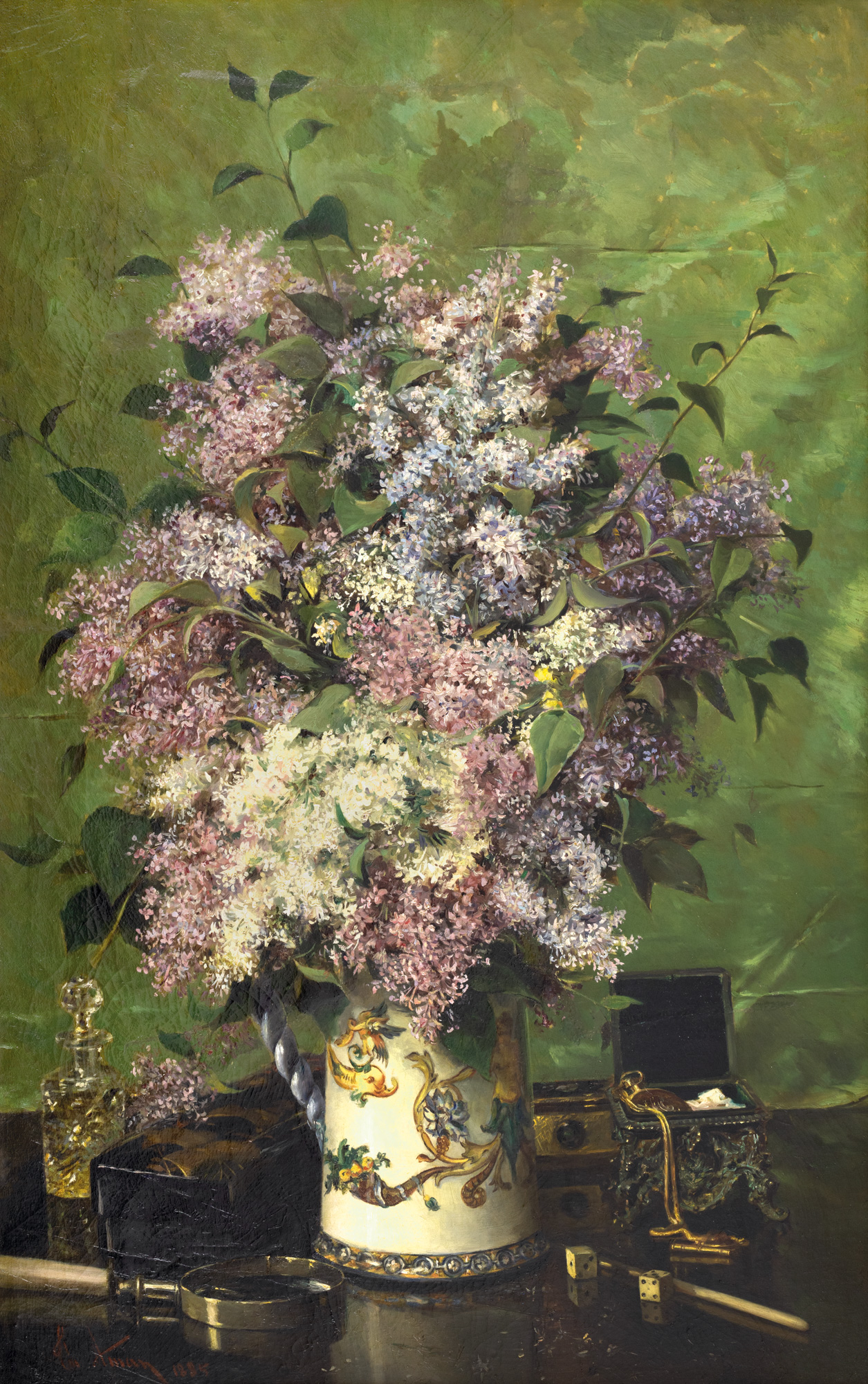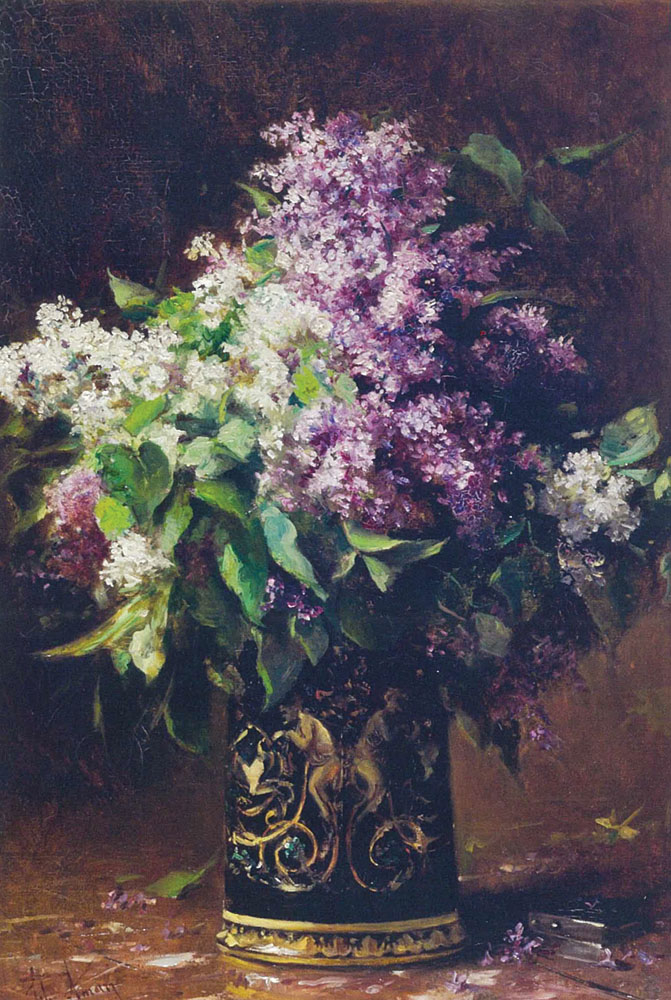

96. Lilac on Green Satin [1885]

1831, Câmpulung Muscel, Argeş - 1891, Bucureşti

Estimate

EUR 70.000 - 120.000

Sold

EUR 115.000

Session

Thu, 19 June 2025 18:00

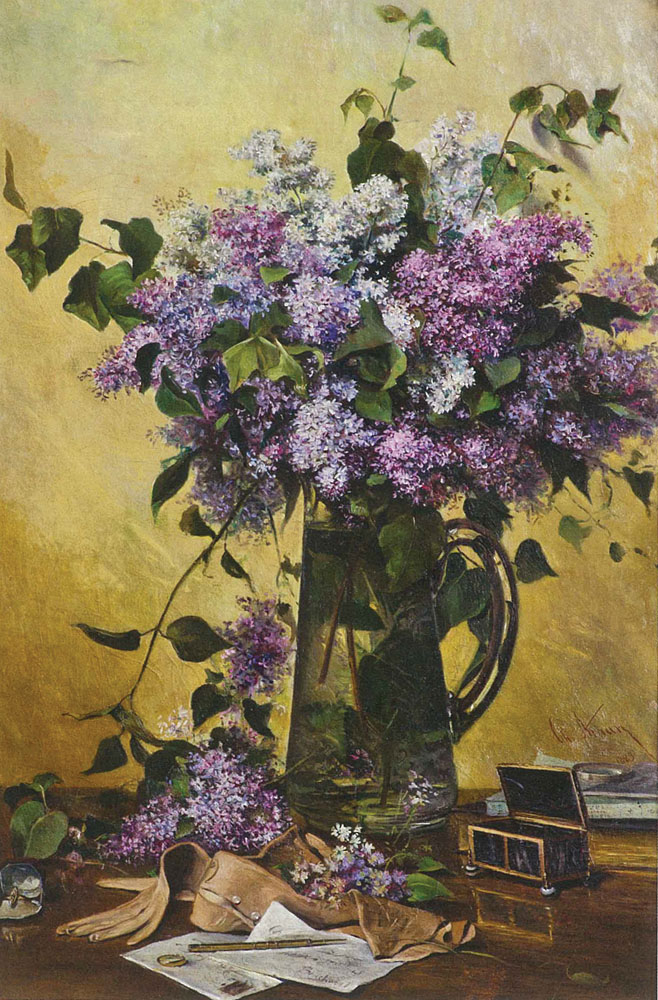
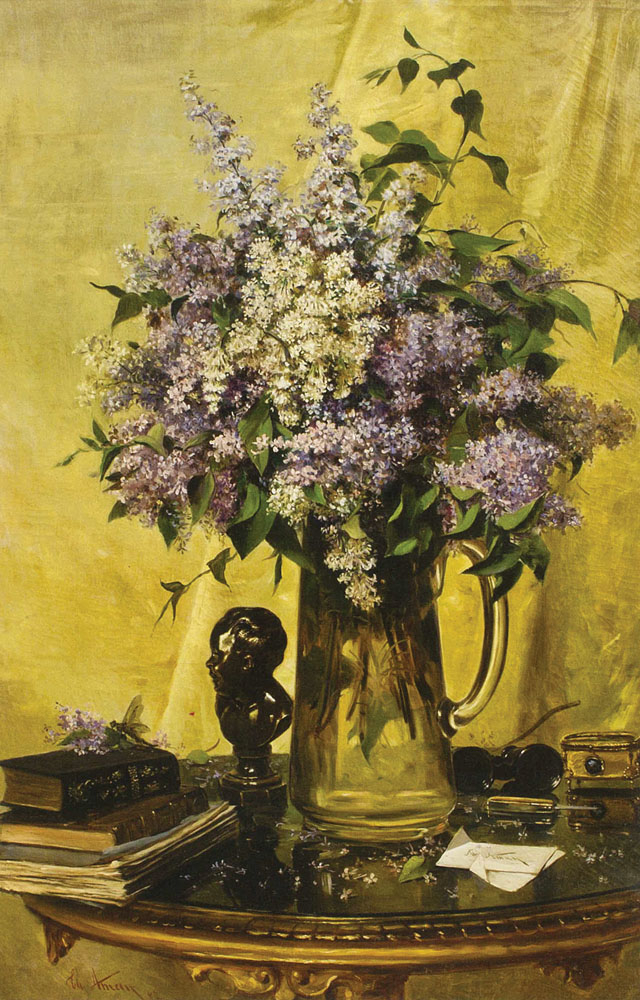
A favorite subject in art history, still life was for artists both an occasion for technical exercise and a way of expressing ideas and their vision of the world. A standalone genre, still life developed mainly in the Dutch art of the 17th century and, to this day, has undergone numerous changes at the plastic and stylistic level. Throughout this journey, Theodor Aman perseveringly contributes his personal input, probably being the most frequently approached genre in the last decade of his activity. The artist is especially recognized for landscapes, portraits, and historical scenes, but still life is a genre that he loved and in which, like in all the others, he excelled. His first attempts approached floral themes with Caravaggisti influences, standing out for their attention to detail and realism. In the second stage of creation, Aman adopted Flemish Baroque symbolism, using details that build a story between observer and artwork. An important pillar of his creation were the studies after great masters from Parisian museums and academic education. Among these masters are Rubens, Velázquez, Caravaggio or Watteau, along with academic teachers Constantin Lecca, Carol Wallenstein de Vella and neoclassicists Michel Martin Drolling and François-Édouard Picot. His travels to Paris, Constantinople, Crimea, Italy and other European cities deepened his understanding of art. In Crimea he made an impressive composition about the Battle of Alma, highly appreciated by the public. In 1853 he debuted at the Paris Salon with a self-portrait, and in 1855 he exhibited again at the Universal Exposition. Upon returning to his country, Aman contributed through painting to evoke historical and national values. He organized numerous exhibitions at home and abroad, and in 1865 initiated the Exhibition of Living Artists in Bucharest. In 1876 he opened an exhibition with sale in his own workshop, followed by two retrospectives in 1883 and 1889, with still life, landscapes and portraits. In his still lifes, we often encounter the theme of vanitas, a symbol of the ephemerality of life, rendered through realistic and harmonious compositions. Aman pays special attention to details and the materiality of objects, achieving impeccable surfaces and introducing symbols such as letters, books, clocks, or jewelry. In his last creations, Aman focused on luminosity and reflection effects, using shiny surfaces and objects that suggest ephemerality – white and purple lilac, dice, magnifying glasses or watches. The work "Still Life with Lilac and Jewelry Box" perfectly illustrates this direction: fresh flowers, freshly picked, and symbolic objects, all rendered with meticulous realism, enveloped by color games and mirror effects that give his paintings a refined and full of life air.

References

Greta Suteu, Aman-Painter. The painting repertoire of the "Theodor Aman" Museum, Ed. of the Municipality Museum of Bucharest, Bucharest, 2017. Centenary Theodor Aman, Ed. Venus, Bucharest, 1991. Theodor Aman, EDIMPEX Art Collection, Bucharest, January 1995. Vasile Florea, Theodor Aman, Ed. Meridiane, Bucharest, 1972.

Dimensions

width 62 cm, height 94.5 cm

Description

oil on canvas, signed and dated bottom left, in brown, "Th. Aman, 1885"

Research information

The artwork was part of the exhibition "Theodor Aman the first modern Romanian artist", Art Safari, Bucharest, 2022.

Dating

1885

ADDITIONAL INFORMATION

For clarifications regarding the bidding procedure, hammer price costs, guarantee, payment, and collection terms for the winning lot, we recommend carefully reading/re-reading the Bidding Regulations.

For additional information regarding the lot and the auction, please contact the Art Consultants Department.

Similar lots