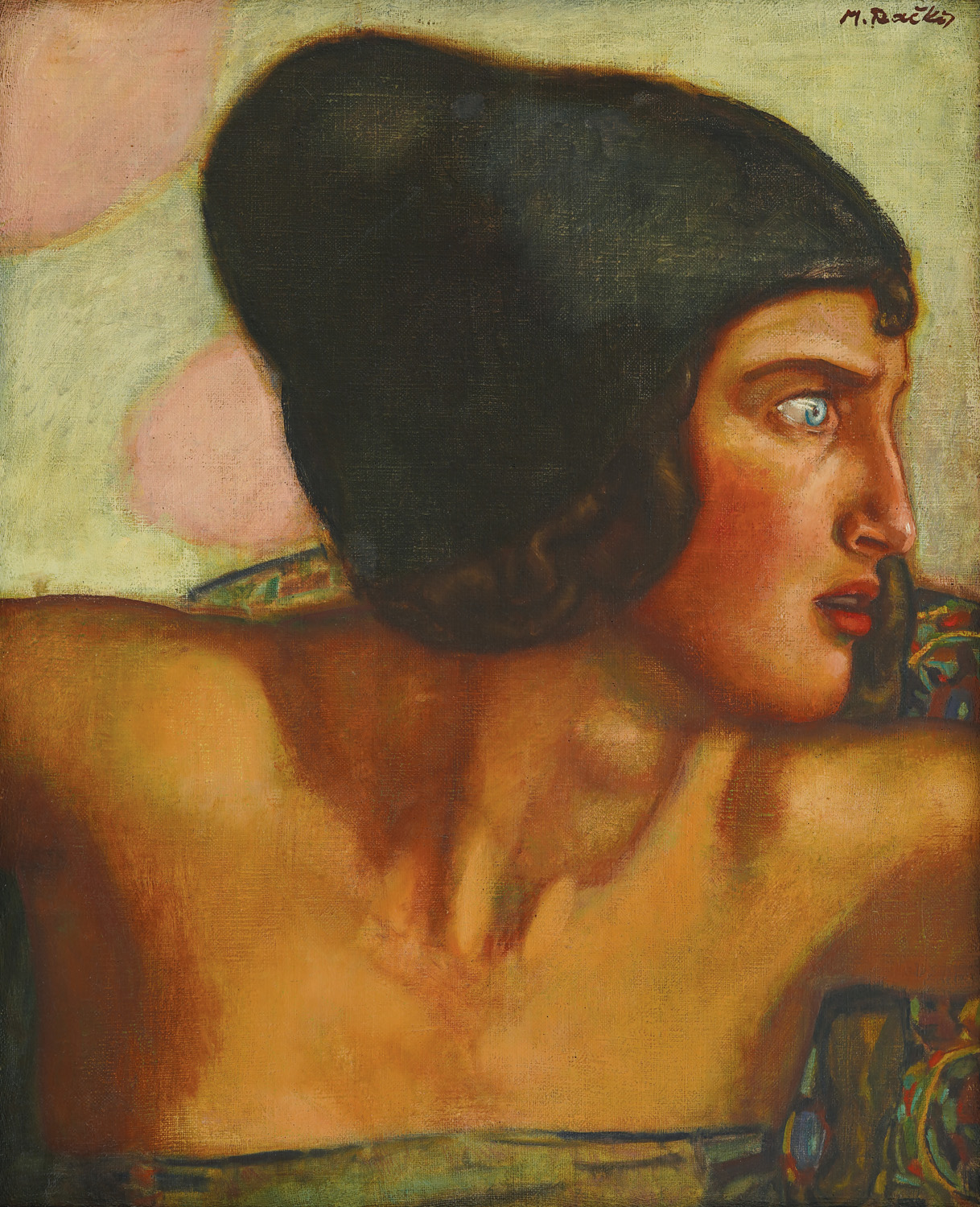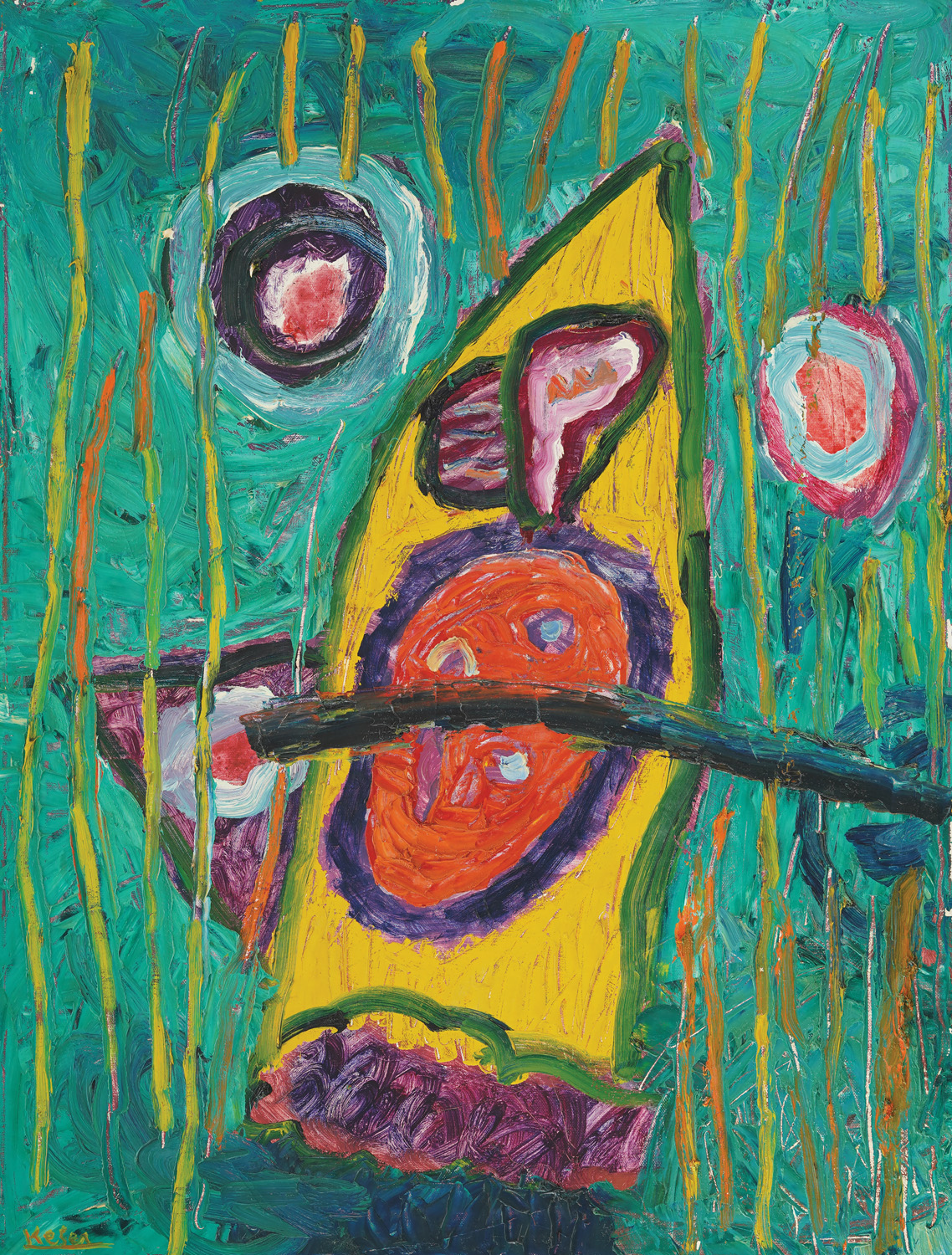
36. Allegory (Princess) [cca. 1917.]

1879, Novi Marof - 1982, Split

Estimate

EUR 12.000 - 18.000

Sold

EUR 9.000

Session

Tue, 11 June 2024 20:00

The painting titled "Allegory" was created in the spirit of the Munich-Hodler Secession. However, in terms of significance and the formal treatment of the volume of the head, it also belongs to the period when Rački, as a member of the group of artists captivated by the idea of the national unity of the South Slavs gathered in the Society "Medulić", exhibited with them and shared with them the style of ideologized monumentalism. His allegorical figurative compositions from the large reading room of the old National and University Library in Zagreb, painted between 1912 and 1913, as well as the dramatic treatment of the head of the model from the painting "Kosovka Girl" from his cycle inspired by folk songs from 1914, also reveal a similar monumentality. During the many years of the painting's storage in the Modern Gallery (today the National Museum of Modern Art), it was sporadically exhibited at thematic exhibitions and in the permanent museum setup. In addition, it was immortalized by a camera in a documentary film shot in 1969 on the occasion of the 90th birthday of the painter, according to the script by Radovan Ivančević. Mirko Rački's inclination towards artistic expression - painting and literary - was already shown during his schooling at the Zagreb Preparandia. His published story "Propao" in the Nova nada (New Hope) Collection (1898) and several oil studies painted during working summers on the estates of the noble Vranyczany family in Oroslavje and the noble Bedeković family in Bedekovčina bear witness to this (1898/1901). He received his first painting education in Vienna at the private painting school of Heinrich Streblow, and then in Prague at the Art Academy, where he earned the title of academic painter (1905) in the class of Vlaho Bukovac. During his studies, he assisted himself by creating illustrations for the magazines "Sijelo" and "Domaći prijatelj" edited by the Slovenian-Croatian writer Zofka Kveder. Art connoisseur Iso Kršnjavi noticed these illustrations in Zagreb and entrusted him with the task of illustrating his translation of Dante's "Divine Comedy". Kršnjavi was extremely satisfied with the received drawings and copper engravings so he then secured him the coveted scholarship for improvement in the graphic "special" of William Unger at the Vienna Academy (1906/2007). In the years that followed, Dante's grand trilogy was an inexhaustible source of inspiration for a series of relatively large oil compositions that he accomplished at the end of the first decade of the 20th century. These are exceptionally valuable painting works of Secessionist expression, such as the paintings "City of Dis" and "Francesca da Rimini" that have been adorning the permanent setup of the National Museum of Modern Art for decades. It should also be mentioned that Rački, after artistic studies in Vienna and Prague, gained artistic experience and successfully exhibited in Munich, then in Rome, and from 1915 until the late 1919 in Geneva, where he came into contact with the works of Swiss Ferdinand Hodler, which also left a mark on his painting. In 1920, he settled in Zagreb, where he quickly became a highly valued painter and a member of the Yugoslav Academy of Sciences and Arts (JAZU). From the 1950s he lived secluded and - unlike his pre-war vehement participation in numerous exhibitions - he rarely exhibited until a retrospective exhibition on the occasion of his 90th birthday brought him back into the spotlight of the Croatian art public. BRP

References

Radovan Ivančević, To the Croatian painter Mirko Rački on the occasion of his 90th birthday (documentary film), Filmoteka 16, Zagreb, 1969. / https://www.youtube.com/watch?v=9jn7aLc1cDY

Dimensions

width 61 cm, height 73.5 cm

Description

ulje na platnu, signed upper right, in red, "M. Rački"

Research information

The work has been stored for many years in the depot of the Modern Gallery in Zagreb, and occasionally it has been exhibited at thematic exhibitions, as well as part of the gallery's permanent collection. On the back of the work, there is a label from the Modern Gallery with the inventory number MGP - 1120.

Lot.notes

on the back is a sticker from the Modern Gallery in Zagreb

Dating

cca. 1917.

ADDITIONAL INFORMATION

For clarifications regarding the bidding procedure, hammer price costs, guarantee, payment, and collection terms for the winning lot, we recommend carefully reading/re-reading the Bidding Regulations.

For additional information regarding the lot and the auction, please contact the Art Consultants Department.

Similar lots