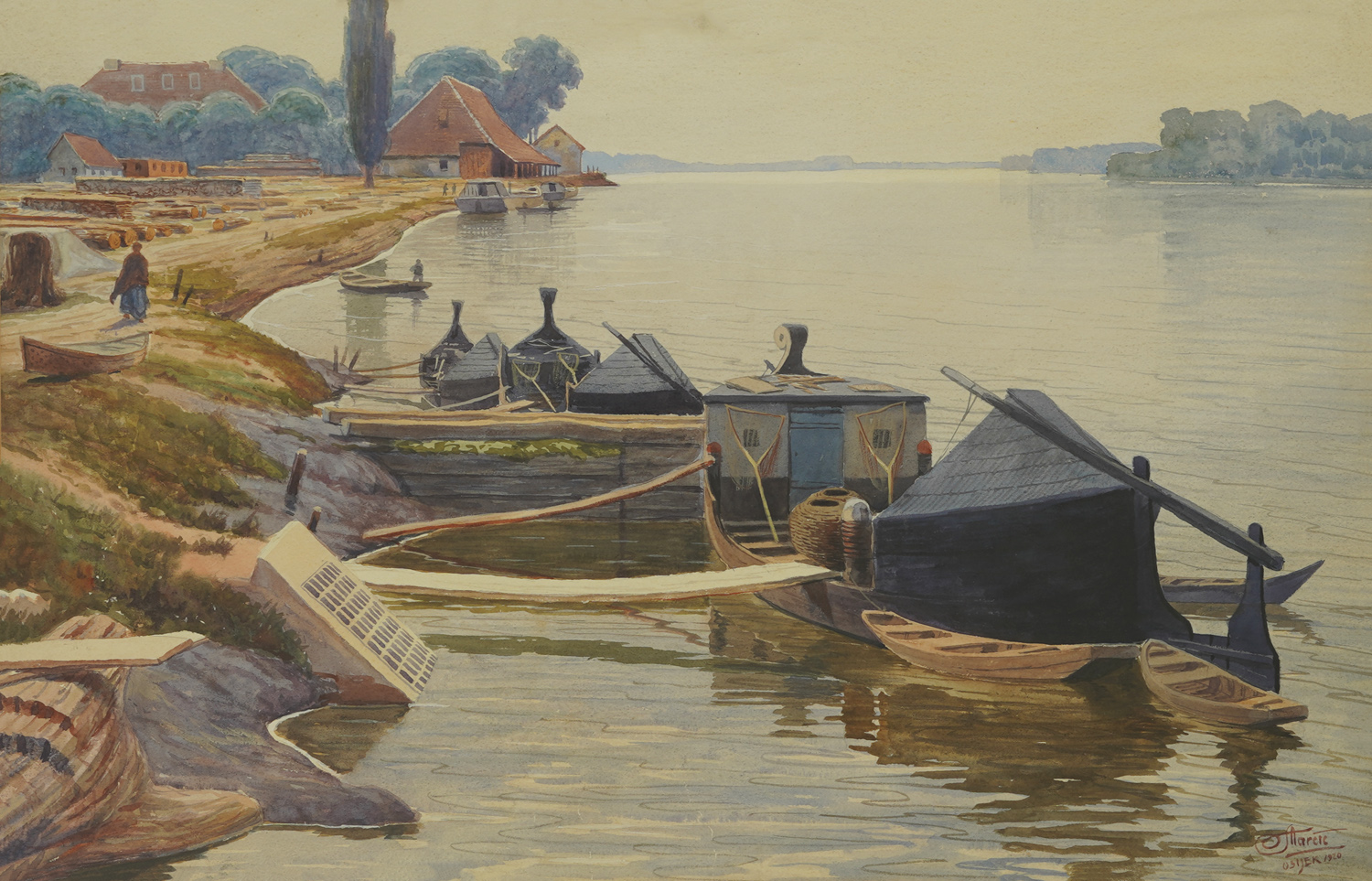
The photos of the lot are informative and indicative, and cannot provide a highly detailed view of the object from all angles. We recommend a careful physical inspection of the lot before bidding.
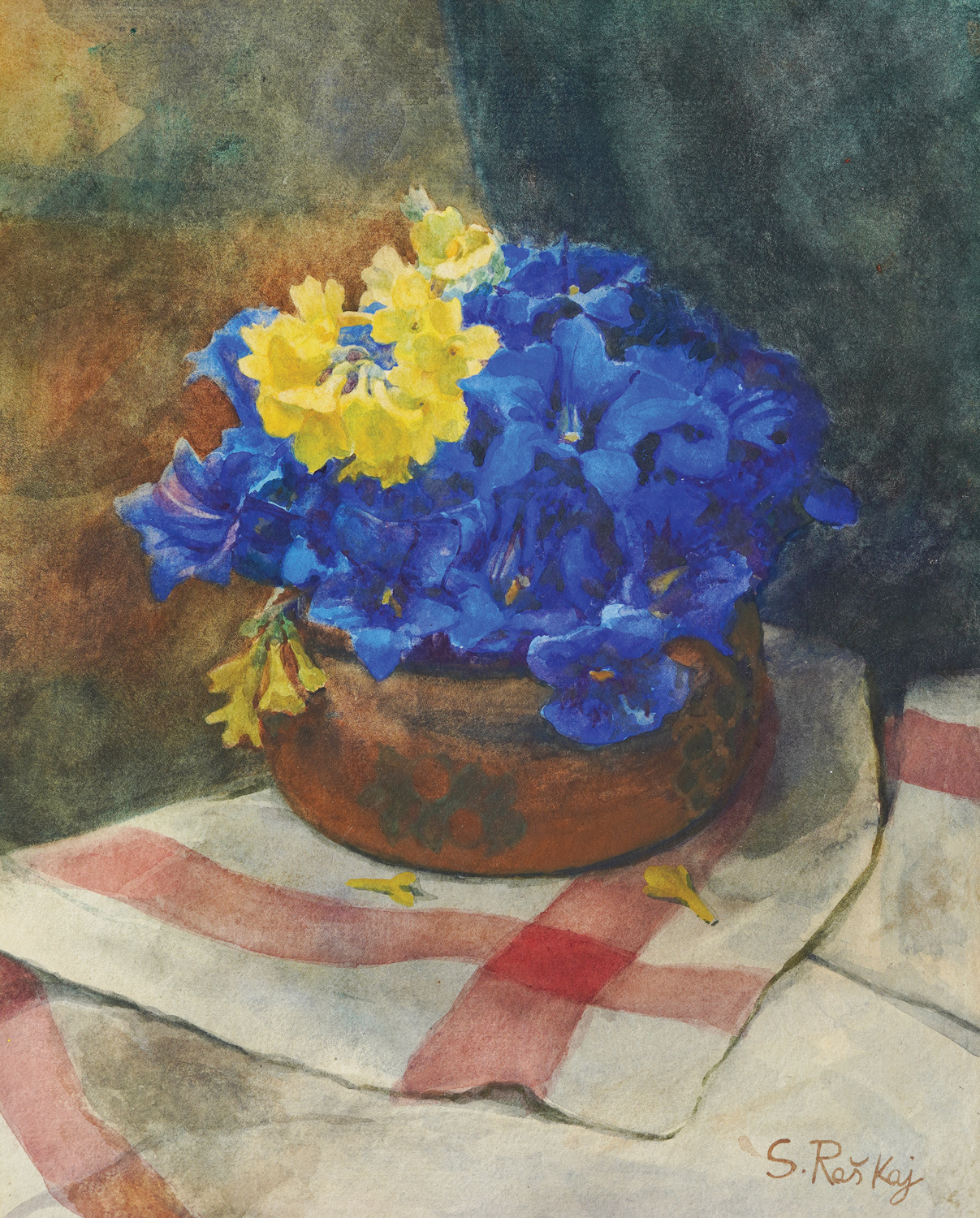
watercolor on paper, 24.5 x 20.5 cm, signed at the bottom right, in brown, ''S. Raškaj''
Research information
The work is reproduced and documented in the monograph by Josip Kovačić, "Dead Ends in the Life of Slava pl. Raškaj", Art Magazine Kontura, Zagreb, 2019., cat. No. 342.
Slava Raškaj (Ozalj, 1877 - Zagreb, 1906) was a Croatian deaf and mute artist who faced many prejudices in her lifetime as deaf-muteness was then considered a mental illness. She completed elementary and high school in Vienna, where she received her first painting lessons. I. Kršnjavi noticed her talent and with his support, Raškaj completed a course in artistic craft drawing with an excellent grade. Until 1902 she had been taught painting by Bela Čikoš Sesija, and that for free. In her watercolors, she often depicted the Kupa River that runs through her native Ozalj. Wherever she traveled, she created watercolors and drawings of the nature she observed - in Zlatar, Lobor, Orahovica, Ozalj, and even in Opatija where she went for tuberculosis treatment. She exhibited at the Croatian Salon exhibition in 1898, in St. Petersburg, Moscow, and Paris. As early as 1902, she ends up in the Hospital for Mental Diseases in Stenjevec with a diagnosis of paranoid schizophrenia. She spent just under four years in the asylum and died in 1906 at the age of 29 from tuberculosis. Today, her name bears a primary school in her hometown of Ozalj and the Center for Education and Training, which deals with people with communication difficulties. Her most famous works are in a cycle called "Lopoči", created under the impression of the Zagreb Botanical Garden. Her later watercolors are bright, fluid, and light, they could be called pattern watercolors, and she paints them from start to finish outdoors, in plein air. She also uses pastel for landscapes, but more for portraits and in these works the influence of Čikoš Sesija is visible. The watercolor on paper "Still Life (bells in a bowl)" was created in the late 19th century. It is of a typical small format and a frequent motif of Slava Raškaj – floral still lifes. She studied painting on flower models in Vienna, so the later choice of the same motifs is not surprising. Blue and yellow flowers are in contrast, which draws additional attention to this central motif – the bells. The subtle, almost blurred background, dark in the style of Bela Čikoš Sesija, further emphasizes the beauty of the flowers. The bowl of flowers is placed in the center of the composition, on a white-red tablecloth. Raškaj uses denser and rarer pigments to contribute more accurately to the impression of three-dimensionality. Her flowers are painted very realistically, with almost anatomical precision. The watercolor is signed in the lower right corner.
For clarifications regarding the bidding procedure, hammer price costs, guarantee, payment, and collection terms for the winning lot, we recommend carefully reading/re-reading the Bidding Regulations.
For additional information regarding the lot and the auction, please contact the Art Consultants Department.