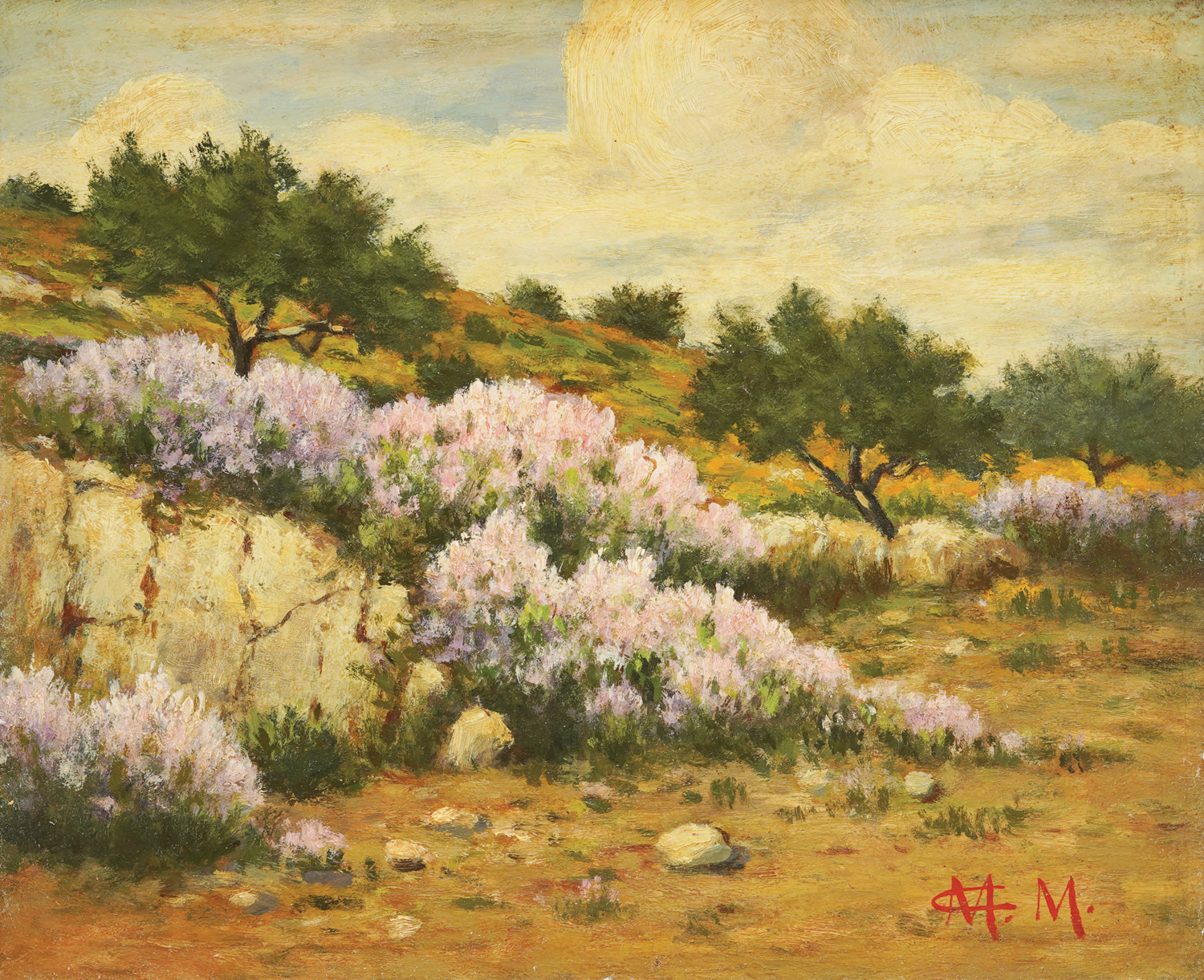

33. Thyme [1914.-1918.]

1857, Kuna Pelješka - 1920, Sarajevo, Bosna i Hercegovina

Session

Tue, 19 March 2024 20:00

In 1868, Novak was a novice of the Franciscan Order in the seminary of the Monastery of Little Brothers in Dubrovnik, where his superiors noticed his gift for drawing. After completing his theology studies and priestly ordination, with the support of the Order's general from Rome, he stayed in Italy from 1880 to 1886, mainly in Rome, where he attended the painting school of Lodovico Seitz and the atelier of the sculptor Giuseppe Grandi. He exhibited at international spring exhibitions in Rome in 1882 and 1884, which was documented by art critics. As a Franciscan, he stayed in Fucecchio, Faenza and Cesena for the needs of the Order, doing some minor painting restoration work, and in his spare time, gaining experiences for his own progress. In 1883, he had to go to Florence for the same job. He stayed there for nine months, which contributed more to the development of his painting than six scholastic years in Rome. In his free time, he attended the private school of Antonio Ciseri, where painting focused on Italian narrative realism and education was based on the new program of state academies. Upon his return from Italy in 1886, he stayed in his native Kuna and Dubrovnik, waiting for a scholarship to continue his studies at the Academy in Munich. The artistic and life drama of his art lies in the fact that strict monastic life restrained him and he had to work and progress in two parallel vocations: priesthood and painting. When he finally asked for and got secularization (1894-1897), with the painter's diploma and experience gained from several study trips, the painter sailed on with full sails in the free profession of painting. The years of life and work in the relation Kuna - Dubrovnik - Zagreb ensued, filled with considerable painting of large sacred and historical compositions ordered by the state administration. Tired of these assignments and eager to work in nature, he left Zagreb in 1907 and went back to his native region to find peace and freedom to work in landscape. His painting from then shows that the poetics of the Italian Macchiaioli not only touched him, but also inspired him to create a fascinating opus of southern Dalmatian landscapes with the help of Mediterranean light that demonstrate a direct observation and an exceptional painter's sense for color so many include them among the most glorious works of Croatian art modernism. To the painter Medović - despite all his priestly background and substantial portion of sacred painting - landscape was always at the center of his painting. Wholeheartedly absorbed in the native Pelješac landscape, its fragrant heather, lavender, and immortelle, he first painted landscapes in large formats and analytical post-impressionist method - small flecked and "sketching" brush strokes. In the later period, after traveling around Europe and doing significant painting work in Zagreb for the Golden Hall of the Department for Worship and Education, he returned to Pelješac - the analysis was replaced by synthesis - and on smaller canvas formats he achieved a series of equally magnificent pictorial odes to Mediterranean nature and the beauty of the landscape that determined him as a painter. The painting "Heather in Bloom" is part of that pictorial symphony and although small in format, by the power of Medović's art it belongs to the top miniatures of Croatian art modernism from the beginning of the 20th century. (B.R.P.)

References

Igor Fisković, Painter Medović in his homeland (monograph), Possibilities, Split, 1973. Slade, Iris. Mato Celestin Medović: Works from the fundus of the Art Gallery (catalog), Art Gallery, Split, 2010. Zidić, Igor. The lights and colors of Dubrovnik: People, city and surroundings in the works of modern painters / The Light and Colour of Dubrovnik: The People, city and surroundings in the works of modern painters, MGC Gradec, Zagreb 1988. Zidić, Igor. The landscape in modern Croatian painting 1890–1990, Galleria Centro Culturale San Fedele, Milan 1991.

Dimensions

width 28 cm, height 23 cm

Description

oil on board, signed with initials and monogrammed at the bottom right, in red, "MC.M."

Dating

1914.-1918.

ADDITIONAL INFORMATION

For clarifications regarding the bidding procedure, hammer price costs, guarantee, payment, and collection terms for the winning lot, we recommend carefully reading/re-reading the Bidding Regulations.

For additional information regarding the lot and the auction, please contact the Art Consultants Department.

Similar lots