
The photos of the lot are informative and indicative, and cannot provide a highly detailed view of the object from all angles. We recommend a careful physical inspection of the lot before bidding.
The photos of the lot are informative and indicative, and cannot provide a highly detailed view of the object from all angles. We recommend a careful physical inspection of the lot before bidding.
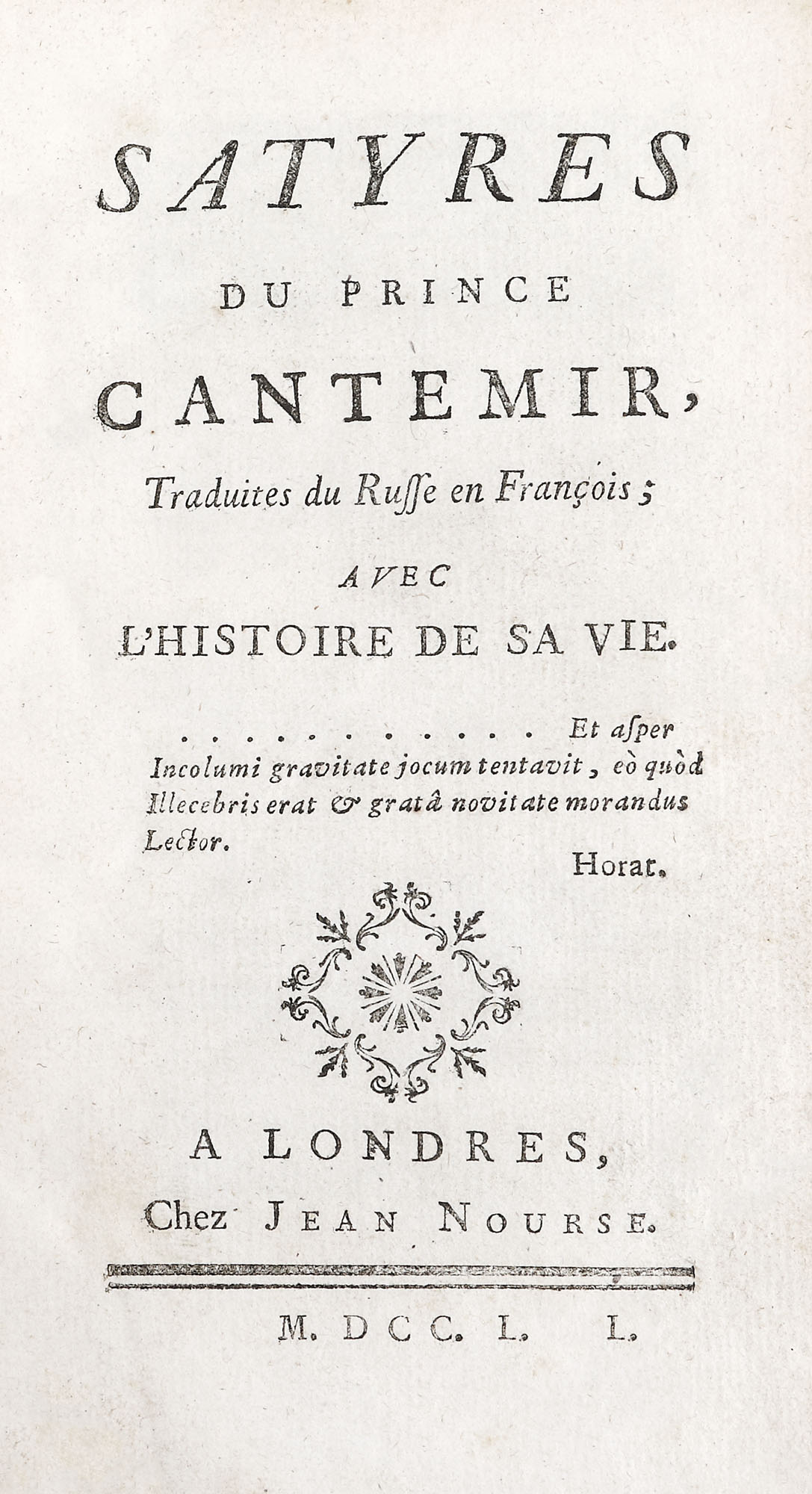
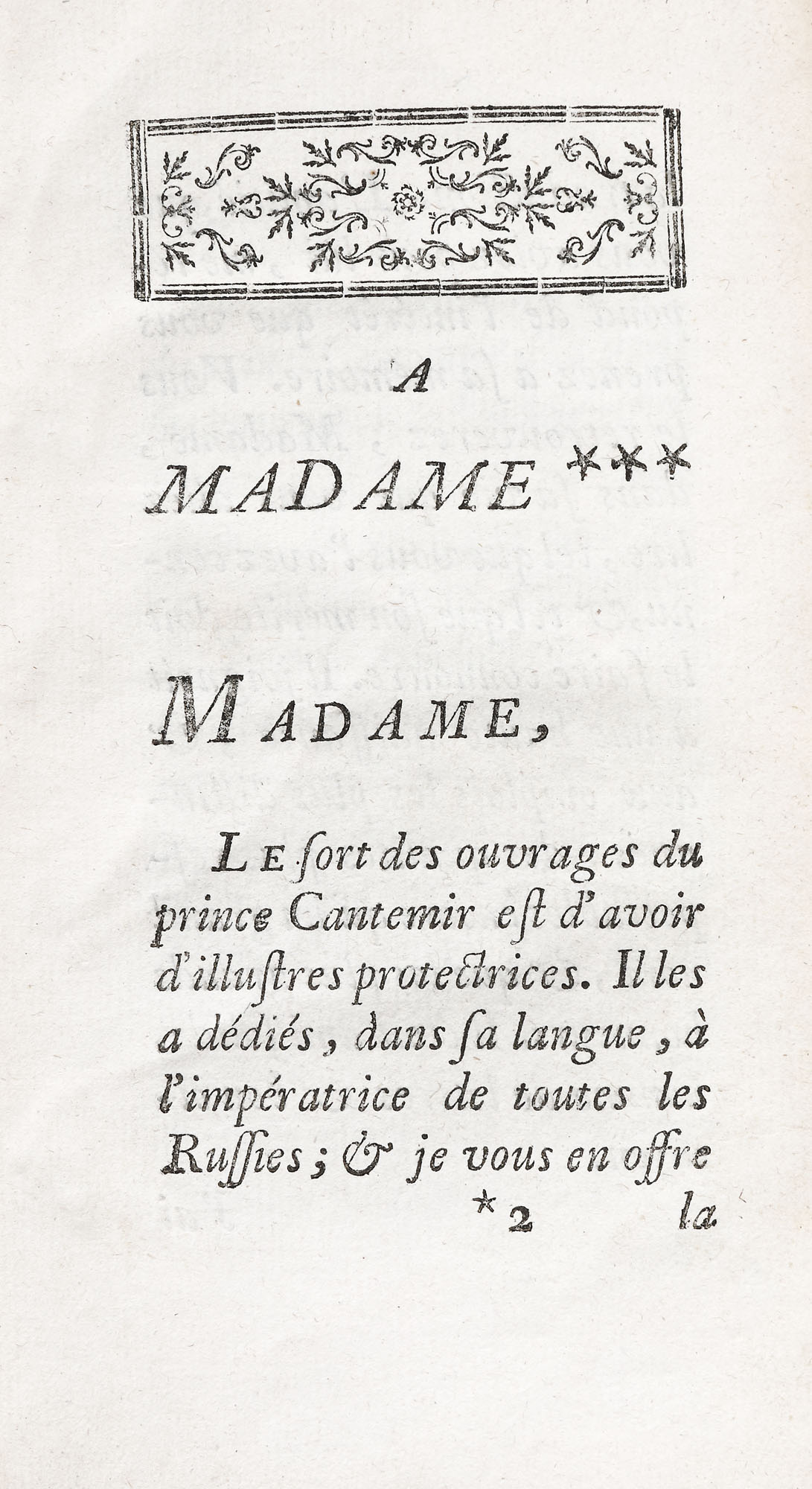
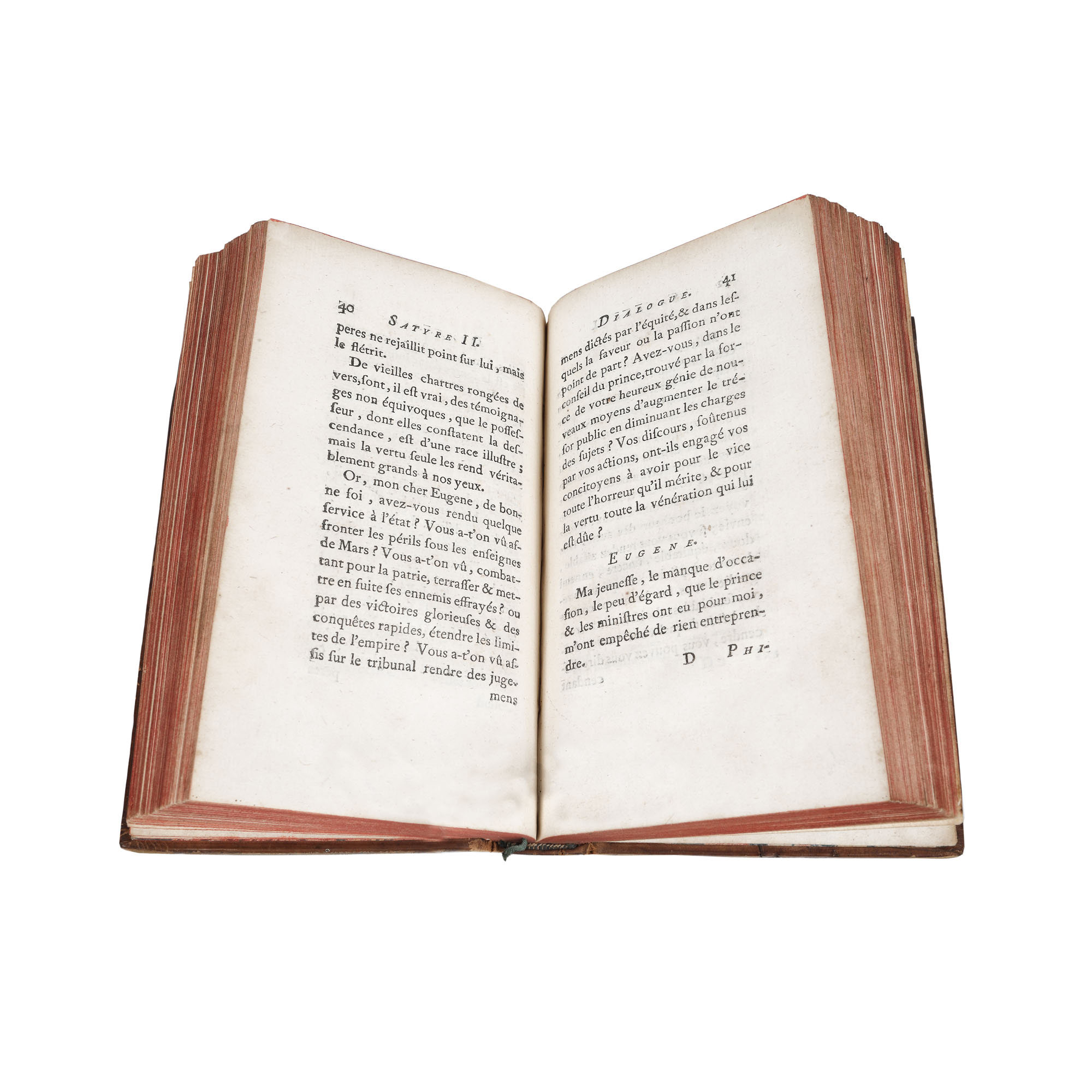
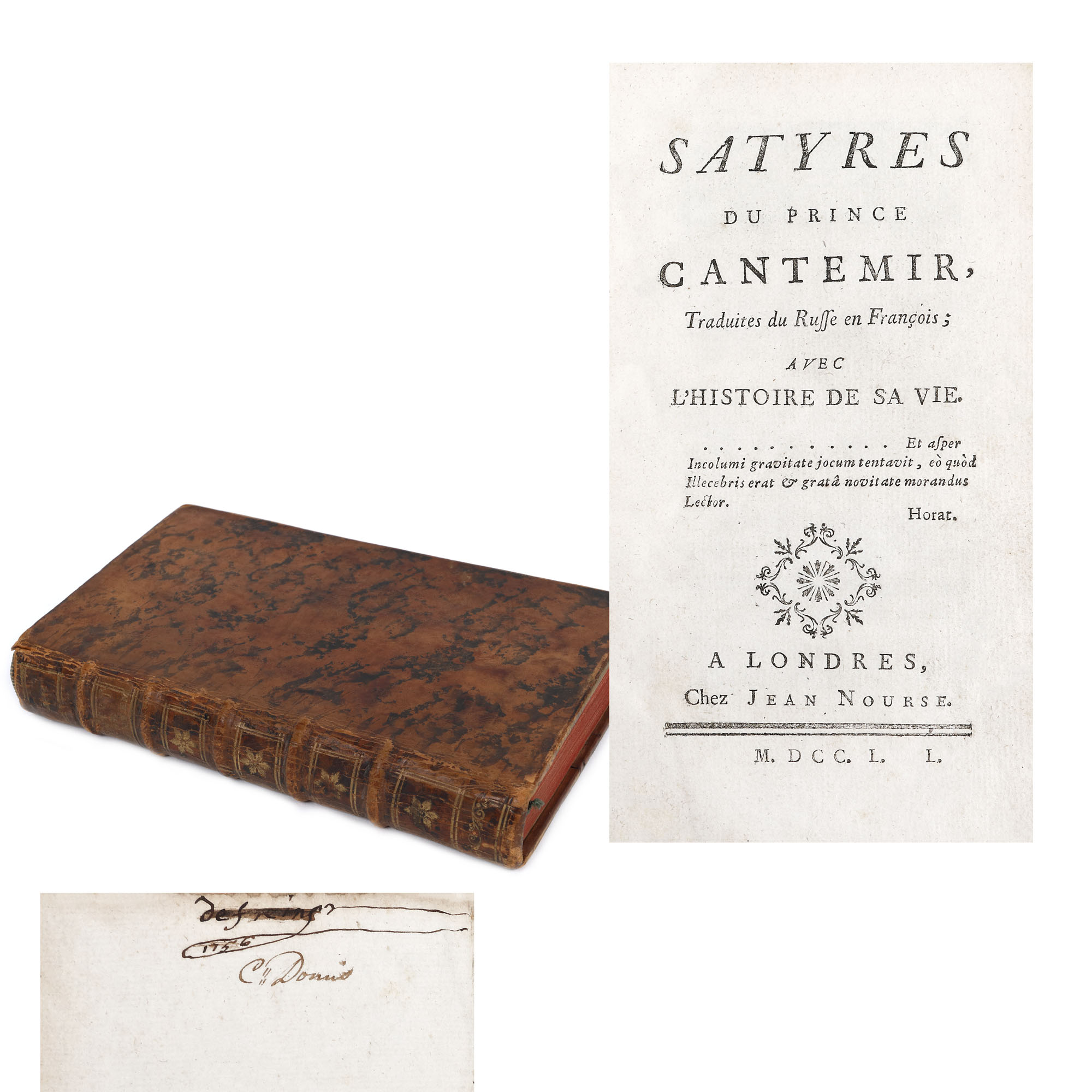
91. "Satyres de Monsieur le Prince Cantemir", by Prince Antioh Cantemir, French, London, 1750, rarity
Selling price
Pretul de pornire si cel estimat nu sunt preturi de vanzare efective
EUR 720
Session
Thu, 25 November 2021 19:00
Brought to you by
Antioh Cantemir (1709-1744) was born in Constantinople as the son of the future ruler of Moldova Dimitrie Cantemir and Princess Smaranda Cantacuzino. After the military failure in 1711 against the Ottoman Empire, the Moldavian ruler was forced into exile in the Russian Empire where his ally, Tsar Peter the Great, offered him asylum, estates and recognized his noble rank for himself and his descendants. The young prince's journey in his new homeland included both a diplomatic career in the service of the Tsar and the glory of the literary world. Educated and trained, with a vast culture and deep philological knowledge, a diligent polyglot, Antioh distinguished himself both as a writer and as a diplomat. In 1731 he was appointed ambassador to the Russian Empire in London, a position he took up the following year, where he remained for six years, during which time he became acquainted with both political and literary circles. In addition to Latin, Greek, Russian, Italian and French, he also learned English in London, which he used to correspond with intellectuals on the island even after his return to Sankt-Petersburg. His publishing work established him as a wide-ranging European illuminist and his diplomatic successes, including the resumption of contacts between France and Russia, blocked due to the division of Poland between Austria, Prussia and Russia, recommended him for the position of ambassador in Paris. It was in the French capital that he met his untimely end in 1744, aged just 35. Antioh Cantemir is considered to be one of the founders of Russian cultic literature. His work Satire was first published in 1743 in Paris, in Joncquieres' French translation of the Russian original. The author's Enlightenment creed emerges from its reading: the value of adult behaviour as a model for young people, the role of education in the development of the individual's personality, the material and not divine origin of human defects. The present copy is part of the French edition published in London by the bookseller Jean Nourse in 1750. The printing is done in black ink and the tabs are decorated with small boxes and ornaments composed of stylized vegetal and geometric motifs, often in the upper and lower registers. The covers are made of leather-covered cardboard and the squares between the bindings are decorated with a plant pattern in which the lily flower stands out.
Dimensions
width 10 cm, height 17 cm, custom 17 Ã 10 cm
ADDITIONAL INFORMATION
For clarifications regarding the bidding procedure, hammer price costs, guarantee, payment, and collection terms for the winning lot, we recommend carefully reading/re-reading the Bidding Regulations.
For additional information regarding the lot and the auction, please contact the Art Consultants Department.
Detalii
Antioh Cantemir (1709-1744) was born in Constantinople as the son of the future ruler of Moldova Dimitrie Cantemir and Princess Smaranda Cantacuzino. After the military failure in 1711 against the Ottoman Empire, the Moldavian ruler was forced into exile in the Russian Empire where his ally, Tsar Peter the Great, offered him asylum, estates and recognized his noble rank for himself and his descendants. The young prince's journey in his new homeland included both a diplomatic career in the service of the Tsar and the glory of the literary world. Educated and trained, with a vast culture and deep philological knowledge, a diligent polyglot, Antioh distinguished himself both as a writer and as a diplomat. In 1731 he was appointed ambassador to the Russian Empire in London, a position he took up the following year, where he remained for six years, during which time he became acquainted with both political and literary circles. In addition to Latin, Greek, Russian, Italian and French, he also learned English in London, which he used to correspond with intellectuals on the island even after his return to Sankt-Petersburg. His publishing work established him as a wide-ranging European illuminist and his diplomatic successes, including the resumption of contacts between France and Russia, blocked due to the division of Poland between Austria, Prussia and Russia, recommended him for the position of ambassador in Paris. It was in the French capital that he met his untimely end in 1744, aged just 35. Antioh Cantemir is considered to be one of the founders of Russian cultic literature. His work Satire was first published in 1743 in Paris, in Joncquieres' French translation of the Russian original. The author's Enlightenment creed emerges from its reading: the value of adult behaviour as a model for young people, the role of education in the development of the individual's personality, the material and not divine origin of human defects. The present copy is part of the French edition published in London by the bookseller Jean Nourse in 1750. The printing is done in black ink and the tabs are decorated with small boxes and ornaments composed of stylized vegetal and geometric motifs, often in the upper and lower registers. The covers are made of leather-covered cardboard and the squares between the bindings are decorated with a plant pattern in which the lily flower stands out.
ADDITIONAL INFORMATION
For clarifications regarding the bidding procedure, hammer price costs, guarantee, payment, and collection terms for the winning lot, we recommend carefully reading/re-reading the Bidding Regulations.
For additional information regarding the lot and the auction, please contact the Art Consultants Department.
Dimensions
width 10 cm, height 17 cm, custom 17 Ã 10 cm
Brought to you by
Similar lots
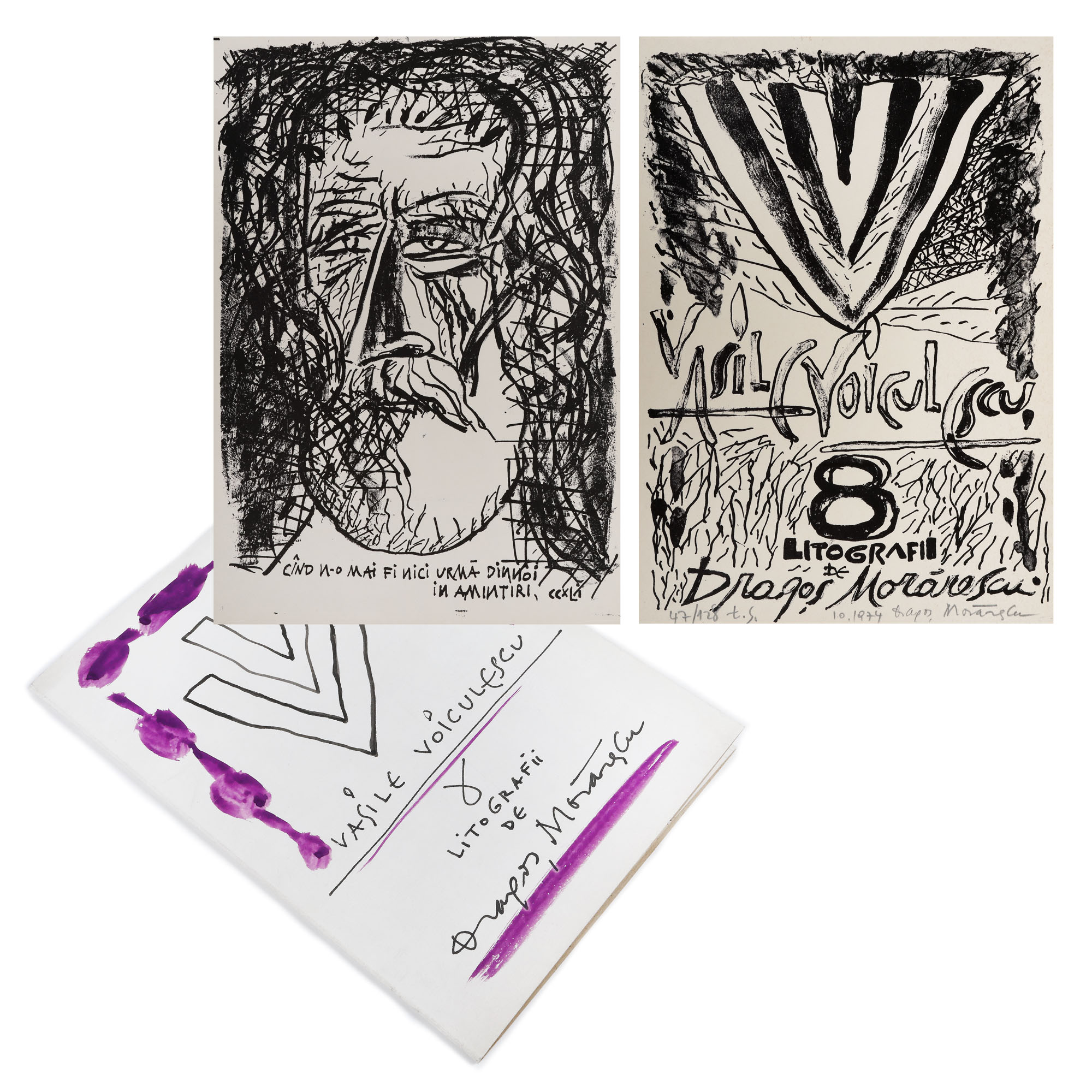
45. "Vasile Voiculescu" folder, by Dragoș Morărescu, 1974, with eight lithographs
Starting price
EUR 300
Sold
EUR 400