
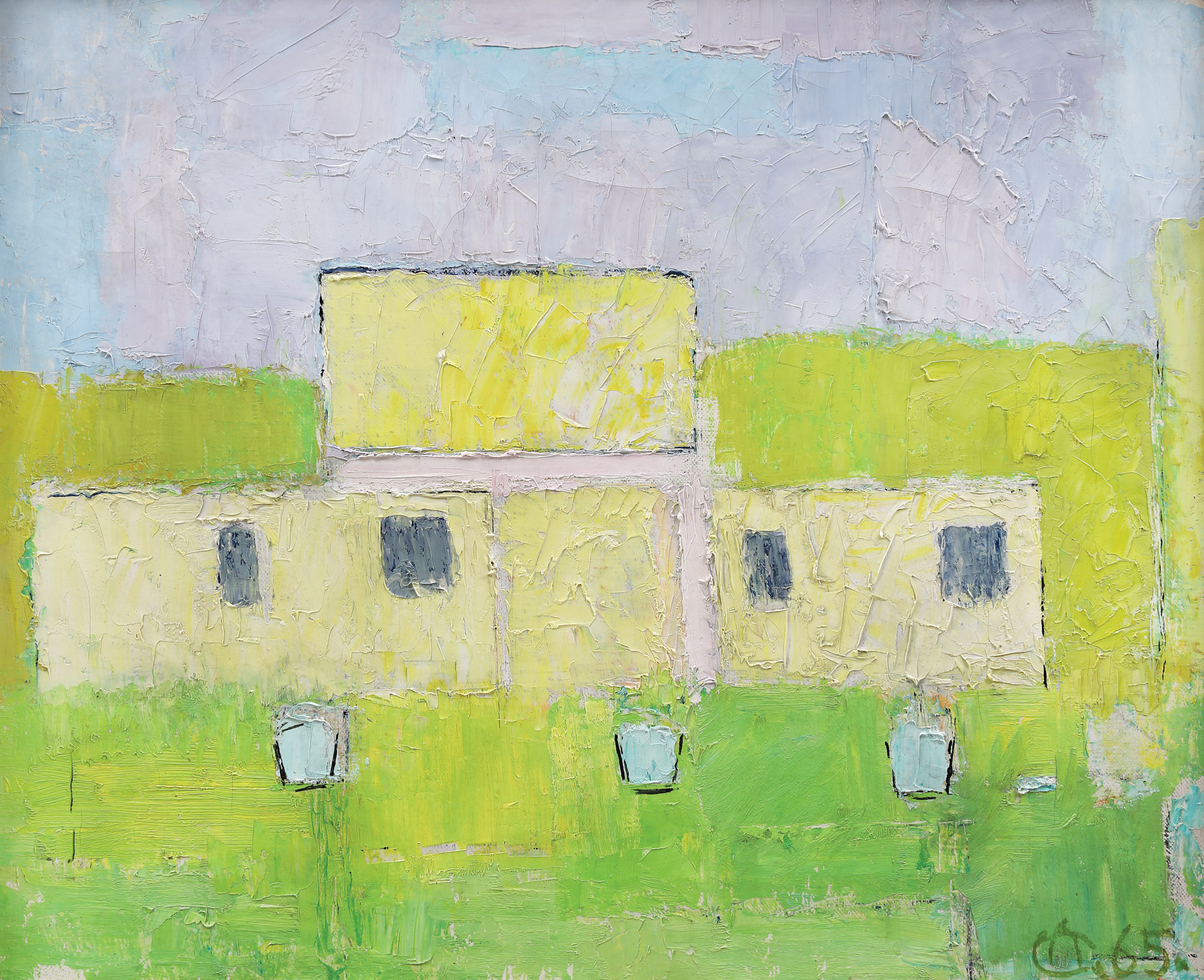
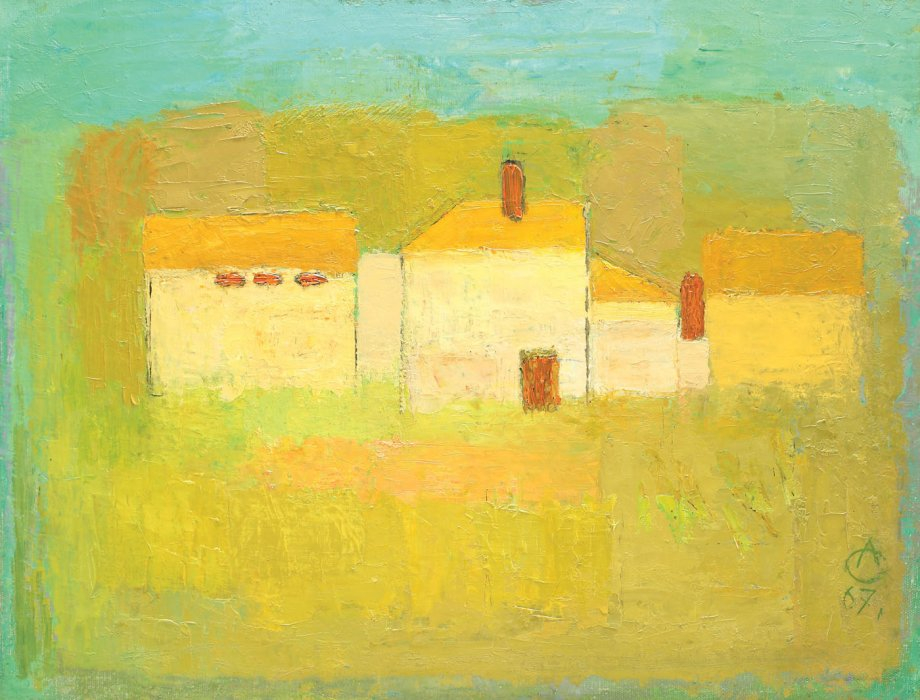
54. Villa in Eforie (House designed by Henrieta Gibory Delavrancea) [1965]

The photos of the lot are informative and indicative, and cannot provide a highly detailed view of the object from all angles. We recommend a careful physical inspection of the lot before bidding.

54. Villa in Eforie (House designed by Henrieta Gibory Delavrancea) [1965]
1903, Ciucurova, Tulcea - 1977, Bucureşti

Estimate:
EUR 6.000 - 9.000
Not sold

References

DEAC, Mircea, "Ciucurencu", Meridiane Publishing House, Bucharest, 1978. FLOREA, Vasile, "Ciucurencu", Arc 2000 Publishing House, Bucharest, 1995.

oil on canvas, 51 x 61.5 cm, signed and dated bottom right, in brown, in monogram, "AC, (19)65"

Although she made her debut in Romanian art in the 1930s, a period deeply marked by the influence of impressionism, Alexandru Ciucurencu will dissociate herself from the teachings of this artistic movement, taking, however, some characteristics. His plastic language will keep the colour's autonomy in relation to the represented object, the study of the model and the deepening of light variations. Whether we refer to Matisse, Duffy or Luchian, each of these will inspire Ciucurencu the appetite for a lively, bright and exuberant chromatic. The artist stands out through his innovative vision. Unlike his contemporaries, he is much more concerned with compositional organisation and ordering and shows a particular interest in colour, which goes beyond the decorative function. The innovation of his creations comes in the context of assiduous studies of predecessors, of his own experiments and by reflecting on the works of contemporaries. For Ciucurencu, the light definitively supresses the shade and becomes part of the colour. The line, mark of his geometric plastic language, is not only given an imitative function, of outlining the object, but is immersed in the composition, becoming, in turn, part of the light and colour. And in landscapes, the same as in every genre she approached, Ciucurencu will assign to her paintings the importance of the plastic surface organisation. In his works, nature takes on geometric values and the chromatic palette is overlaid with well-structured rhythms. The object is subject to colour, not the other way round. The artist begins from a spot of colour which will become the leitmotiv of the whole work. The period to which the present work corresponds has been irrevocably linked to the imposing force of yellow. We also identify the same light of the yellow and of the raw green in the works "Landscape in Breaza" (1962), "Greenhouses in Mogoșoaia" (1962) or "Greenhouses in Căciulați" (1968). The chromatic universe is discreetly modulated, through harmonious concordances and gets inflections of blue and broad touch-lines of white. Alexandru Ciucurencu does not stumble into a singular formula, but constantly experiments, synchronising his brush with post-impressionism, cubism or constructivism. However, he will remain the master in the swimmer posture and will shape his own, unique style.

For clarifications regarding the bidding procedure, hammer price costs, guarantee, payment, and collection terms for the winning lot, we recommend carefully reading/re-reading the Bidding Regulations.

For additional information regarding the lot and the auction, please contact the Art Consultants Department.

SESSION
Tue, 20 June 2023 19:00

Similar lots

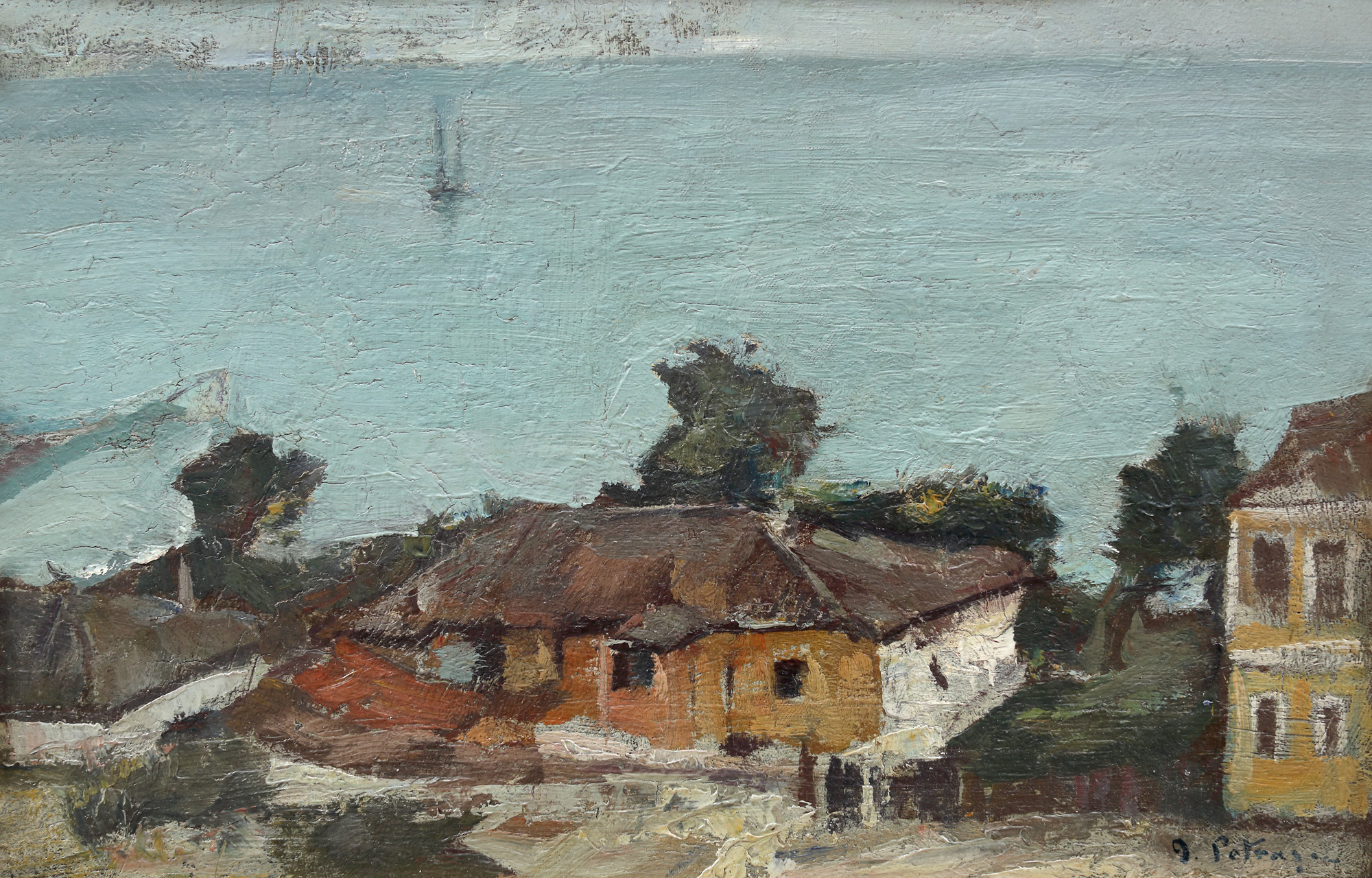
Mediterranean View

185. Mediterranean View [1915-1920]

Gheorghe Petraşcu

    Estimate: EUR 5.000 - 8.000
    Sold post auction EUR 5.000