


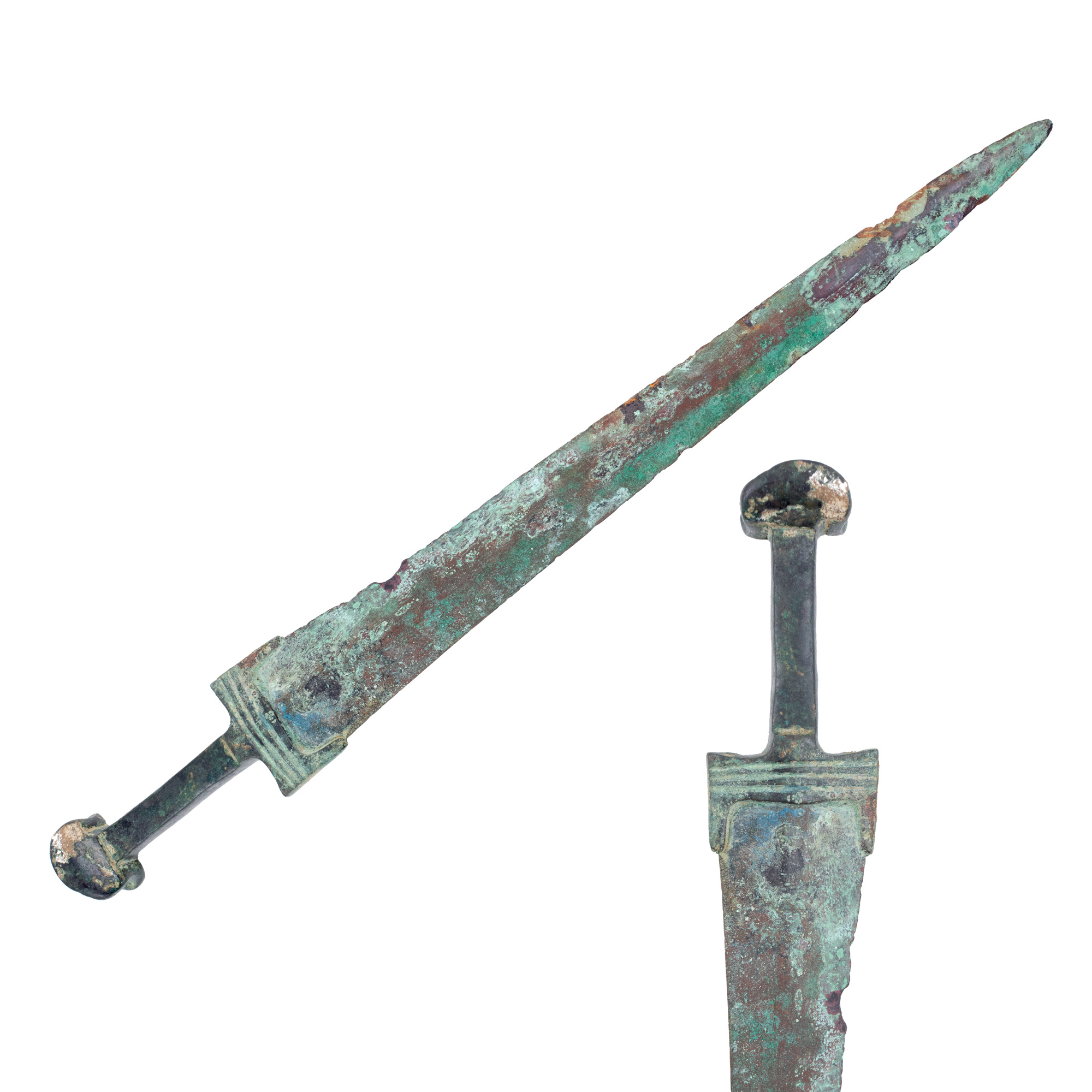
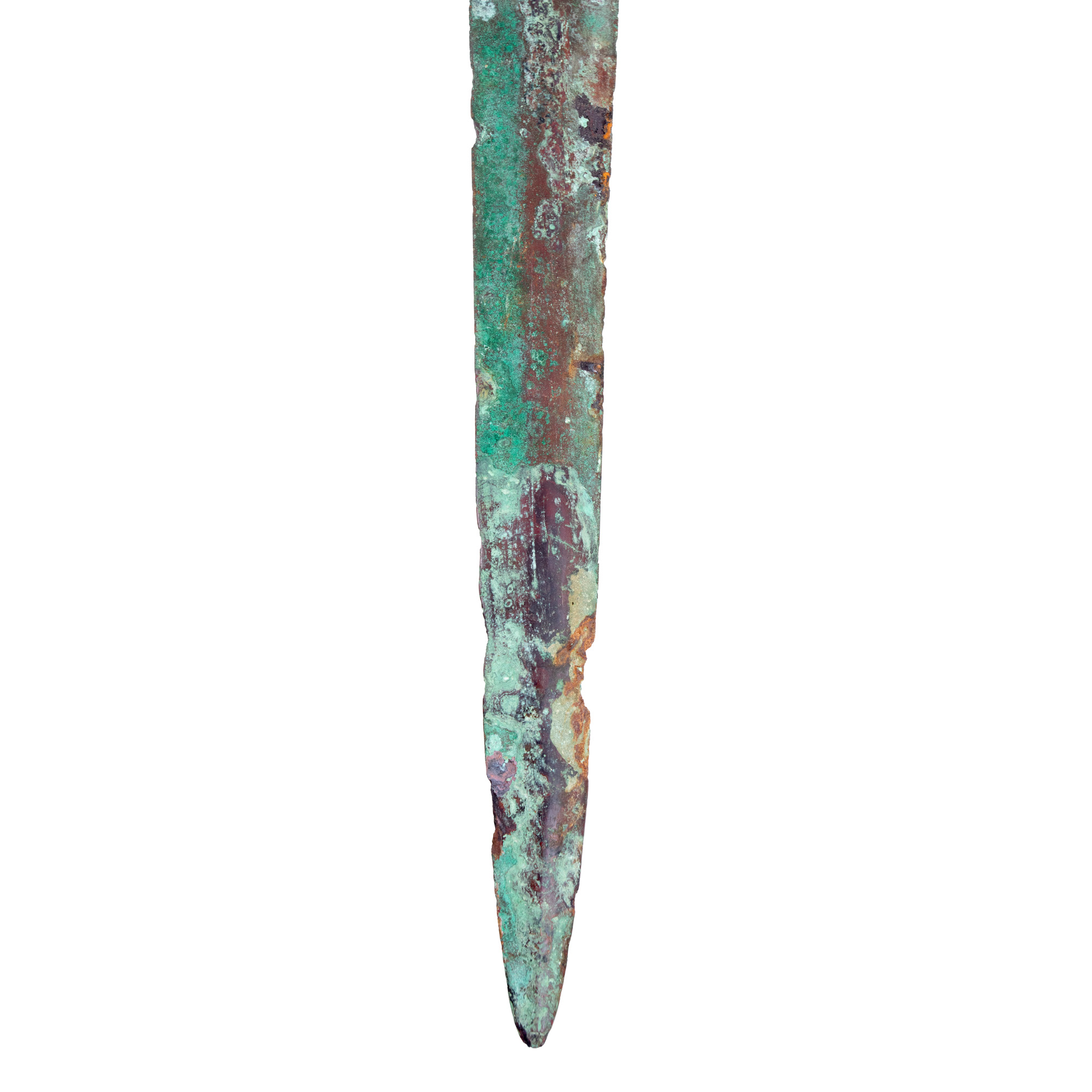
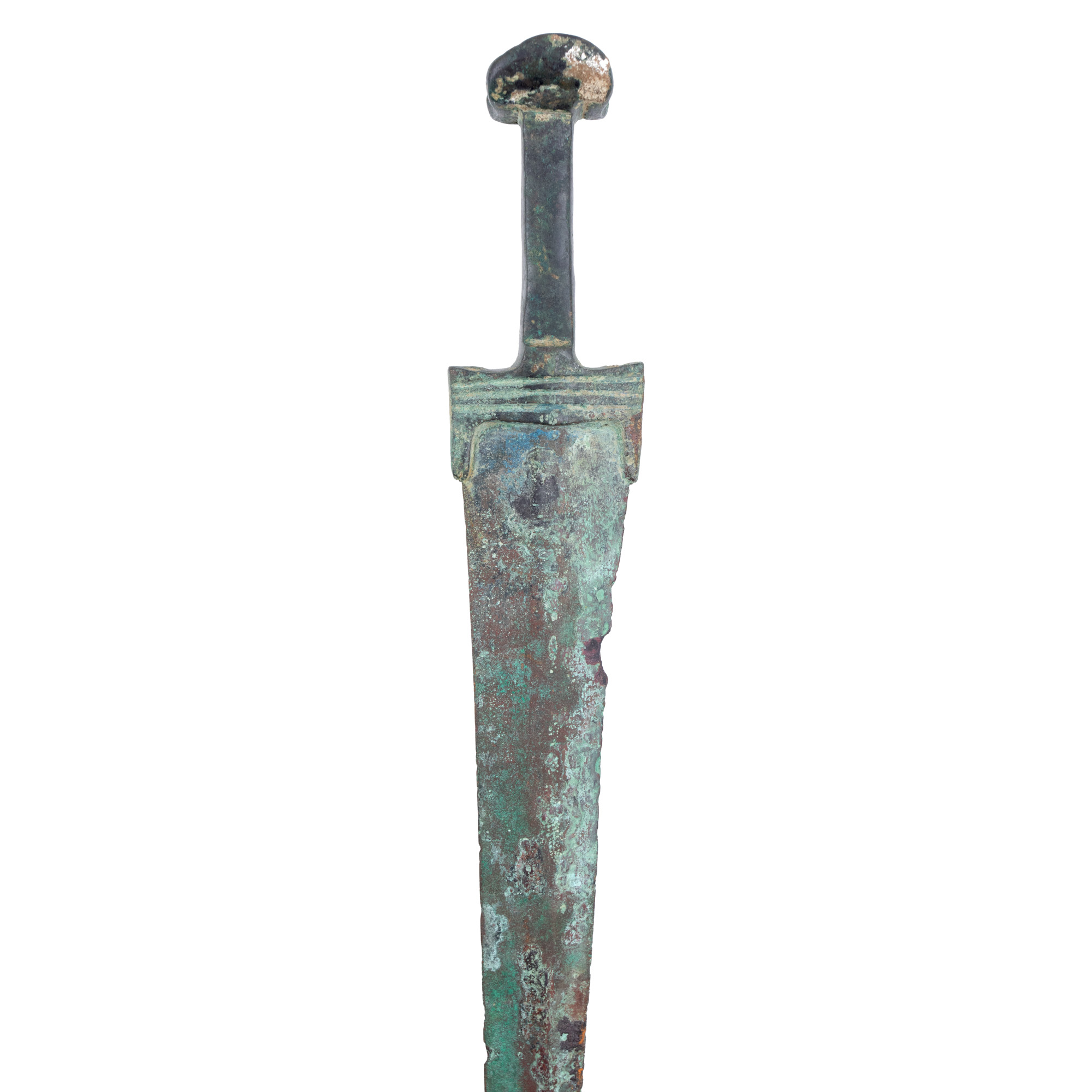
134Т. Bronze Sword, Luristan, Persian region, Bronze Age, XII - IX century B.C., museum piece
The photos of the lot are informative and indicative, and cannot provide a highly detailed view of the object from all angles. We recommend a careful physical inspection of the lot before bidding.
134Т. Bronze Sword, Luristan, Persian region, Bronze Age, XII - IX century B.C., museum piece
Starting price:
EUR 2.500
Not sold
bronze, l=57 cm
An elongated triangular blade sword, with a rectangular guard and a full handle (in the form of an inverted saddle). The blade section is rhombic, with very elongated sides; the handle section is square, with well defined edges. The piece is cast in a single piece, in a bivalve mould. Rectangular guard, with two elongated side ends, which "dress" the upper sides of the blade. On the guard (at the bottom of the handle) a decor made of three wide, transverse incisions. On the blade, a longitudinal rib (not very pronounced). Straight handle, the handle end in the shape of an inverted saddle (or in other words "fan-shaped").
Bronzes of this specific type come from the province of Luristan / Lorestan, a region located in the current southwestern area of Iran. In antiquity, a number of nomadic populations, such as the Medes, Kassites, and finally the Persians, settled in this area. In general, given the nomadic nature of these populations, it is considered that none of the Luristan bronzes (especially weapons - battle axes, swords, daggers) were large, needing to be easily handled and carried, including by horse riders. The series of Luristan bronze discoveries, often accidental discoveries from the end of the 19th century and then from excavations of Western archaeological missions from the first half of the 20th century, also includes wearables or bronze vessels. In the manner of decorating weapons, as well as the fact that some have been found in funerary contexts, they appear to have also had a ceremonial role. It should be noted that the bronzes from Luristan are not known in the eastern part of Ancient Persia (current Iran), but there are findings (of this type of import) in the west of Anatolia and Greece (Samos and Crete). The general dating range of these specific objects is between 1000 BC and 650 BC.
Such objects are found in a series of important museums in Europe, for example The British Museum (London), Louvre (Paris) or Neues Museum (Berlin), but also from North America, such as the Metropolitan Museum of Art (New York).
For clarifications regarding the bidding procedure, hammer price costs, guarantee, payment, and collection terms for the winning lot, we recommend carefully reading/re-reading the Bidding Regulations.
For additional information regarding the lot and the auction, please contact the Art Consultants Department.
SESSION
Brought to you by
Similar lots
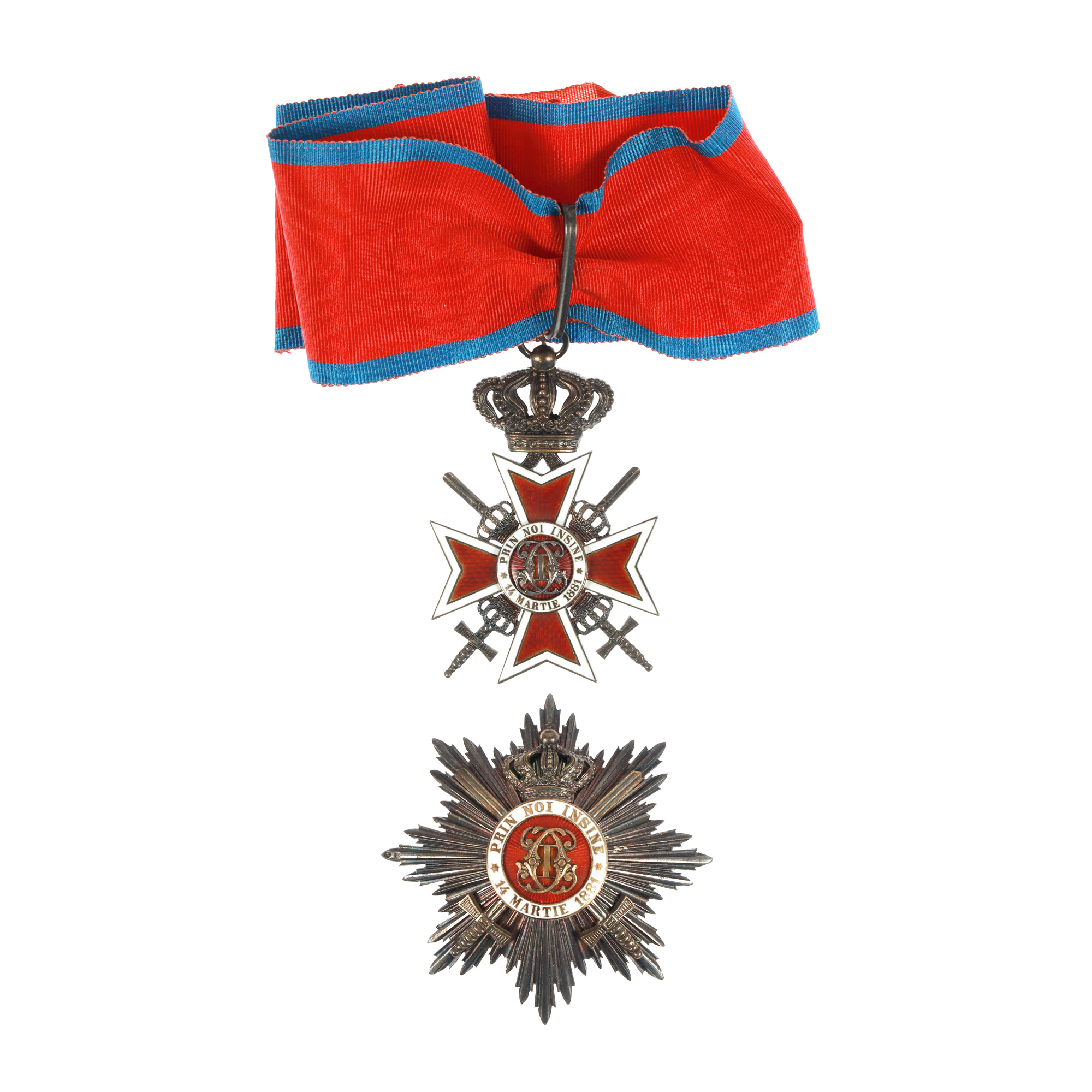
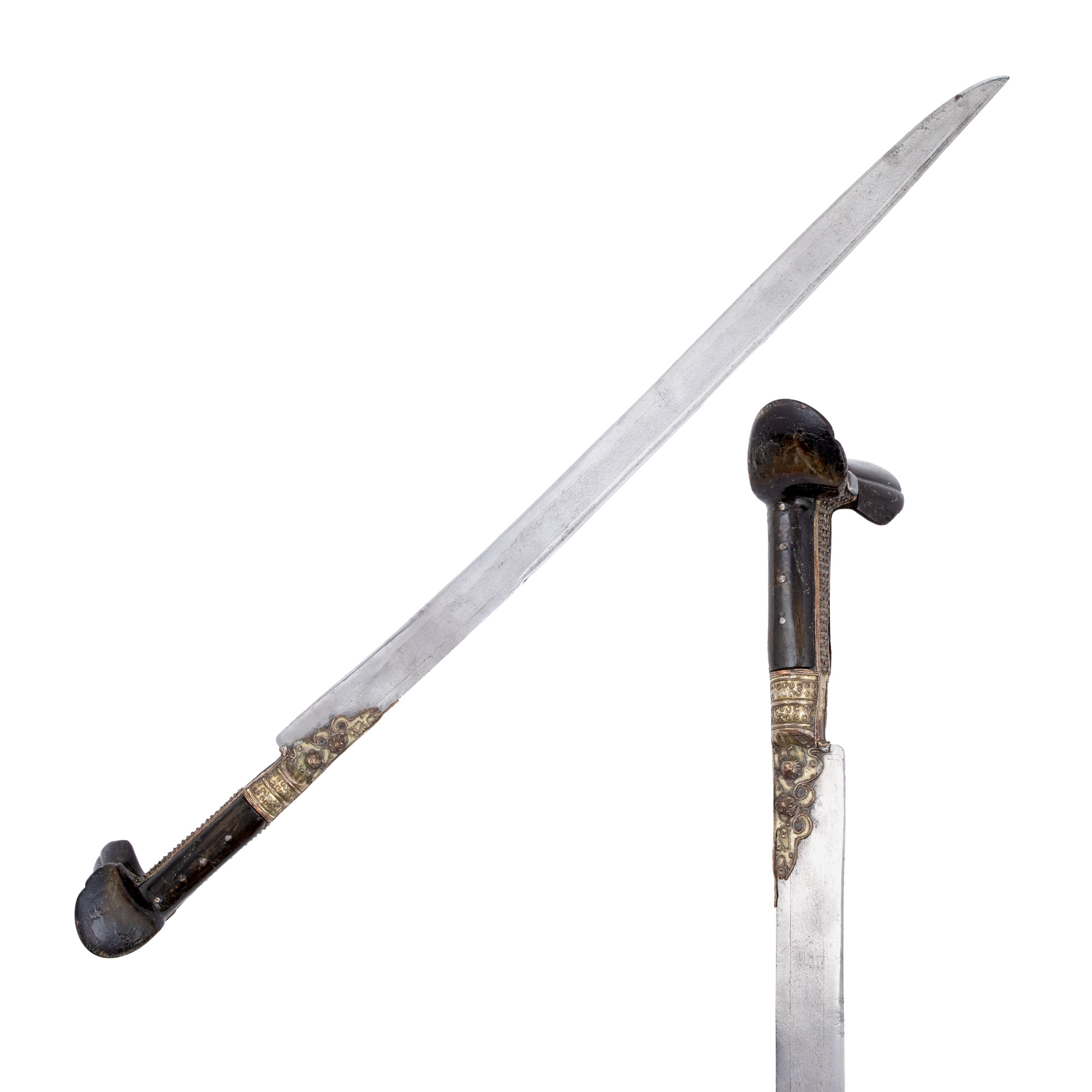
135. Ottoman Yatagan, Balkan workshop, first half of the 19th century
Starting price:
EUR 400
Sold
EUR 500