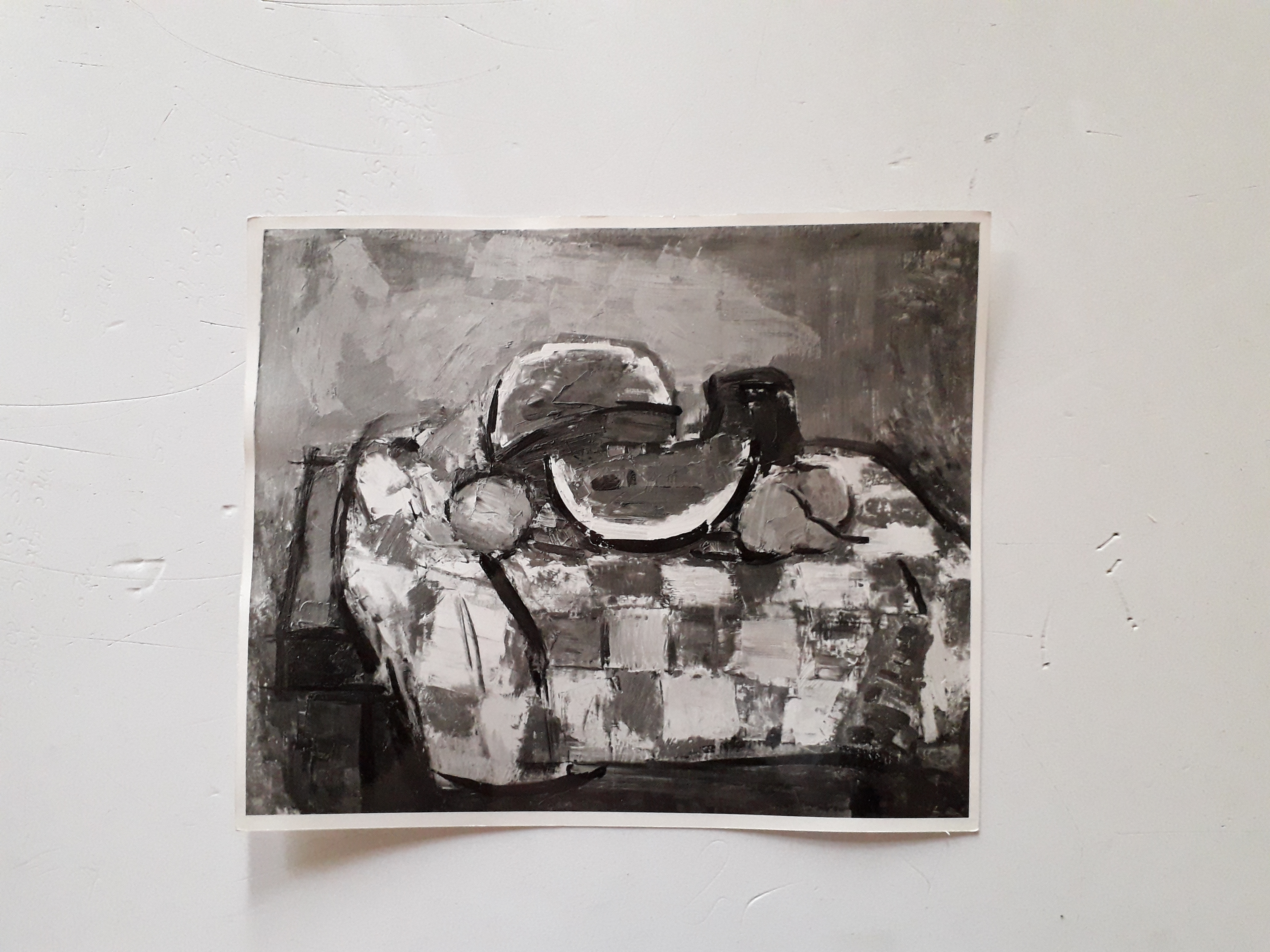

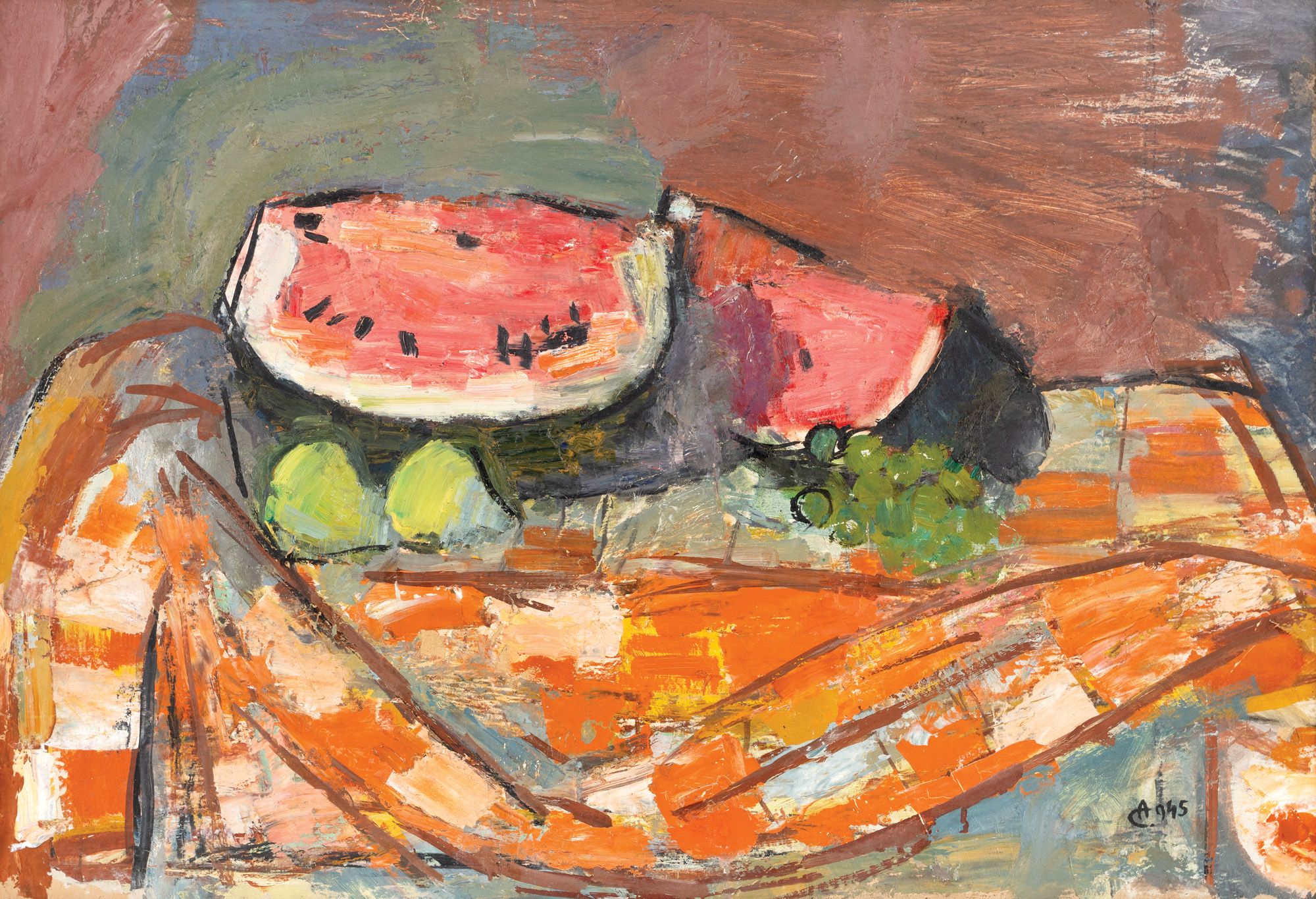
139. Still Life with Melons and Grapes [1945]
1903, Ciucurova, Tulcea - 1977, Bucureşti

Selling price

EUR 12.060

Session

Thu, 12 December 2024 17:00

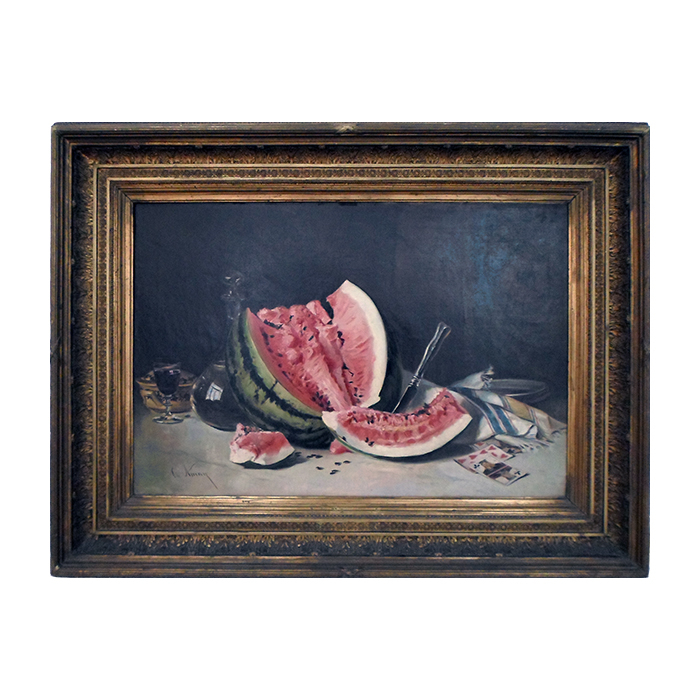
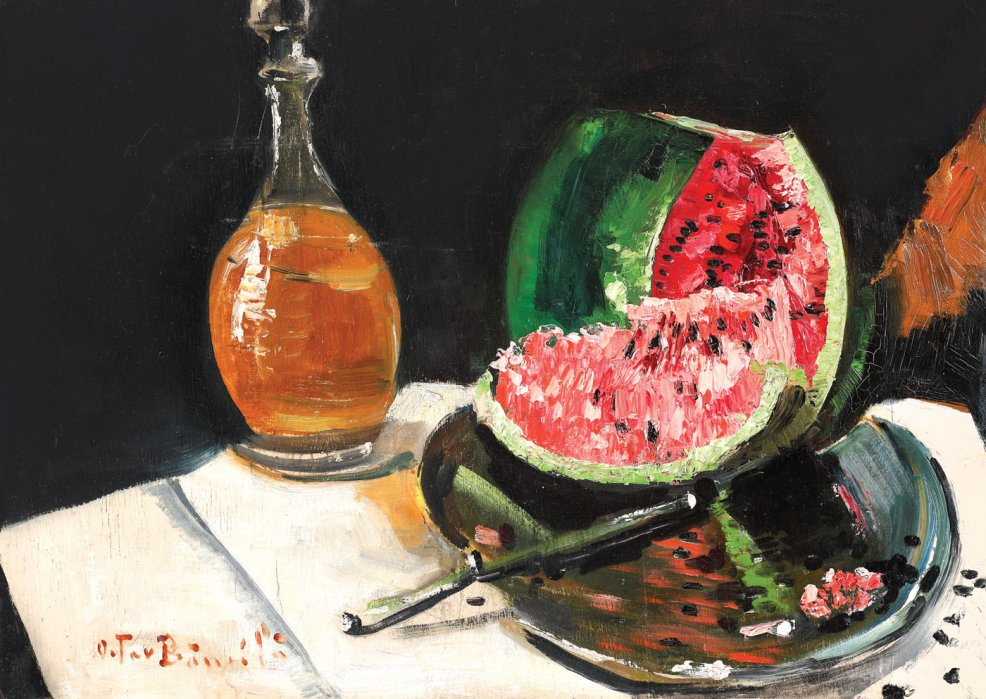
Alexandru Ciucurencu's mature work, famed for its vibrant, exuberant chromatics, starts in strong contrast to his first creative stage, deeply influenced by the brown nuances promoted by his professor, G.D. Mirea. During the summers spent in Baia Mare, Ciucurencu is surprised by the expressive palette of the Maramureş painters and amazed by the chromatic juxtapositions they propose. In 1930, the artist leaves his homeland behind and heads for Paris. The fervor of one of the most renowned European artistic capitals of the previous century considerably broadens his imaginative horizon and offers him new plastic expressive possibilities. In the capital of France, Ciucurencu discovers Hieronymus Bosch, Botticelli, Matisse, Picasso, Braque, or Cézanne. In addition to encountering universal art, his contact with Paris mediates the acquisition of a much more significant pictorial refinement. His works always start from reality, regardless of the manner they end up being executed. He takes, in much diminished quantities, from Cézanne's cubism, and from Matisse he will assume line and color value in his work. A colorist by excellence, he adjusts tones and shapes thus creating a harmonious ensemble. From Pallady, he learns the necessary rules in composing a still life, from Tonitza he takes the instruments that help him create decoratively, and from Petraşcu he will understand the importance of using black. The black line, initially sinuous, then abrupt or fragmented, accentuates the contrasts between colors. In Ciucurencu, color predominates. Color offers him endless possibilities of artistic expression, leading to the secondary approach of objects and shapes. The still life with watermelon is not a singular appearance either in Ciucurencu's creation, or in Romanian visual arts in general. We see the subject initially tackled by the artist in 1942, in a work that was part of Dr. Theodor Firică's collection. We observe the same checkered tablecloth, and a similar arrangement of watermelon slices and pears. If in the 1942 work, the composition with the two watermelon slices included a small jug in the background, the 1945 work receives as a new element a bunch of grapes. However, the thematic approached by Ciucurencu is not, as mentioned, an isolated appearance. We find the still life with watermelon also in the works of artists such as Ion Andreescu, Ştefan Luchian, Theodor Aman, Octav Băncilă or C.D. Stahi.

References

FLOREA, Vasile, "Ciucurencu", Arc 2000 Publishing House, Bucharest, 1995. OPRESCU, George, "Alexandru Ciucurencu", Meridiane Publishing House, Bucharest, 1962. JIANU, Ionel, "A. Ciucurencu", State Publishing House for Literature and Art, Bucharest, 1958.

Dimensions

width 84.5 cm, height 58.5 cm

Description

oil on cardboard, signed and dated bottom right, in black, "AC, (1)945"

Research information

The artwork was part of the "Picnic at the Palace" exhibition, Art Safari Bucharest, 2024.

Dating

1945

PROVENANCE

Historical collection of Mircea Iliescu (1900-1982).

ADDITIONAL INFORMATION

For clarifications regarding the bidding procedure, hammer price costs, guarantee, payment, and collection terms for the winning lot, we recommend carefully reading/re-reading the Bidding Regulations.

For additional information regarding the lot and the auction, please contact the Art Consultants Department.

Similar lots
Dance

3. Dance

Theodor Aman

    Estimate EUR 600 - 900
    Sold EUR 1.200
Nevermore (Alter Ego)

137. Nevermore (Alter Ego)

Dorin Coltofeanu

    Estimate EUR 1.500 - 2.500
    Sold EUR 2.500
On the Terrace at Balchik

22. On the Terrace at Balchik [1939]

Samuel Mützner

    Estimate EUR 5.000 - 8.000
    Sold EUR 8.500