
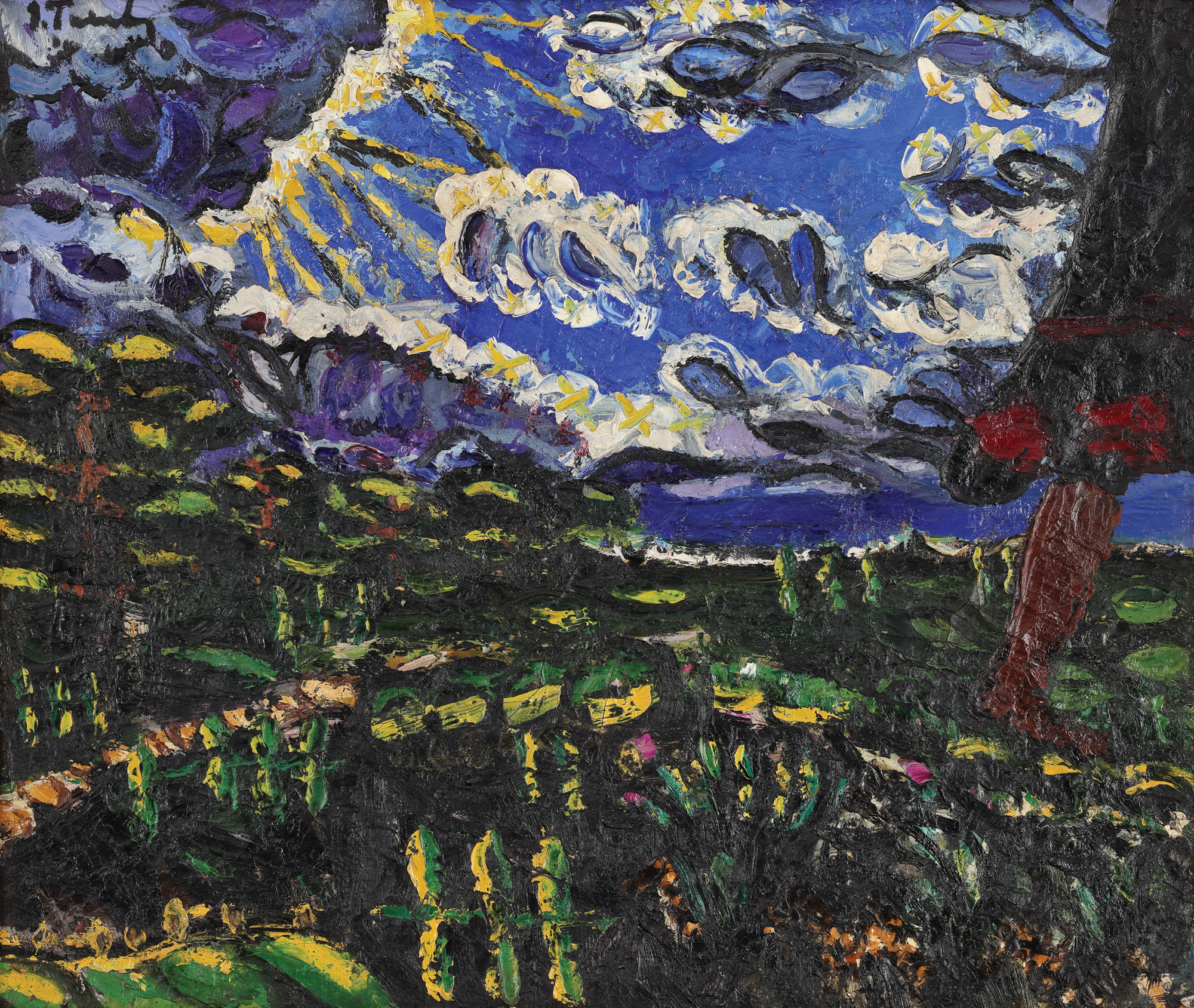
56. Daybreak [1949]

1910, Craiova - 1962, Bucureşti

Estimate

EUR 30.000 - 50.000

Sold

EUR 45.000

Session

Thu, 12 December 2024 17:00

The folkloric period in Ion Țuculescu's creation has its genesis in the middle of the last century, but in the absence of clear dates, this period can only be roughly framed between 1947-1956. It is a stage reserved for complex processes that encompass the artist's passions and his predilection for folk motifs. The folkloric period divides into three stages, as observed by Magda Cârneci, with the present work being included in the first. This is a stage where decorative elements suddenly appear in works, so we will encounter, seemingly out of context, plant elements stylized according to traditional decorative objects. The series of works now reveals oscillations, evolution, or returns to elements of interest to the artist. Ion Țuculescu will use his aesthetic and spiritual revelations to bring his works out of anonymity. Țuculescu asserts himself as an authentic interpreter of nature and particularly excels in creating landscapes. If the decorative elements are rather flattened, the landscape keeps its three-dimensionality to some extent. However, the decorative function is blurred, and the distinction between the figurative decorative system and the popular one is emphasized. The exceptional vocation of the colorist is accentuated by harmonious alternations of strong tones and the intentionally exaggerated use of paste. The artist borrows from the pictorial manner of the expressionists and excels in illustrating rhythms and in painting brushstrokes. His plastic space, infinite and with unusual materializations, is crossed by artificial brightness and a brutal chromaticism which has become a leitmotif. It goes beyond the decorative, purely imitative framework and tends toward the emotional charging of the canvas by using an exacerbated palette. His ornamental chords are set in black accents, a shade he assimilates from Petrașcu's works. He reinterprets the folkloric elements in a deeply modernized manner and transfers the analytical vision of the biologist into feverish attempts to exhaustively render frescoes dedicated to nature. Țuculescu is interested in highlighting the figurative-decorative dichotomy, while also emphasizing spatial principles. The feverishly imparted brushstrokes and electric blue hues confirm the similarities intuitively noted by critics from his first exhibitions with world-renowned artists like Van Gogh.

References

VLASIU, Ion, "Ion Țuculescu"; Meridiane Publishing House, Bucharest, 1966. CÂRNECI, Magda, "Ion Țuculescu", Meridiane Publishing House, Bucharest, 1984. DAVIDESCU, Cătălin, "Țuculescu", Scrisul Românesc Publishing House, Craiova, 1988. Catalogue of the exhibition "Țuculescu Centennial", ArtSociety Cultural Center, Bucharest, 2010.

Dimensions

width 53.5 cm, height 45 cm

Description

oil on canvas, signed top left, in black, "I. Țuculescu"

Dating

1949

ADDITIONAL INFORMATION

For clarifications regarding the bidding procedure, hammer price costs, guarantee, payment, and collection terms for the winning lot, we recommend carefully reading/re-reading the Bidding Regulations.

For additional information regarding the lot and the auction, please contact the Art Consultants Department.

Similar lots
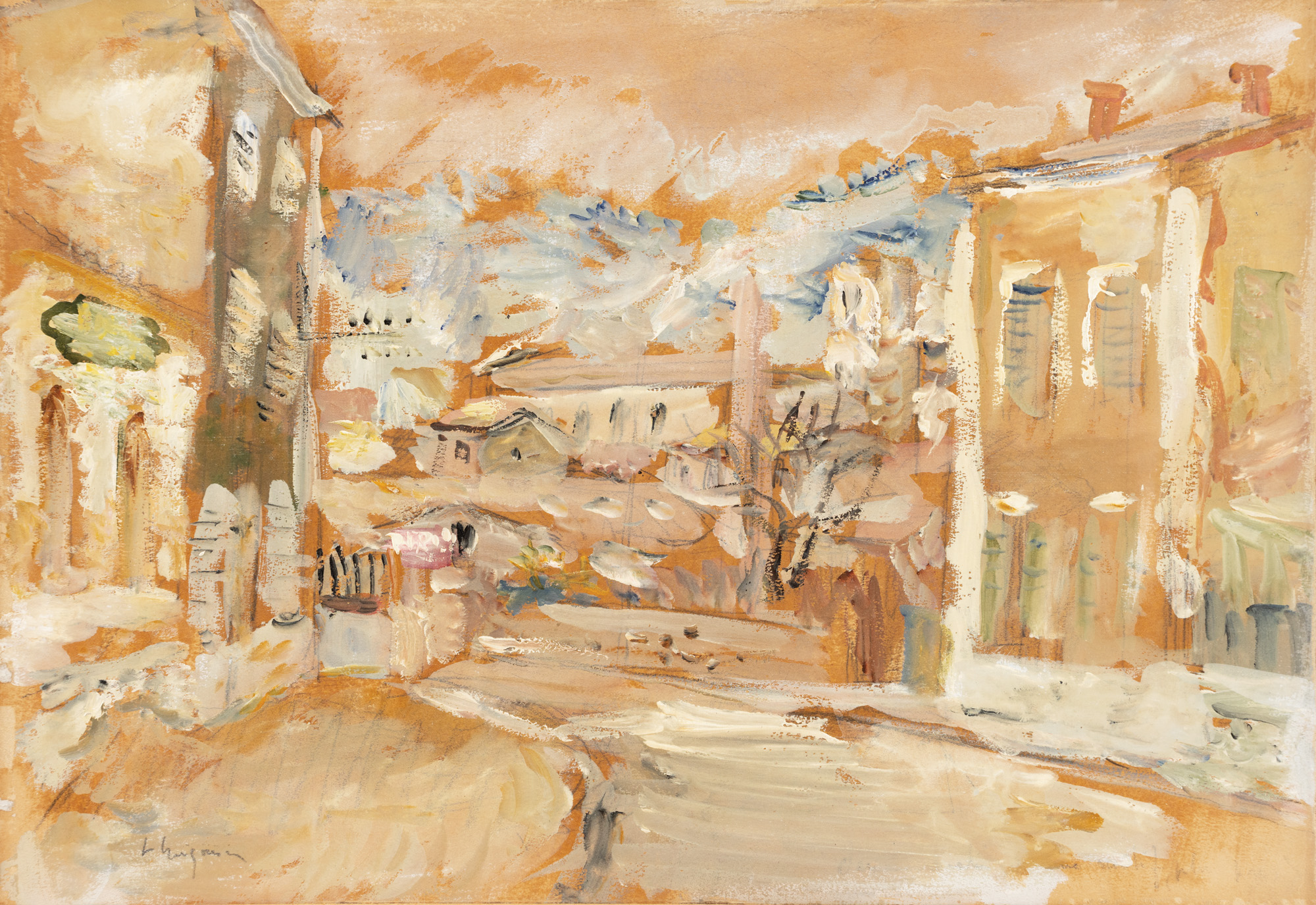
Margin of Iasi

117. Margin of Iasi [1943-1946]

Adam Bălţatu

    Estimate EUR 2.000 - 3.000
    Sold EUR 2.000
Winter in Bucharest

157. Winter in Bucharest [1940]

Jean Cheller

    Estimate EUR 3.000 - 5.000
    Sold EUR 4.500
Tea Time

23. Tea Time [a doua jumătate a anilor '20]

Constantin Isachie Popescu

    Estimate EUR 1.200 - 1.800
    Sold post auction EUR 2.000