


The photos of the lot are informative and indicative, and cannot provide a highly detailed view of the object from all angles. We recommend a careful physical inspection of the lot before bidding.
The photos of the lot are informative and indicative, and cannot provide a highly detailed view of the object from all angles. We recommend a careful physical inspection of the lot before bidding.
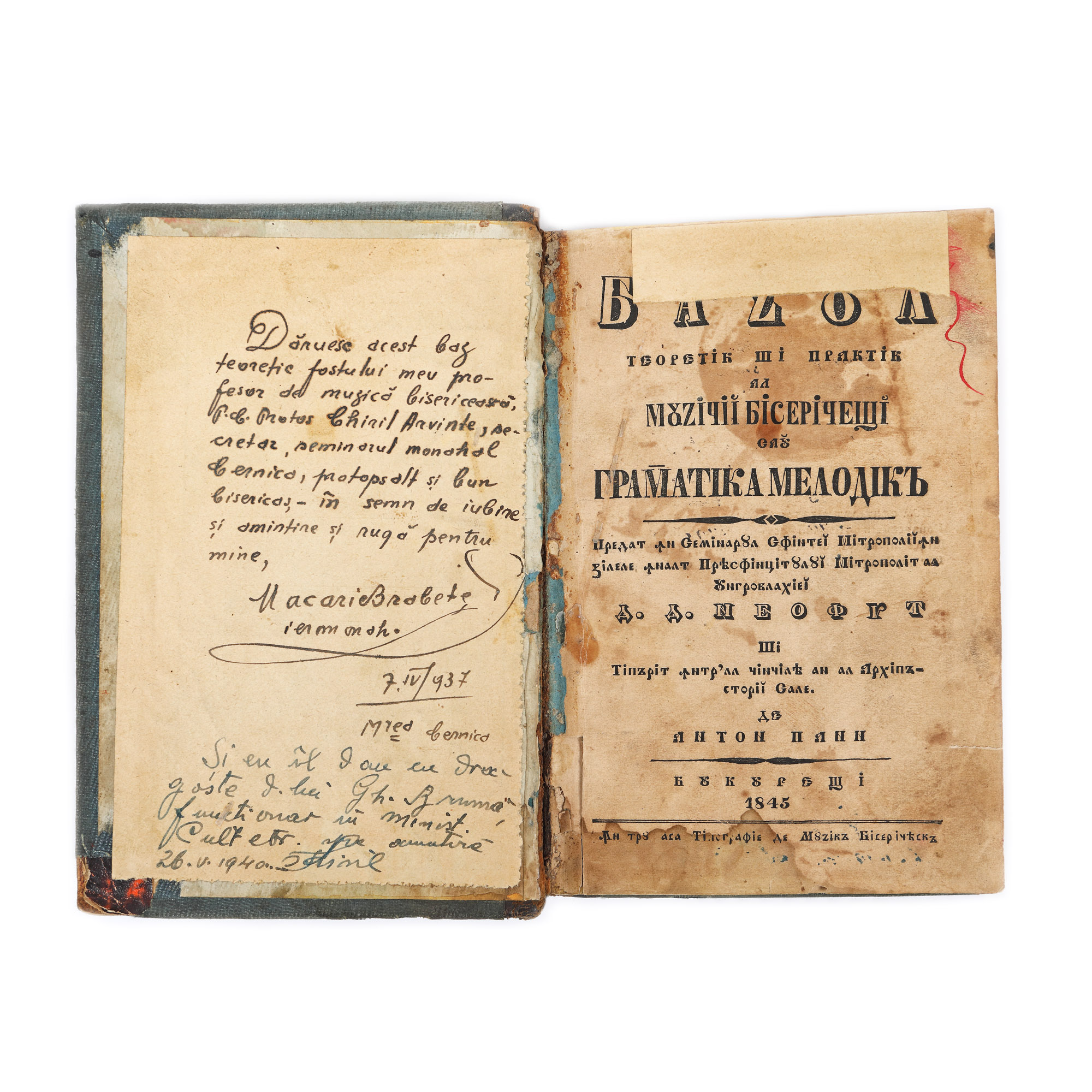
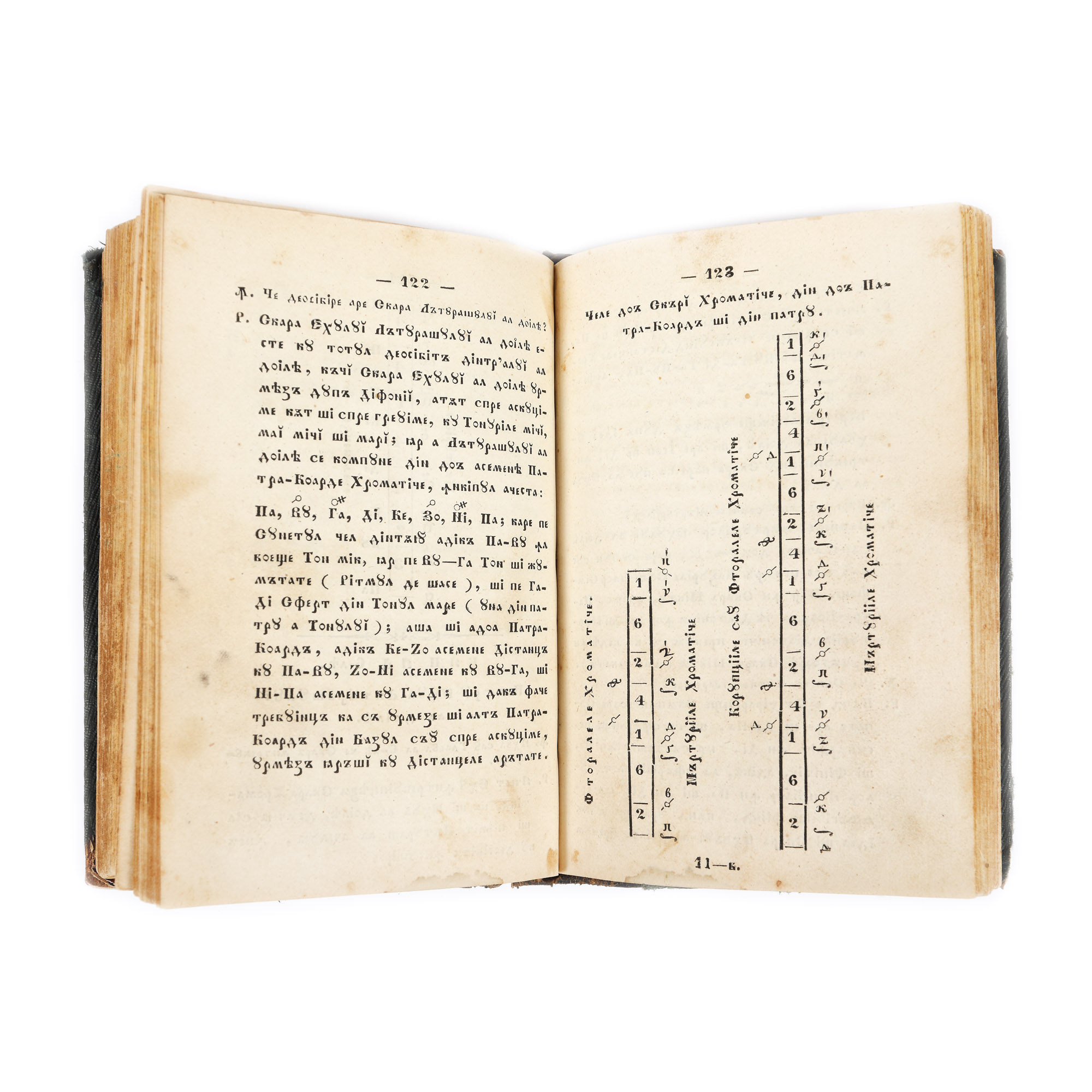
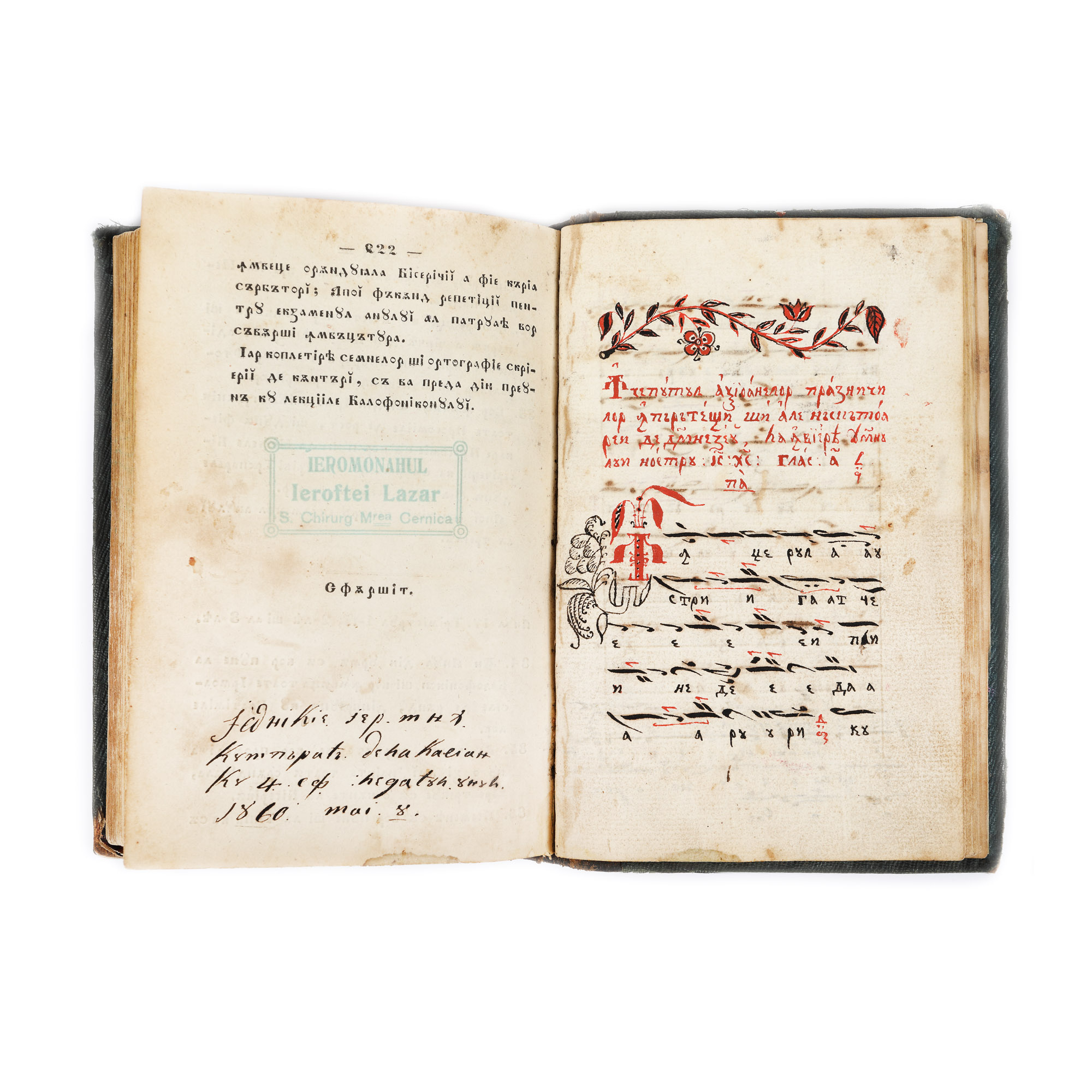
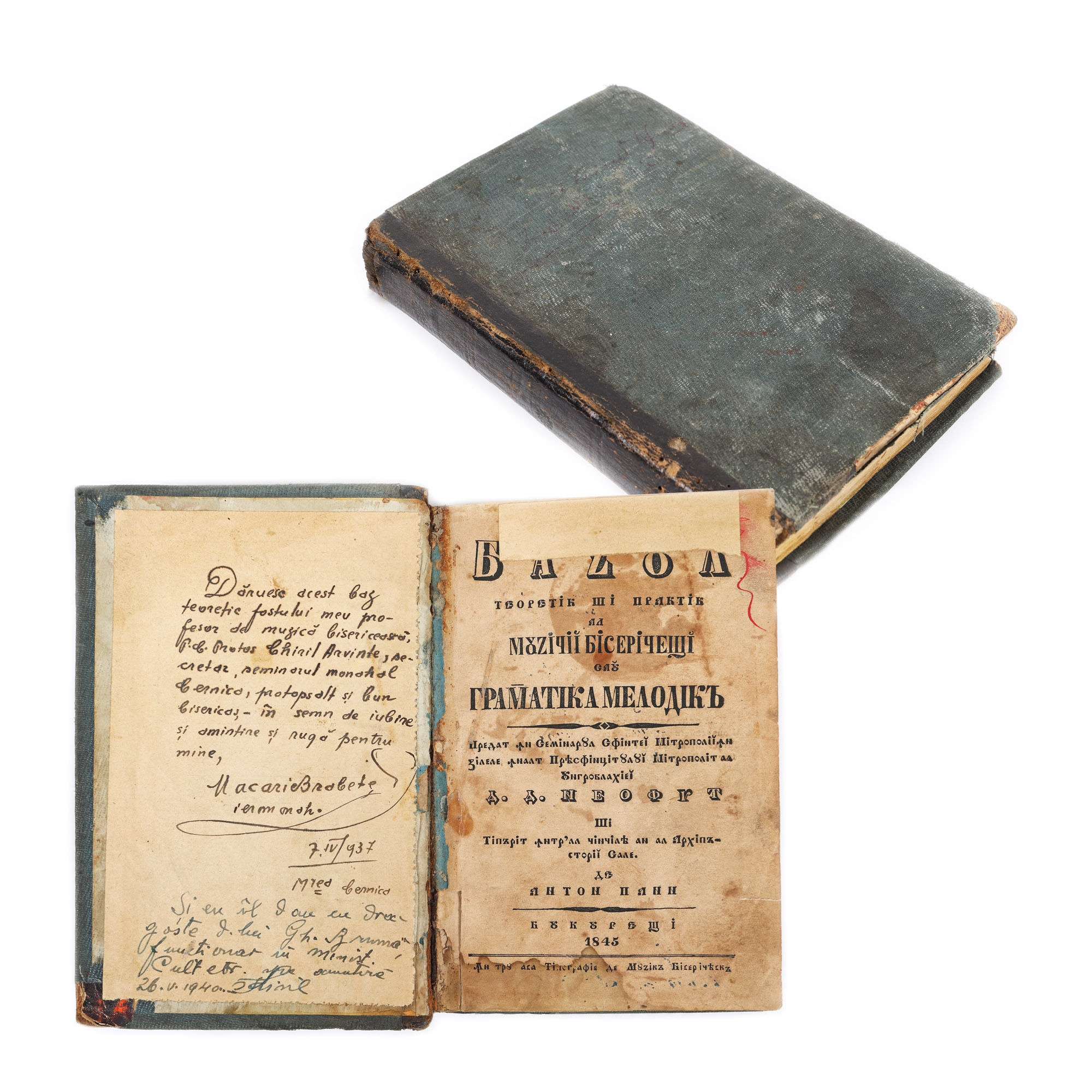
162. Two volumes bound "Bazul teoretic și practic al muzicii bisericești sau gramatica melodică" ("The Theoretical and Practical Basis of Church Music or Melodic Grammar") by Anton Pann, first edition, Bucharest, 1845, and manuscript of psaltic music, with the dedication and signature of the hieromonk Macarie Brabete to Father Chiril Arvinte, rare collector's item
Starting price
Pretul de pornire si cel estimat nu sunt preturi de vanzare efective
EUR 250
Sold
Pretul de pornire si cel estimat nu sunt preturi de vanzare efective
EUR 700
Session
Tue, 15 February 2022 19:00
Brought to you by
If Macarie's "Theoreticon" has today more of a historical value, being the first music book printed in Romanian, Anton Pann's "Bazul teoretic și practic al muzicii bisericești" ("Theoretical and Practical Basis of Church Music") continues to preserve its theoretical virtues, thanks to which we could penetrate even deeper into the universe of this not yet sufficiently known music, Byzantine music. Of all the theoretical Romanian musical works of the 19th century, the "Basis", Anton Pann's first work, also called "Gramatica melodică" ("The Melodic Grammar"), enjoyed the greatest authority and popularity, and was also the first book printed in 1845 in Bucharest. Anton Pann himself consulted the specialist books existing at that time, printed or in manuscript, after having listened, a quarter of a century earlier, to the psaltic courses, in the new "system" of Petru Efesiu from the Church "Saint Nicholas" Șelari, one of his colleagues being Father Macarie, among others. In his so-called "introduction" to the "Theoretical and Practical Basis", Anton Pann presents his readers, the " Muse Lovers", with a real course in the history of Byzantine music, starting from the ancient modal structures, some of which are the originators of the four authentic Byzantine etudes and the four plagal etudes (or "lăturașe", as he calls them). He then shows the contribution of the "classics", Ptolemy Philadelphus, Leo the Emperor, John of Damascus, Cosmas the Assyrian, "with a perfect knowledge of Persian music", to the development of this art, which culminated in the great masters of the 14th and 15th centuries: Ioannes Koukouzeles, Manouel Chrysaphes, Ioannes Kladas, etc., without overlooking those who dealt with the art of music in the 17th and 18th centuries: Peter Bereket, Neon Patron, John the Protopsalmist, Daniylus Lampadarie, Peter Peloponnesius, Jakob the Protopsalmist, Serdar Dionysius Fotino, etc. "Apart from the poets of music who have made their mark here, there are many others whom Greek music history shows..."
Continuing his music history lesson, Anton Pann also briefly introduces the three great psalters who reformed music: Gregory Protopsalter, Hurmuz Hartophilax and Chrysanth, metropolitan of Prussia, "these three being accomplished in the system of the old music, having knowledge also of the special Persian and European music-instruments, set to work together and reformed the system of music all with the old signs it contained, discarding only those that were superfluous and adding those that were lacking, and they brought in the new method" (p. XXXII). Anton Pann places the "Basis" at the top of the list, considering it the most important book with which to begin the study of music.
As far as the graphic aspect of the "Basis" is concerned, it must be said that it is of a higher quality than anything printed in the field of this music in the 19th century: the layout is balanced, well and correctly proportioned, the layouts are clear, and the neume outshines in elegance and evenness any specialized type made in other countries with a printing tradition
The Theoretical and Practical Basis" is a book of 276 pages (200 x 130 mm), of which: pp. I-VIII - Dedication to the Metropolitan; pp. IX-XVII - "To the Lovers of Muse"; pag. XVIII-XL - "Introduction"; pp. 1-210 - The actual text of the theoretical part; pp. 211-222 - "Method" (another attempt at a methodical approach to teaching music in schools); pp. 223-232 - "Names of the honourable subscribers and helpers in the printing of church-music books".
Dimensions
width 12 cm, height 18 cm, custom 18 Ã 12 cm
ADDITIONAL INFORMATION
For clarifications regarding the bidding procedure, hammer price costs, guarantee, payment, and collection terms for the winning lot, we recommend carefully reading/re-reading the Bidding Regulations.
For additional information regarding the lot and the auction, please contact the Art Consultants Department.
Detalii
If Macarie's "Theoreticon" has today more of a historical value, being the first music book printed in Romanian, Anton Pann's "Bazul teoretic și practic al muzicii bisericești" ("Theoretical and Practical Basis of Church Music") continues to preserve its theoretical virtues, thanks to which we could penetrate even deeper into the universe of this not yet sufficiently known music, Byzantine music. Of all the theoretical Romanian musical works of the 19th century, the "Basis", Anton Pann's first work, also called "Gramatica melodică" ("The Melodic Grammar"), enjoyed the greatest authority and popularity, and was also the first book printed in 1845 in Bucharest. Anton Pann himself consulted the specialist books existing at that time, printed or in manuscript, after having listened, a quarter of a century earlier, to the psaltic courses, in the new "system" of Petru Efesiu from the Church "Saint Nicholas" Șelari, one of his colleagues being Father Macarie, among others. In his so-called "introduction" to the "Theoretical and Practical Basis", Anton Pann presents his readers, the " Muse Lovers", with a real course in the history of Byzantine music, starting from the ancient modal structures, some of which are the originators of the four authentic Byzantine etudes and the four plagal etudes (or "lăturașe", as he calls them). He then shows the contribution of the "classics", Ptolemy Philadelphus, Leo the Emperor, John of Damascus, Cosmas the Assyrian, "with a perfect knowledge of Persian music", to the development of this art, which culminated in the great masters of the 14th and 15th centuries: Ioannes Koukouzeles, Manouel Chrysaphes, Ioannes Kladas, etc., without overlooking those who dealt with the art of music in the 17th and 18th centuries: Peter Bereket, Neon Patron, John the Protopsalmist, Daniylus Lampadarie, Peter Peloponnesius, Jakob the Protopsalmist, Serdar Dionysius Fotino, etc. "Apart from the poets of music who have made their mark here, there are many others whom Greek music history shows..."
Continuing his music history lesson, Anton Pann also briefly introduces the three great psalters who reformed music: Gregory Protopsalter, Hurmuz Hartophilax and Chrysanth, metropolitan of Prussia, "these three being accomplished in the system of the old music, having knowledge also of the special Persian and European music-instruments, set to work together and reformed the system of music all with the old signs it contained, discarding only those that were superfluous and adding those that were lacking, and they brought in the new method" (p. XXXII). Anton Pann places the "Basis" at the top of the list, considering it the most important book with which to begin the study of music.
As far as the graphic aspect of the "Basis" is concerned, it must be said that it is of a higher quality than anything printed in the field of this music in the 19th century: the layout is balanced, well and correctly proportioned, the layouts are clear, and the neume outshines in elegance and evenness any specialized type made in other countries with a printing tradition
The Theoretical and Practical Basis" is a book of 276 pages (200 x 130 mm), of which: pp. I-VIII - Dedication to the Metropolitan; pp. IX-XVII - "To the Lovers of Muse"; pag. XVIII-XL - "Introduction"; pp. 1-210 - The actual text of the theoretical part; pp. 211-222 - "Method" (another attempt at a methodical approach to teaching music in schools); pp. 223-232 - "Names of the honourable subscribers and helpers in the printing of church-music books".
ADDITIONAL INFORMATION
For clarifications regarding the bidding procedure, hammer price costs, guarantee, payment, and collection terms for the winning lot, we recommend carefully reading/re-reading the Bidding Regulations.
For additional information regarding the lot and the auction, please contact the Art Consultants Department.
Dimensions
width 12 cm, height 18 cm, custom 18 Ã 12 cm
Brought to you by
Similar lots
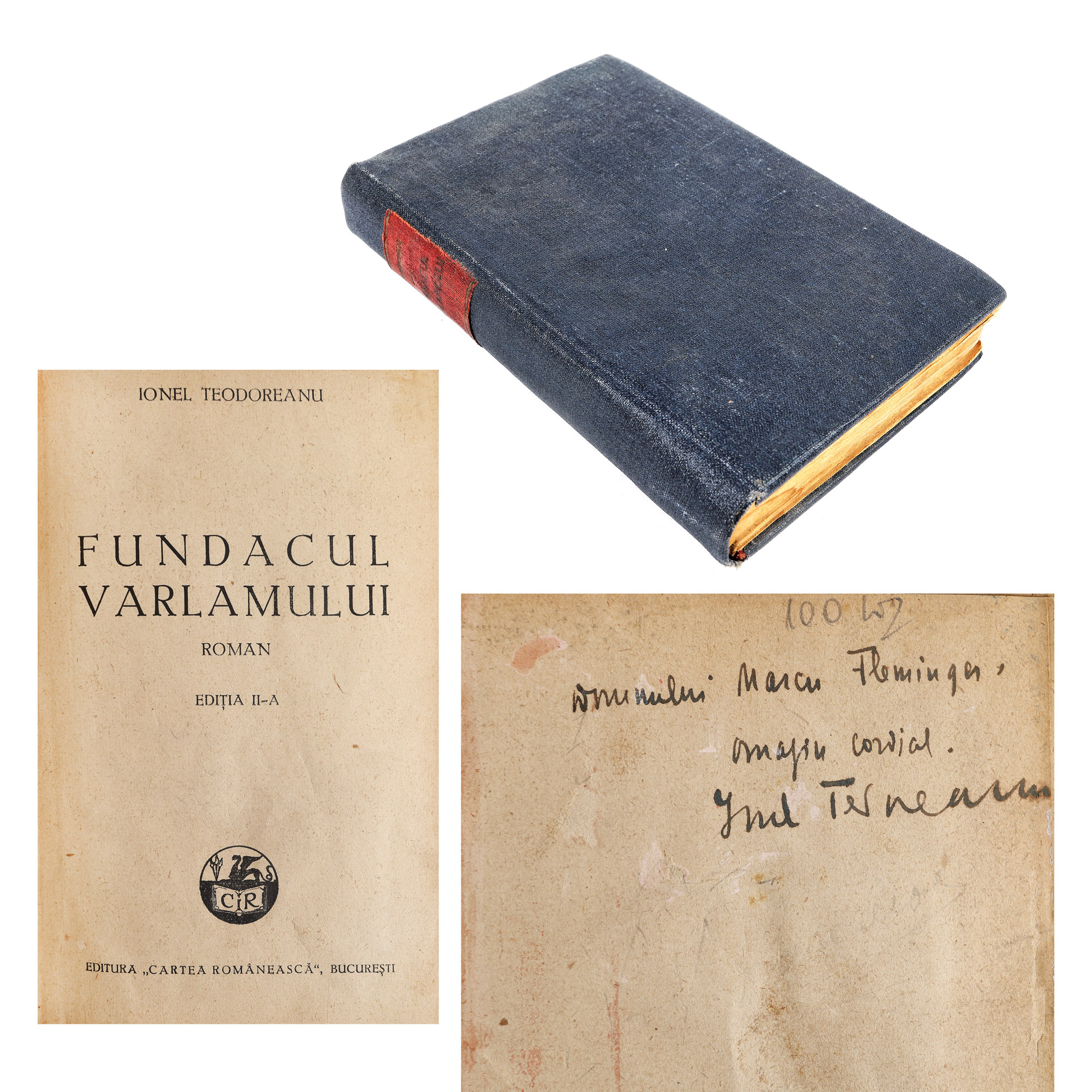
142. "Fundacul Varlamului", by Ionel Teodoreanu, Bucharest, with the author's dedication
Starting price
EUR 50
Sold
EUR 200