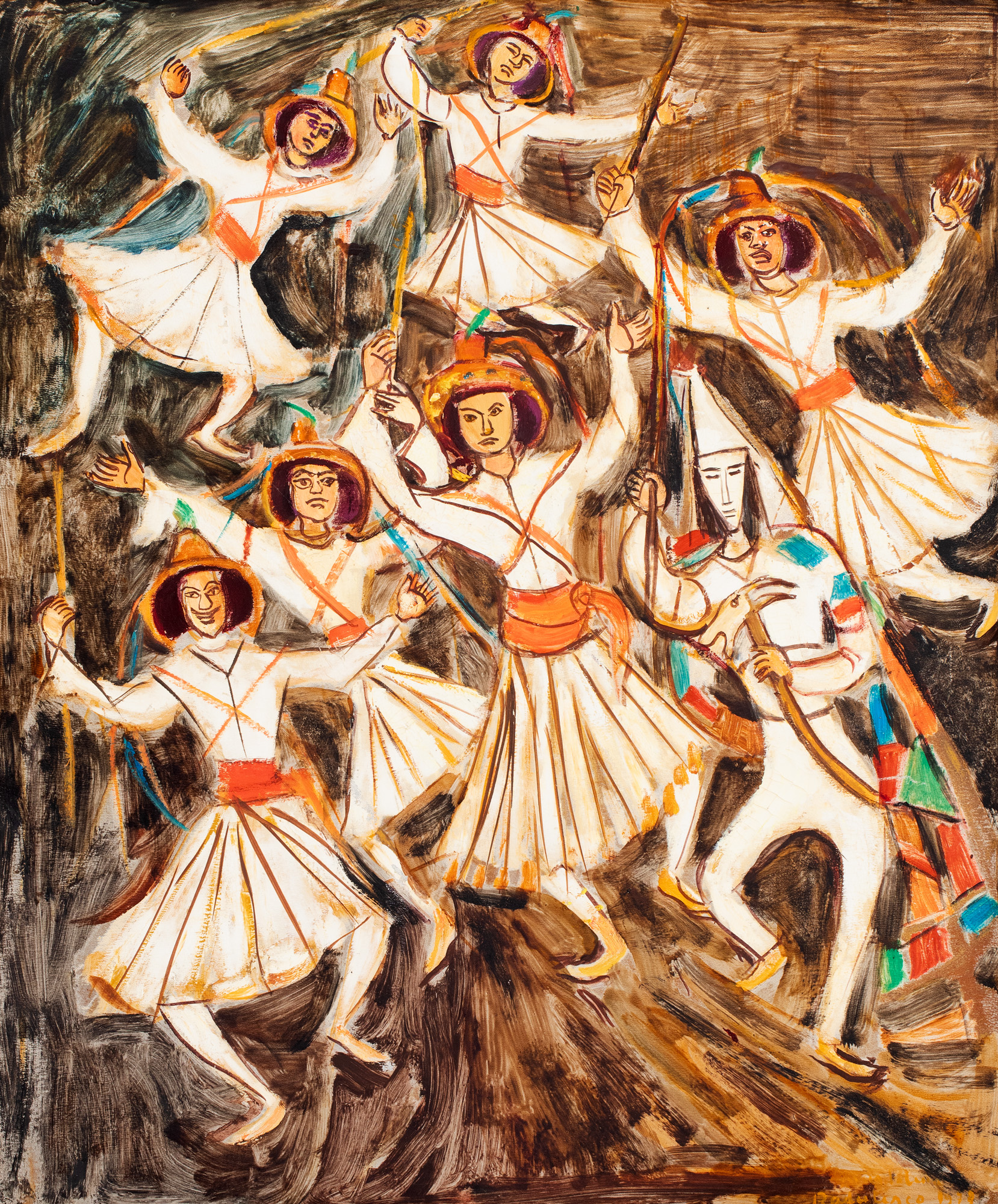

52. Dance of the Calusari [1973]

The photos of the lot are informative and indicative, and cannot provide a highly detailed view of the object from all angles. We recommend a careful physical inspection of the lot before bidding.

52. Dance of the Calusari [1973]

1902, Râmnicu Vâlcea - 1983, Paris

Estimate:
EUR 1.500 - 2.500
Sold
EUR 2.250

References

DEAC, Mircea, "Magdalena Rădulescu", Meridiane Publishing House, Bucharest, 1980. "Magdalena Rădulescu. Painting and Graphics", National Museum of Art of Romania, Bucharest, 1994. ILNIȚCHI-ARDELEAN, Alexandra, "Magdalena Rădulescu", Art Museum of Brașov, Brașov, 2022.

oil on leather, 55 x 46 cm, signed and dated bottom right, in yellow, "Magdalena Rădulesco, 1973"

Magdalena Rădulescu undertakes a laborious process of creation in which symbolism, expressionism, and folk art gradually intertwine. The artist manages to harmonize elements that seem heterogeneous on the surface. Traditional motifs and fairy tales represent the red thread that ties her entire body of work together. An inexhaustible resource in her creative imagination - childhood - repeatedly appears in the popular themes of her canvases. The oriental fragrance of Dobrogea will remain deeply imprinted in the mind of Magdalena Rădulescu. She lived successively in Constanța and Galați, geographical placements under whose protection she had the chance to come directly into contact with oriental dances and costumes, as well as with the Tatars and odalisques that we will meet later in her works. The representations of ordinary people take on higher meanings in her works. Like a ritual, Magdalena Rădulescu constantly revisits themes such as the "hora" or the "călușari". Spectacle, understood as the world of theater, circus, or dance, also serves as a source of inspiration for her. The works of Magdalena Rădulescu appear as a spiritual heritage that the artist feels responsible to pass on. The folkloric stamp is placed on canvases filled with pleiades of silhouettes wearing folk costumes, depicted with raised arms or dancing. Alongside the representative protagonists of national folklore, the artist revitalizes myths, introducing an element that would become her leitmotif - the horse. With divine origins, a symbol of fervor and courage, the horse completes the triptych of the artist's favorite subjects, alongside dancers and masks. Magadeleni Rădulescu's professional journey overlaps with her endeavor to identify new forms of compositional structuring. In the artist's work, conventions disappear, with the emphasis rather on the representation of popular themes through symbolism. The fervor and agitation of festive scenes are captured both with rapid brushstrokes and through the use of red, brown, and white hues, the latter often acquiring symbolic value.

For clarifications regarding the bidding procedure, hammer price costs, guarantee, payment, and collection terms for the winning lot, we recommend carefully reading/re-reading the Bidding Regulations.

For additional information regarding the lot and the auction, please contact the Art Consultants Department.

SESSION
Thu, 18 April 2024 19:00
Brought to you by

Similar lots

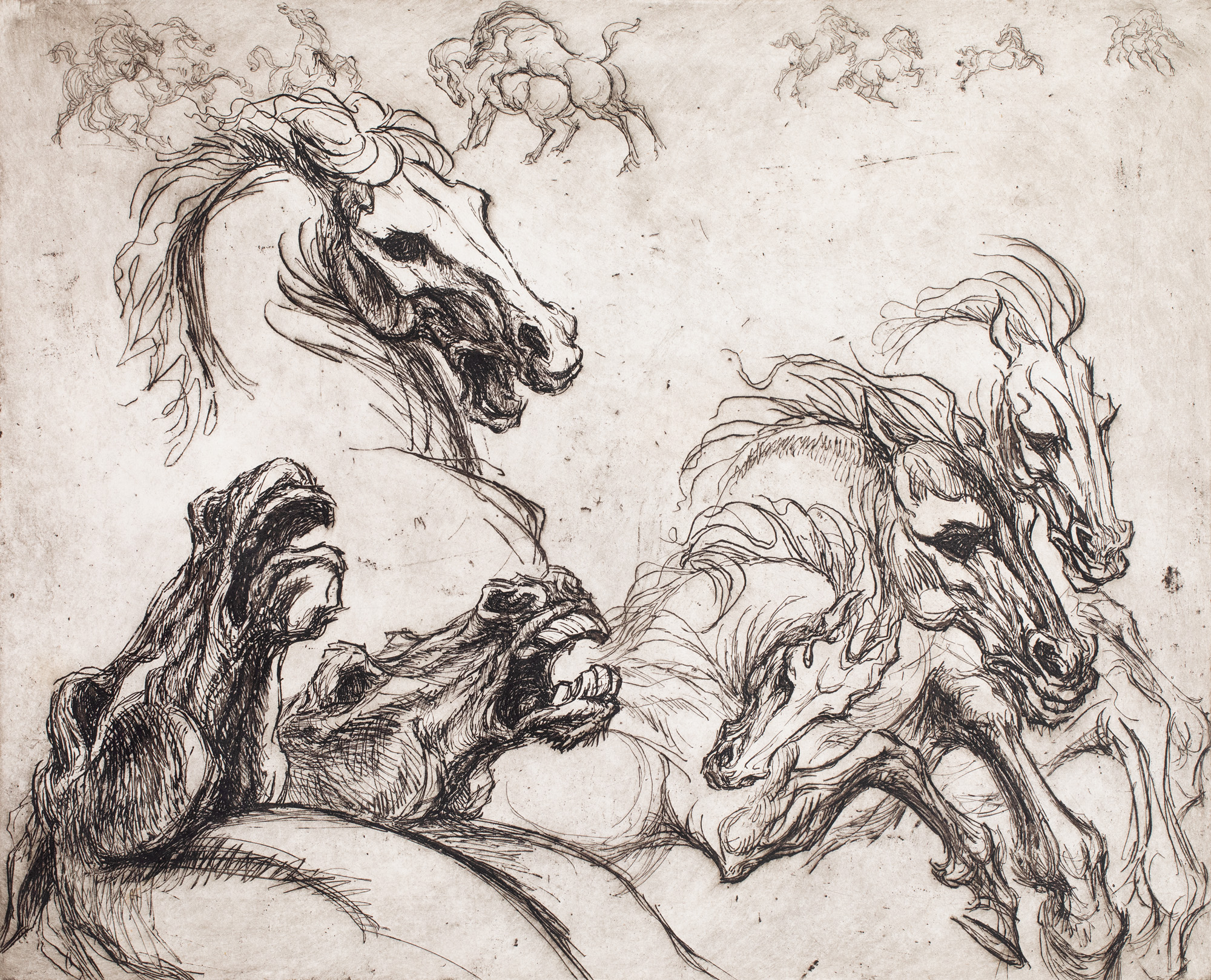
Cavalcade

110. Cavalcade

Marcel Chirnoagă

    Estimate: EUR 300 - 500
    Sold EUR 500
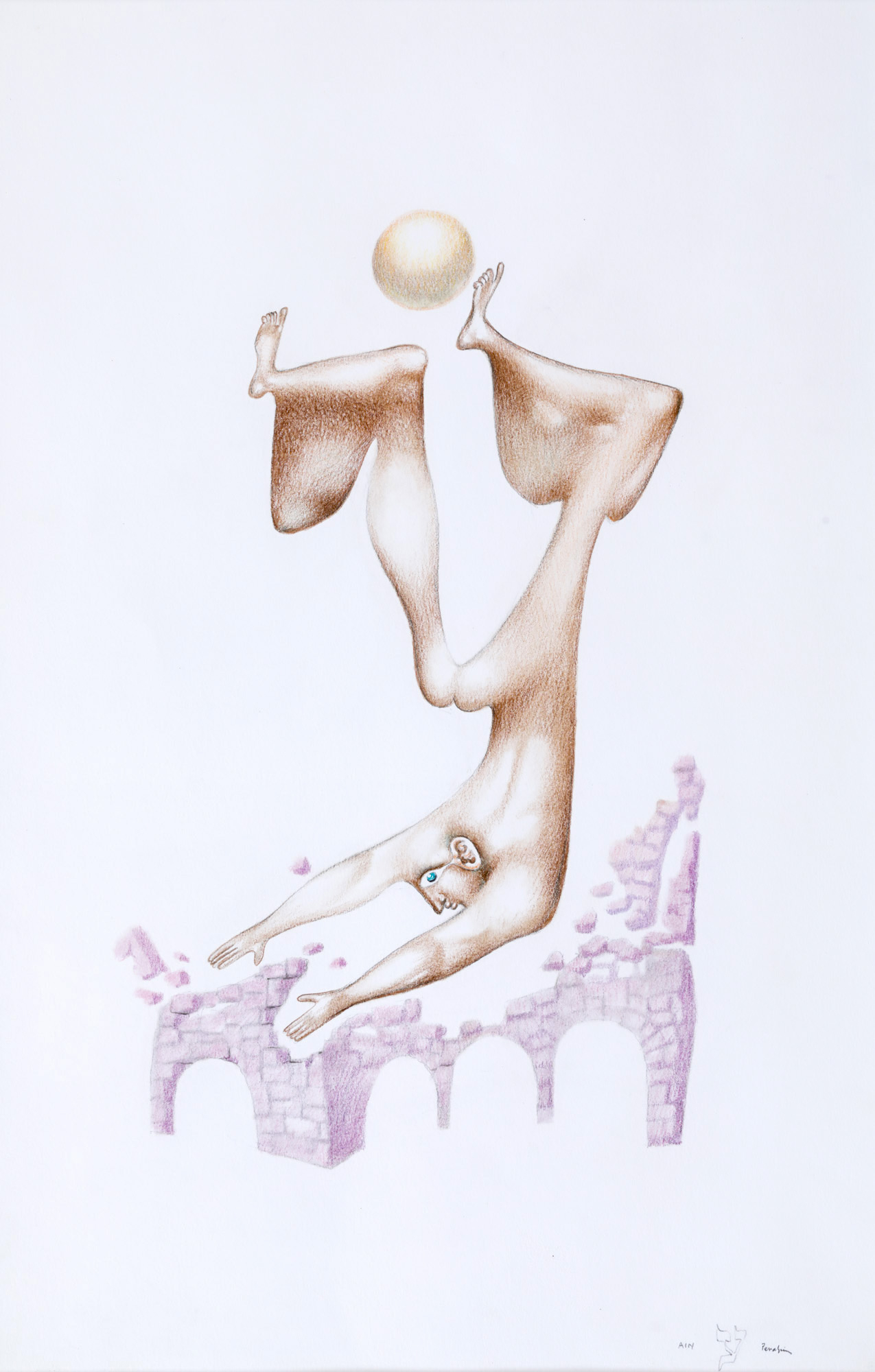
Ain

148. Ain

Jules Perahim

    Estimate: EUR 700 - 1.200
    Sold EUR 1.400