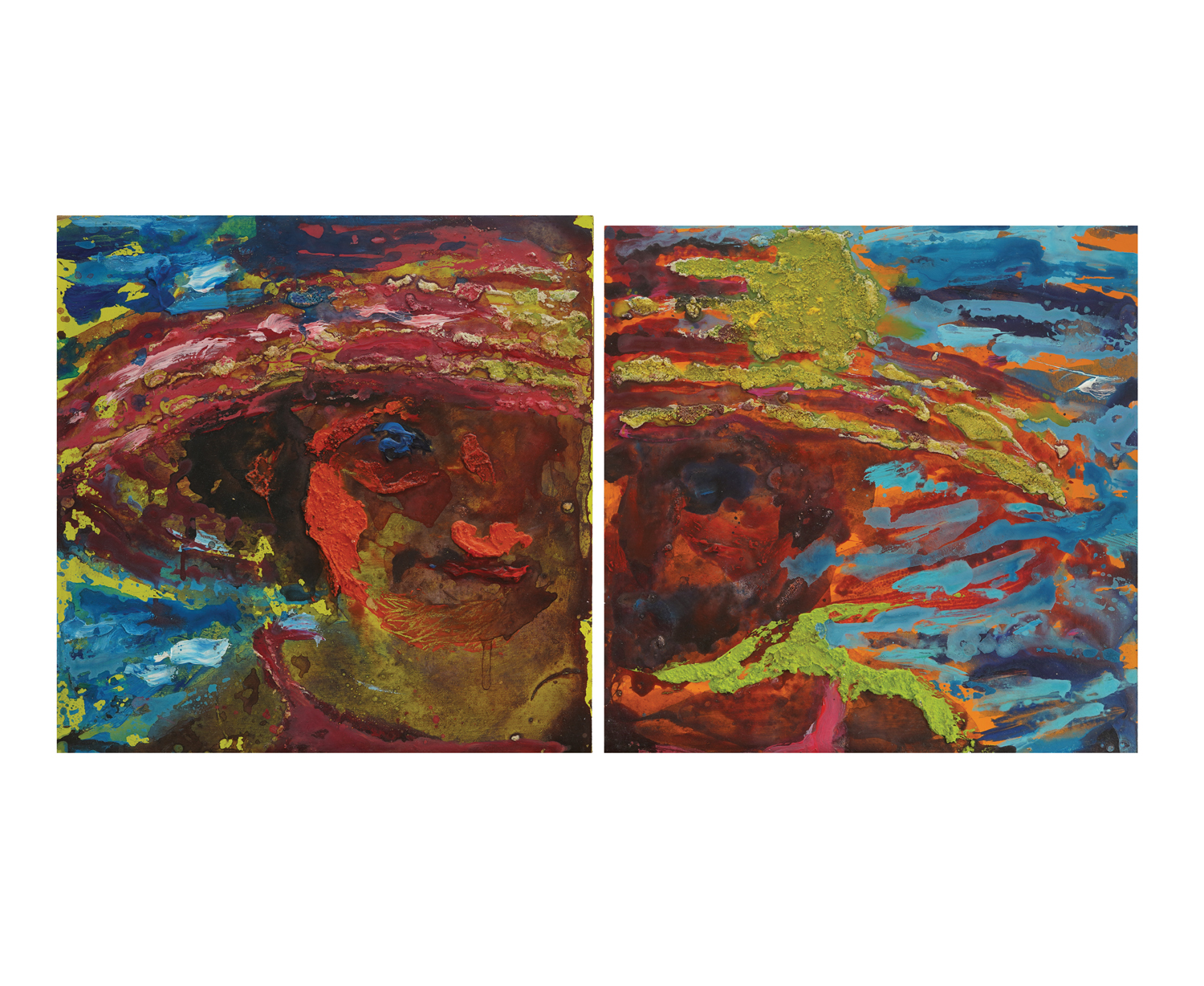
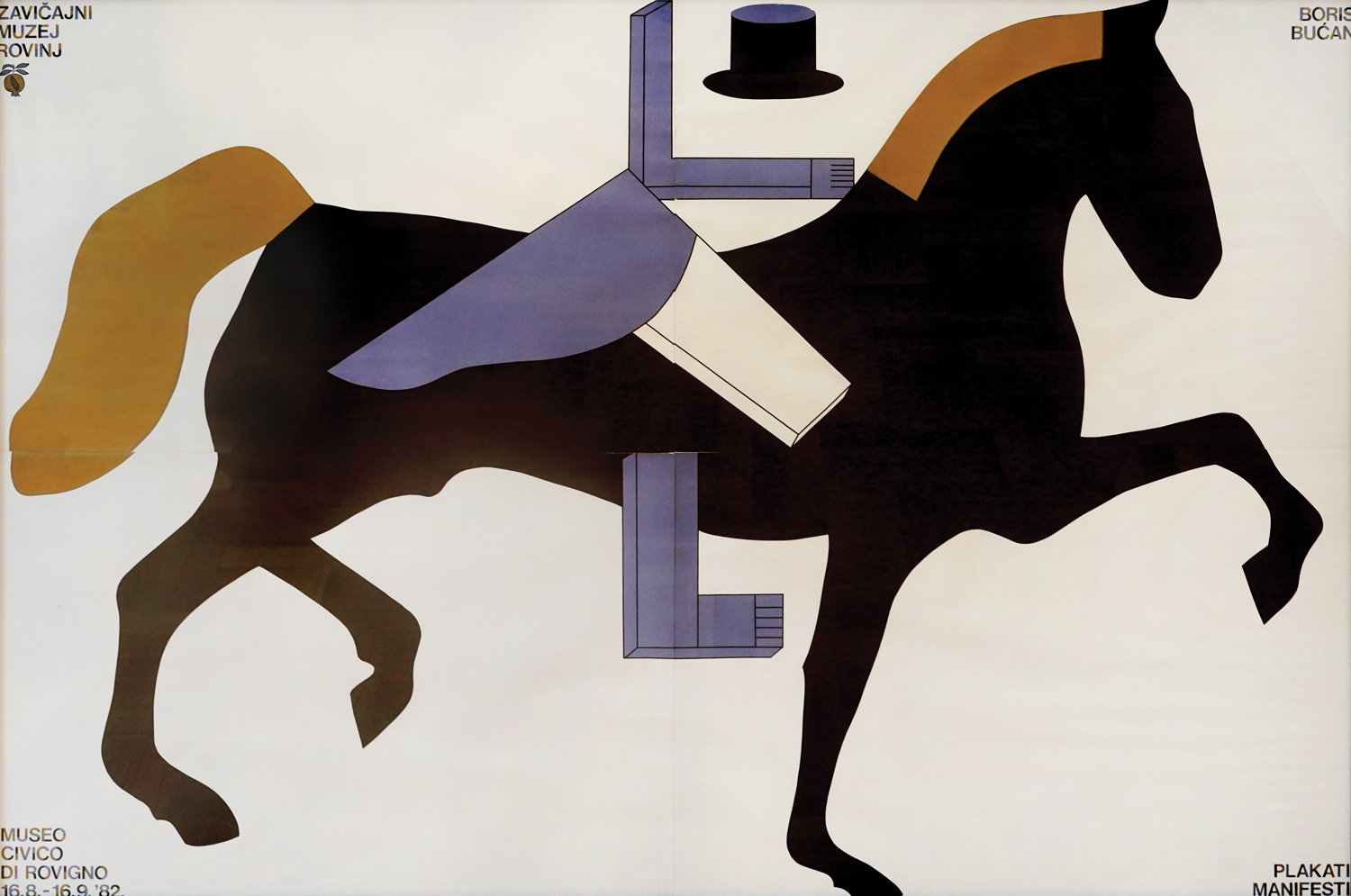
121. "Posters Manifestos" [1982.]
The photos of the lot are informative and indicative, and cannot provide a highly detailed view of the object from all angles. We recommend a careful physical inspection of the lot before bidding.
121. "Posters Manifestos" [1982.]
1947, Zagreb - 2023, Zagreb
Not sold
Post-auction price
EUR 3.000
silkscreen on paper, 1 poster (4 parts) 136 x 196 cm, each part 68 x 98 cm.
Research information
The version of the work is reproduced in the publication "Bućan: posters (1967-1984)", Tonko Maroević, National and University Library, Zagreb, 1984., p. 33.
A classic poster by Croatian design classic, Boris Bućan, from 1982, is a product of his most potent creative period (1980s), from which other iconic posters of his also date, such as the famous Firebird, for the Croatian National Theatre in Split, or a series of posters for the Zagreb Radiotelevision Choir, the Split National Theatre and other institutions. Bućan was born in Zagreb in 1947, where he died in 2023. He graduated in painting from the Academy of Fine Arts in Zagreb in 1972, and achieved the most significant part of his opus in poster design. Recognized globally, Boris Bućan is among the artists who, until the 21st century, have persistently reinterpreted historical avant-gardes (in the manner of the times and poetics that can be called postmodernist), but also insisted on observing peculiarities and agreements in the world around them, from which his later painting work emerged. However, his work does not stop at interpretations. Following contemporary artistic production, he also embraced conceptual creation, especially in posters for the institutions of the Student Center in Zagreb, from the 1960s onwards.
The poster for the exhibition at the Rovinj Museum belongs to Bućan's characteristic, Pop Art expression, characterized by intense color and clear, simplified forms, in which there is a trace of some meaning or message. In this case, it is about the interpretation of the classic motif of the knight, in which the silhouette of the horse is ridden by a constructivist, hence avant-garde rider in ceremonial riding uniform (her gender is hinted by the top hat, more common as part of women's uniform). This is also a symbol of new (avant-garde, modernist) thinking in the interpretation of classical heritage, which was becoming increasingly relevant in the postmodern period and which, here, is also manifested as the artist's poetics. Similar characters, as reflections of the deconstructed mind of man in the second half of the twentieth century - a man aware of the relativity of all categories and all learned knowledge - can also be seen in Bućan's poster "Conversation of artists, designers, and kitsches on the occasion of 30 years of ULUPUH" (from 1984), where, also, the way human figures are constructed implies a certain relationship to tradition, art, and its interpretation. Bućan's rider is reduced to geometry, while the viewer fills in the anatomical blanks - her torso and head are implied, in fact, the imagined head would go beyond the format of the poster, but the presence of a ceremonial top hat also suggests the presence of the head. Thus the viewer, in his perception, achieves a full picture of the rider, a game achieved by composition of forms. Again, there is Bućan's subtle observation of elements of reality, their decomposition, and reassembly. FG
For clarifications regarding the bidding procedure, hammer price costs, guarantee, payment, and collection terms for the winning lot, we recommend carefully reading/re-reading the Bidding Regulations.
For additional information regarding the lot and the auction, please contact the Art Consultants Department.
SESSION
Brought to you by
Similar lots