The photos of the lot are informative and indicative, and cannot provide a highly detailed view of the object from all angles. We recommend a careful physical inspection of the lot before bidding.
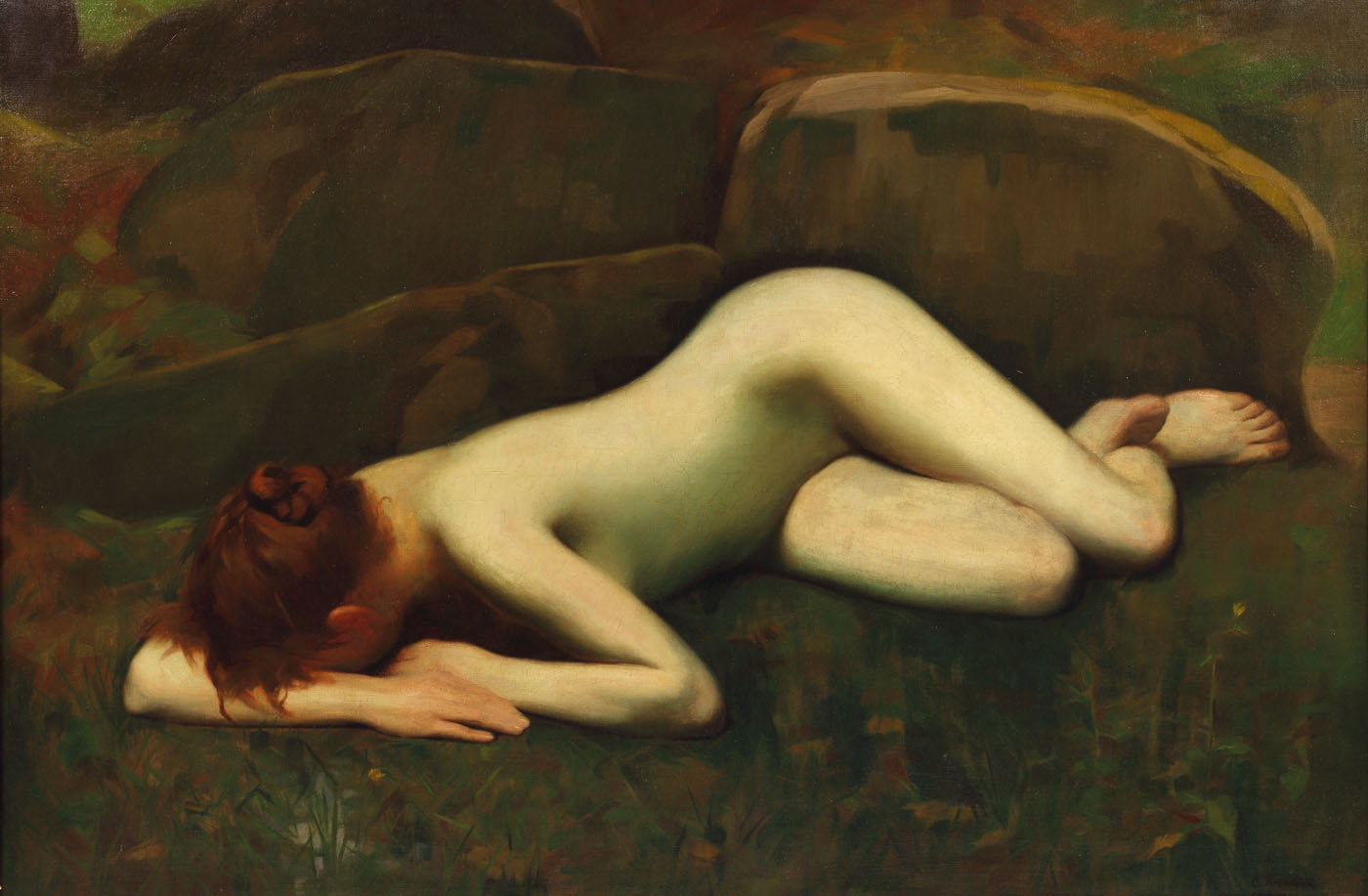
oil on canvas, 96 x 144 cm, 144x96, signed lower right "C. Artachino", in black
Material / Carats
ulei pe pânză
Research information
În 1894, în urma participării la expoziția de la Salonul Ateneului, Ministerul Cultelor și Instrucțiunii Publice achiziționa o variantă a lucrării "Biblis preschimbată în izvor" pentru suma de 1200 de lei. În aceeași campanie de achiziții, Ministerul achiziționa un peisaj de Ștefan Luchian pentru suma de 500 de lei.
Even though Artachino's painting is generically integrated in the so-called interwar art, which, of course, is representative for most of the artist's activity, the moments around 1900 are worth mentioning for a better understanding of the entire biography that defines him. Given the fact that he lived for more than 80 years, in Artachino's career we can see the defining stages that have shaped Romanian modern art. Until the founding of the Artistic Youth, the painter was influenced by contemporary movements, gradually, according to the context. Of course the first style is the Academicist one, given that his first professors were Theodor Aman and G.D. Mirea. He perfected his studies in Paris where, as a recipient of a two-year scholarship, attended the Julian Academy, under the guidance of Alexandre Cabanel. This is the moment when Artachino conscientiously masters characteristic elements of a deep Symbolism, which he will feel attracted to due to the expressive qualities of the entire pictorial language. His move from pure Academicism to Symbolism occurs with a process following which he does not remove the elements of the former style, but rather accumulates and modifies them to respond to the demands of the latter. Thus, Artachino is the author of representative works for Romanian Symbolism, including this one. We can note that our painter approaches composition in a relatively atypical manner, particularly through his apparent detachment, even neutrality towards the model, focusing rather on an unbiased depiction of the subject, as accurately as possible. The artist's detachment pours over the beholder, as well, who is not emotionally involved in the entire pictorial complex. In the case of this painting, the source of inspiration is Greek mythology, and the theme can often be found in his period. The myth focuses on the love between Byblis and her twin brother Caunus, who runs as far away as possible so as not to be confronted by his sister. Byblis, in her attempt to convince him of her love, looks for him in the entire Greece and Asia Minor, until eventually she dies of exhaustion and she is turned into a spring. Painting the main character is a synthetic expression of a well-defined canon at the time, with the story being limited to the image of a female nude, in a humble position, of a creature defeated by its own destiny. (I.P.)
For clarifications regarding the bidding procedure, hammer price costs, guarantee, payment, and collection terms for the winning lot, we recommend carefully reading/re-reading the Bidding Regulations.
For additional information regarding the lot and the auction, please contact the Art Consultants Department.