


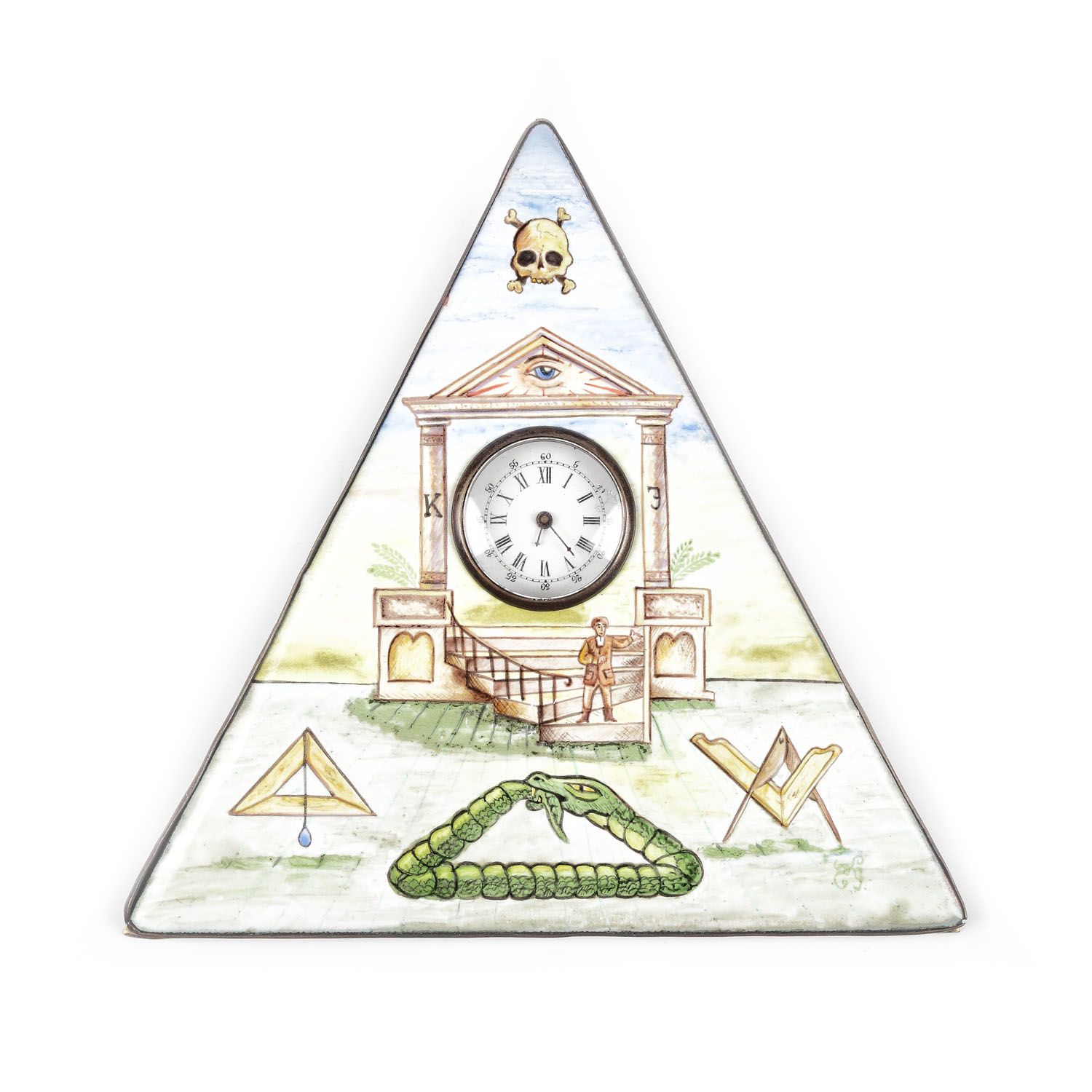
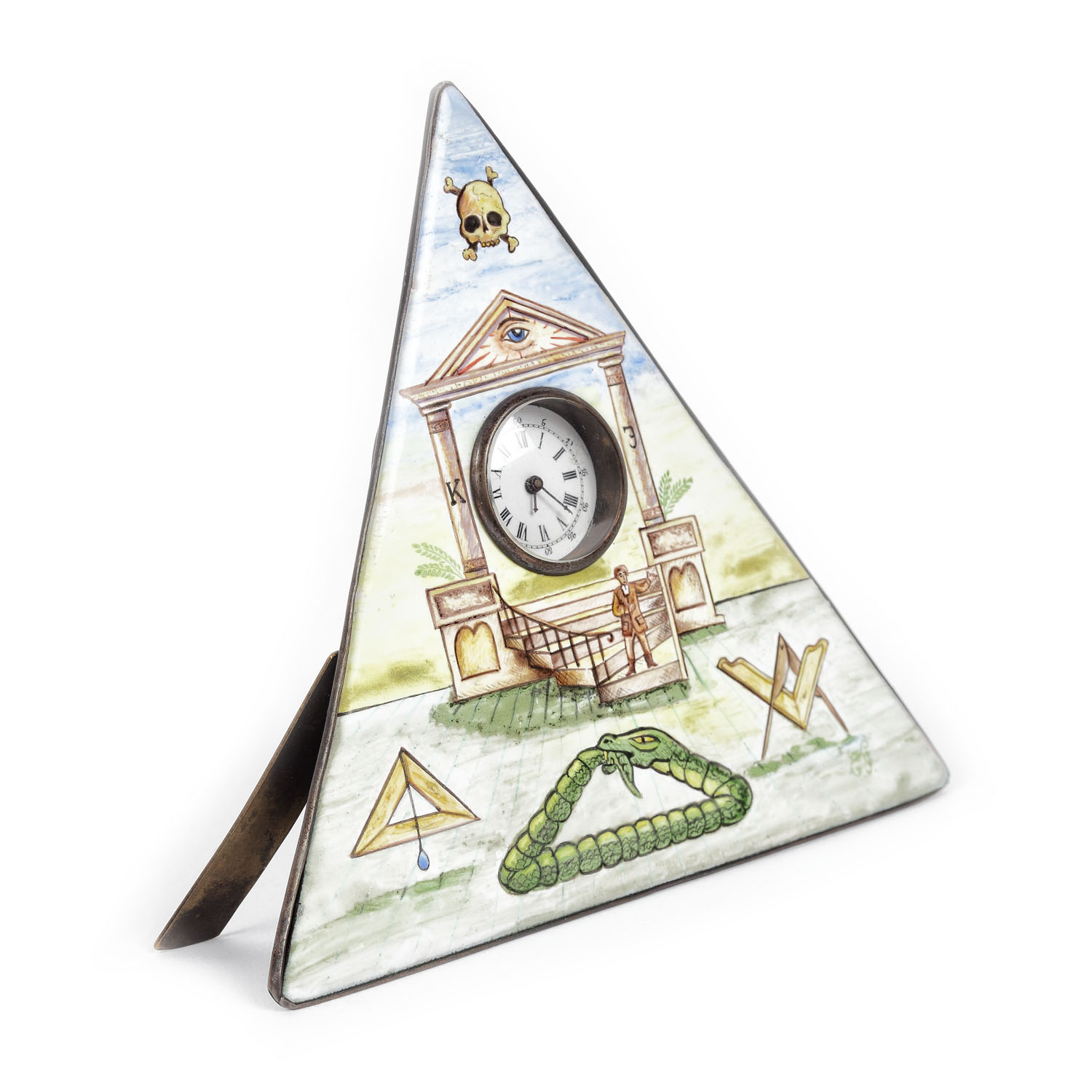
4. Interesting porcelain travel clock, hand painted with Masonic insignia
The photos of the lot are informative and indicative, and cannot provide a highly detailed view of the object from all angles. We recommend a careful physical inspection of the lot before bidding.
4. Interesting porcelain travel clock, hand painted with Masonic insignia
Starting price:
EUR 350
Sold
EUR 450
cast and painted porcelain, brass, 11.5 x 12 cm, 12x11,5
Uroborus (also known as Uroboros or Ouroboros) is an ancient symbol depicting a serpent or a dragon swallowing its own tail, forming a circle with its body. It has been used throughout history to depict many things, but most of the time it symbolises primordial unity, the endless cycle of time and the universe. Uroborus was very important in religious and mythological symbolism and was frequently used in alchemy illustrations. In the 19th century it was interpreted by some psychologists like Carl Gustav Jung as having a certain influence on the human psyche. The earliest "uroborus"-type dragons appeared in China during the Hongshan culture (4700-2200 BC). In the Mediterranean area, they first appeared in Ancient Egypt around 1600 BC.
For clarifications regarding the bidding procedure, hammer price costs, guarantee, payment, and collection terms for the winning lot, we recommend carefully reading/re-reading the Bidding Regulations.
For additional information regarding the lot and the auction, please contact the Art Consultants Department.
SESSION
Brought to you by
Similar lots
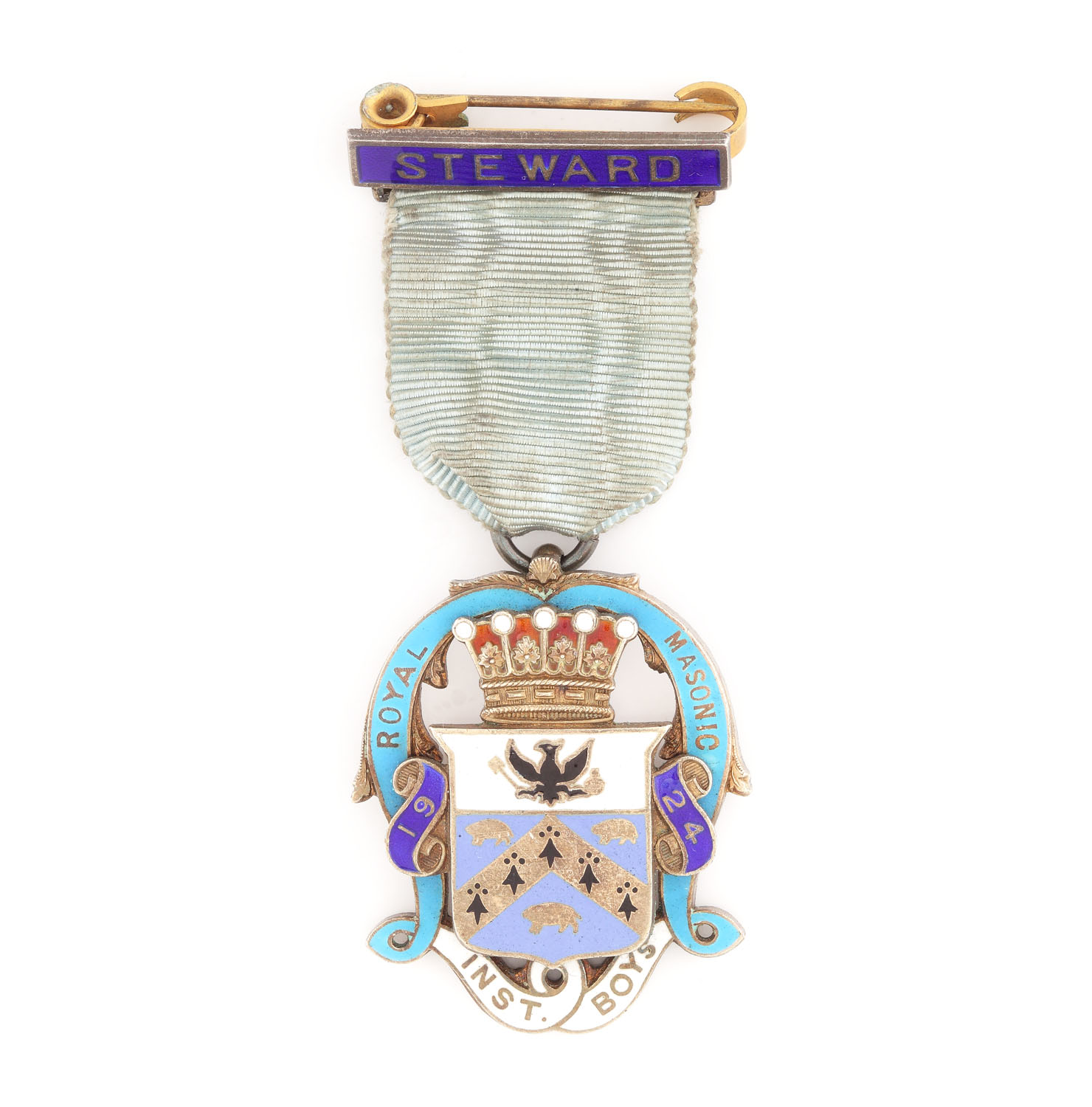
203. Silver Masonic order of the Royal Masonic Institution for Boys, for the position of Steward, 1924
Starting price:
EUR 45
Not sold
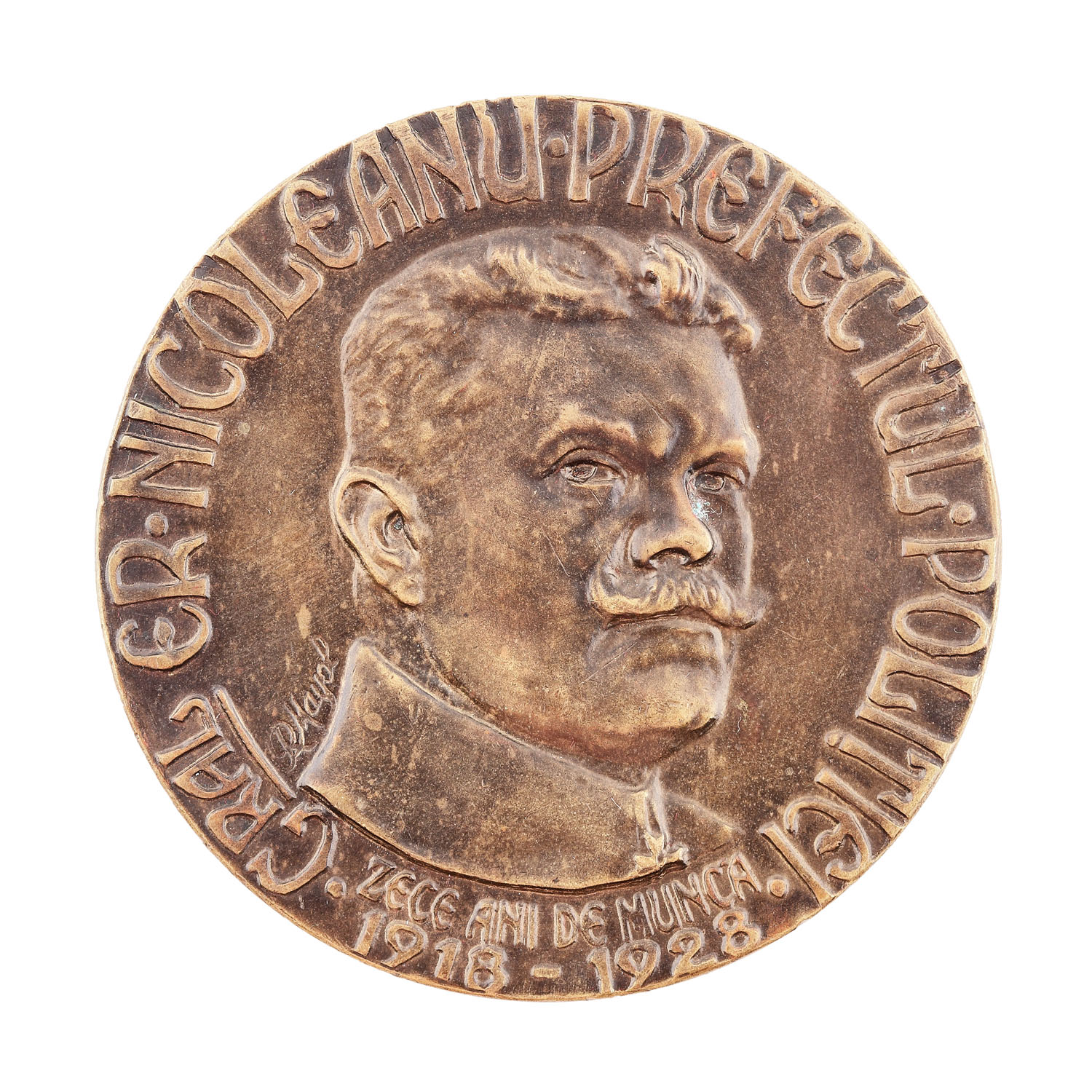
292. "Generalul Er. Nicoleanu - Prefectul Poliției, zece ani de munca 1918-1928 - Omagiu străjerului capitalei" medal ("General Er. Nicoleanu - Police Prefect, ten years of service 1918-1928 - Tribute to the Sentinel of the Capital"), engraved by Moise Carniol and R. Mayol, 1928
Starting price:
EUR 150
Not sold
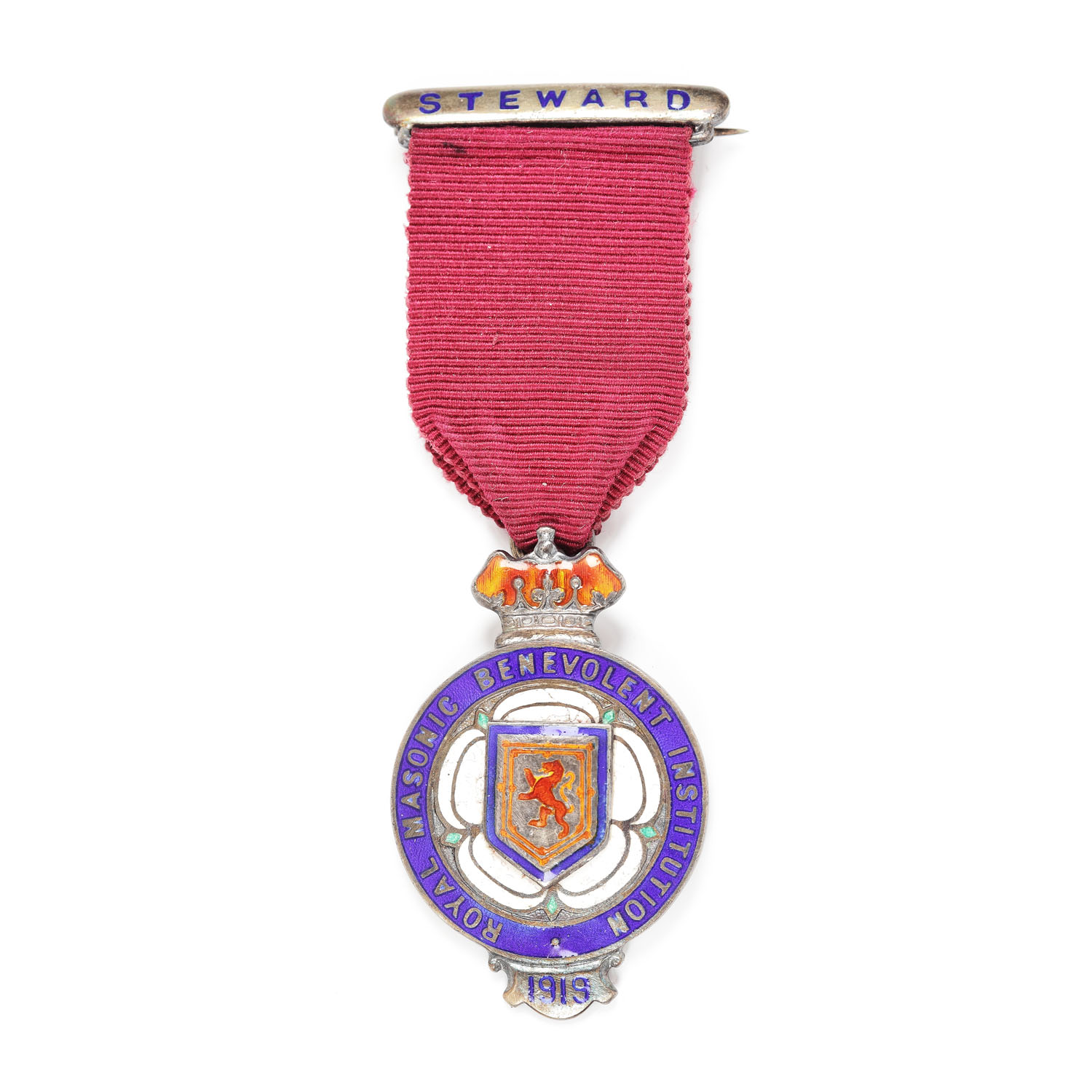
100. Silver Masonic order of the Royal Masonic Benevolent Institution, for the position of Steward, 1919
Starting price:
EUR 60
Not sold