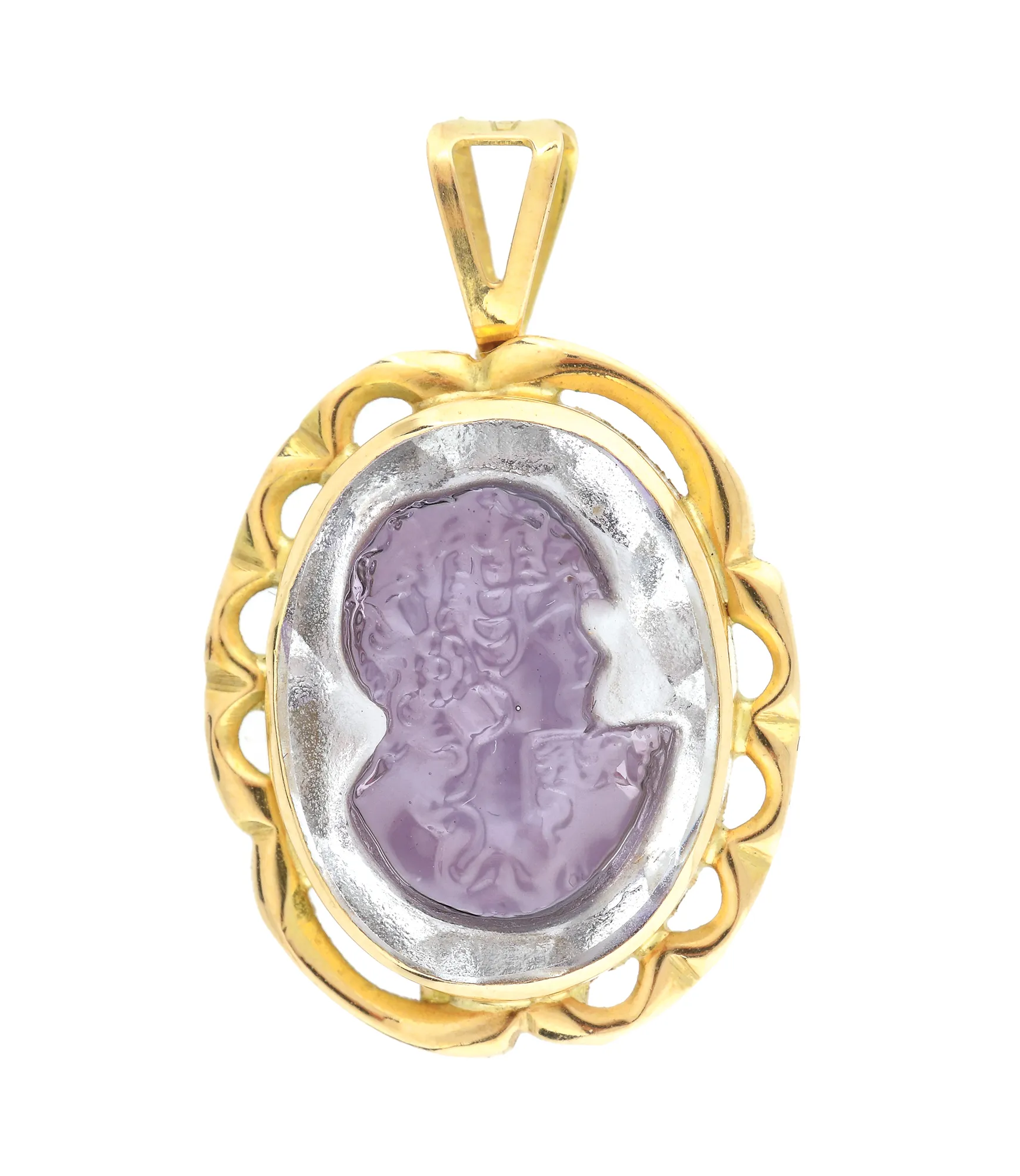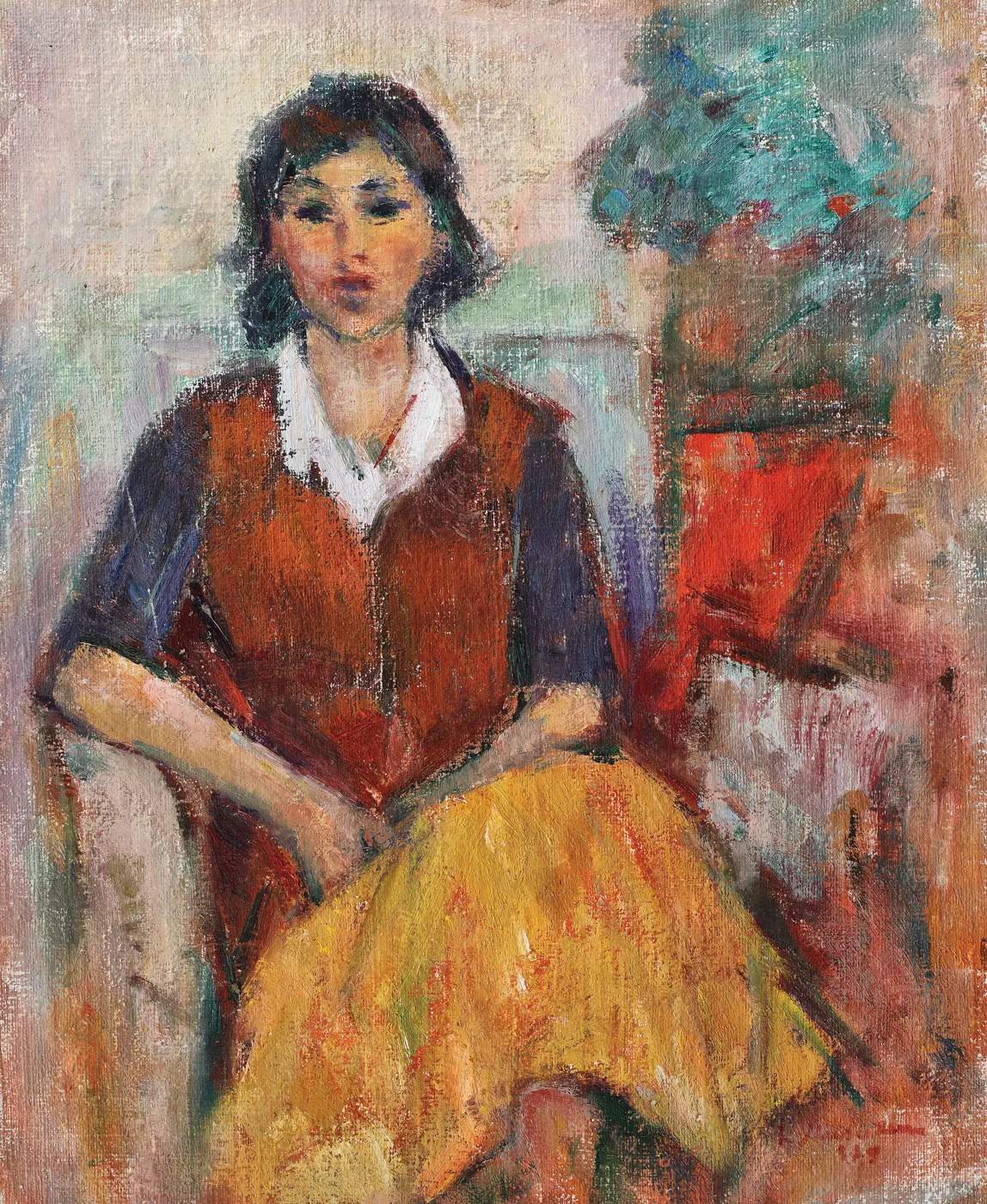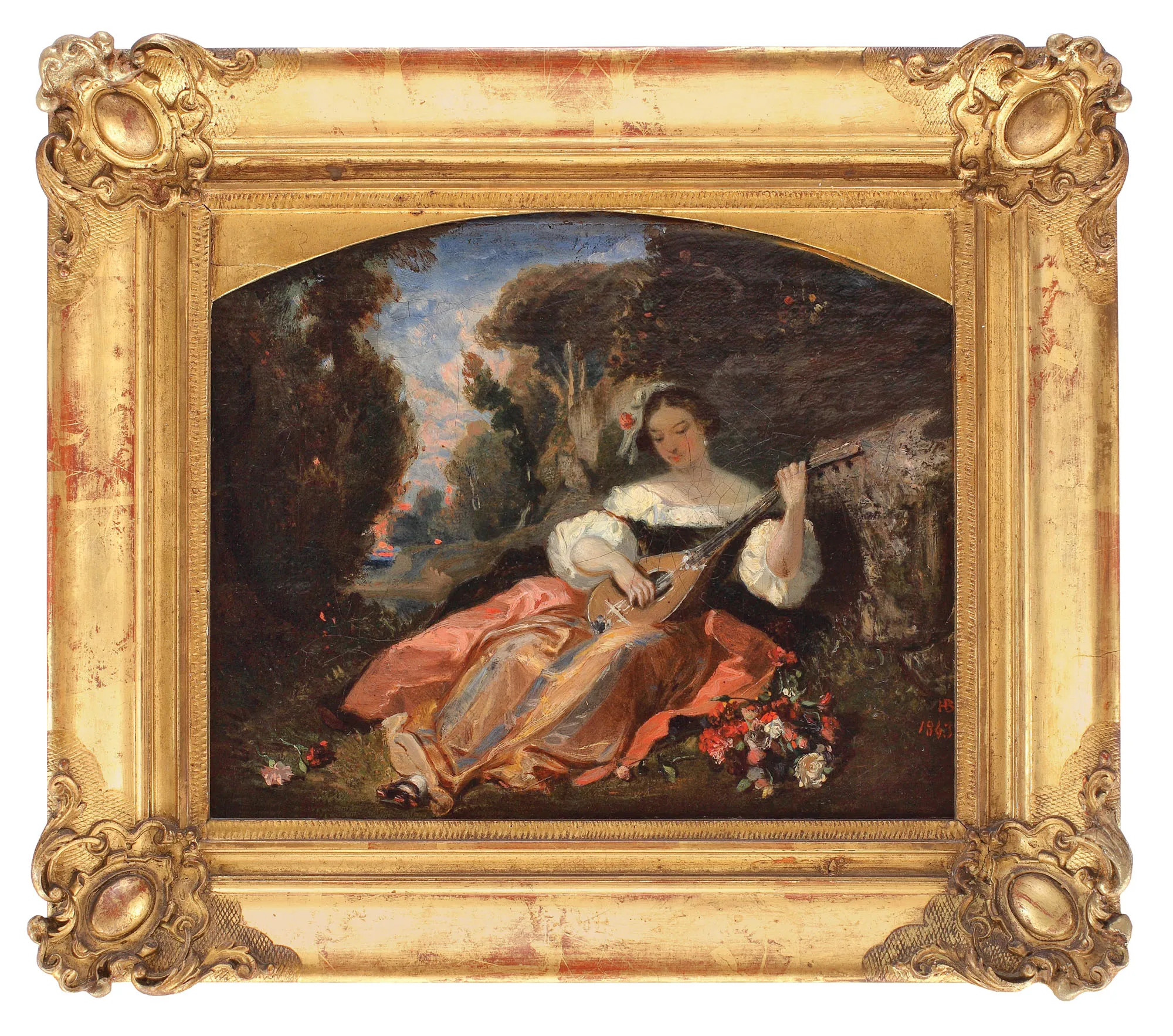



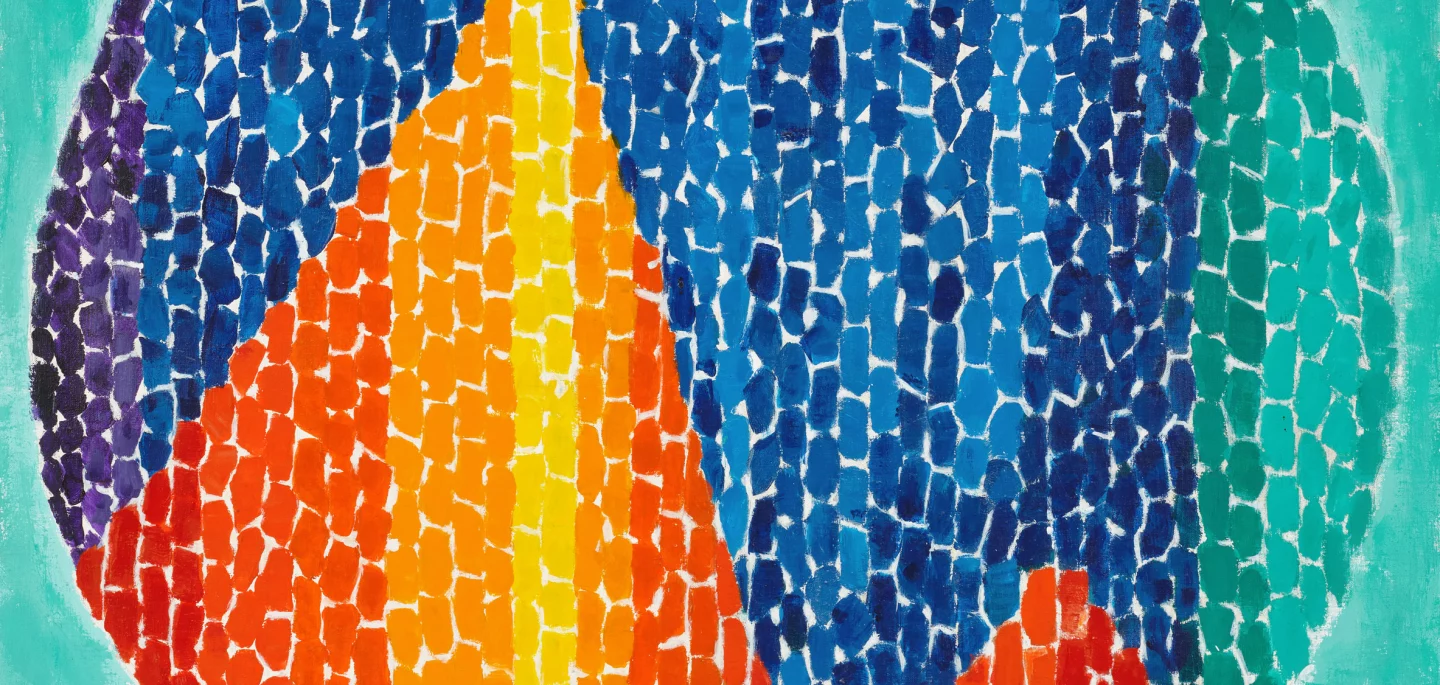

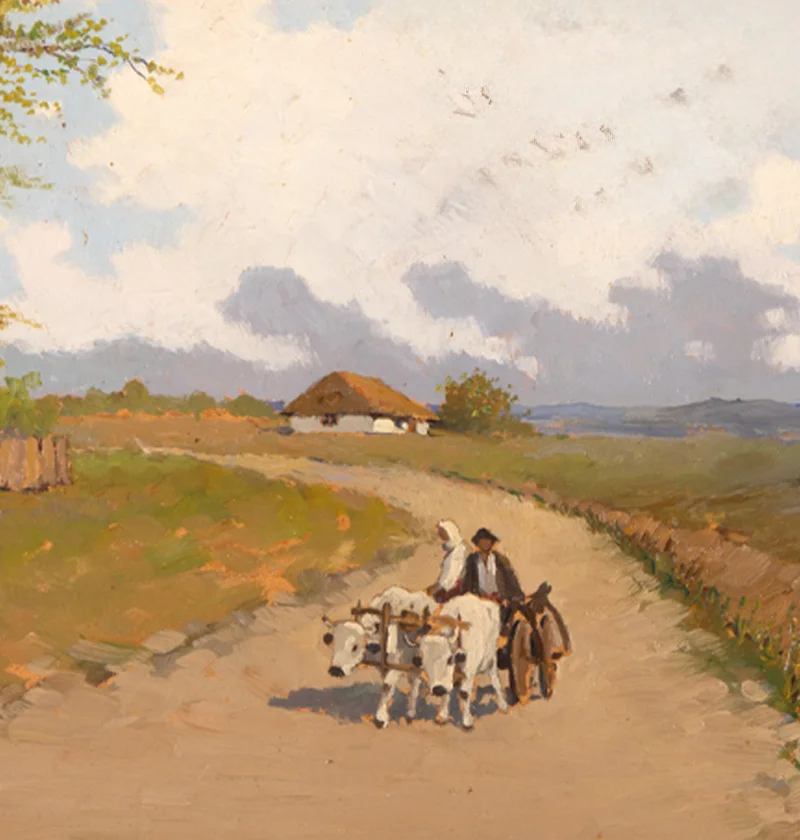

Fotografije parcele su informativne i indikativne te ne mogu pružiti vrlo detaljan prikaz objekta iz svih kutova. Preporučujemo pažljiv fizički pregled parcele prije licitiranja.
The present work is part of the series of works that Nicolae Dărăscu dedicates to Vâlcov. Recorded in one issue of the "National Geographic" magazine from 1940 as the "Venice of the Delta", the small settlement on the Danube bank was to be artistically portrayed in a broad series of works. Going successively through the peculiarities of Impressionism and those of Neo-Impressionism, the artist confesses his love for nature. Arriving in Paris, at the Julian Academy, he works in Jean Paul Laurens' studio and borrows from his palette and the way he places his brush strokes. In the frenzy and tumult of the French capital, he will visit museums, collections, and exhibitions that help him penetrate into the aesthetic depth of artistic currents. He will now develop a passion for Monet's work and will further explore his inclination towards Pointillism. His vocation for nature and its transcription into pictorial matter does not converge towards the illustration of an active landscape, with unstable waves or moving boats, but towards the reflection of the Danube marked by a deep calm. Receptive to changes in the outside environment and with a special understanding of everyday life, Nicolae Dărăscu presents water and boats as a symbol of possible pilgrimages.
From Saint Tropez and Venice and up to Balcic or Tulcea, he will always orient himself towards the arid landscape, where we find the same warm chromatic and the dull color of his native Dobrogea. After a long series of journeys made throughout Europe, journeys that have inevitably been transposed into pictorial motifs, the artist will stop, in 1919, in Dobrogea. He discovers Balcic and develops a real passion for its color. He paints genre scenes where he is concerned with rendering groups of people, inns, or slums. At the personal exhibition organized in 1924, he presents several works that start from the Black Sea, with incandescent rocks and reddish hills, Tatar houses, and azure skies. We can now observe the boats docked on the shore or the boats that are gently pulling away from shore. The artist includes in his works both small, fishing boats and large vessels. He captures the warm seasons, with the sun making its presence felt by carefully overloaded surfaces of light and shadow. Dărăscu will succeed in lending his work some of his solar spirit, through the vibrations of tones and the rigidity of the technique that breaks through the dusty roads of Dobrogea and Balcic.
oil on canvas, signed bottom left, in brown, "N. Dărăscu"
Izlasci
cca. 1925
DODATNE INFORMACIJE
Za pojašnjenja u vezi s postupkom licitiranja, troškovima kupnje, uvjetima jamstva, plaćanja i preuzimanja osvojenog lota preporučujemo da pažljivo pročitate/ponovno pročitate Pravilnik o licitiranju.
The present work is part of the series of works that Nicolae Dărăscu dedicates to Vâlcov. Recorded in one issue of the "National Geographic" magazine from 1940 as the "Venice of the Delta", the small settlement on the Danube bank was to be artistically portrayed in a broad series of works. Going successively through the peculiarities of Impressionism and those of Neo-Impressionism, the artist confesses his love for nature. Arriving in Paris, at the Julian Academy, he works in Jean Paul Laurens' studio and borrows from his palette and the way he places his brush strokes. In the frenzy and tumult of the French capital, he will visit museums, collections, and exhibitions that help him penetrate into the aesthetic depth of artistic currents. He will now develop a passion for Monet's work and will further explore his inclination towards Pointillism. His vocation for nature and its transcription into pictorial matter does not converge towards the illustration of an active landscape, with unstable waves or moving boats, but towards the reflection of the Danube marked by a deep calm. Receptive to changes in the outside environment and with a special understanding of everyday life, Nicolae Dărăscu presents water and boats as a symbol of possible pilgrimages.
From Saint Tropez and Venice and up to Balcic or Tulcea, he will always orient himself towards the arid landscape, where we find the same warm chromatic and the dull color of his native Dobrogea. After a long series of journeys made throughout Europe, journeys that have inevitably been transposed into pictorial motifs, the artist will stop, in 1919, in Dobrogea. He discovers Balcic and develops a real passion for its color. He paints genre scenes where he is concerned with rendering groups of people, inns, or slums. At the personal exhibition organized in 1924, he presents several works that start from the Black Sea, with incandescent rocks and reddish hills, Tatar houses, and azure skies. We can now observe the boats docked on the shore or the boats that are gently pulling away from shore. The artist includes in his works both small, fishing boats and large vessels. He captures the warm seasons, with the sun making its presence felt by carefully overloaded surfaces of light and shadow. Dărăscu will succeed in lending his work some of his solar spirit, through the vibrations of tones and the rigidity of the technique that breaks through the dusty roads of Dobrogea and Balcic.
DODATNE INFORMACIJE
Za pojašnjenja u vezi s postupkom licitiranja, troškovima kupnje, uvjetima jamstva, plaćanja i preuzimanja osvojenog lota preporučujemo da pažljivo pročitate/ponovno pročitate Pravilnik o licitiranju.