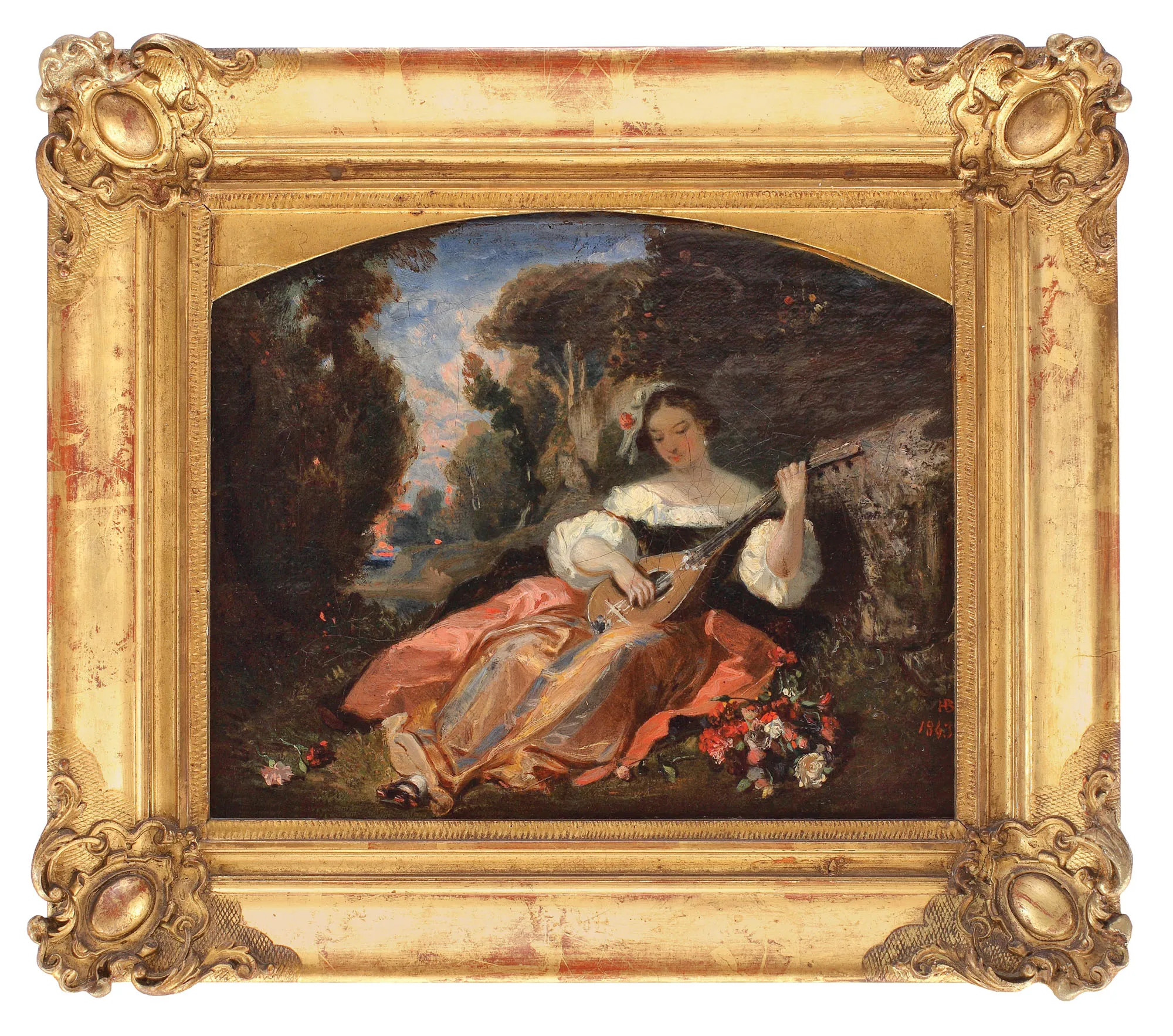


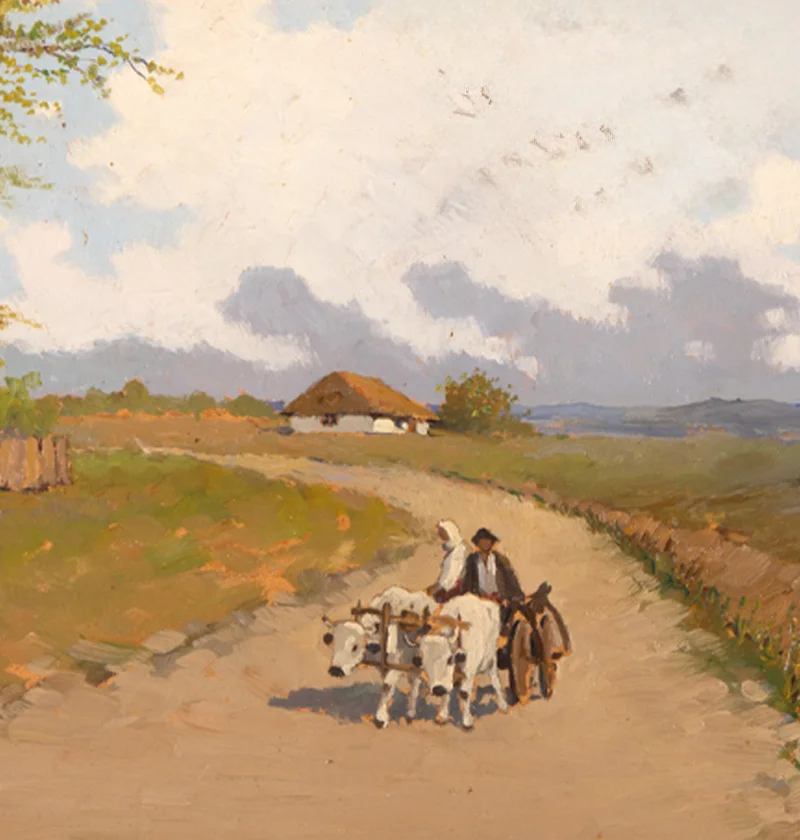

Fotografije parcele su informativne i indikativne te ne mogu pružiti vrlo detaljan prikaz objekta iz svih kutova. Preporučujemo pažljiv fizički pregled parcele prije licitiranja.
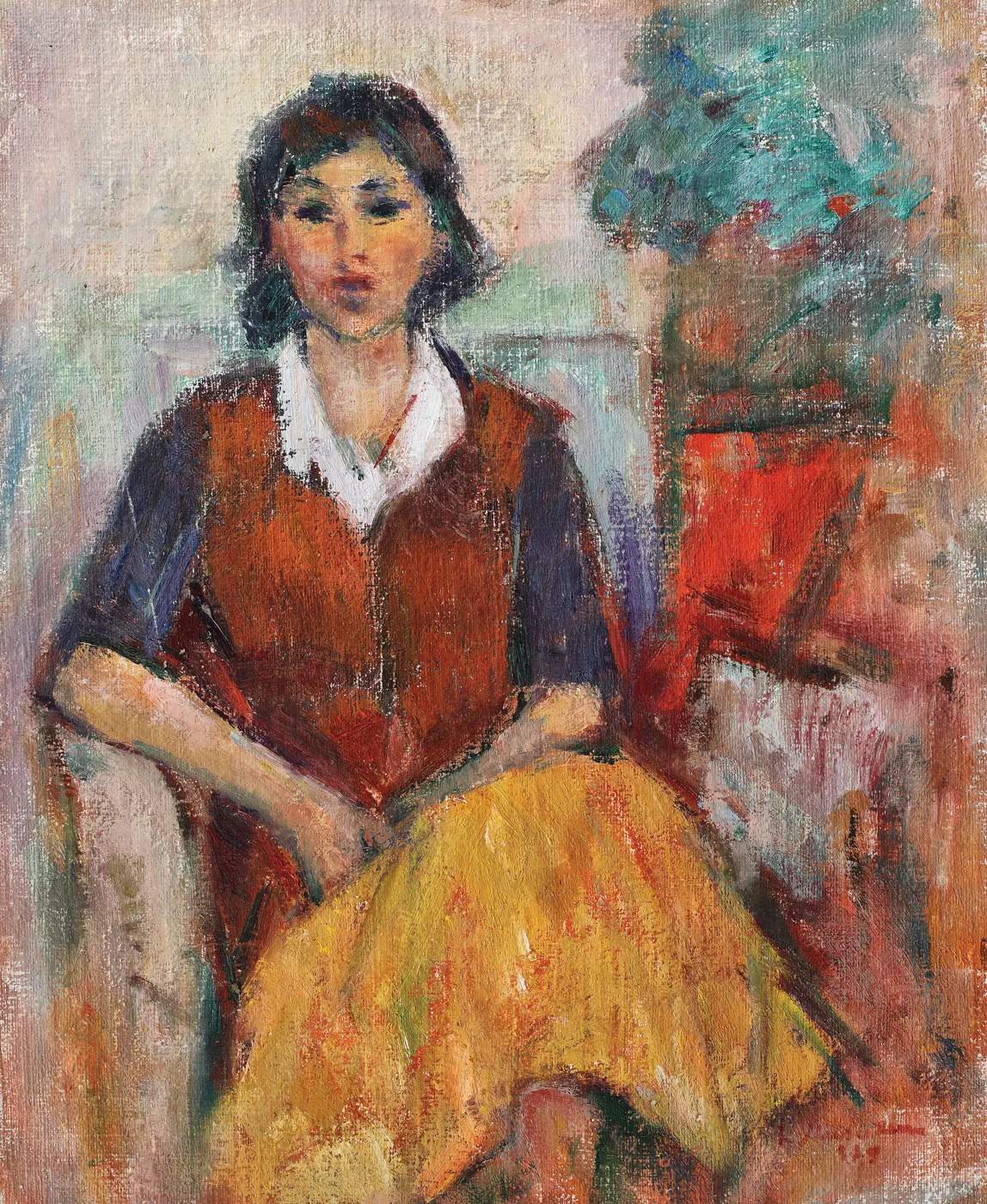
A perfectly accomplished master of children's portraits, Nicolae Tonitza penetrates the souls of his very young models, skilfully managing to expose their whole psychology within his work. His creation is loaded with paternal feeling, which would dominate his pictorial choices. This way, his main source of creative inspiration would actually be his three children. Thanks to an exercise which started at the same time with the birth of his first child and continued throughout the entire growing up process of all his children, he manages to capture an entire merry-go-round of ages, as well as the whole emotional turmoil covering each stage of coming-of-age. In Tonitza's works, as the artist himself declared, children are depicted "with their charming lack of experience, with their harmonious mess, with their winged lack of discipline". He pays a particular attention to the subject matter starting from 1924, when he starts concentrating more on accomplishing a meditative introspection into the theme of childhood. Children's portraits bring him success, an extended series of customised orders, ensuring him a well-deserved place in Romanian art history. Amongst his very young feminine muses we find Catrina and Irina, his daughters; Nineta, his niece; Katiusha the Lipovan girl, or just a regular little girl (often captured sitting down, reading or playing). He does not stop at national inspiration, and instead he also occupies his canvases with Dutch, Tatar, Russian or Italian feminine subjects. Sometimes, the title suggested by the artist indicates the profession of the child's parent: "The Clown's Daughter", "The Lumberjack's Daughter", "The Magnate's Little Girl" or "The Florist's Son" are just a few example. Other times, he indicates the model's social status both by representation, as well as by name - he paints orphan children, healthy or ill children, children wearing fancy clothing or traditional costumes. His youngest models - newborn babies, are especially identified through the indications that the artist offers in his works. The newborn baby appears like a blank page, lacking a biography or specific features. Pre-school age is notably covered in feminine portraits. Tonitza assigns his little muses various decorative elements: bows, bonnets, scarfs or dresses which he carefully studies and renders in detail in his works. Most of his portraits only include one face. The artist focuses mostly on a single human face, allowing himself enough time to capture both the model's features, as well as their entire psychology. In his muses' gaze, Tonitza hides an entire universe and reflects fairytale twinkles. He paints inexpressive faces, whose mute monologue he locks entirely within the eyes. He captures those eyes gazing with nostalgic innocence, or those eyes that are full of melancholy and purity. He presents the human face as a microcosm on which he takes action when necessary, using specific details as well as a protective clarity. With the humorous theme, he finds musical correspondence to the colours he uses in his canvases. He mostly uses decorative and scenographic backgrounds, pointing on the contrast between the dark background and the muse he depicts in lively colours. His literary interests would make themselves felt also in the visual art he creates, so that several writers - amongst which we mention Eugen Ionescu and Barbu Brezianu - would praise his ambivalent talent. What is worth mentioning in this context is the friendship that Tonitza would build with "mythologist" childhood writer Ionel Teodoreanu. Just like his friend Teodoreanu, who sometimes adopts a playful perspective in his novels, Tonitza would try to transpose himself into the imaginary of his very young models, in order to lay on paper a series of fictional letters, in which he exposes a child's perspective on various deeper themes, often difficult to comprehend even by adults. Together with Ionel Teodoreanu, he would work on "The Living Alphabet", a project aiming to attract the complicity of very young souls in uncovering the secrets of transposing letters into images. Therefore, he dedicates both his visual and literary creation to discovering the secrets of childhood.
oil on cardboard, signed and dated upper left, with black, "Tonitza, 1933"
Informacije o istraživanju
The artwork was part of the exhibition "Pavilionul de ArtÄ BucureÈti - Art Safari", 2016.
Izlasci
1933
DODATNE INFORMACIJE
Za pojašnjenja u vezi s postupkom licitiranja, troškovima kupnje, uvjetima jamstva, plaćanja i preuzimanja osvojenog lota preporučujemo da pažljivo pročitate/ponovno pročitate Pravilnik o licitiranju.
A perfectly accomplished master of children's portraits, Nicolae Tonitza penetrates the souls of his very young models, skilfully managing to expose their whole psychology within his work. His creation is loaded with paternal feeling, which would dominate his pictorial choices. This way, his main source of creative inspiration would actually be his three children. Thanks to an exercise which started at the same time with the birth of his first child and continued throughout the entire growing up process of all his children, he manages to capture an entire merry-go-round of ages, as well as the whole emotional turmoil covering each stage of coming-of-age. In Tonitza's works, as the artist himself declared, children are depicted "with their charming lack of experience, with their harmonious mess, with their winged lack of discipline". He pays a particular attention to the subject matter starting from 1924, when he starts concentrating more on accomplishing a meditative introspection into the theme of childhood. Children's portraits bring him success, an extended series of customised orders, ensuring him a well-deserved place in Romanian art history. Amongst his very young feminine muses we find Catrina and Irina, his daughters; Nineta, his niece; Katiusha the Lipovan girl, or just a regular little girl (often captured sitting down, reading or playing). He does not stop at national inspiration, and instead he also occupies his canvases with Dutch, Tatar, Russian or Italian feminine subjects. Sometimes, the title suggested by the artist indicates the profession of the child's parent: "The Clown's Daughter", "The Lumberjack's Daughter", "The Magnate's Little Girl" or "The Florist's Son" are just a few example. Other times, he indicates the model's social status both by representation, as well as by name - he paints orphan children, healthy or ill children, children wearing fancy clothing or traditional costumes. His youngest models - newborn babies, are especially identified through the indications that the artist offers in his works. The newborn baby appears like a blank page, lacking a biography or specific features. Pre-school age is notably covered in feminine portraits. Tonitza assigns his little muses various decorative elements: bows, bonnets, scarfs or dresses which he carefully studies and renders in detail in his works. Most of his portraits only include one face. The artist focuses mostly on a single human face, allowing himself enough time to capture both the model's features, as well as their entire psychology. In his muses' gaze, Tonitza hides an entire universe and reflects fairytale twinkles. He paints inexpressive faces, whose mute monologue he locks entirely within the eyes. He captures those eyes gazing with nostalgic innocence, or those eyes that are full of melancholy and purity. He presents the human face as a microcosm on which he takes action when necessary, using specific details as well as a protective clarity. With the humorous theme, he finds musical correspondence to the colours he uses in his canvases. He mostly uses decorative and scenographic backgrounds, pointing on the contrast between the dark background and the muse he depicts in lively colours. His literary interests would make themselves felt also in the visual art he creates, so that several writers - amongst which we mention Eugen Ionescu and Barbu Brezianu - would praise his ambivalent talent. What is worth mentioning in this context is the friendship that Tonitza would build with "mythologist" childhood writer Ionel Teodoreanu. Just like his friend Teodoreanu, who sometimes adopts a playful perspective in his novels, Tonitza would try to transpose himself into the imaginary of his very young models, in order to lay on paper a series of fictional letters, in which he exposes a child's perspective on various deeper themes, often difficult to comprehend even by adults. Together with Ionel Teodoreanu, he would work on "The Living Alphabet", a project aiming to attract the complicity of very young souls in uncovering the secrets of transposing letters into images. Therefore, he dedicates both his visual and literary creation to discovering the secrets of childhood.
DODATNE INFORMACIJE
Za pojašnjenja u vezi s postupkom licitiranja, troškovima kupnje, uvjetima jamstva, plaćanja i preuzimanja osvojenog lota preporučujemo da pažljivo pročitate/ponovno pročitate Pravilnik o licitiranju.