

Fotografije parcele su informativne i indikativne te ne mogu pružiti vrlo detaljan prikaz objekta iz svih kutova. Preporučujemo pažljiv fizički pregled parcele prije licitiranja.
Fotografije parcele su informativne i indikativne te ne mogu pružiti vrlo detaljan prikaz objekta iz svih kutova. Preporučujemo pažljiv fizički pregled parcele prije licitiranja.
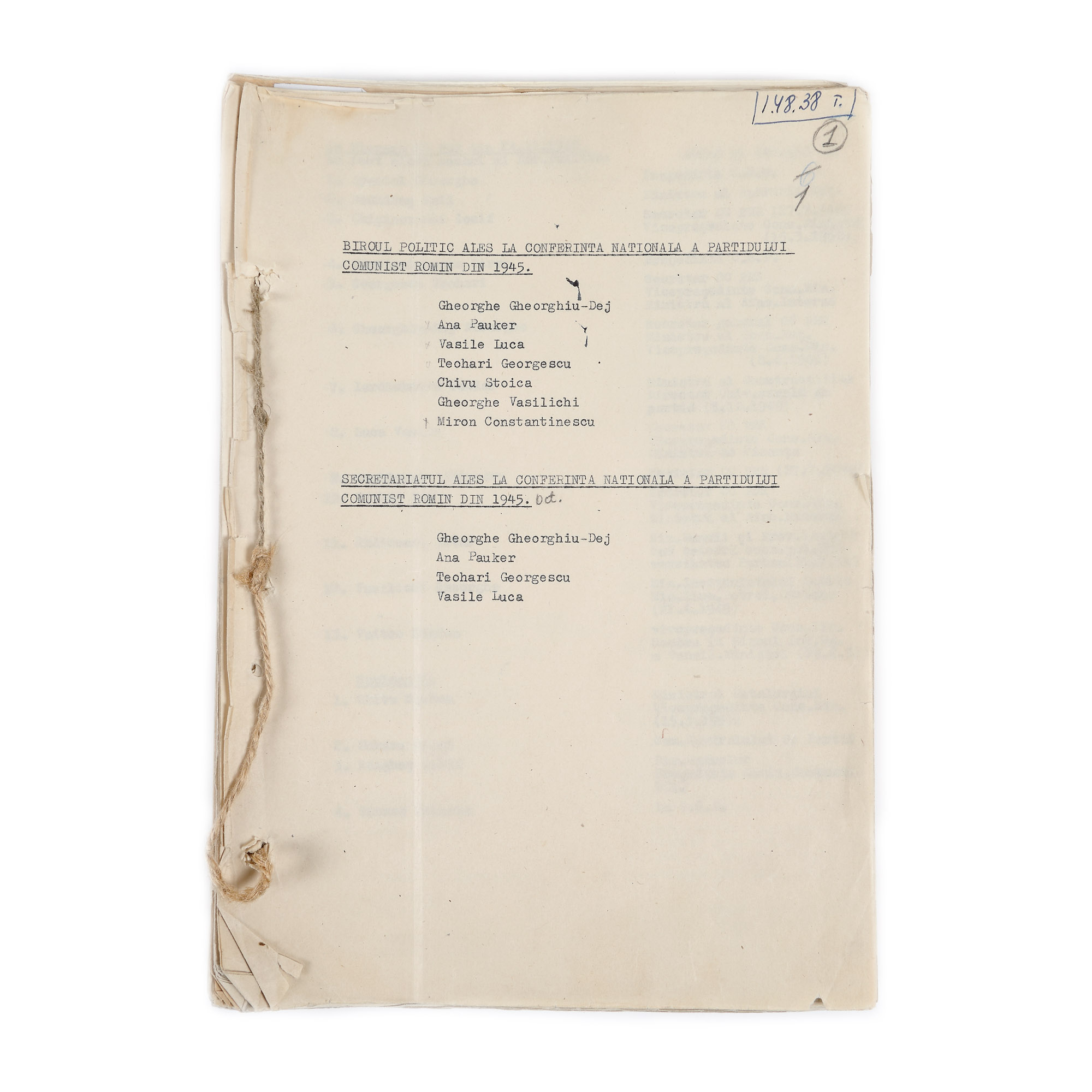
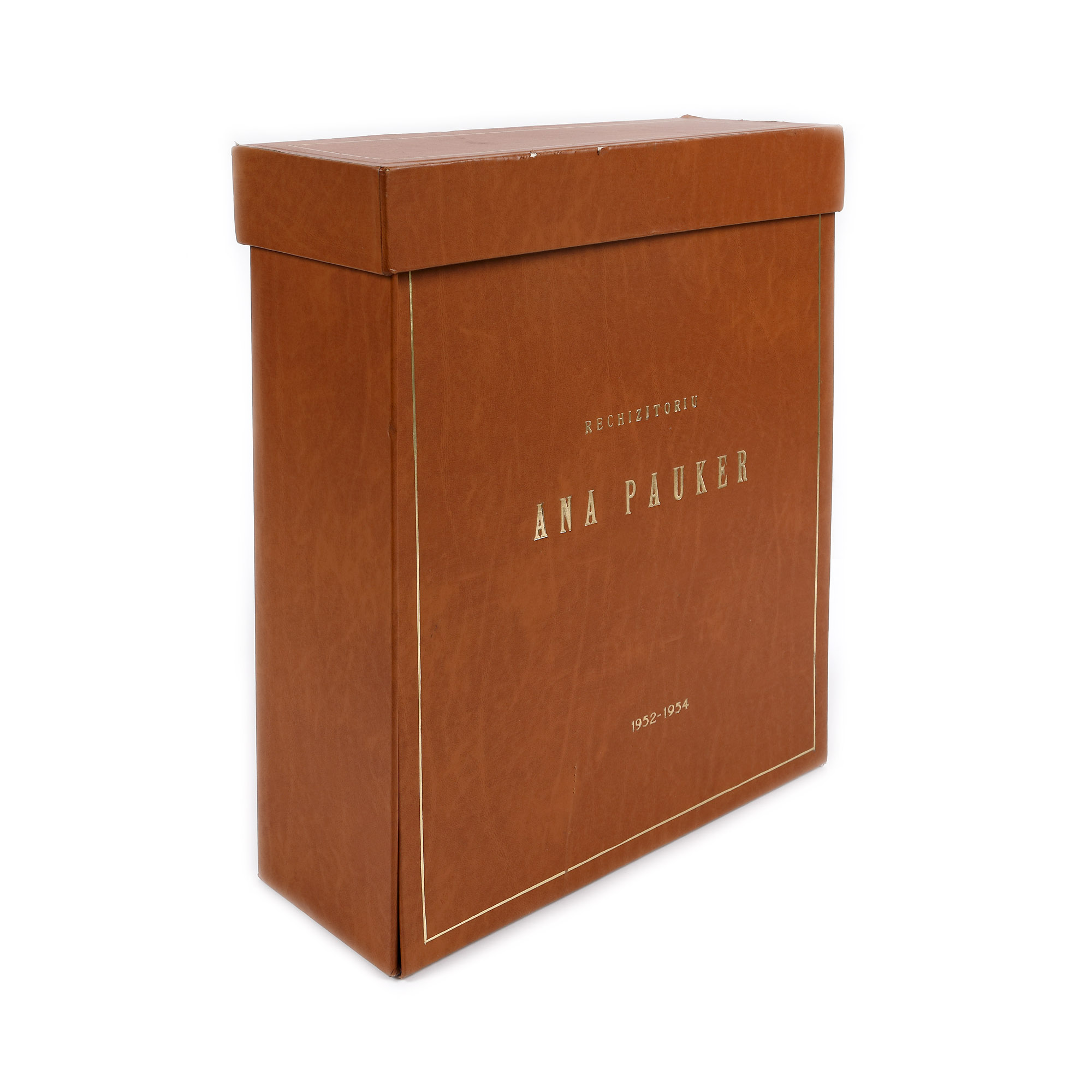
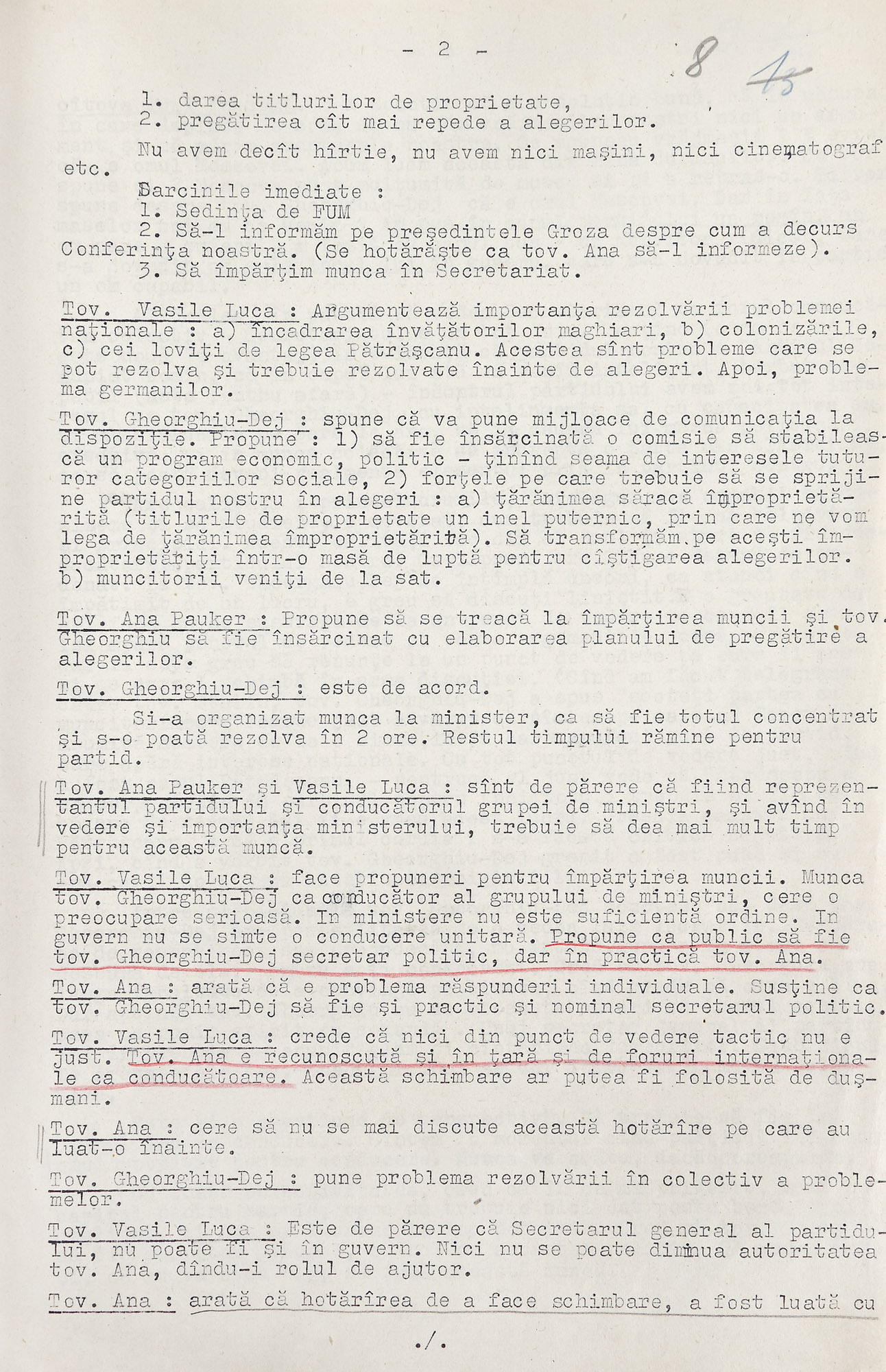
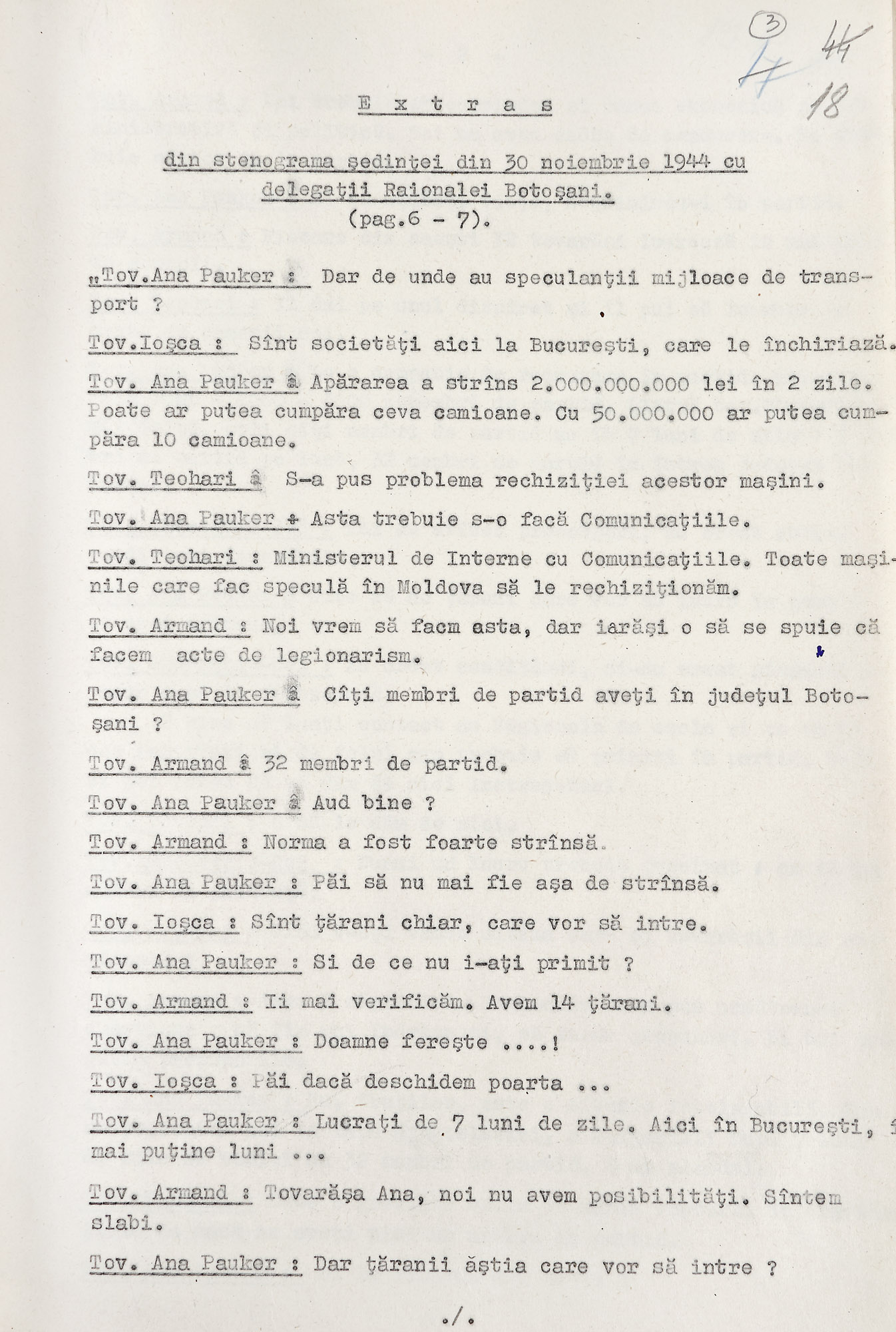
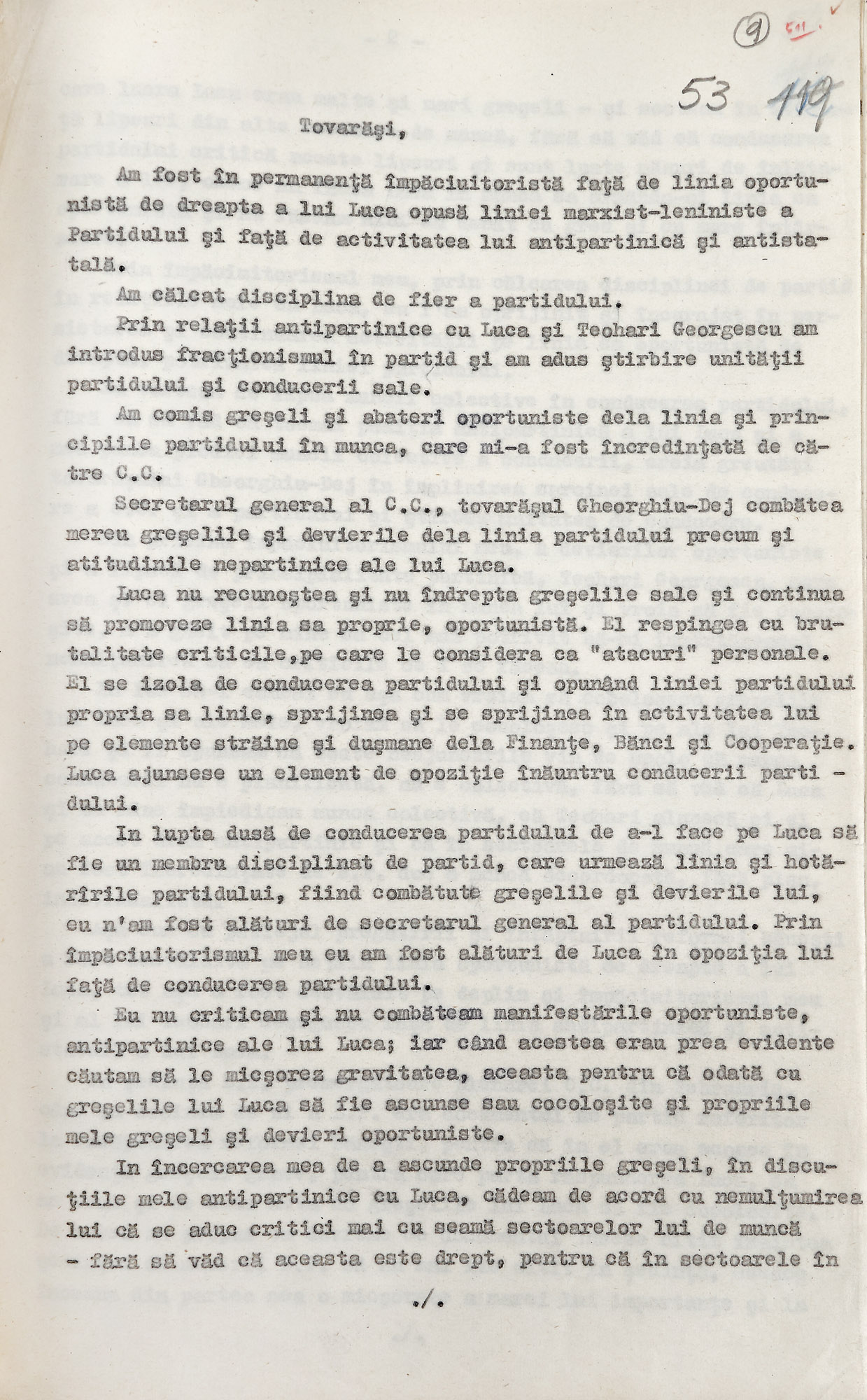
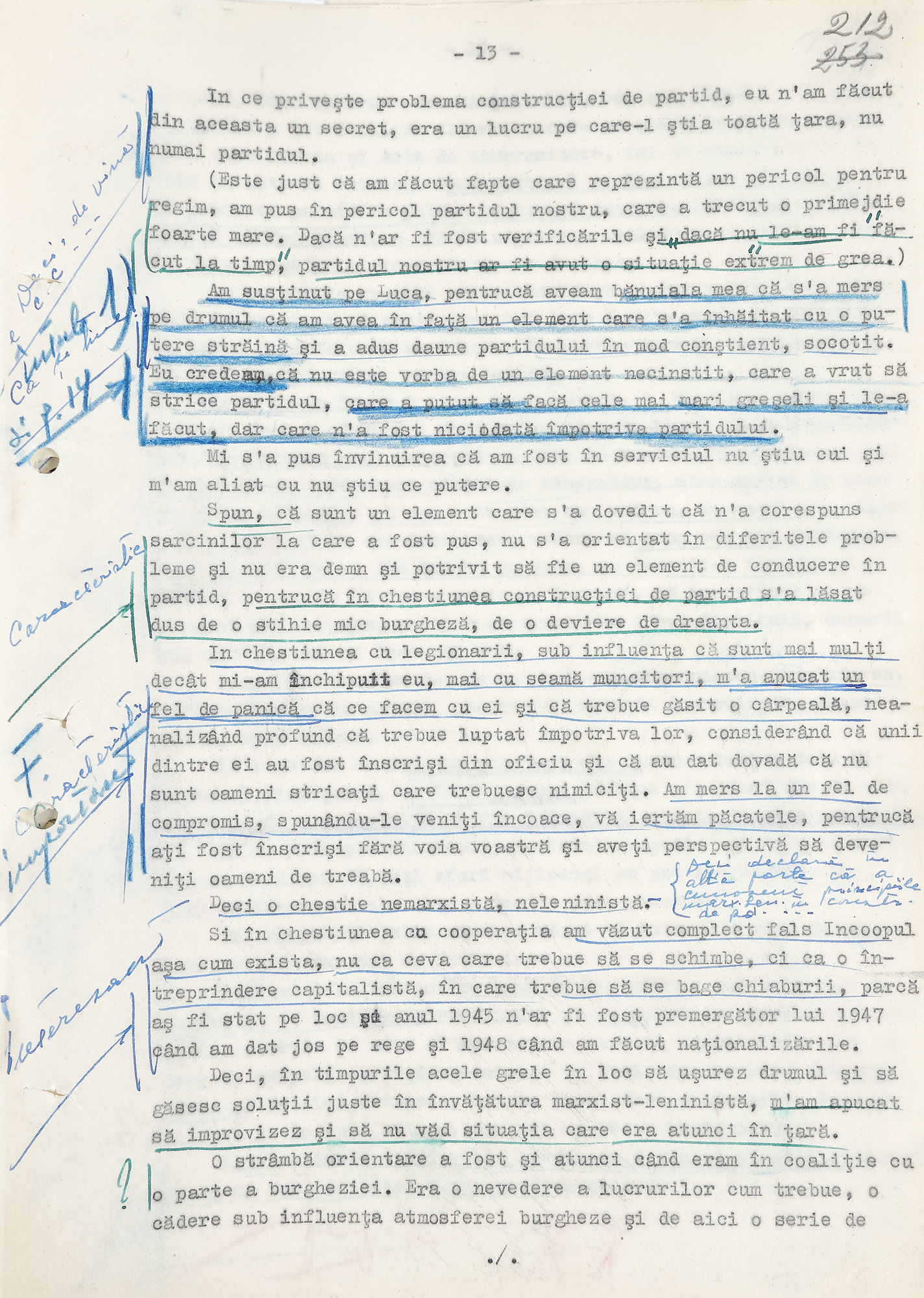
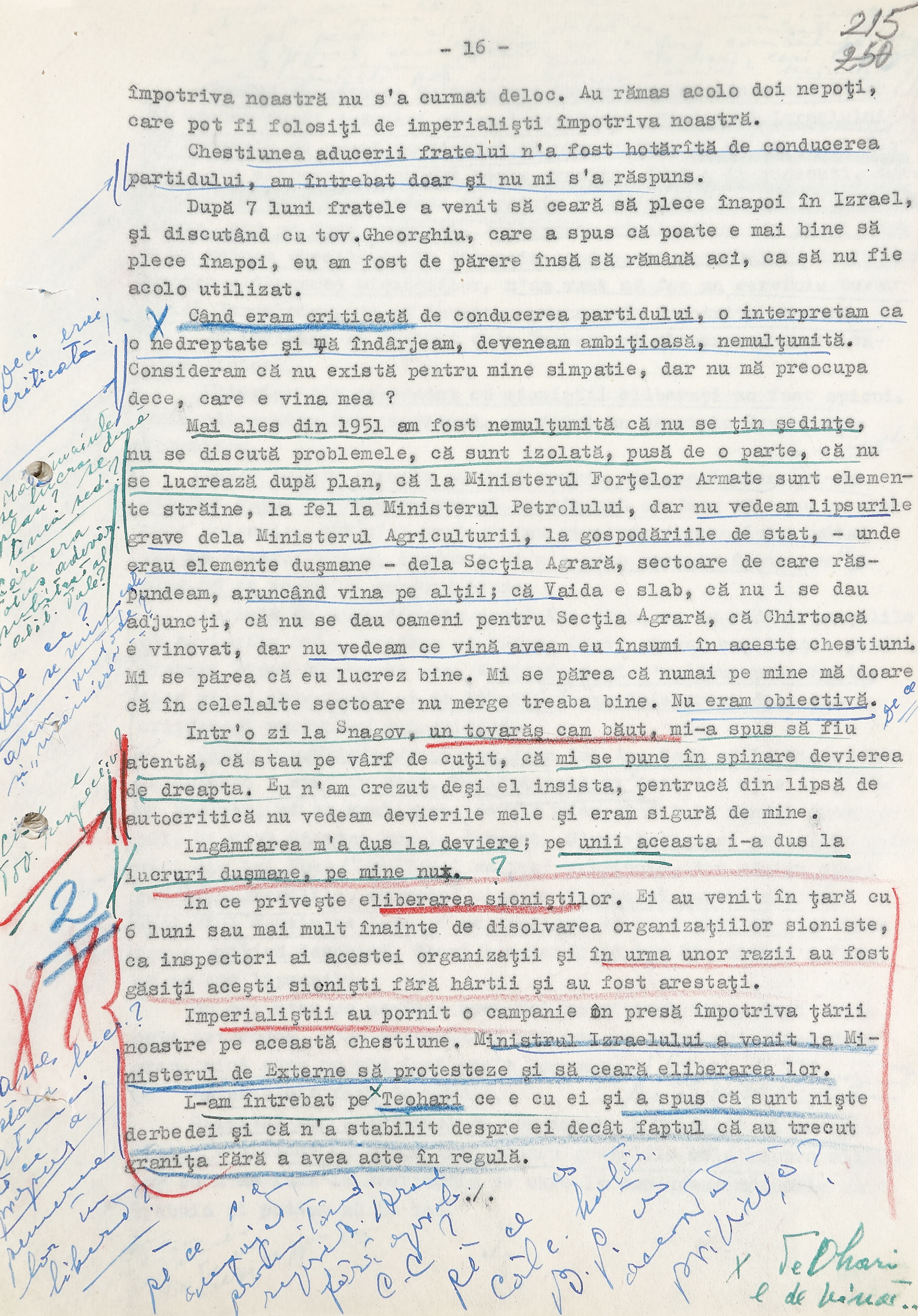
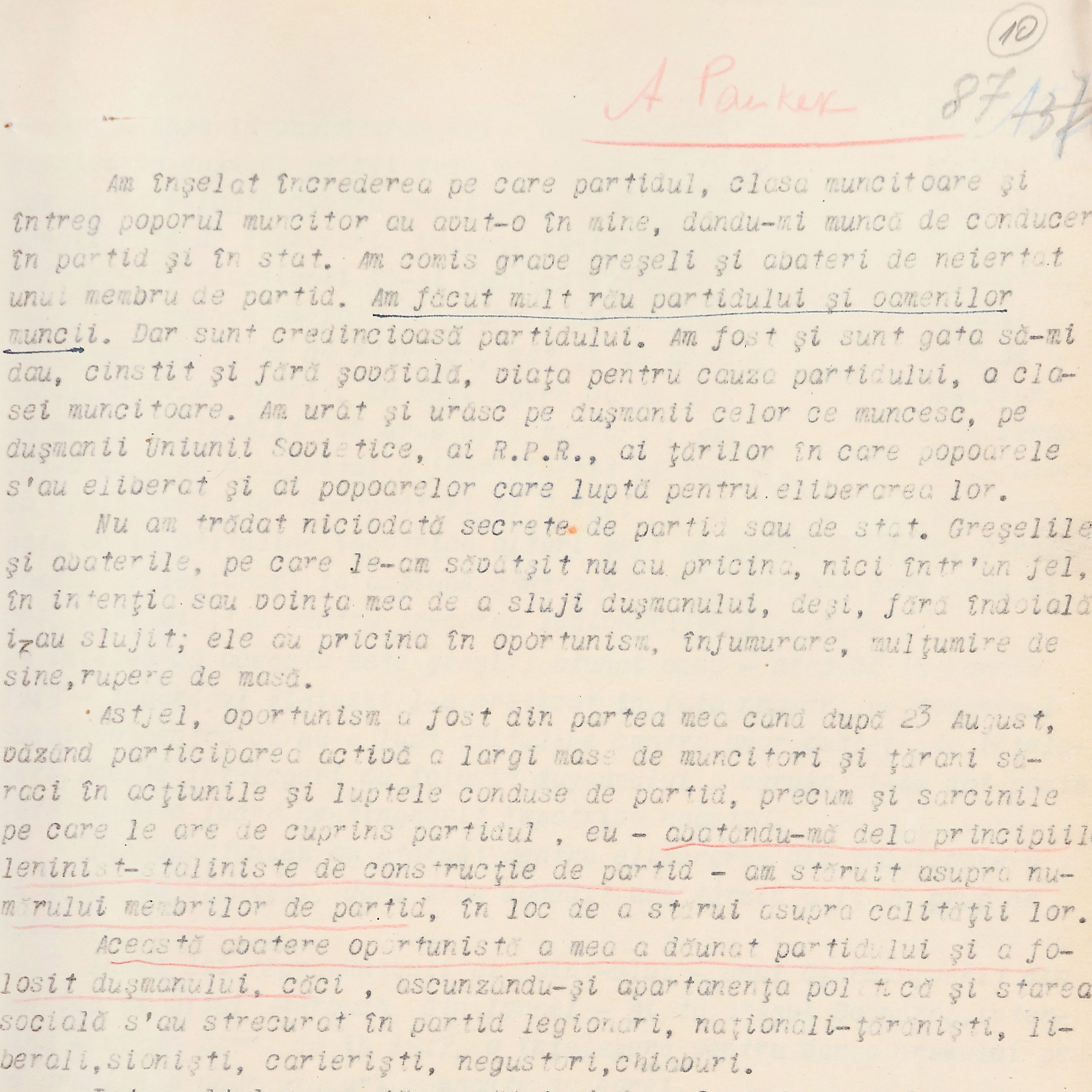
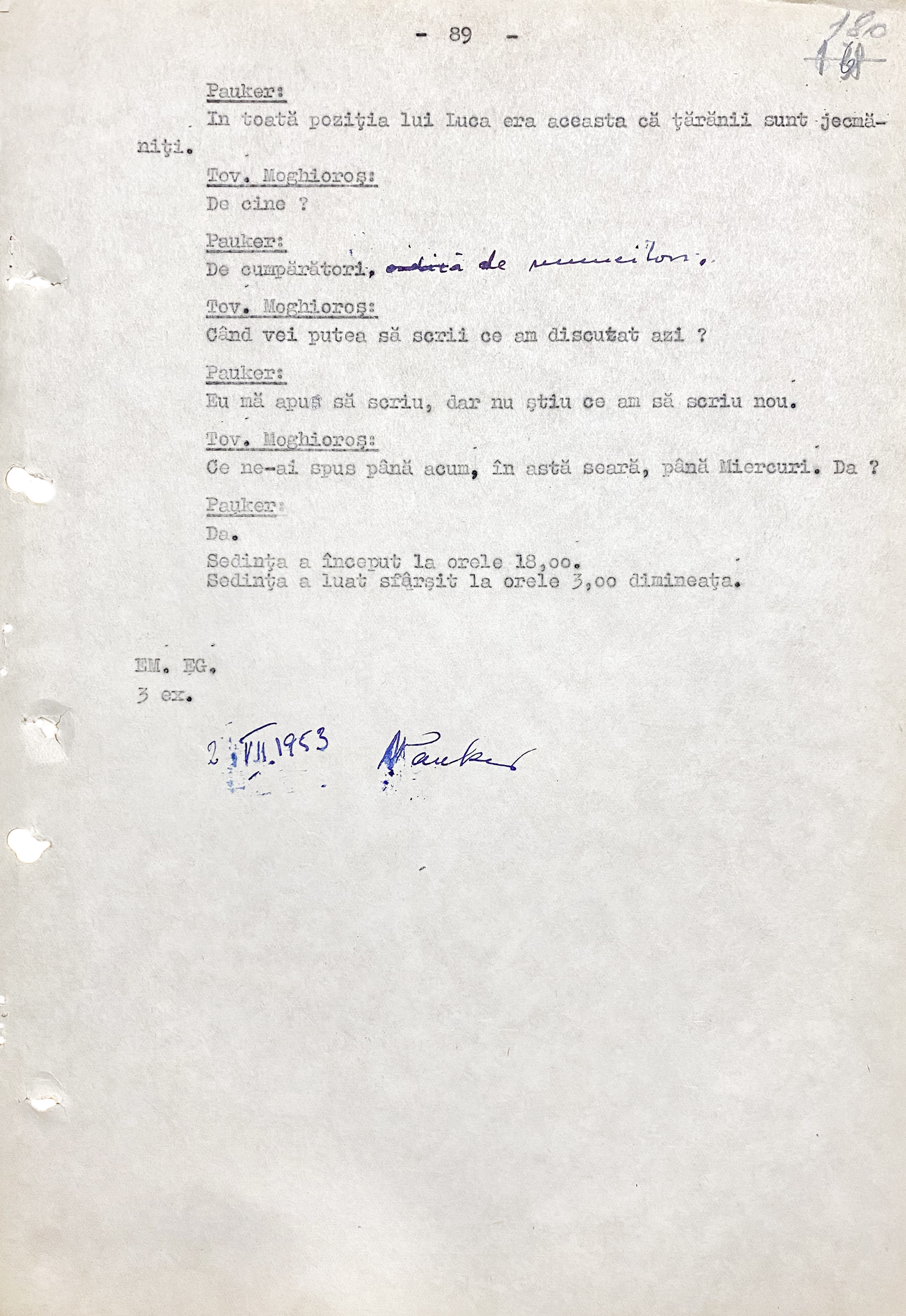
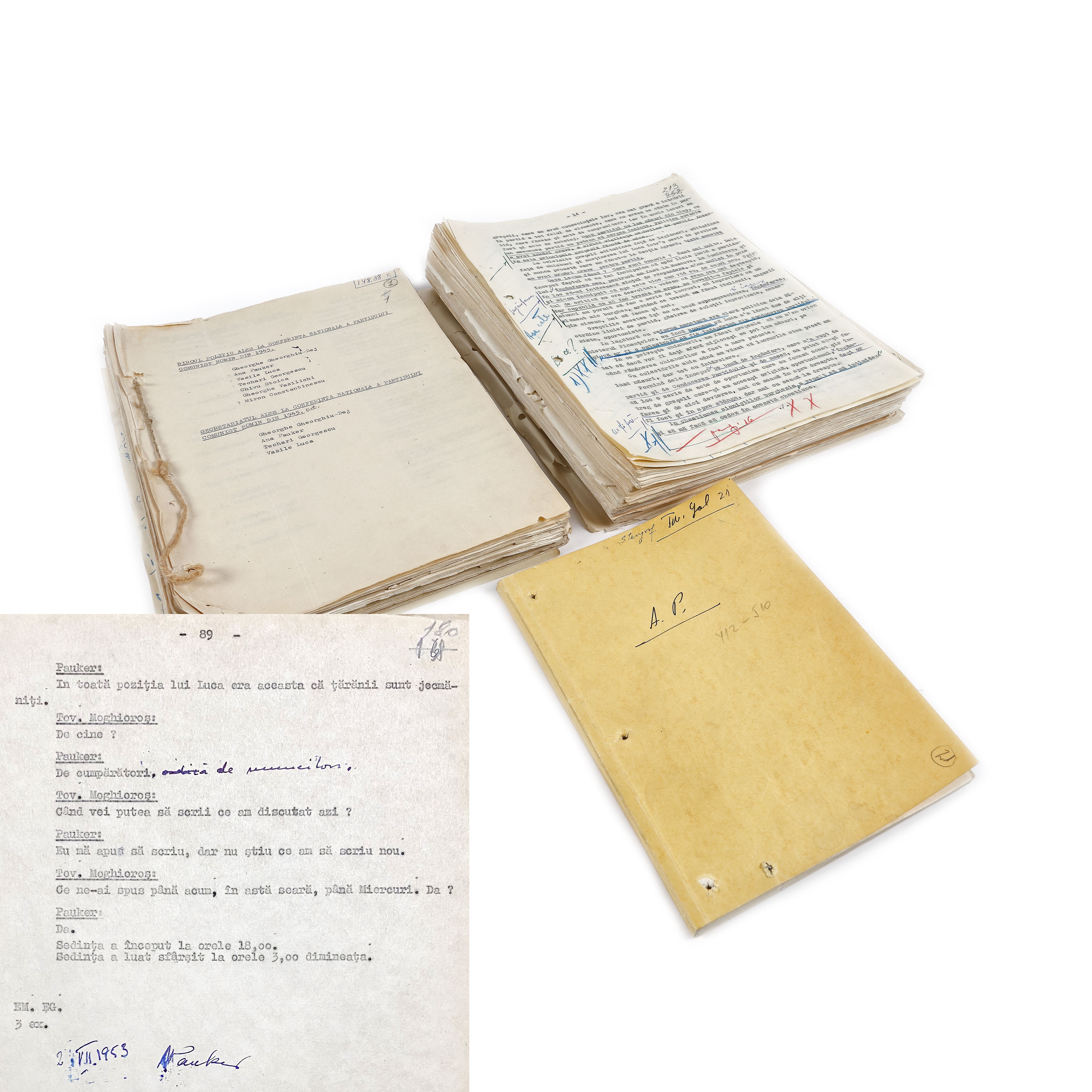
87. File containing material on the disciplinary prosecution by the Romanian Communist/Labour Party of the politically purged communist leader Ana Pauker, 1952-1954, with shorthand, holograph or typed statements, pro and con of the political prosecution, some signed in holograph, including by Ana Pauker, including her self-critical statement, unique piece of great historical significance (827 sheets)
Sesija
Uto., 15 veljače 2022 19:00
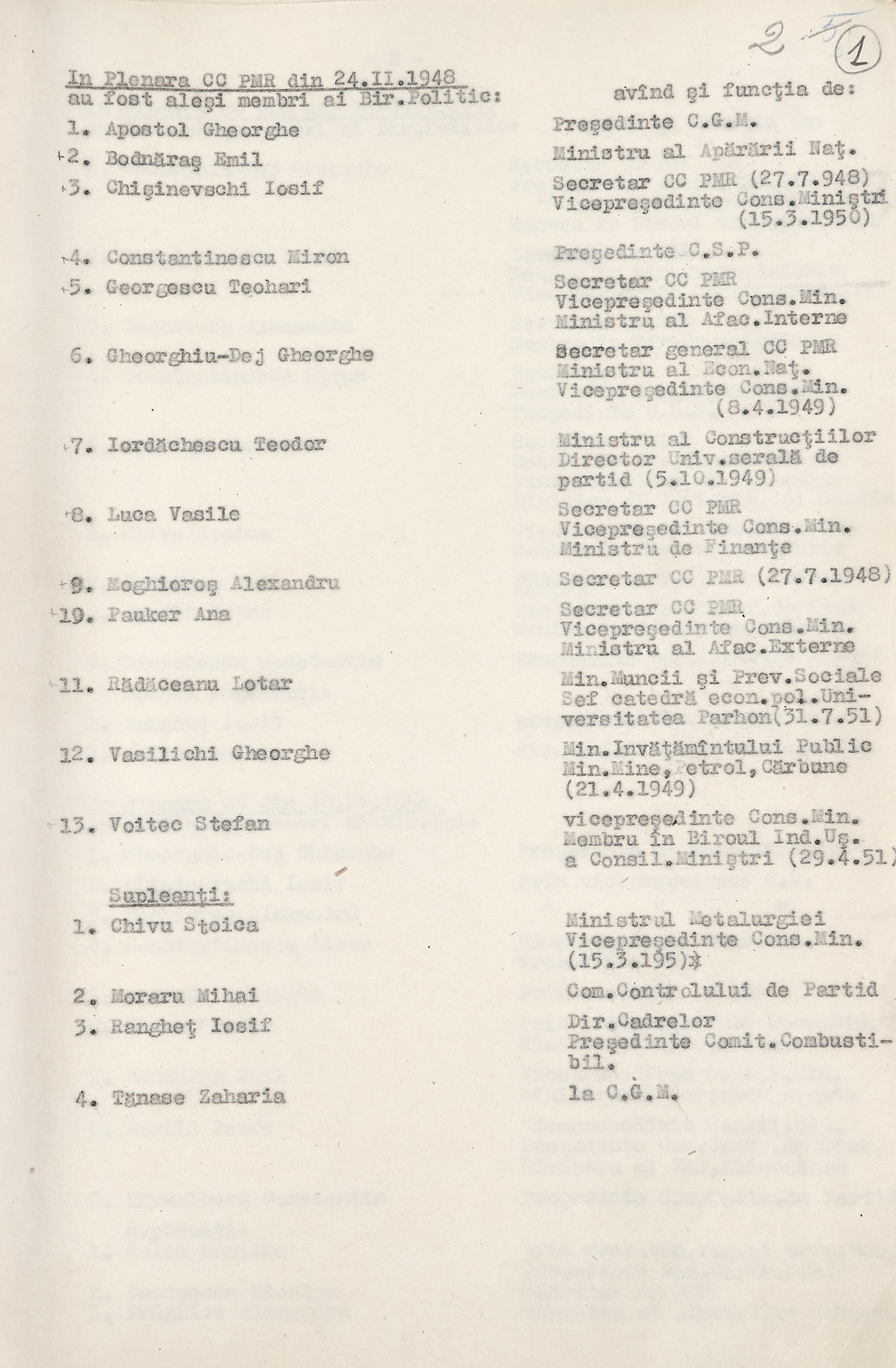
Synopsis of documents in the Ana Pauker file: 1. Book of transcripts of meetings and hearings; 2. List of the Political Bureau and Secretariat elected by the 1945 RCP National Conference; 3. List of members of the Plenary CC of the PMR of 24.11.1948, List of members of the Plenary CC of the PMR of 24-27.5.1952, List of members of the Plenary CC of 28.12.1955; 4. List of meetings of the Political Bureau of the CC in 1948, list of meetings of the CC Secretariat of the PMR, list of plenary meetings of the CC, drawn up by the CC Secretariat of the PMR in 1956; 5. List of members of the Organisational Bureau of the CC of the PMR from 1956; 6. Transcript of the CC Secretariat meeting of 24.10.1945 (in copy) - double copy; 7. Extract from the transcript of the meeting of 30.11.1944 with the delegates of the Botoșani District - double copy; 8. Extract from the transcript of the plenary meeting of the CC of the PMR of 26-27.05.1952; 9. Communication of Ana Pauker to comrades - Bucharest, 1952 (double copy); 10. Notice from Ana Pauker to the Political Bureau of the CC of the PMR dated 22.09.1952 (double copy); 11. Letter of Ana Pauker of 20.04.1953; 12. Transcript of the meeting of comrade Moghioroș with Ana Pauker of 12.06.1953, Extract from the transcript corrected by Ana Pauker of 12.06.1953; 13. Answers given by Ana Pauker to questions asked by the Party Commission of the PMR CC; 14. Transcript of the meeting of 29.07.1953 in which Ana Pauker answers questions from the committee; 15. Report on the outcome of the investigation of Ana Pauker by the Party Commission, drawn up in 1954 (double copy); 16. Extract from the transcript of the plenary meeting of the CC of the PMR of 19-20.08.1953; 17. Extract from Protocol No. 21 of the meeting of the Political Bureau of the CC of the PMR of 11.05.1954; 18. Note on the placement in labour of Ana Pauker, 1954; 19. Transcript of 18.06.1956 (triple copy); 20. Transcript of the discussion of comrade Vințe with Ana Pauker of 21.06.1956 (triple copy); 21. Transcript of the discussion between comrade Moghioroș, comrade Vințe with Ana Pauker of 06.07.1956 (triple copy); 22. Issues raised by Ana Pauker during the discussions of 21.06.1956 (double copy); 23. Declaration of Mrs Florica Boduănaș of 20.01.1954; 24. Questionnaire with questions about Ana Pauker; 25. Answers or statement concerning Ana Pauker of 12.10.1956; 26. Answers or statement concerning Ana Pauker of 15.10.1956 (double copy); 27. Statement on Ana Pauker from Pintilie Ghe. of 10.06.1956; 28. Clarifications and additions to previous statements, Teohari Georgescu, 09.06.1956; 29. Teohari Georgescu's clarification of 09.06.1956 on his position in the plenary of 26.05.1952; 30. Teohari Georgescu's statements of 23.05.1956 on the concentration of power in the hands of Ana Pauker; 31. Specifications of 18.05.1956 by Teohari Georgescu regarding the statement of 27(6) April 1956 on Jews, Legionaries, Ana Pauker etc.; 32. Specifications of 26.04.1956 by Teohari Georgescu on antipartisan and factionalist relations with Ana Pauker and Vasile Luca; 33. Plan with the main issues to guide Ana Pauker's investigation.
She met and married the communist activist Marcel Pauker, a descendant of an influential family of left-wing journalists and lawyers, in France. On his encouragement, she joined the communist movement in 1920. She is recruited during this period as a Soviet agent. In 1922 she was arrested together with Marcel Pauker for illegal political activities and after their release they went into exile in Switzerland. She was arrested several times for prohibited political activity, being a member of the Communist Party of Romania, where, as a Comintern activist, she also campaigned for the separation of Romanian Bessarabia (Eastern Moldova) from Romania. Following a trial, she was sentenced to 10 years in prison, but managed to escape in 1926 to the USSR, where she remained until 1934, during which time she studied politics at Comintern schools. After returning to Romania, she was given positions of responsibility in the Communist Party. She was arrested on July 14, 1935 and tried in Craiova together with other leaders of the Communist Party, including Alexandru Moghioroș, Smil Marcovici and Alexandru Drăghici, and sentenced to ten years in prison. In May 1941 she was allowed to leave for the Soviet Union, following an exchange with a Romanian politician detained by the Soviet authorities after the 1940 occupation of Bessarabia and Northern Bukovina. More precisely, this was "Elder" Ion Codreanu, former member of the National Council (Bessarabia), arrested by the Soviets immediately after their entry into Bessarabia on June 28, 1940. Meanwhile, during a stay in the Soviet Union, her husband, Marcel, had been arrested and executed in 1938 as a "spy for the West" as part of the Stalinist purges, which failed, however, to shake her faith in the communist cause and her loyalty as an agent of the Soviet regime. Ana Pauker returned to Romania in 1944, dressed in Soviet uniform, after the Red Army entered the country. She was elected secretary of the Central Committee of the Romanian Communist Party and played an important role in organizing the coalition government, called "of broad democratic concentration", in fact controlled by the Communists, presided over by Petru Groza, in 1945-1947. In 1947 she was appointed Foreign Minister and Deputy Prime Minister, the first woman in the world to hold this government position. In this capacity, she signed, among other things, the act by which Romania surrendered Serpent Island (Ro. Insula Șerpilor) to the Soviet Union. In 1952, as part of a wave of purges initiated by Gheorghiu-Dej and inspired by the model of other campaigns and trials orchestrated in the USSR and in all countries under Soviet domination, she was removed from the leadership of the RCP, accused of "cosmopolitanism", "right-wing deviation" and "anti-partisan" activities, of sabotaging the collectivisation of agriculture and of links with legionaries, foreign agents, Zionists, etc. In 1954 she was expelled from the Romanian Labour Party (as the communist party was then called). In February 1953 she was subjected to a series of interrogations with a view to a political trial, but only a month and a half after Stalin's death, in April 1953, she was released from prison and kept under house arrest for several years, under constant surveillance on suspicion of intending political revenge under the relative de-Stalinisation initiated by Nikita Khrushchev.
DODATNE INFORMACIJE
Za pojašnjenja u vezi s postupkom licitiranja, troškovima kupnje, uvjetima jamstva, plaćanja i preuzimanja osvojenog lota preporučujemo da pažljivo pročitate/ponovno pročitate Pravilnik o licitiranju.
Za dodatne informacije o lotu i aukciji kontaktirajte Odjel umjetničkih savjetnika.
Detalii
Synopsis of documents in the Ana Pauker file: 1. Book of transcripts of meetings and hearings; 2. List of the Political Bureau and Secretariat elected by the 1945 RCP National Conference; 3. List of members of the Plenary CC of the PMR of 24.11.1948, List of members of the Plenary CC of the PMR of 24-27.5.1952, List of members of the Plenary CC of 28.12.1955; 4. List of meetings of the Political Bureau of the CC in 1948, list of meetings of the CC Secretariat of the PMR, list of plenary meetings of the CC, drawn up by the CC Secretariat of the PMR in 1956; 5. List of members of the Organisational Bureau of the CC of the PMR from 1956; 6. Transcript of the CC Secretariat meeting of 24.10.1945 (in copy) - double copy; 7. Extract from the transcript of the meeting of 30.11.1944 with the delegates of the Botoșani District - double copy; 8. Extract from the transcript of the plenary meeting of the CC of the PMR of 26-27.05.1952; 9. Communication of Ana Pauker to comrades - Bucharest, 1952 (double copy); 10. Notice from Ana Pauker to the Political Bureau of the CC of the PMR dated 22.09.1952 (double copy); 11. Letter of Ana Pauker of 20.04.1953; 12. Transcript of the meeting of comrade Moghioroș with Ana Pauker of 12.06.1953, Extract from the transcript corrected by Ana Pauker of 12.06.1953; 13. Answers given by Ana Pauker to questions asked by the Party Commission of the PMR CC; 14. Transcript of the meeting of 29.07.1953 in which Ana Pauker answers questions from the committee; 15. Report on the outcome of the investigation of Ana Pauker by the Party Commission, drawn up in 1954 (double copy); 16. Extract from the transcript of the plenary meeting of the CC of the PMR of 19-20.08.1953; 17. Extract from Protocol No. 21 of the meeting of the Political Bureau of the CC of the PMR of 11.05.1954; 18. Note on the placement in labour of Ana Pauker, 1954; 19. Transcript of 18.06.1956 (triple copy); 20. Transcript of the discussion of comrade Vințe with Ana Pauker of 21.06.1956 (triple copy); 21. Transcript of the discussion between comrade Moghioroș, comrade Vințe with Ana Pauker of 06.07.1956 (triple copy); 22. Issues raised by Ana Pauker during the discussions of 21.06.1956 (double copy); 23. Declaration of Mrs Florica Boduănaș of 20.01.1954; 24. Questionnaire with questions about Ana Pauker; 25. Answers or statement concerning Ana Pauker of 12.10.1956; 26. Answers or statement concerning Ana Pauker of 15.10.1956 (double copy); 27. Statement on Ana Pauker from Pintilie Ghe. of 10.06.1956; 28. Clarifications and additions to previous statements, Teohari Georgescu, 09.06.1956; 29. Teohari Georgescu's clarification of 09.06.1956 on his position in the plenary of 26.05.1952; 30. Teohari Georgescu's statements of 23.05.1956 on the concentration of power in the hands of Ana Pauker; 31. Specifications of 18.05.1956 by Teohari Georgescu regarding the statement of 27(6) April 1956 on Jews, Legionaries, Ana Pauker etc.; 32. Specifications of 26.04.1956 by Teohari Georgescu on antipartisan and factionalist relations with Ana Pauker and Vasile Luca; 33. Plan with the main issues to guide Ana Pauker's investigation.
She met and married the communist activist Marcel Pauker, a descendant of an influential family of left-wing journalists and lawyers, in France. On his encouragement, she joined the communist movement in 1920. She is recruited during this period as a Soviet agent. In 1922 she was arrested together with Marcel Pauker for illegal political activities and after their release they went into exile in Switzerland. She was arrested several times for prohibited political activity, being a member of the Communist Party of Romania, where, as a Comintern activist, she also campaigned for the separation of Romanian Bessarabia (Eastern Moldova) from Romania. Following a trial, she was sentenced to 10 years in prison, but managed to escape in 1926 to the USSR, where she remained until 1934, during which time she studied politics at Comintern schools. After returning to Romania, she was given positions of responsibility in the Communist Party. She was arrested on July 14, 1935 and tried in Craiova together with other leaders of the Communist Party, including Alexandru Moghioroș, Smil Marcovici and Alexandru Drăghici, and sentenced to ten years in prison. In May 1941 she was allowed to leave for the Soviet Union, following an exchange with a Romanian politician detained by the Soviet authorities after the 1940 occupation of Bessarabia and Northern Bukovina. More precisely, this was "Elder" Ion Codreanu, former member of the National Council (Bessarabia), arrested by the Soviets immediately after their entry into Bessarabia on June 28, 1940. Meanwhile, during a stay in the Soviet Union, her husband, Marcel, had been arrested and executed in 1938 as a "spy for the West" as part of the Stalinist purges, which failed, however, to shake her faith in the communist cause and her loyalty as an agent of the Soviet regime. Ana Pauker returned to Romania in 1944, dressed in Soviet uniform, after the Red Army entered the country. She was elected secretary of the Central Committee of the Romanian Communist Party and played an important role in organizing the coalition government, called "of broad democratic concentration", in fact controlled by the Communists, presided over by Petru Groza, in 1945-1947. In 1947 she was appointed Foreign Minister and Deputy Prime Minister, the first woman in the world to hold this government position. In this capacity, she signed, among other things, the act by which Romania surrendered Serpent Island (Ro. Insula Șerpilor) to the Soviet Union. In 1952, as part of a wave of purges initiated by Gheorghiu-Dej and inspired by the model of other campaigns and trials orchestrated in the USSR and in all countries under Soviet domination, she was removed from the leadership of the RCP, accused of "cosmopolitanism", "right-wing deviation" and "anti-partisan" activities, of sabotaging the collectivisation of agriculture and of links with legionaries, foreign agents, Zionists, etc. In 1954 she was expelled from the Romanian Labour Party (as the communist party was then called). In February 1953 she was subjected to a series of interrogations with a view to a political trial, but only a month and a half after Stalin's death, in April 1953, she was released from prison and kept under house arrest for several years, under constant surveillance on suspicion of intending political revenge under the relative de-Stalinisation initiated by Nikita Khrushchev.
DODATNE INFORMACIJE
Za pojašnjenja u vezi s postupkom licitiranja, troškovima kupnje, uvjetima jamstva, plaćanja i preuzimanja osvojenog lota preporučujemo da pažljivo pročitate/ponovno pročitate Pravilnik o licitiranju.
Za dodatne informacije o lotu i aukciji kontaktirajte Odjel umjetničkih savjetnika.
Alternativni lotovi
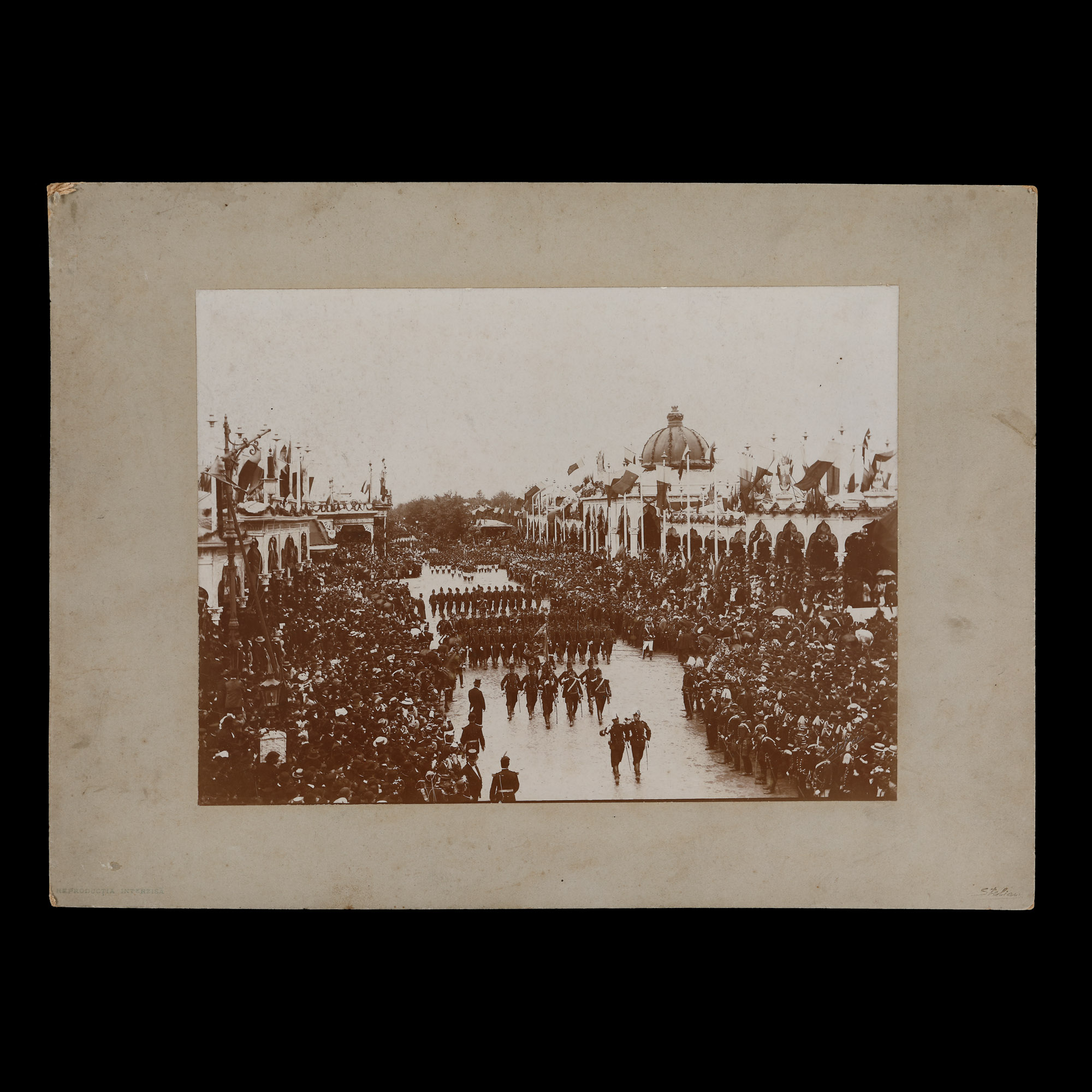
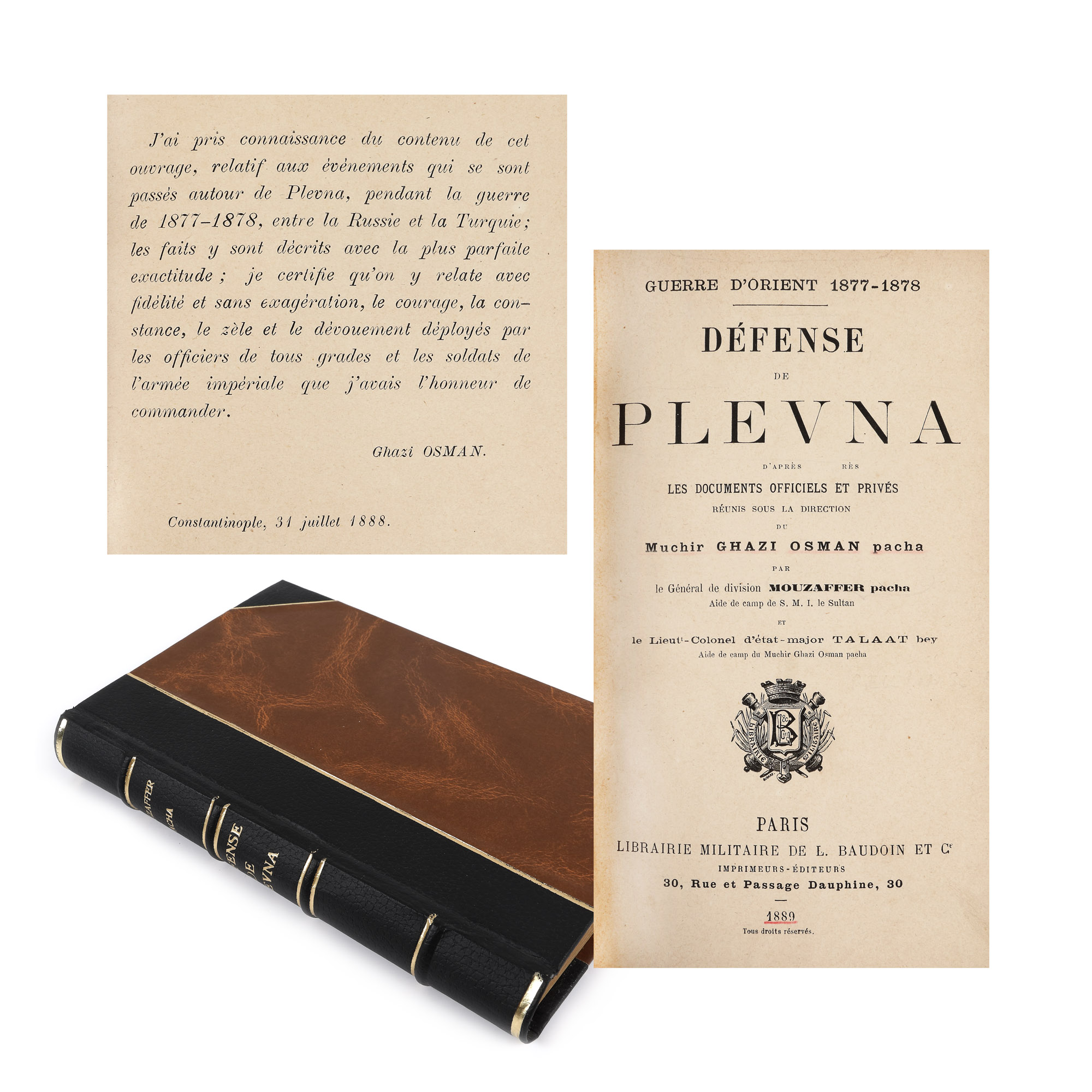
97. "Défense de Plevna", by Muzaffar Pacha, French, Paris, 1889
Početna cijena
EUR 50
Prodano
EUR 150
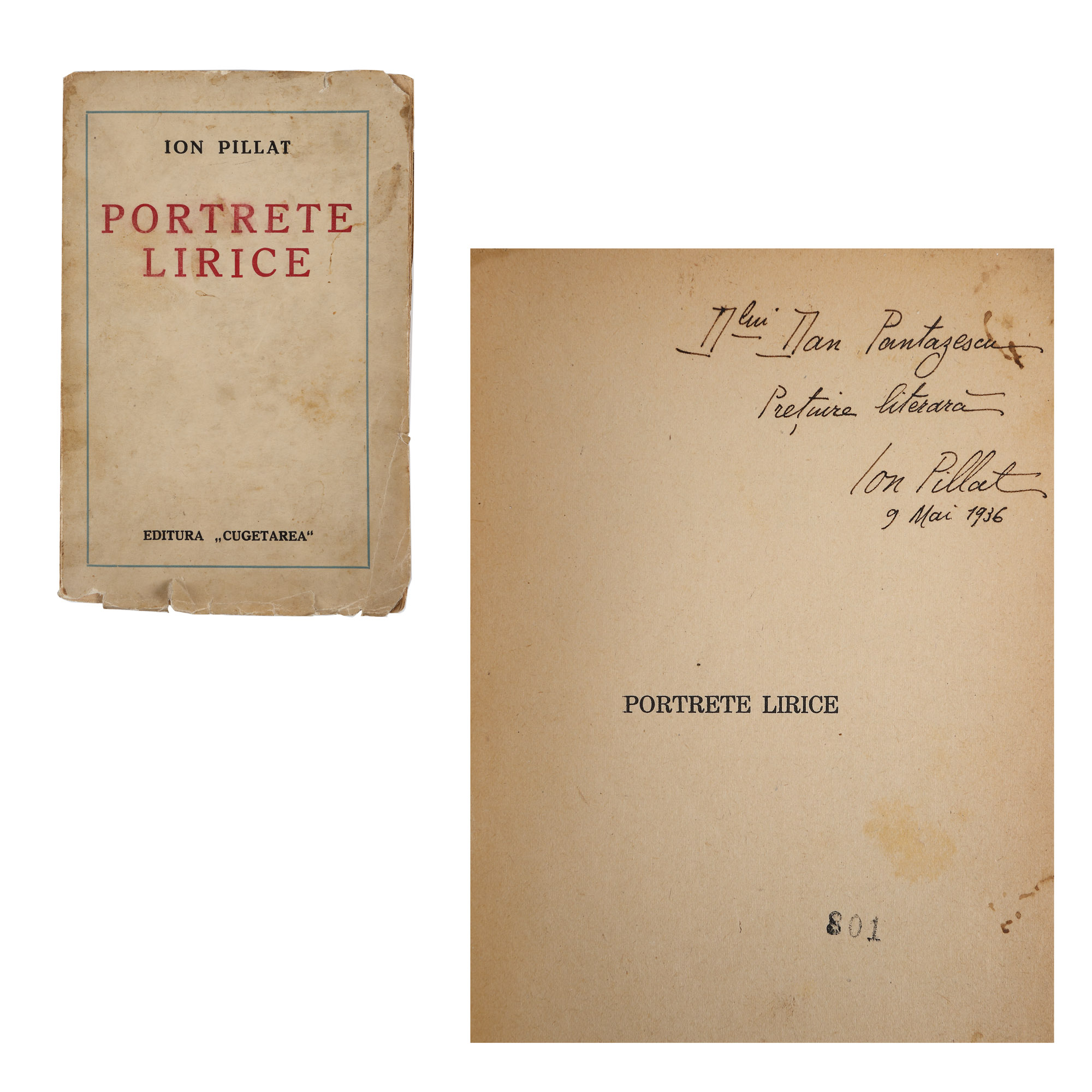
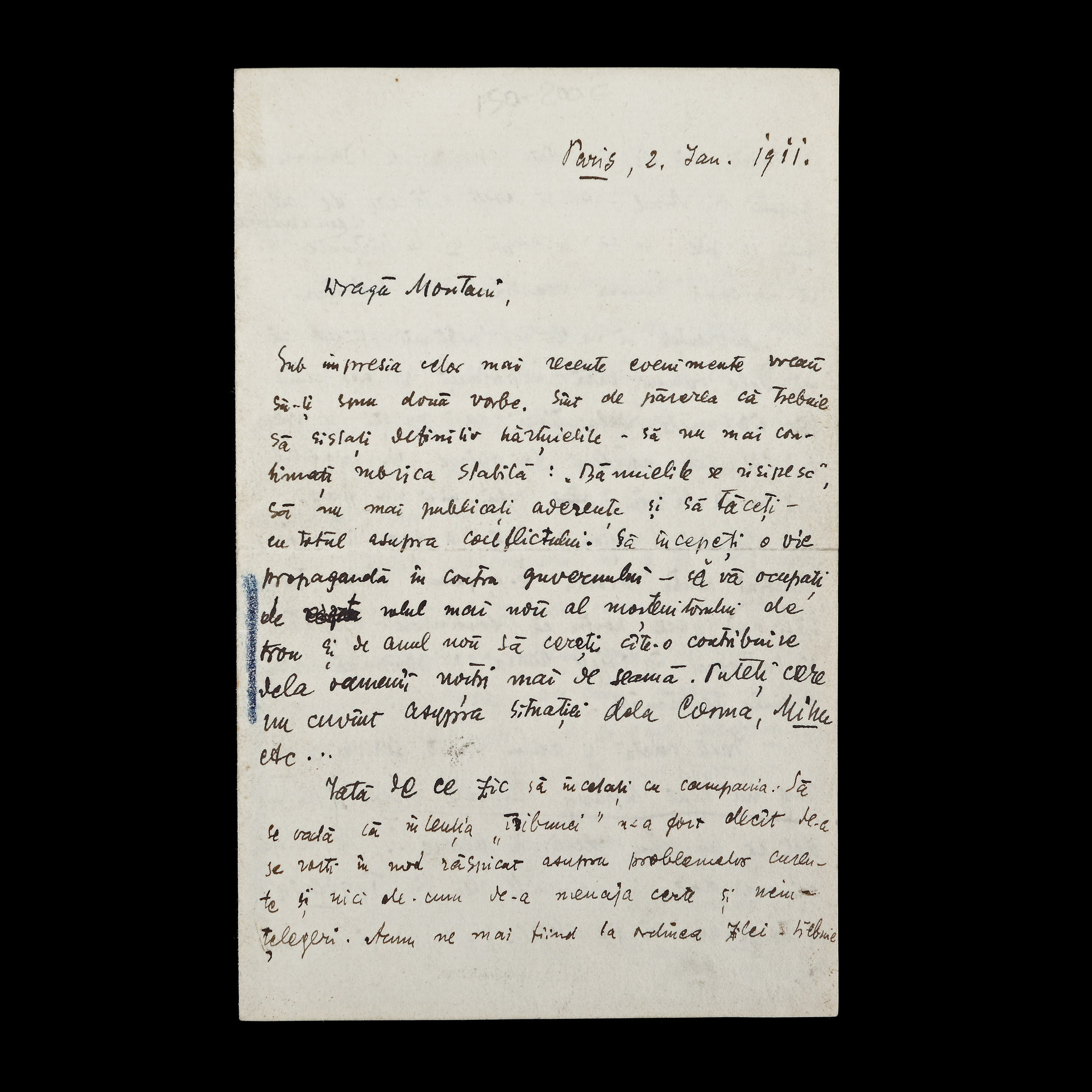
89. Friendly letter sent by Octavian Goga to Ion Montan, member of the Great National Assembly in Alba Iulia, about the direction which the newspaper "Tribuna" should take, Paris, January 2, 1911, with the autograph of the writer, rare collector's item (2 sheets)
Početna cijena
EUR 100
Prodano
EUR 200