Fotografije parcele su informativne i indikativne te ne mogu pružiti vrlo detaljan prikaz objekta iz svih kutova. Preporučujemo pažljiv fizički pregled parcele prije licitiranja.
Fotografije parcele su informativne i indikativne te ne mogu pružiti vrlo detaljan prikaz objekta iz svih kutova. Preporučujemo pažljiv fizički pregled parcele prije licitiranja.
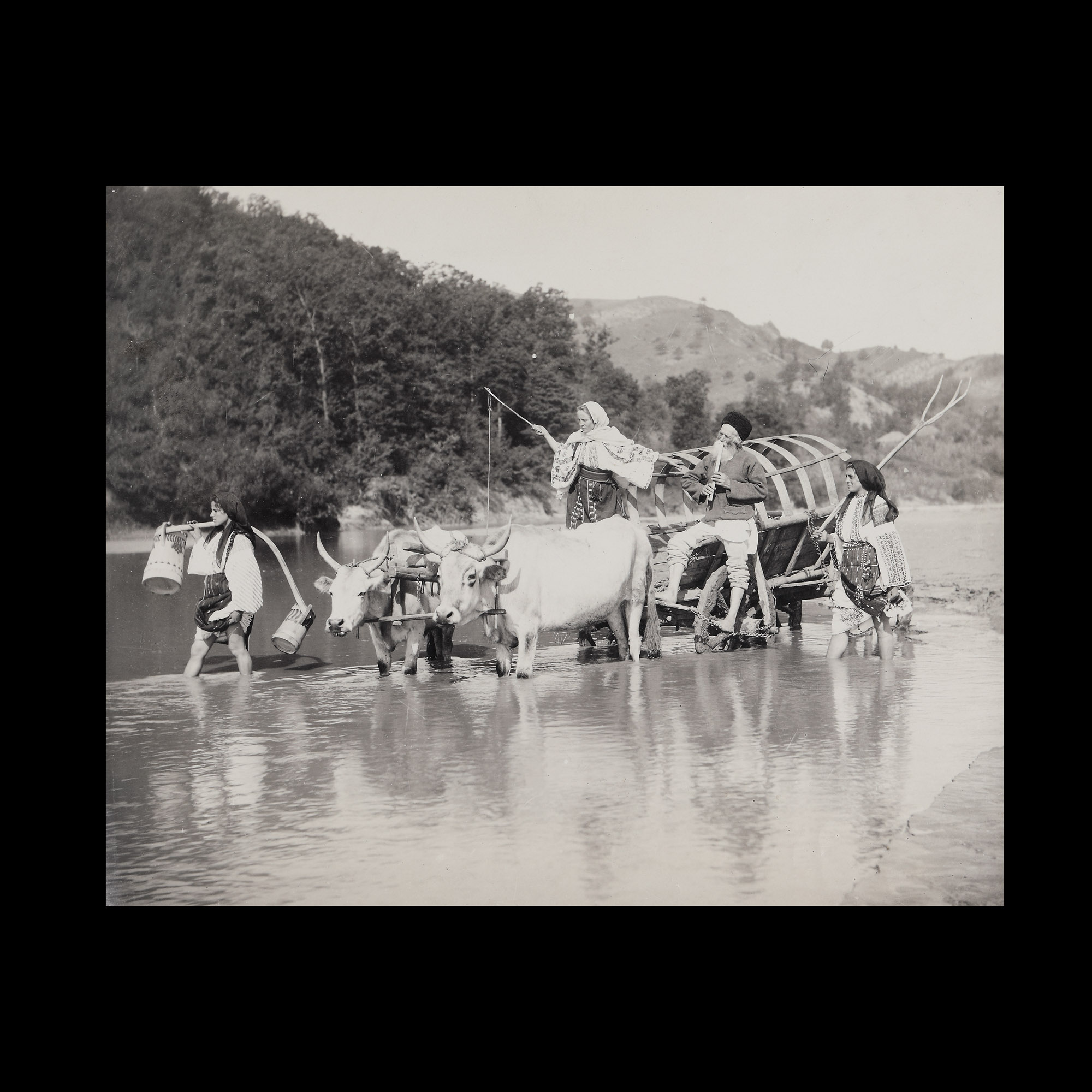
114. "Car cu boi, cu coviltir", photograph by Alexandru Bellu, Urlați, 1901-1915, rare collectible item
Početna cijena
Pretul de pornire si cel estimat nu sunt preturi de vanzare efective
EUR 100
Prodano
Pretul de pornire si cel estimat nu sunt preturi de vanzare efective
Baron Alexandru Bellu, a descendant of the family that donated the land for the Bellu cemetery in Bucharest, was a pioneer of Romanian photography. His beautiful peasant faces, mostly from the Urlați area, were reproduced in the album "La Roumanie en images", published in Paris in 1919. A friend of Grigorescu, Alexandru Bellu also immortalized the famous ox carts. Passionate about the way of life of the peasants and despite the modern facilities of the manor house - it had, in 1900, electric lighting, Ericsson telephone, still existing today, photo studio and cinema - Alexandru Bellu borrows in the decoration of his house in Urlați elements of folk architecture, white masonry and oak beam ceilings, but also traditional rugs and clothes. The passion that consecrated the nobleman from Urlați was, however, the art of photography. The baron frequently went out on the hills and fields around Urlați, he went through the villages and printed on photographic plates many portraits of peasants. He left to posterity portraits of beautiful women of the people, at work, spinning wool, nursing children or drawing water from the spring, old men with wise eyes and young men, working in the fields or playing the flute. Frequently, in his photographs appear ox carts, snapshots also used by Nicolae Grigorescu for the paintings that consecrated him in Romanian art. The poetic images left to posterity by Alexandru Bellu established him as an internationally recognized pioneer of Romanian photography. Bellu was considered a follower of Carol Popp of Szathmari (whose lithographs have pride of place in the Urlați mansion), the first art and documentary photographer in the Romanian Kingdom and one of the first ten photographers in Europe. Baron Bellu's photographs of Romanian peasants were reproduced in the album "La Roumanie en images", published in Paris in 1919, and he also authorized the printing of postcards based on his photographs (made public on the internet by enthusiasts, on dedicated pages). The images are evidence of the old way of life, from people's dress to their traditions and everyday life. Gypsy Didina, one of Baron Bellu's muses. His photographs also had a practical contemporary application. After them, the reconstruction and rehabilitation of the Urlați manor house was conducted, even if what has been preserved of the building, now a museum, is only a part of a complex of buildings that has faced the two world wars and especially the terrible earthquakes of 1940, 1977, 1984 and 1990. All the collections in the manor were donated by Alexandru Bellu in 1921, the year of his death, to the Romanian Academy, and in 1926 his wife donated the entire complex to the same institution. The family wanted to leave to the Romanians all that they had accumulated, a material and spiritual legacy for the people among whom they lived.
DODATNE INFORMACIJE
Za pojašnjenja u vezi s postupkom licitiranja, troškovima kupnje, uvjetima jamstva, plaćanja i preuzimanja osvojenog lota preporučujemo da pažljivo pročitate/ponovno pročitate Pravilnik o licitiranju.
Baron Alexandru Bellu, a descendant of the family that donated the land for the Bellu cemetery in Bucharest, was a pioneer of Romanian photography. His beautiful peasant faces, mostly from the Urlați area, were reproduced in the album "La Roumanie en images", published in Paris in 1919. A friend of Grigorescu, Alexandru Bellu also immortalized the famous ox carts. Passionate about the way of life of the peasants and despite the modern facilities of the manor house - it had, in 1900, electric lighting, Ericsson telephone, still existing today, photo studio and cinema - Alexandru Bellu borrows in the decoration of his house in Urlați elements of folk architecture, white masonry and oak beam ceilings, but also traditional rugs and clothes. The passion that consecrated the nobleman from Urlați was, however, the art of photography. The baron frequently went out on the hills and fields around Urlați, he went through the villages and printed on photographic plates many portraits of peasants. He left to posterity portraits of beautiful women of the people, at work, spinning wool, nursing children or drawing water from the spring, old men with wise eyes and young men, working in the fields or playing the flute. Frequently, in his photographs appear ox carts, snapshots also used by Nicolae Grigorescu for the paintings that consecrated him in Romanian art. The poetic images left to posterity by Alexandru Bellu established him as an internationally recognized pioneer of Romanian photography. Bellu was considered a follower of Carol Popp of Szathmari (whose lithographs have pride of place in the Urlați mansion), the first art and documentary photographer in the Romanian Kingdom and one of the first ten photographers in Europe. Baron Bellu's photographs of Romanian peasants were reproduced in the album "La Roumanie en images", published in Paris in 1919, and he also authorized the printing of postcards based on his photographs (made public on the internet by enthusiasts, on dedicated pages). The images are evidence of the old way of life, from people's dress to their traditions and everyday life. Gypsy Didina, one of Baron Bellu's muses. His photographs also had a practical contemporary application. After them, the reconstruction and rehabilitation of the Urlați manor house was conducted, even if what has been preserved of the building, now a museum, is only a part of a complex of buildings that has faced the two world wars and especially the terrible earthquakes of 1940, 1977, 1984 and 1990. All the collections in the manor were donated by Alexandru Bellu in 1921, the year of his death, to the Romanian Academy, and in 1926 his wife donated the entire complex to the same institution. The family wanted to leave to the Romanians all that they had accumulated, a material and spiritual legacy for the people among whom they lived.
DODATNE INFORMACIJE
Za pojašnjenja u vezi s postupkom licitiranja, troškovima kupnje, uvjetima jamstva, plaćanja i preuzimanja osvojenog lota preporučujemo da pažljivo pročitate/ponovno pročitate Pravilnik o licitiranju.