





63. Unique pair of cabinets, incorporating painted panels, possibly by Nicolae Grigorescu, beginning of the 20th century, from the historical collection of the scholar Constantin I. Istrati
Početna cijena
EUR 500
Prodano
EUR 10.500
Sesija
Uto., 1 listopada 2024 19:00
Opis
lemn de brad, strunjit, băițuit, aurit, integrând panouri pictate în ulei
Informacije o istraživanju
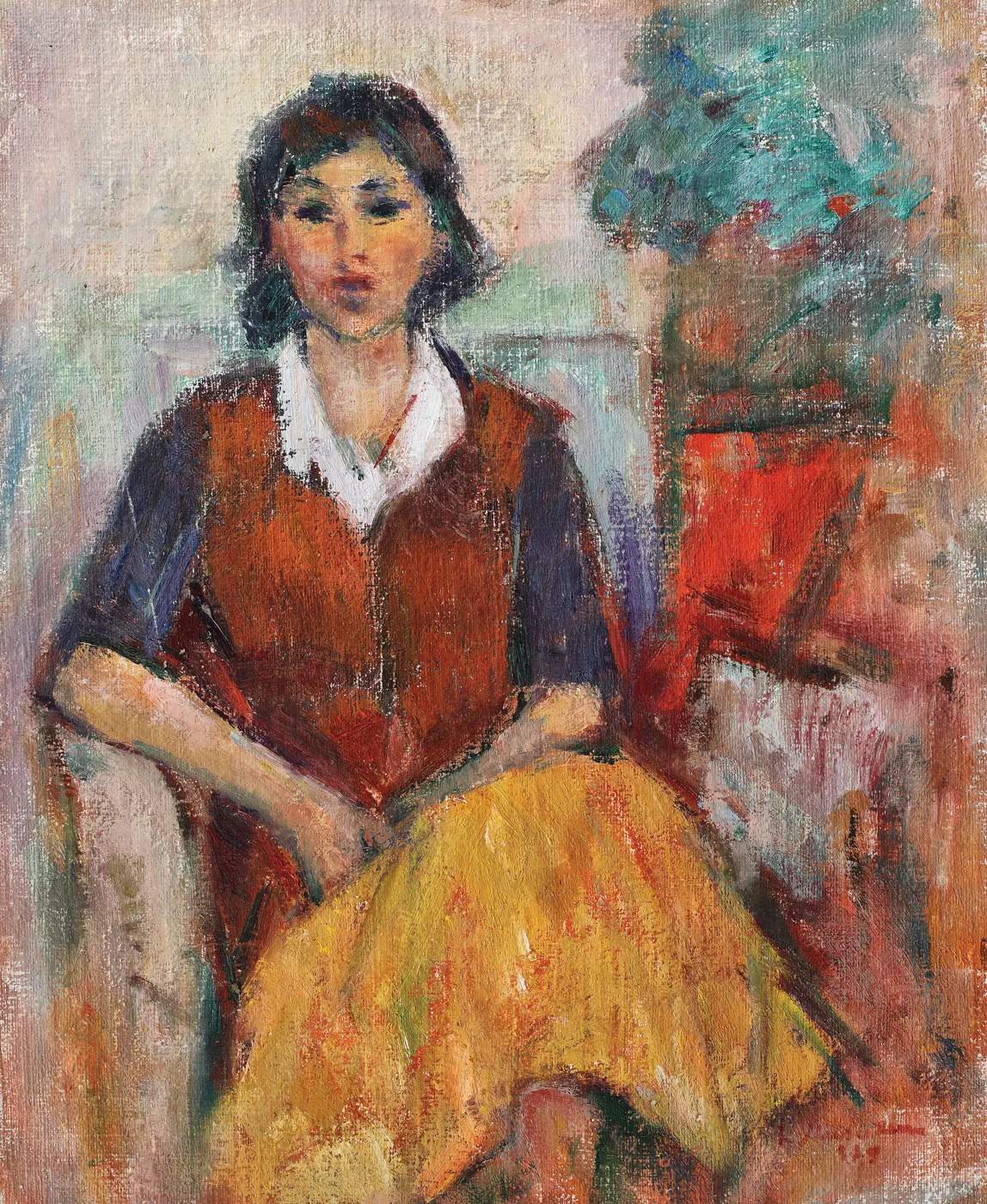
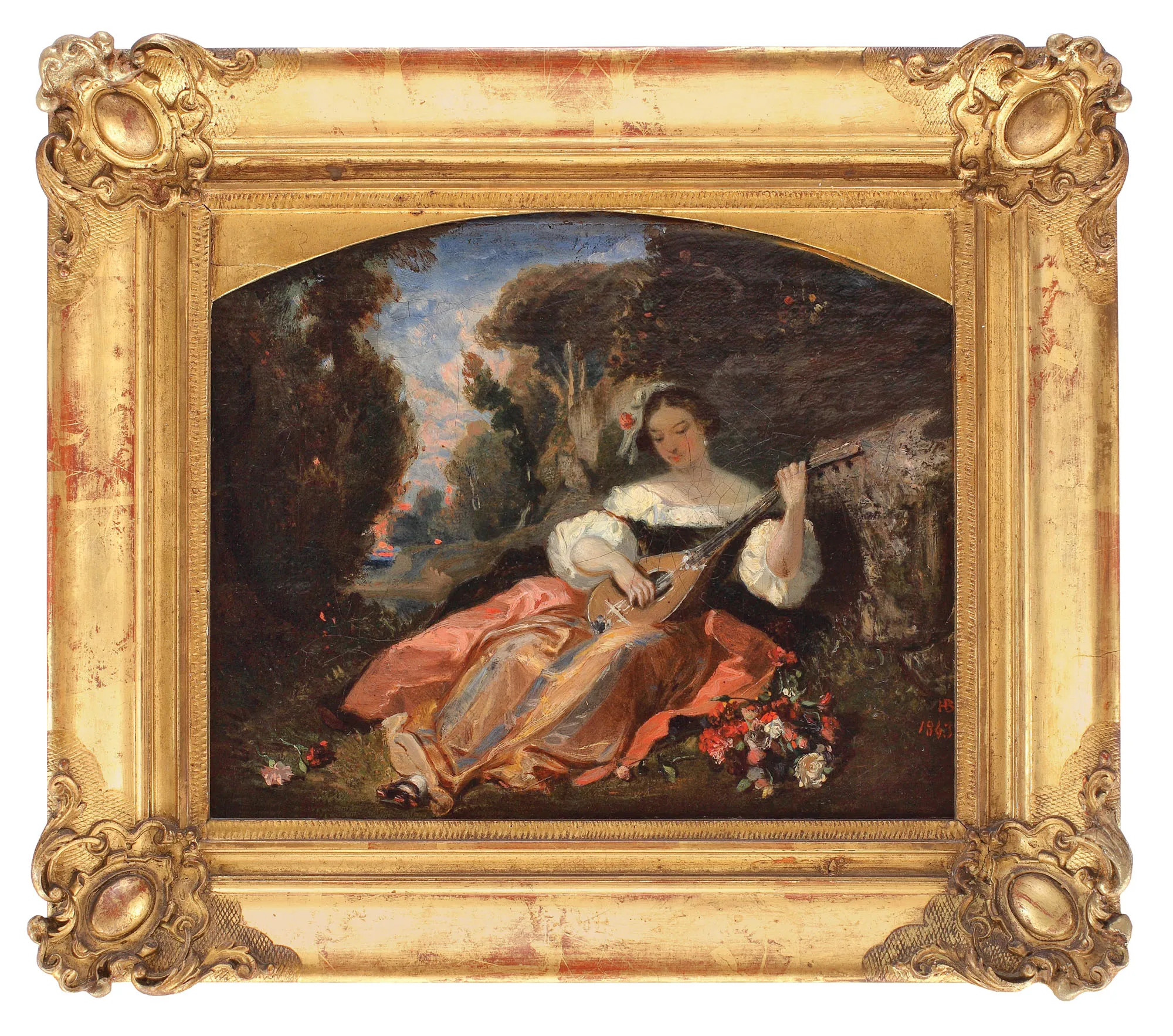
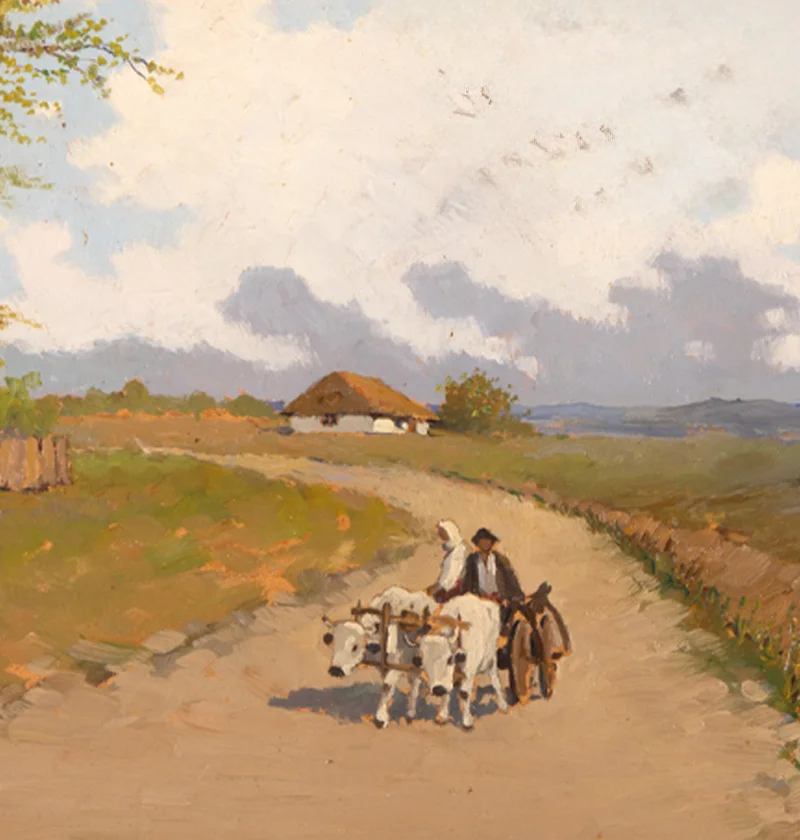
From the French peasant, whom he studies in the middle of the Barbizon group, to the man in the Romanian village, Nicolae Grigorescu hones his brush, dips it in the history of the country and fuses it frantically into his canvases. He pleads for the honesty of sentiment and campaigns for the representation of the nature of the native lands in a profoundly purified, pictorial and synthesized manner through the charm of art. Countless summers spent amidst nature, in valleys and mountains, endowed the artist with the Romanian ethos that would dominate his entire work. His early exhibitions introduced Nicolae Grigorescu to the prominent figures of the time, and his works thus made their way into renowned collections such as Queen Elisabeta, Alexandru Vlahuță, Iosif Dona, and Constantin Istrati. Born in Roman into a family of boyars, Constantin Istrati was a respected doctor, chemist, academician, and statesman. In 1906, Filaret Hill in Bucharest hosted the jubilee exhibition dedicated to the 40-year reign of Carol I (also known as the "Romanian General Exhibition"). On this occasion, Dr. Constantin Istrati is appointed General Commissioner (and president) of the event. The exhibition aimed to publicly present the national progress of the last forty years from various sectors such as cultural, agricultural, commercial or industrial. King Carol I himself inaugurated the exhibition, accompanied by other members of the royal family, such as Queen Elisabeta, Prince Ferdinand or Princess Maria. Gifted with remarkable organizational abilities, Dr. Constantin Istrati will be rewarded with the grand prize of the exhibition, the gold commemorative medal, and an album containing the signatures of many exhibitors. In the framework of this grand event, the retrospective exhibition dedicated to the great painter Nicolae Grigorescu was remarkable. The preexisting cordial relations between the artist and the doctor were deepened around this exhibition when the two worked closely together for the good organization of the event, which undoubtedly attracted tens of thousands of visitors. Modest, sincere and with an evident inclination towards introspection, Grigorescu used to keep away from the soirées and social events of the time, but on the occasion of the Romanian General Exhibition, the painter made the journey from Câmpina to Bucharest. Câmpina was a point of interest in the era for many significant personalities of the time: Ion Heliade Rădulescu, George Barițiu, Dimitrie Bolintineanu, Alexandru Vlahuță, Bogdan Petriceicu Hașdeu or George Coșbuc are just some of those who stopped in the small Prahovean settlement, probably driven by the climate and picturesque position. Nicolae Grigorescu settles in Câmpina in 1891, and Constantin Istrati, "who had a slightly larger country house next to Grigorescu, in a fruit tree orchard" arrives here in 1889. A frequent visitor to the events of the time and inspired by the Grigorescu topics, Dr. C.I. Istrati will become one of the collectors of the great master's works. The closeness of the two was imminent, Grigorescu considering his supporter a "man of heart". Based on these data revealed over the years by both the biographies of the two personalities and the pages of the personal diary of Dr. C.I. Istrati, we would tend to believe that the artist could have assumed, at some point, the completion of a project like the present one. The two pieces of furniture come from the collection of an intellectual family, distant descendants of Dr. Constantin Istrati. It is also said that Dr. Istrati is the one who helped the son of the painter to change his name from Danciu to Grigorescu (most likely starting from the desire expressed by the artist on his deathbed). Divided between the four panels, the paintings that decorate the pair of cabinets represent a reinterpretation of the artist's previous works. We find them reproduced in exhibition catalogs or in monographs, some of them even taking part in the retrospective exhibition of 1906. Grouped in pairs, the protagonists of these scenes appear as shepherds and peasant girls, the leitmotifs in the master's work. Studied closely, observed while executing his daily chores, the peasant represents an inexhaustible source of pictorial motifs for Grigorescu. His shepherds are young, flirtatious - lying on hills or standing, descending the hillside, up in carriages or driving oxen. We find here both the shepherd lying on the hill and the one who drives the flock or, blended into the fine strokes of nature, reveling in the warmth of the sun and the clear blue sky. The female character will enjoy special attention in Grigorescu's work and will often be caught staring into distances, pulling thread from distaff, sitting by the fireplace, or strolling through the yards of lanes. The graceful strokes and subtle, almost diaphanous hues, present us with the protagonist from Valea Doftanei in a relaxed posture, in the middle of the valley, surrounded by trees and hills, embraced by the warmth of the summer, with her ever-present red 'headscarf' perched on her head, in stark contrast with the raw green of the grove. The other piece of furniture reveals to us the peasant girl with the distaff, sitting directly on the grass, caught in profile, suggesting movements "of ancient elegance," as Alexandru Vlahuță remarked. Grigorescu focuses on revealing the fine details of the face and traditional costume specific to his pastoral muse, revealed at a moment of maximum concentration, while carrying out her daily activities, undisturbed by the exterior environment. Not infrequently, the titles that the artist attributes to his paintings indicate the social status of his characters: "Peasant Girl", "Logofeata"; their activities: "Sewing", "Peasant Girl Spinning", "Peasant Girl Reading"; the geographic placement they come from: "Mountain Girl", "Gypsy from Ghergani"; or various aesthetic particularities: "Young Girl", "A Flower Among Flowers". The artist's encounters with his protagonists thus take place against the background of the journeys made to Rucăr, along the Dâmbovița valley, to Câmpina, Ghergani, in Buzău or Moldova. Nicolae Grigorescu presents himself to the world as a creator of pictorial scores dedicated to his country; and the two pieces of furniture become exponents of the Romanian ethos, by taking over some archetypal motifs and transforming them into a genuine artistic act.
PODRIJETLO
Commissioned at the beginning of the 20th century by Constantin I. Istrati, a doctor (colleague of Carol Davila), Doctor in Chemistry in Paris and later President of the Romanian Academy; Constantin Istrati was the organizer, designated by King Carol I, in 1906, of Carol I Park and the Romanian General Exhibition, which celebrated 40 years since King Carol I's ascent to the throne (as well as 25 years since the proclamation of the Kingdom of Romania and 1800 years since the conquest of Dacia by Emperor Trajan), within which Exhibitions one of the gala, memorable presence, was precisely the last great retrospective Nicolae Grigorescu. Starting with 1889, Constantin Istrati acquires a summer residence in Campina, going to have Nicolae Grigorescu as his neighbor, whom he esteems and whose trusted friend becomes (they knew and appreciated each other since 1877, when both lived the limit-life experience of the Independence War front). The scientist was a recognized collector of historical documents, but also of national subject art. Various components of the collection, as well as the painted furniture, possibly by Nicolae Grigorescu, are inherited in the family, the pair of cabinets being signaled in the 1920s in the patrimony of some collateral relatives, and in the 1930s in the family of other relatives, from whose patrimony they arrive, 90 years later, in the contemporary collection of a nephew.
DODATNE INFORMACIJE
Za pojašnjenja u vezi s postupkom licitiranja, troškovima kupnje, uvjetima jamstva, plaćanja i preuzimanja osvojenog lota preporučujemo da pažljivo pročitate/ponovno pročitate Pravilnik o licitiranju.
Za dodatne informacije o lotu i aukciji kontaktirajte Odjel umjetničkih savjetnika.
DODATNE INFORMACIJE
Za pojašnjenja u vezi s postupkom licitiranja, troškovima kupnje, uvjetima jamstva, plaćanja i preuzimanja osvojenog lota preporučujemo da pažljivo pročitate/ponovno pročitate Pravilnik o licitiranju.
Za dodatne informacije o lotu i aukciji kontaktirajte Odjel umjetničkih savjetnika.
Opis
lemn de brad, strunjit, băițuit, aurit, integrând panouri pictate în ulei
Informacije o istraživanju
From the French peasant, whom he studies in the middle of the Barbizon group, to the man in the Romanian village, Nicolae Grigorescu hones his brush, dips it in the history of the country and fuses it frantically into his canvases. He pleads for the honesty of sentiment and campaigns for the representation of the nature of the native lands in a profoundly purified, pictorial and synthesized manner through the charm of art. Countless summers spent amidst nature, in valleys and mountains, endowed the artist with the Romanian ethos that would dominate his entire work. His early exhibitions introduced Nicolae Grigorescu to the prominent figures of the time, and his works thus made their way into renowned collections such as Queen Elisabeta, Alexandru Vlahuță, Iosif Dona, and Constantin Istrati. Born in Roman into a family of boyars, Constantin Istrati was a respected doctor, chemist, academician, and statesman. In 1906, Filaret Hill in Bucharest hosted the jubilee exhibition dedicated to the 40-year reign of Carol I (also known as the "Romanian General Exhibition"). On this occasion, Dr. Constantin Istrati is appointed General Commissioner (and president) of the event. The exhibition aimed to publicly present the national progress of the last forty years from various sectors such as cultural, agricultural, commercial or industrial. King Carol I himself inaugurated the exhibition, accompanied by other members of the royal family, such as Queen Elisabeta, Prince Ferdinand or Princess Maria. Gifted with remarkable organizational abilities, Dr. Constantin Istrati will be rewarded with the grand prize of the exhibition, the gold commemorative medal, and an album containing the signatures of many exhibitors. In the framework of this grand event, the retrospective exhibition dedicated to the great painter Nicolae Grigorescu was remarkable. The preexisting cordial relations between the artist and the doctor were deepened around this exhibition when the two worked closely together for the good organization of the event, which undoubtedly attracted tens of thousands of visitors. Modest, sincere and with an evident inclination towards introspection, Grigorescu used to keep away from the soirées and social events of the time, but on the occasion of the Romanian General Exhibition, the painter made the journey from Câmpina to Bucharest. Câmpina was a point of interest in the era for many significant personalities of the time: Ion Heliade Rădulescu, George Barițiu, Dimitrie Bolintineanu, Alexandru Vlahuță, Bogdan Petriceicu Hașdeu or George Coșbuc are just some of those who stopped in the small Prahovean settlement, probably driven by the climate and picturesque position. Nicolae Grigorescu settles in Câmpina in 1891, and Constantin Istrati, "who had a slightly larger country house next to Grigorescu, in a fruit tree orchard" arrives here in 1889. A frequent visitor to the events of the time and inspired by the Grigorescu topics, Dr. C.I. Istrati will become one of the collectors of the great master's works. The closeness of the two was imminent, Grigorescu considering his supporter a "man of heart". Based on these data revealed over the years by both the biographies of the two personalities and the pages of the personal diary of Dr. C.I. Istrati, we would tend to believe that the artist could have assumed, at some point, the completion of a project like the present one. The two pieces of furniture come from the collection of an intellectual family, distant descendants of Dr. Constantin Istrati. It is also said that Dr. Istrati is the one who helped the son of the painter to change his name from Danciu to Grigorescu (most likely starting from the desire expressed by the artist on his deathbed). Divided between the four panels, the paintings that decorate the pair of cabinets represent a reinterpretation of the artist's previous works. We find them reproduced in exhibition catalogs or in monographs, some of them even taking part in the retrospective exhibition of 1906. Grouped in pairs, the protagonists of these scenes appear as shepherds and peasant girls, the leitmotifs in the master's work. Studied closely, observed while executing his daily chores, the peasant represents an inexhaustible source of pictorial motifs for Grigorescu. His shepherds are young, flirtatious - lying on hills or standing, descending the hillside, up in carriages or driving oxen. We find here both the shepherd lying on the hill and the one who drives the flock or, blended into the fine strokes of nature, reveling in the warmth of the sun and the clear blue sky. The female character will enjoy special attention in Grigorescu's work and will often be caught staring into distances, pulling thread from distaff, sitting by the fireplace, or strolling through the yards of lanes. The graceful strokes and subtle, almost diaphanous hues, present us with the protagonist from Valea Doftanei in a relaxed posture, in the middle of the valley, surrounded by trees and hills, embraced by the warmth of the summer, with her ever-present red 'headscarf' perched on her head, in stark contrast with the raw green of the grove. The other piece of furniture reveals to us the peasant girl with the distaff, sitting directly on the grass, caught in profile, suggesting movements "of ancient elegance," as Alexandru Vlahuță remarked. Grigorescu focuses on revealing the fine details of the face and traditional costume specific to his pastoral muse, revealed at a moment of maximum concentration, while carrying out her daily activities, undisturbed by the exterior environment. Not infrequently, the titles that the artist attributes to his paintings indicate the social status of his characters: "Peasant Girl", "Logofeata"; their activities: "Sewing", "Peasant Girl Spinning", "Peasant Girl Reading"; the geographic placement they come from: "Mountain Girl", "Gypsy from Ghergani"; or various aesthetic particularities: "Young Girl", "A Flower Among Flowers". The artist's encounters with his protagonists thus take place against the background of the journeys made to Rucăr, along the Dâmbovița valley, to Câmpina, Ghergani, in Buzău or Moldova. Nicolae Grigorescu presents himself to the world as a creator of pictorial scores dedicated to his country; and the two pieces of furniture become exponents of the Romanian ethos, by taking over some archetypal motifs and transforming them into a genuine artistic act.
PODRIJETLO
Commissioned at the beginning of the 20th century by Constantin I. Istrati, a doctor (colleague of Carol Davila), Doctor in Chemistry in Paris and later President of the Romanian Academy; Constantin Istrati was the organizer, designated by King Carol I, in 1906, of Carol I Park and the Romanian General Exhibition, which celebrated 40 years since King Carol I's ascent to the throne (as well as 25 years since the proclamation of the Kingdom of Romania and 1800 years since the conquest of Dacia by Emperor Trajan), within which Exhibitions one of the gala, memorable presence, was precisely the last great retrospective Nicolae Grigorescu. Starting with 1889, Constantin Istrati acquires a summer residence in Campina, going to have Nicolae Grigorescu as his neighbor, whom he esteems and whose trusted friend becomes (they knew and appreciated each other since 1877, when both lived the limit-life experience of the Independence War front). The scientist was a recognized collector of historical documents, but also of national subject art. Various components of the collection, as well as the painted furniture, possibly by Nicolae Grigorescu, are inherited in the family, the pair of cabinets being signaled in the 1920s in the patrimony of some collateral relatives, and in the 1930s in the family of other relatives, from whose patrimony they arrive, 90 years later, in the contemporary collection of a nephew.