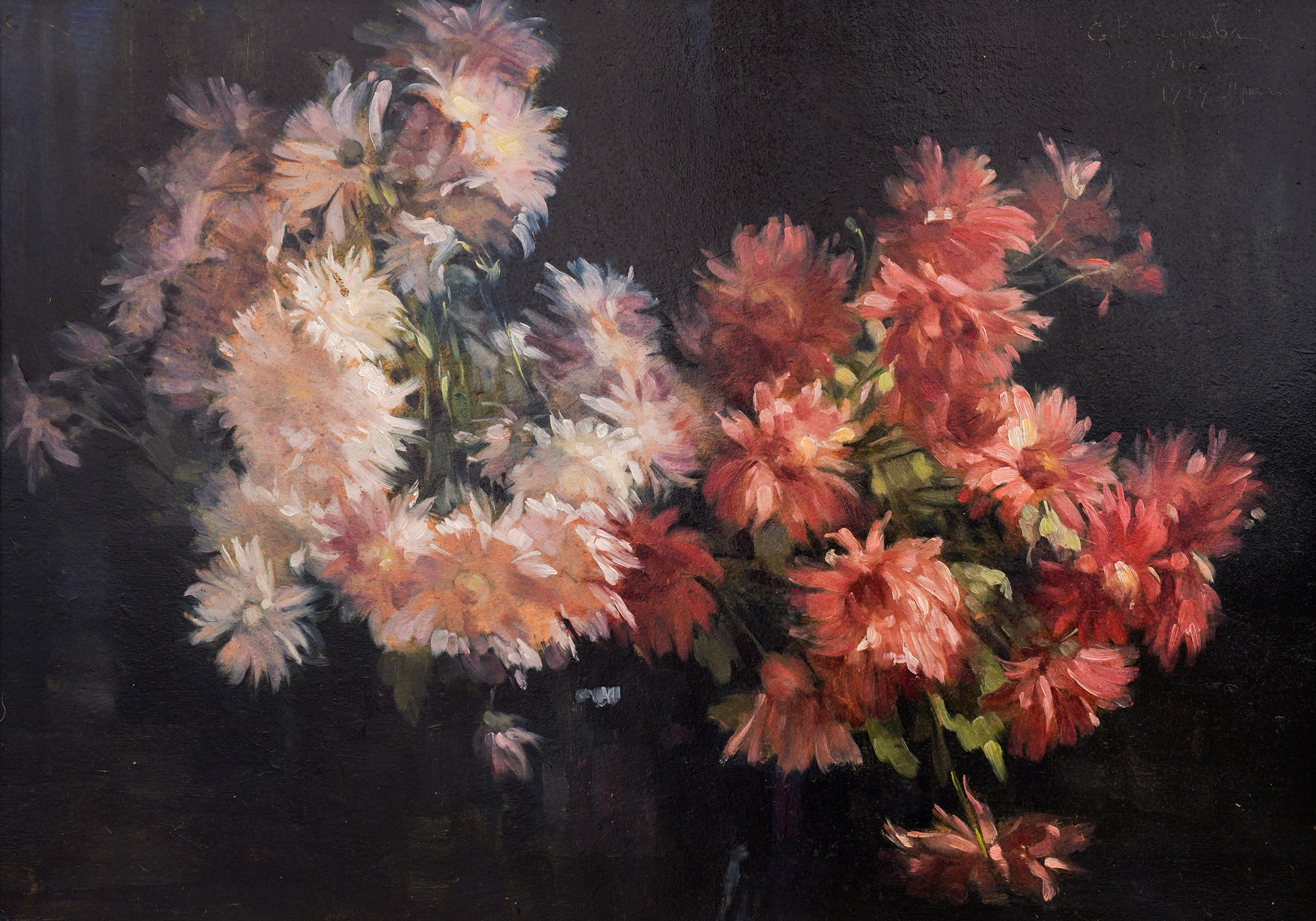
Fotografije parcele su informativne i indikativne te ne mogu pružiti vrlo detaljan prikaz objekta iz svih kutova. Preporučujemo pažljiv fizički pregled parcele prije licitiranja.
Fotografije parcele su informativne i indikativne te ne mogu pružiti vrlo detaljan prikaz objekta iz svih kutova. Preporučujemo pažljiv fizički pregled parcele prije licitiranja.
Anastas Staykov, who became famous for the dramatic story of the panoramic canvas The Maiden Bids Farewell to Her Family (Rodopi Wedding) from 1949–1957, primarily created landscapes, portraits, and compositions depicting moments from characteristic Rhodope life. He was one of the first Rhodope artists to graduate from the Academy of Fine Arts. The most characteristic compositional scheme he employed was the placement of a figure in traditional folk costume within a Rhodope interior. Often, these were compositions featuring the artist’s mother performing everyday tasks—cooking porridge or stirring maize mush on the hearth.
In the 1930s, Anastas Staykov entered the artistic scene with his own recognizable method of form construction, achieved by breaking down forms into small spatial planes. This stylization of volumes was further enhanced by the decorative color of tempera or oil paint, in which each area has independent value. This original stylistic approach did not go unnoticed, and Staykov became one of the recognizable Bulgarian artists, gaining great fame with the monumental painting The Maiden Bids Farewell to Her Family. In the following decades, the artist continually returned to this method of stylization.
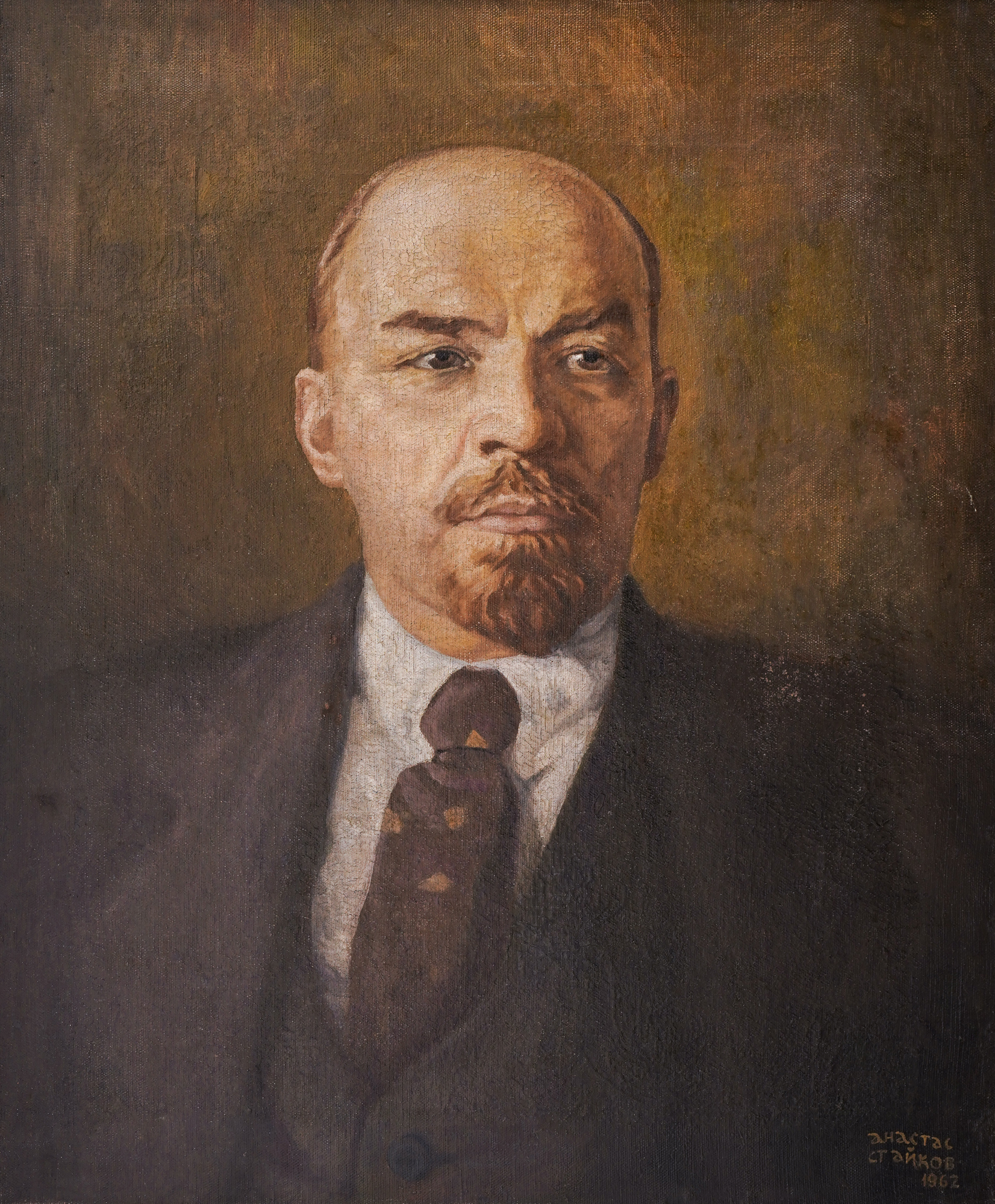
Portrait of Lenin is an emblematic work of the 1950s. Schematically, this was a period of art shaped by the imperatives of the Soviet model. Primarily, official portraits of communist leaders were produced during the so-called “cult of personality” period, as well as thematic compositions connected to our historical past or labor-related subjects. Most of these works were multi-figure compositions marked by collective pathos, built according to the rules of pseudo-academic naturalism.
Portrait of Lenin is emblematic for the period. Although it was created in 1962, it is constructed in the spirit of academic realism, in the typical “iconography” of the time. The image of the leader—whether Lenin, Stalin, Georgi Dimitrov, or Todor Zhivkov—possesses all the qualities of a leader: strong, unwavering, and confident in guiding the people. Such official portraits were regularly produced in Bulgarian painting until 1989, when the ideological system collapsed, and most prominent Bulgarian artists contributed to this genre.
In terms of painterly execution, the portrait possesses all the qualities of classical academic painting, skillfully and masterfully constructed. The canvas is immersed in noble golden ochres and subtle nuances of umber and brown. Anastas Staykov also created other portraits of historical figures and his contemporaries. A notable example of high achievement is Portrait of Colonel Vladimir Serafimov—the liberator of the Rhodopes, from the collection of the Smolyan Art Gallery.
All the artistic qualities of Portrait of Lenin make it extremely valuable for any collection, as such works are increasingly rare. (S.N.)
Dimenzije
width 63 cm, height 75 cm
Opis
маслени бои върху платно, signed and dated bottom right, in yellow, "Анастас Стайков, 1962"
Izlasci
1962
DODATNE INFORMACIJE
Za pojašnjenja u vezi s postupkom licitiranja, troškovima kupnje, uvjetima jamstva, plaćanja i preuzimanja osvojenog lota preporučujemo da pažljivo pročitate/ponovno pročitate Pravilnik o licitiranju.
Anastas Staykov, who became famous for the dramatic story of the panoramic canvas The Maiden Bids Farewell to Her Family (Rodopi Wedding) from 1949–1957, primarily created landscapes, portraits, and compositions depicting moments from characteristic Rhodope life. He was one of the first Rhodope artists to graduate from the Academy of Fine Arts. The most characteristic compositional scheme he employed was the placement of a figure in traditional folk costume within a Rhodope interior. Often, these were compositions featuring the artist’s mother performing everyday tasks—cooking porridge or stirring maize mush on the hearth.
In the 1930s, Anastas Staykov entered the artistic scene with his own recognizable method of form construction, achieved by breaking down forms into small spatial planes. This stylization of volumes was further enhanced by the decorative color of tempera or oil paint, in which each area has independent value. This original stylistic approach did not go unnoticed, and Staykov became one of the recognizable Bulgarian artists, gaining great fame with the monumental painting The Maiden Bids Farewell to Her Family. In the following decades, the artist continually returned to this method of stylization.
Portrait of Lenin is an emblematic work of the 1950s. Schematically, this was a period of art shaped by the imperatives of the Soviet model. Primarily, official portraits of communist leaders were produced during the so-called “cult of personality” period, as well as thematic compositions connected to our historical past or labor-related subjects. Most of these works were multi-figure compositions marked by collective pathos, built according to the rules of pseudo-academic naturalism.
Portrait of Lenin is emblematic for the period. Although it was created in 1962, it is constructed in the spirit of academic realism, in the typical “iconography” of the time. The image of the leader—whether Lenin, Stalin, Georgi Dimitrov, or Todor Zhivkov—possesses all the qualities of a leader: strong, unwavering, and confident in guiding the people. Such official portraits were regularly produced in Bulgarian painting until 1989, when the ideological system collapsed, and most prominent Bulgarian artists contributed to this genre.
In terms of painterly execution, the portrait possesses all the qualities of classical academic painting, skillfully and masterfully constructed. The canvas is immersed in noble golden ochres and subtle nuances of umber and brown. Anastas Staykov also created other portraits of historical figures and his contemporaries. A notable example of high achievement is Portrait of Colonel Vladimir Serafimov—the liberator of the Rhodopes, from the collection of the Smolyan Art Gallery.
All the artistic qualities of Portrait of Lenin make it extremely valuable for any collection, as such works are increasingly rare. (S.N.)
DODATNE INFORMACIJE
Za pojašnjenja u vezi s postupkom licitiranja, troškovima kupnje, uvjetima jamstva, plaćanja i preuzimanja osvojenog lota preporučujemo da pažljivo pročitate/ponovno pročitate Pravilnik o licitiranju.