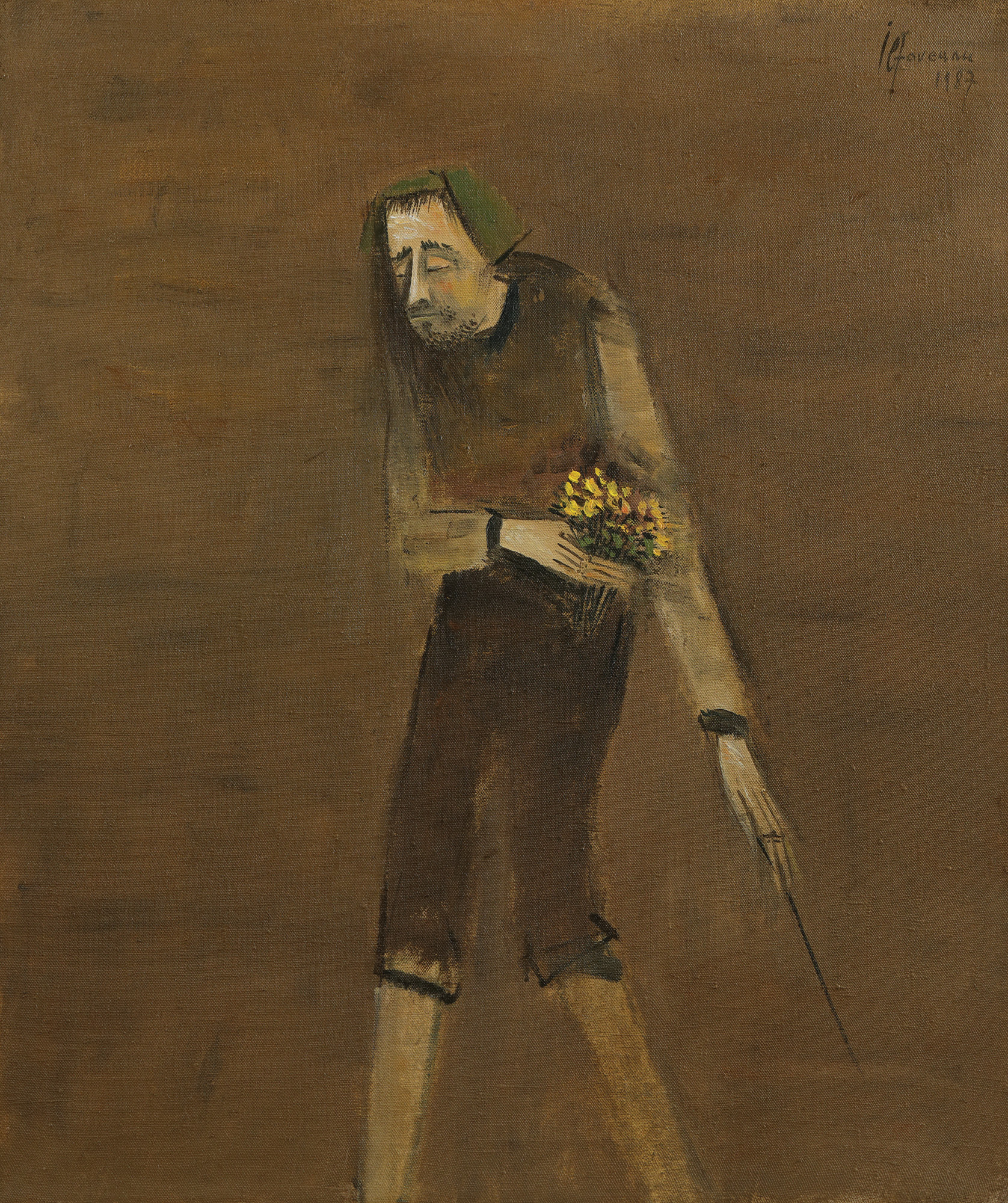
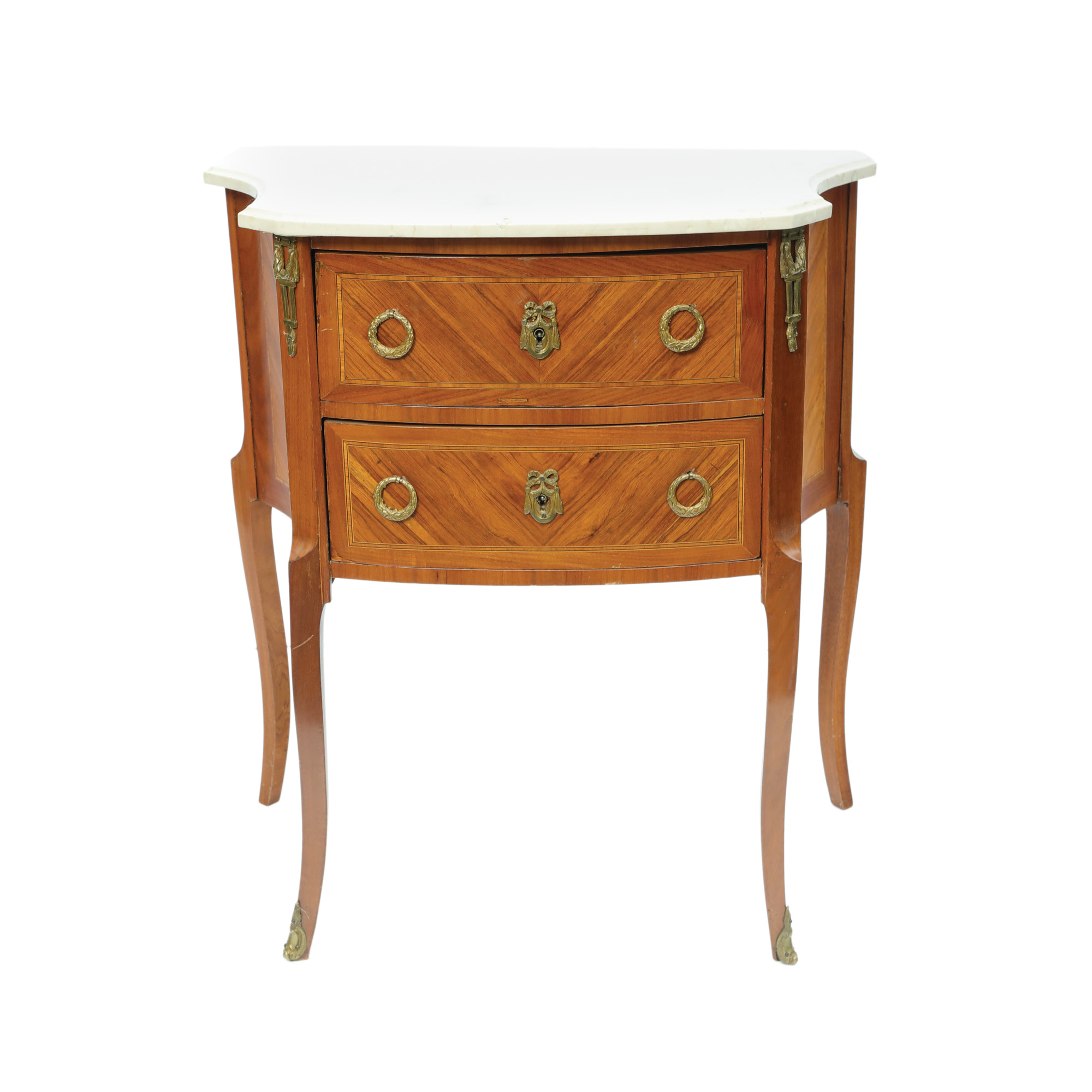
Fotografije parcele su informativne i indikativne te ne mogu pružiti vrlo detaljan prikaz objekta iz svih kutova. Preporučujemo pažljiv fizički pregled parcele prije licitiranja.
Fotografije parcele su informativne i indikativne te ne mogu pružiti vrlo detaljan prikaz objekta iz svih kutova. Preporučujemo pažljiv fizički pregled parcele prije licitiranja.
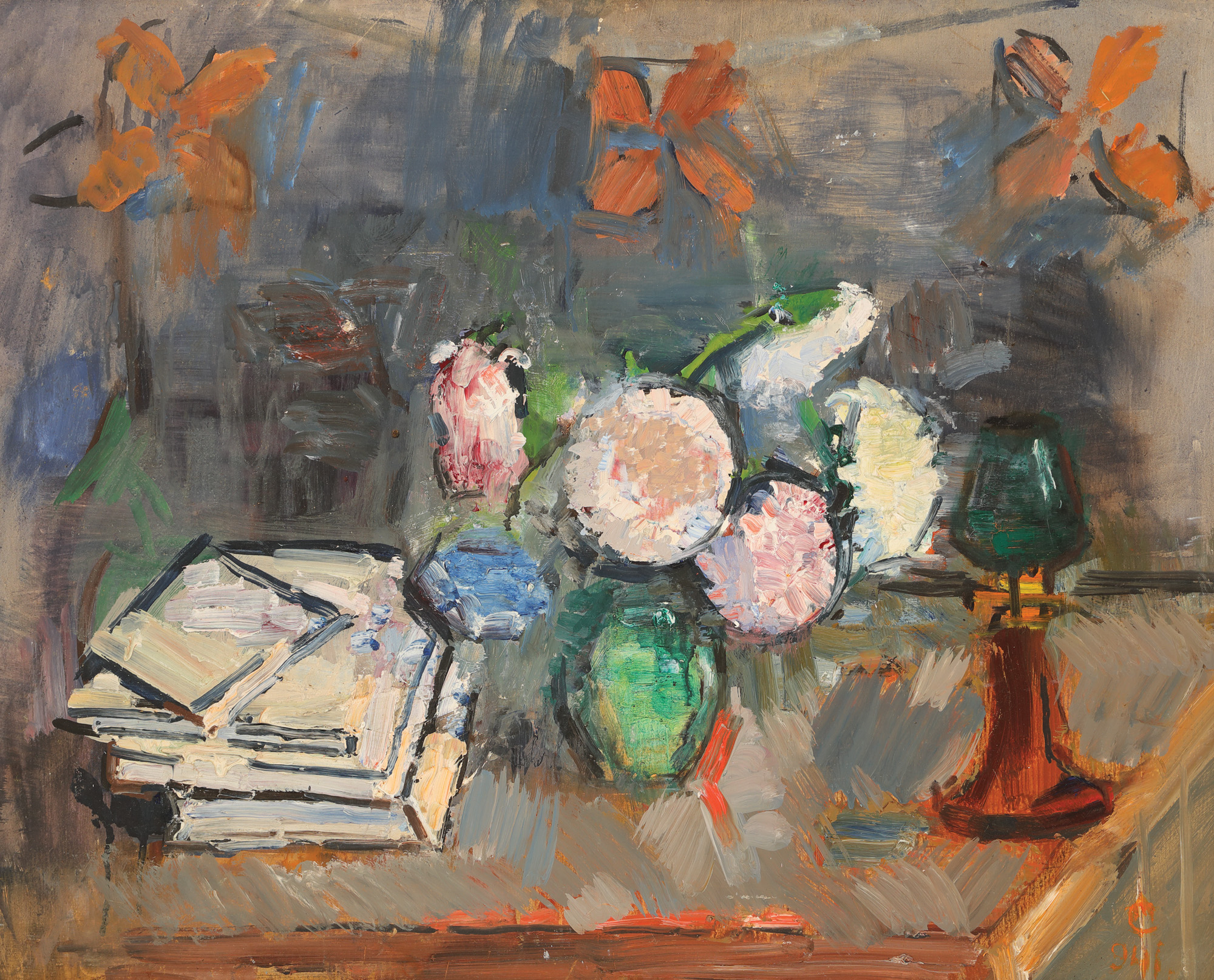
146. Still Life with Books and Chrysanthemums [1941]
Ciucurencu particularly excelled in creating still lifes. In this type of painting, the artist remained famous due to his preference for warm and intense tones, his skill in melodiously organizing the composition, and his ability to render the chromatic juxtapositions in lyrical rhythms. Ciucurencu admired the flowers painted by his predecessors, especially those of Luchian. He was inspired by Luchian's work, but his own flowers remained anchored in a representation where the emphasis was more on the chromatic side, while the form took on secondary importance. His flowers energetically succeed in points of red, blue and white with pinkish insertions, and the background becomes a malleable, interchangeable palette, incorporating vigorously a plethora of tones. The artist's obsession with color never left him, but he turned his attention towards achieving compositional harmony through the juxtaposition of light, shades and contrasts. Respecting the specific compositional organization, the artist centers the vase surrounded by the small green lamp and the stack of books on the table. Rendered in shades of green, the vase contains the frail stems of the flowers, assuming a central place in the artist's work. The brush strokes succeed each other energetically leaving room for pure emotions, which will be transmitted from the depths of the canvas to the viewer. During the summers spent in Baia Mare, Ciucurencu was pleasantly surprised by the expressive palette of the Maramures painters and amazed by their proposed chromatic juxtapositions. In 1930, the artist left his homeland behind and headed for Paris. The fervor of one of the most reputable European artistic capitals of the last century significantly broadened his imaginary horizon and offered him new possibilities of artistic expression. In the French capital, Ciucurencu discovered Hieronymus Bosch, Botticelli, Matisse, Picasso, Braque, and Cézanne. Besides his encounter with universal art, his Parisian contact mediated the acquisition of a much more significant pictorial refinement. His works always start from reality, regardless of the way they are executed. He adopted a reduced amount of Cézanne's cubism, and from Matisse, he incorporated the emphasis on line and color in his own work. As a successor of post-impressionism, he acquired some key characteristics of this style: the autonomy of color and the use of strong, vibrant hues, but he wasn’t shy to also incorporate black in his works. The draughtsman's skills are most evident in the contours by which the artist defines his subjects. Ciucurencu masters the matching of lines and the harmonizing of colors perfectly. Often presented as a "colorist," the artist considered himself a successor of other painters who also had a special concern for color: Luchian, Ressu, Lhote, or Pallady. He knew how to operate with the set of values he acquired under the guidance of André Lhote: he distributed light gradually, following the logic of reality and masterfully distributing the chromatic effects.
ulei pe carton, signed and dated bottom right, in orange, "AC, 1941"
Izlasci
1941
DODATNE INFORMACIJE
Za pojašnjenja u vezi s postupkom licitiranja, troškovima kupnje, uvjetima jamstva, plaćanja i preuzimanja osvojenog lota preporučujemo da pažljivo pročitate/ponovno pročitate Pravilnik o licitiranju.
Ciucurencu particularly excelled in creating still lifes. In this type of painting, the artist remained famous due to his preference for warm and intense tones, his skill in melodiously organizing the composition, and his ability to render the chromatic juxtapositions in lyrical rhythms. Ciucurencu admired the flowers painted by his predecessors, especially those of Luchian. He was inspired by Luchian's work, but his own flowers remained anchored in a representation where the emphasis was more on the chromatic side, while the form took on secondary importance. His flowers energetically succeed in points of red, blue and white with pinkish insertions, and the background becomes a malleable, interchangeable palette, incorporating vigorously a plethora of tones. The artist's obsession with color never left him, but he turned his attention towards achieving compositional harmony through the juxtaposition of light, shades and contrasts. Respecting the specific compositional organization, the artist centers the vase surrounded by the small green lamp and the stack of books on the table. Rendered in shades of green, the vase contains the frail stems of the flowers, assuming a central place in the artist's work. The brush strokes succeed each other energetically leaving room for pure emotions, which will be transmitted from the depths of the canvas to the viewer. During the summers spent in Baia Mare, Ciucurencu was pleasantly surprised by the expressive palette of the Maramures painters and amazed by their proposed chromatic juxtapositions. In 1930, the artist left his homeland behind and headed for Paris. The fervor of one of the most reputable European artistic capitals of the last century significantly broadened his imaginary horizon and offered him new possibilities of artistic expression. In the French capital, Ciucurencu discovered Hieronymus Bosch, Botticelli, Matisse, Picasso, Braque, and Cézanne. Besides his encounter with universal art, his Parisian contact mediated the acquisition of a much more significant pictorial refinement. His works always start from reality, regardless of the way they are executed. He adopted a reduced amount of Cézanne's cubism, and from Matisse, he incorporated the emphasis on line and color in his own work. As a successor of post-impressionism, he acquired some key characteristics of this style: the autonomy of color and the use of strong, vibrant hues, but he wasn’t shy to also incorporate black in his works. The draughtsman's skills are most evident in the contours by which the artist defines his subjects. Ciucurencu masters the matching of lines and the harmonizing of colors perfectly. Often presented as a "colorist," the artist considered himself a successor of other painters who also had a special concern for color: Luchian, Ressu, Lhote, or Pallady. He knew how to operate with the set of values he acquired under the guidance of André Lhote: he distributed light gradually, following the logic of reality and masterfully distributing the chromatic effects.
DODATNE INFORMACIJE
Za pojašnjenja u vezi s postupkom licitiranja, troškovima kupnje, uvjetima jamstva, plaćanja i preuzimanja osvojenog lota preporučujemo da pažljivo pročitate/ponovno pročitate Pravilnik o licitiranju.