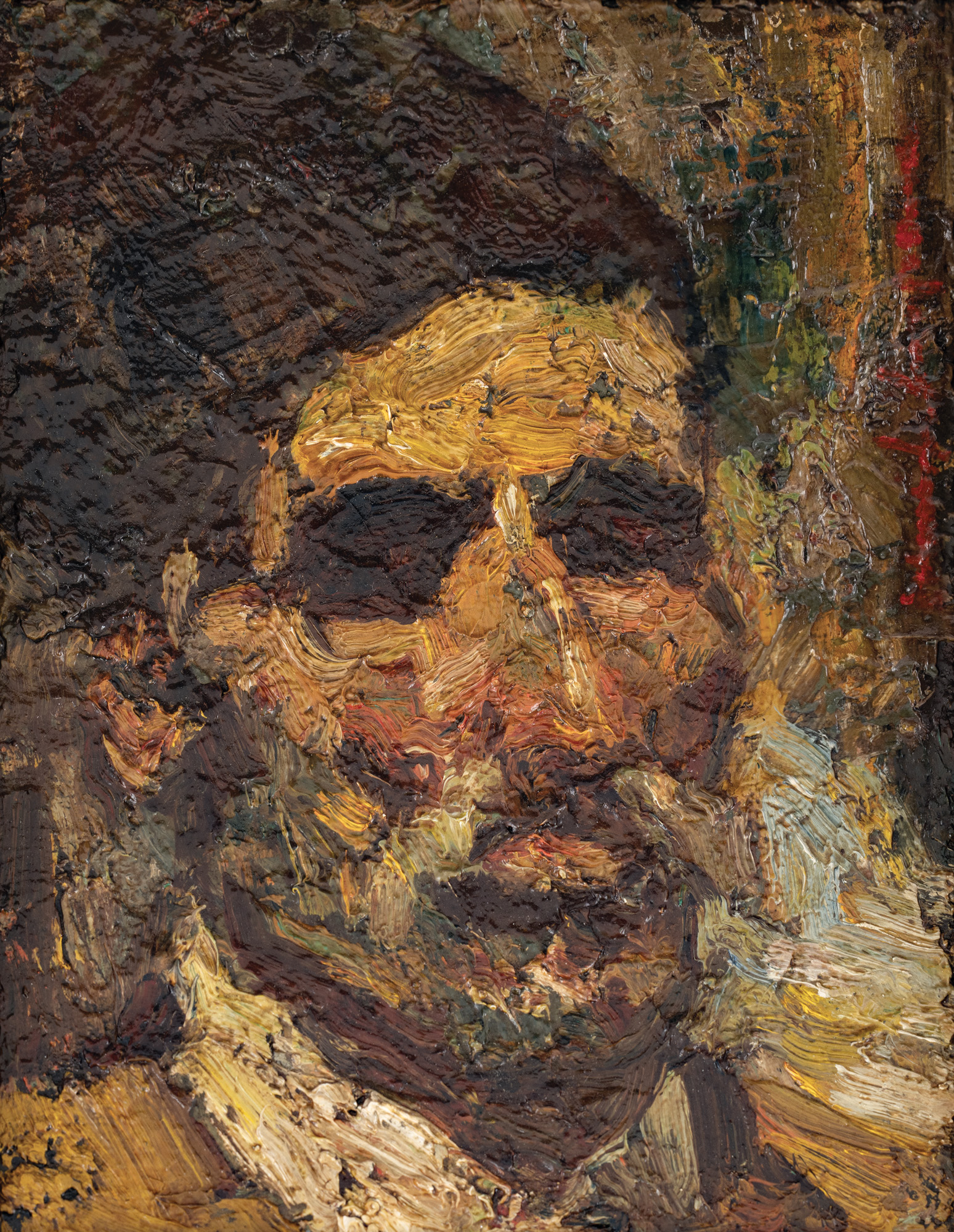
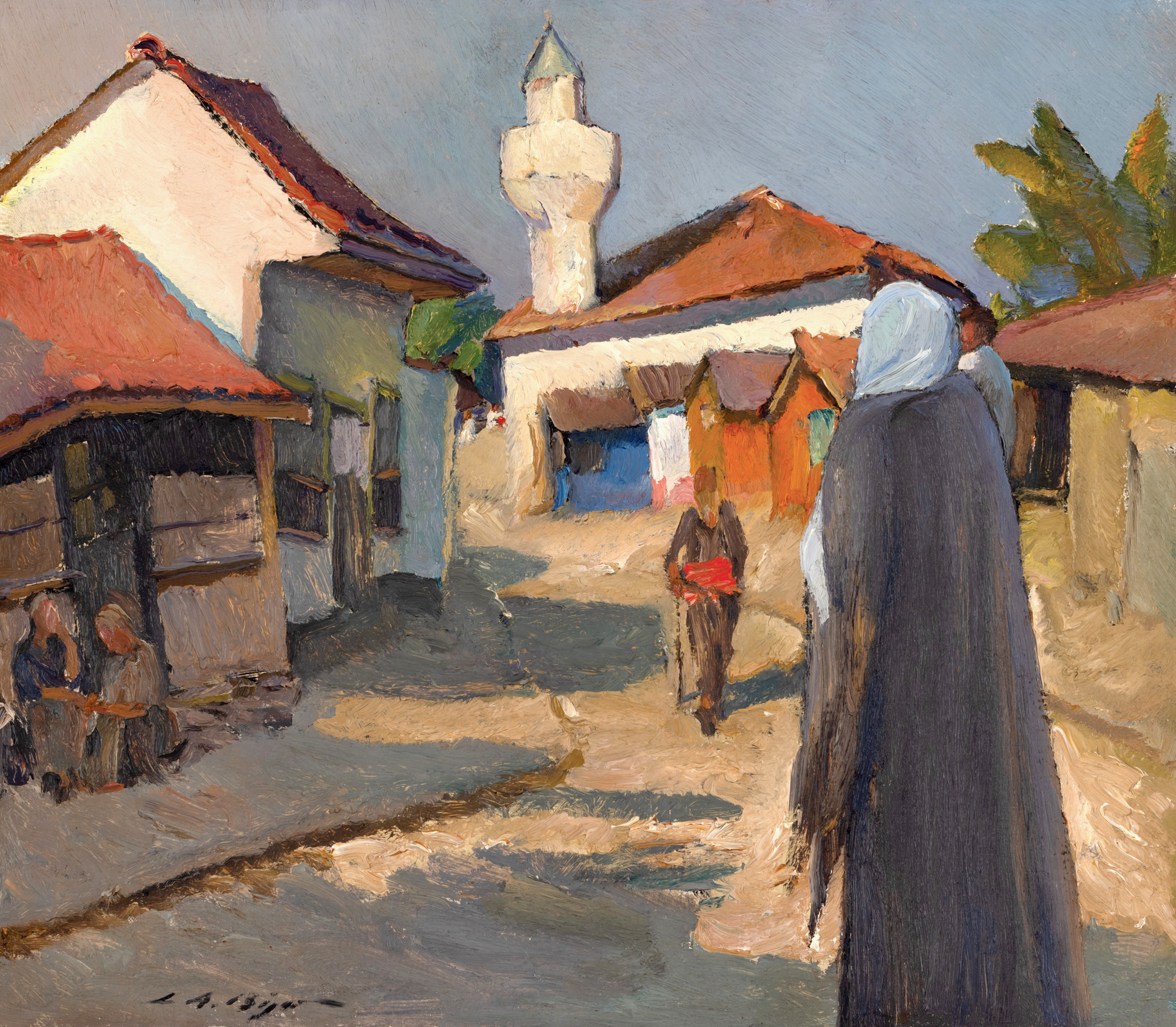
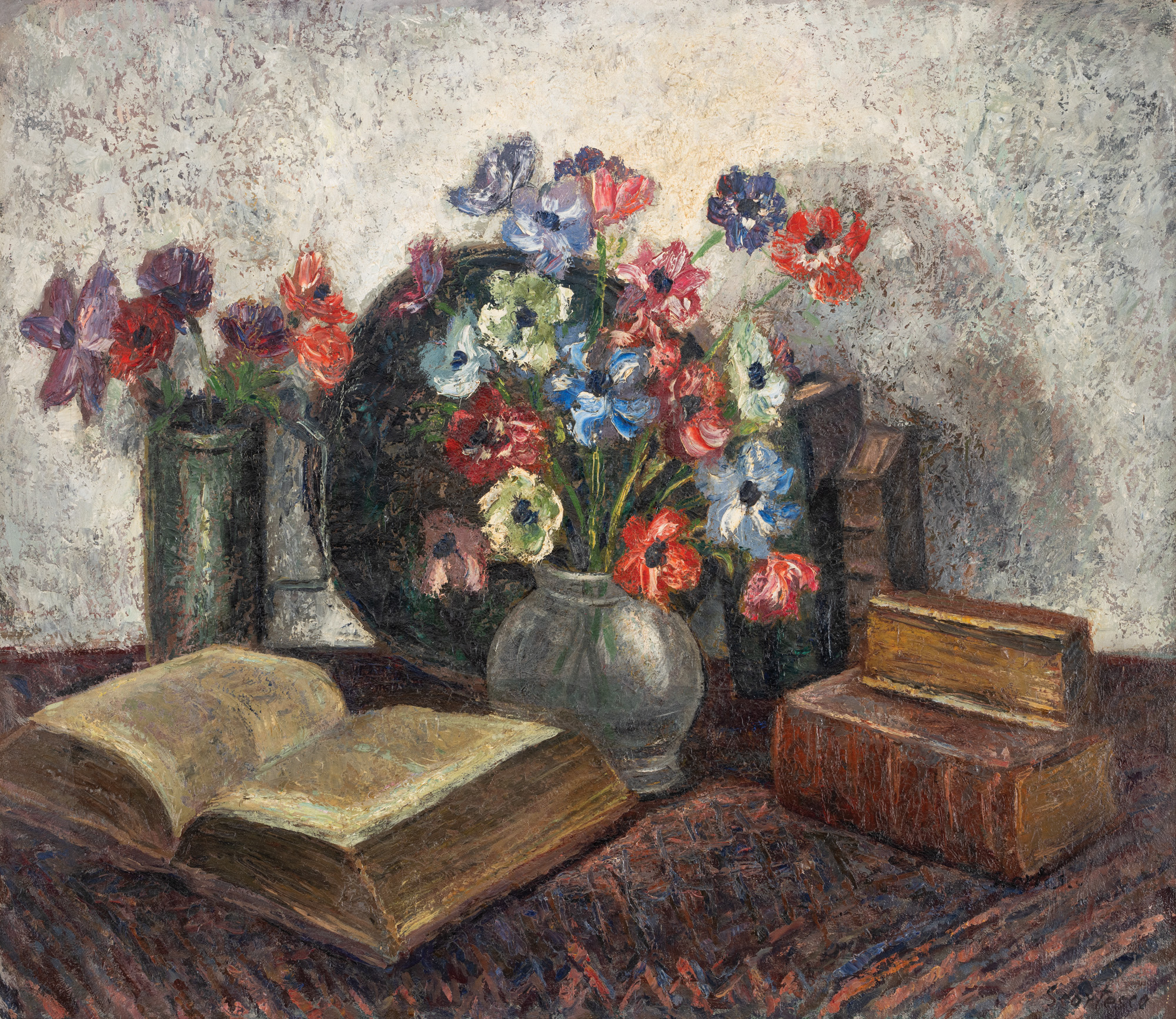
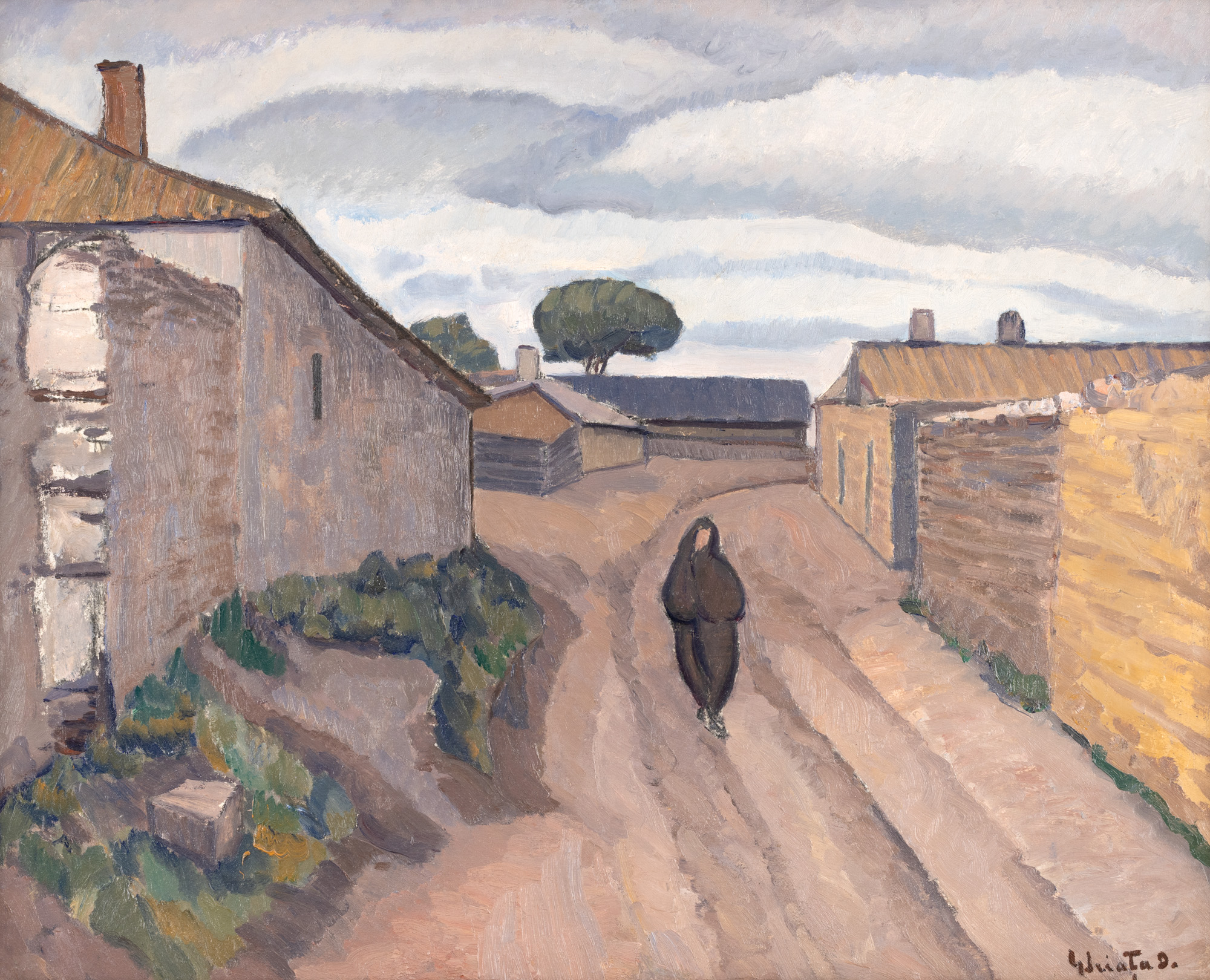
Fotografije parcele su informativne i indikativne te ne mogu pružiti vrlo detaljan prikaz objekta iz svih kutova. Preporučujemo pažljiv fizički pregled parcele prije licitiranja.
Fotografije parcele su informativne i indikativne te ne mogu pružiti vrlo detaljan prikaz objekta iz svih kutova. Preporučujemo pažljiv fizički pregled parcele prije licitiranja.
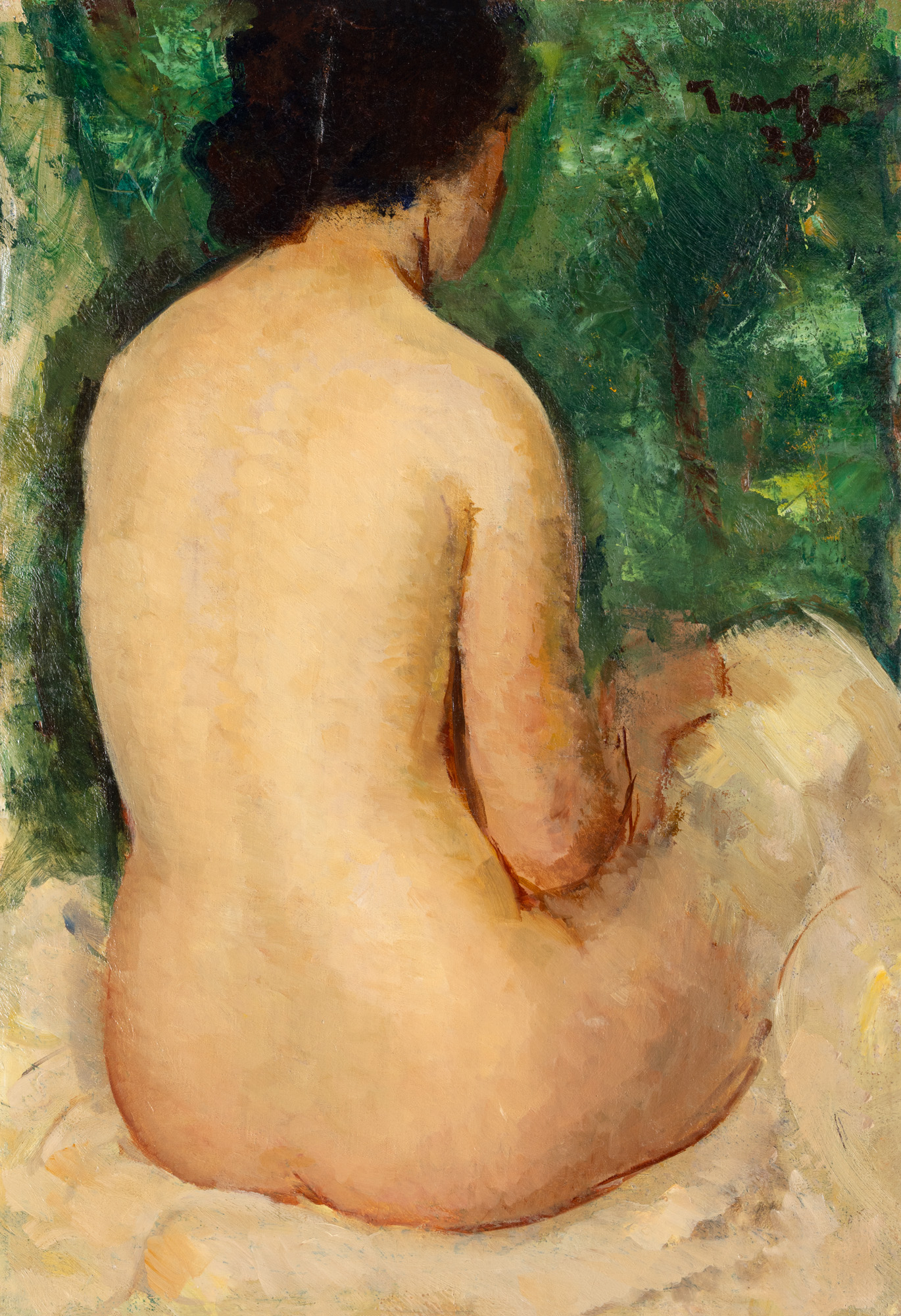
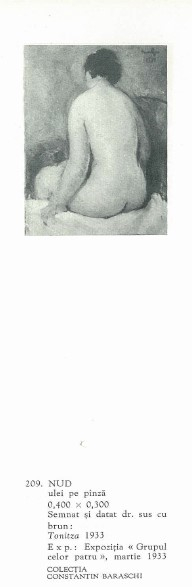
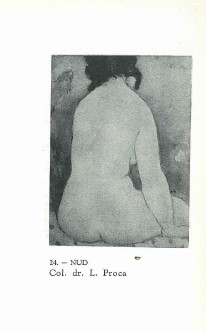
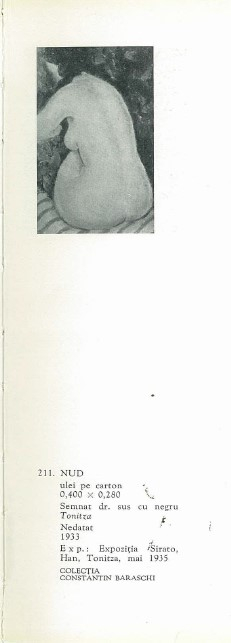
The voluptuousness of the forms and the grace of the bodies sculpted on canvas recall the characters painted by Gauguin in Tahiti, while the elongated faces and almond-shaped eyes refer to the protagonists imagined by Modigliani. Nudity became a favorite theme in his creation around 1926. Nudity also became a pretext for study and a leitmotif of his work. In his critical texts, Tonitza acknowledges and debates the controversy of the era around the depiction of nudity in art. In Antiquity and the Renaissance, representatives of artistic currents will remove Eros' garments, exposing its human nature to viewers. Eros will then take the form of cupids, which will later transform into angels and cherubs. Depicted with their bodies bare, the heroes of ancient works will pave the way for artists and the public alike to familiarize themselves with a new type of art. From the first modern Romanian painters who returned to the country after studying abroad, up to the present, nakedness was integrated into painting and elevated to the rank of art. Unlike sculptors, who also directed their attention towards masculine volumes, painters will rather focus on the idealization of the feminine proportions. Nicolae Tonitza is among the painters who "dominated the first half of the 20th century and made nude paintings an independent genre of painting", as stated by Mircea Deac; alongside Theodor Pallady, Gheorghe Petrașcu, and Camil Ressu. In their works, we will identify the figure of the loved one, a model or a reputable personality. Usually, the model is confused with characters from the artists' biographies, thus being allowed to step both in the workshop and in the painter's home. In the economy of the artists mentioned above, nudity will benefit from numerous preparatory studies, drawings, and grids. They will devote a long time to anatomical study, and the transposition of the image in oil will be realized at the end of a generous period devoted to research and experiments. Located beyond realistic recreation and the ecstasy in front of the subject, Nicolae Tonitza surprises his muses in hiding, sitting on a chair, sprawled on a couch; depicted full-face, profile or even from the back. The artist has the ability to express the body's expressiveness regardless of the posture in which his model is posing. Most often, however, he recreates the intimate atmosphere and the warmth of the interiors. He becomes a careful observer, who faithfully synthesizes the features of his muses, reinterpreting them through elegant lines. He captures distinct attitudes and gives the body a symbolic construction. His characters are often presented in a clear contrast with the background. Although he usually opts for a neutral color scheme, he uses strong tones and contours in dark shades. Interest in nature and the auspices of daily life are transposed into the quiet intimacy that encompasses the decorative arabesques of the line. We distinguish, also in this work, this predilection for backgrounds in dark shades, in which we capture the cold atmosphere and the harshness of the wall in the background. The catalog of the retrospective exhibition organized in 1964 informs us about several works belonging to this expanded cycle. From wide frames to detail plans, Tonitza's protagonists are depicted in varied poses, but within this theme, we find a narrower series dedicated exclusively to the female character depicted from the back. In his writings about art, Tonitza discusses the problem of receiving nudity in local art, referring to the reluctance and puritanism displayed by some viewers. "Whoever is seduced by a nude because of the pleasure of the flesh and not the pleasure of painting - misses out," the artist would remark, so after mastering the precepts of Munich academicism and the teachings of the Iasi Fine Arts, he will master human anatomy and will incorporate this theme into his creation.
Literatura
SORBAN, Raoul, "Tonitza", Meridiane Publishing House, Bucharest, 1973.
Florica Cruceru, Doina Păuleanu, Simona Urziceanu, "The work of Nicolae Tonitza in the heritage of the Art Museums of Constanța and Topalu", Bucharest, 1979.
BREZIANU, Barbu, "N.N. Tonitza", Meridiane Publishing House, Bucharest, 1986.
Dimenzije
width 34 cm, height 49.5 cm
Opis
oil on canvas glued on cardboard, signed and dated top right, in black, "Tonitza, (19)33"
Izlasci
1933
DODATNE INFORMACIJE
Za pojašnjenja u vezi s postupkom licitiranja, troškovima kupnje, uvjetima jamstva, plaćanja i preuzimanja osvojenog lota preporučujemo da pažljivo pročitate/ponovno pročitate Pravilnik o licitiranju.
The voluptuousness of the forms and the grace of the bodies sculpted on canvas recall the characters painted by Gauguin in Tahiti, while the elongated faces and almond-shaped eyes refer to the protagonists imagined by Modigliani. Nudity became a favorite theme in his creation around 1926. Nudity also became a pretext for study and a leitmotif of his work. In his critical texts, Tonitza acknowledges and debates the controversy of the era around the depiction of nudity in art. In Antiquity and the Renaissance, representatives of artistic currents will remove Eros' garments, exposing its human nature to viewers. Eros will then take the form of cupids, which will later transform into angels and cherubs. Depicted with their bodies bare, the heroes of ancient works will pave the way for artists and the public alike to familiarize themselves with a new type of art. From the first modern Romanian painters who returned to the country after studying abroad, up to the present, nakedness was integrated into painting and elevated to the rank of art. Unlike sculptors, who also directed their attention towards masculine volumes, painters will rather focus on the idealization of the feminine proportions. Nicolae Tonitza is among the painters who "dominated the first half of the 20th century and made nude paintings an independent genre of painting", as stated by Mircea Deac; alongside Theodor Pallady, Gheorghe Petrașcu, and Camil Ressu. In their works, we will identify the figure of the loved one, a model or a reputable personality. Usually, the model is confused with characters from the artists' biographies, thus being allowed to step both in the workshop and in the painter's home. In the economy of the artists mentioned above, nudity will benefit from numerous preparatory studies, drawings, and grids. They will devote a long time to anatomical study, and the transposition of the image in oil will be realized at the end of a generous period devoted to research and experiments. Located beyond realistic recreation and the ecstasy in front of the subject, Nicolae Tonitza surprises his muses in hiding, sitting on a chair, sprawled on a couch; depicted full-face, profile or even from the back. The artist has the ability to express the body's expressiveness regardless of the posture in which his model is posing. Most often, however, he recreates the intimate atmosphere and the warmth of the interiors. He becomes a careful observer, who faithfully synthesizes the features of his muses, reinterpreting them through elegant lines. He captures distinct attitudes and gives the body a symbolic construction. His characters are often presented in a clear contrast with the background. Although he usually opts for a neutral color scheme, he uses strong tones and contours in dark shades. Interest in nature and the auspices of daily life are transposed into the quiet intimacy that encompasses the decorative arabesques of the line. We distinguish, also in this work, this predilection for backgrounds in dark shades, in which we capture the cold atmosphere and the harshness of the wall in the background. The catalog of the retrospective exhibition organized in 1964 informs us about several works belonging to this expanded cycle. From wide frames to detail plans, Tonitza's protagonists are depicted in varied poses, but within this theme, we find a narrower series dedicated exclusively to the female character depicted from the back. In his writings about art, Tonitza discusses the problem of receiving nudity in local art, referring to the reluctance and puritanism displayed by some viewers. "Whoever is seduced by a nude because of the pleasure of the flesh and not the pleasure of painting - misses out," the artist would remark, so after mastering the precepts of Munich academicism and the teachings of the Iasi Fine Arts, he will master human anatomy and will incorporate this theme into his creation.
DODATNE INFORMACIJE
Za pojašnjenja u vezi s postupkom licitiranja, troškovima kupnje, uvjetima jamstva, plaćanja i preuzimanja osvojenog lota preporučujemo da pažljivo pročitate/ponovno pročitate Pravilnik o licitiranju.
SORBAN, Raoul, "Tonitza", Meridiane Publishing House, Bucharest, 1973.
Florica Cruceru, Doina Păuleanu, Simona Urziceanu, "The work of Nicolae Tonitza in the heritage of the Art Museums of Constanța and Topalu", Bucharest, 1979.
BREZIANU, Barbu, "N.N. Tonitza", Meridiane Publishing House, Bucharest, 1986.
Dimenzije
width 34 cm, height 49.5 cm
Opis
oil on canvas glued on cardboard, signed and dated top right, in black, "Tonitza, (19)33"