
Meniu

Hrvatski

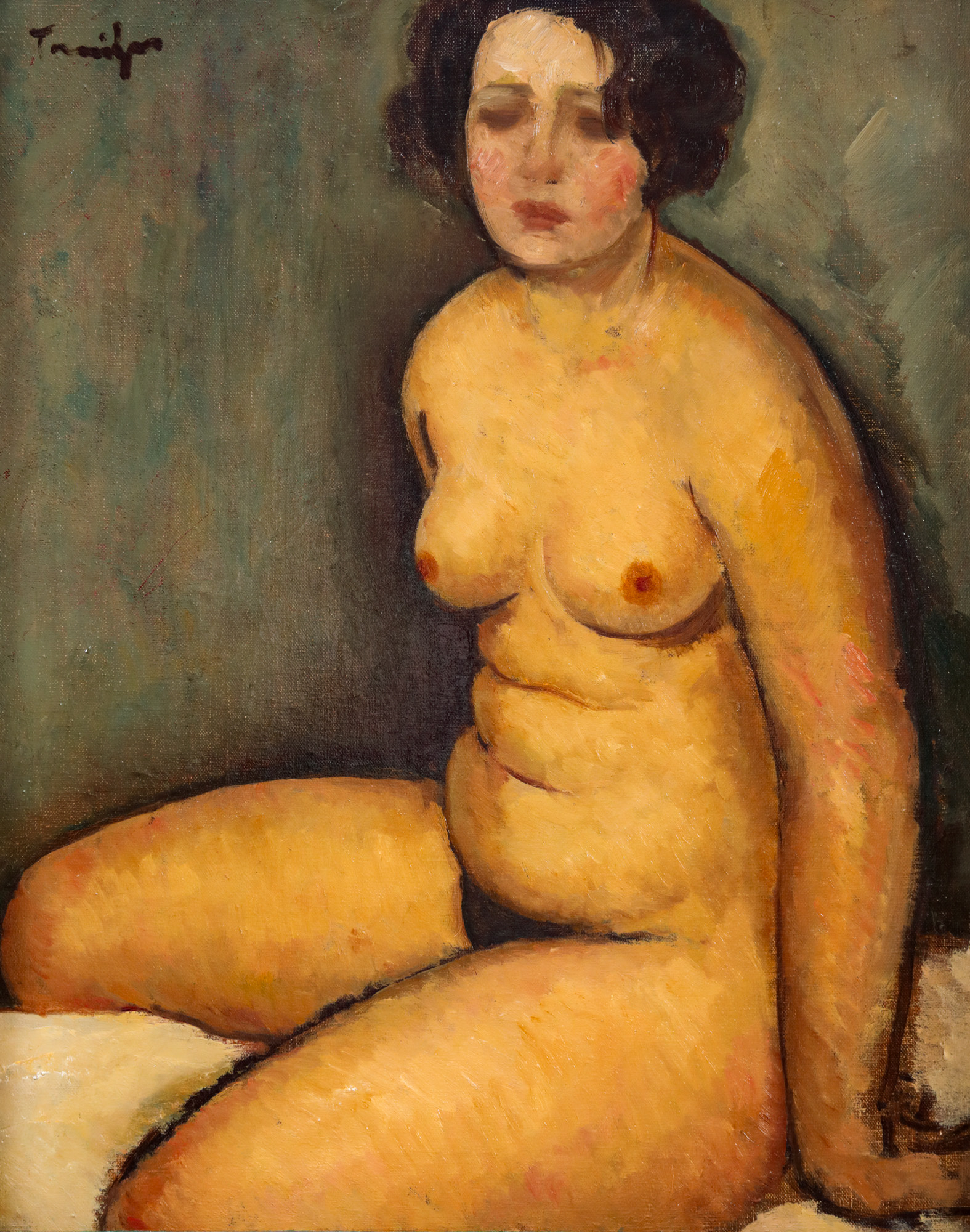
84. Nude [1927]

1886, Bârlad - 1940, Bucureşti

Procjena

EUR 60.000 - 90.000

Prodano

EUR 75.000

Sesija

Čet., 21 ožujka 2024 19:00

The lyricism of Nicolae Tonitza's creation will also reflect upon the subjects he often chooses: women, children, flowers or landscapes. Tonitza will be likened, through the nature of his work, to Daumier, Manet or Toulouse-Lautrec. The voluptuousness of forms and grace of bodies painted on canvas remind of the characters painted by Gauguin in Tahiti, while the elongated faces and almond eyes refer to the protagonists imagined by Modigliani. The nude will become a favorite theme in his creation around 1926. The nude also gains the status of pretext for study and the status of leitmotif of his work. In his theoretical texts, Tonitza acknowledges and discusses the controversy that appeared at the time regarding the representation of the nude in art. From the nude illustrated in painting with a clearly religious character, to the almost paroxystic research of the Renaissance, to the libertine body depicted in mannerism or rococo, and to the excessive dramatization of bodies by romantics and realists, the representation of the female body often took the form of deities, nymphs or mythological characters. With Impressionism, however, exposed female physiognomies will begin to outline the profiles of ordinary characters, inspired by everyday life. Tonitza understands and incorporates in his work the transcendental meaning of the subject and describes the nude as a microcosm within which the artist can deposit all his pictorial substance, the entire richness of nuances and the perfect incandescence of light. He prefers to work from memory, after previously studying a model, and always relates plastic forms to the truth of life. His fascination for color is borrowed from the grace and distinct tonalities of the female nude. He proposes melodic linear rhythms and wraps them chromatically in the same way. He integrates the draughtsman's pen in painting and gives remarkable expressiveness to tones and nuances. Tonitza carries out consistent and lengthy studies, transcribes his researches in pencil and only then adds color, thus revealing his impressive analytical capacity. He learns to render the proportions of the human body through recurring exercises and recomposes the forms according to his own vision. He uses broad, expressive brush strokes and awards a constructive role to the line, shape, and color. He demonstrates his preference for as broad planes as possible and subtle plays of light. Tonitza surprises his characters in the privacy of their homes, at Mangalia or at Balcic. Besides his family's female muses, other models will appear in his work. He will paint, like many other artists, at Balcic or in Dobrogea. He reveals the picturesque of the place and the course of the Black Sea Turks' existence, but in his wanderings, he will also become acquainted with the beauty and exoticism of the Tatar women, whom he will most often place in lush Dobrogea frescoes. Sometimes he individualizes his models, noting their names on the back of the work. Most of the time, however, he conveys the intimate atmosphere and the warmth of the interiors. He becomes an attentive observer, who faithfully synthesizes the features of his muses, reinterpreting them through elegant lines. He captures distinct attitudes and gives the body a symbolic structure. His characters are often presented in stark contrast with the background. Although he usually opts for a neutral palette, he uses strong colors and contours in dark shades. Interest in nature and the auspices of daily living are transposed into the intimate quiet that embraces the decorative arabesques of the line. In the present work, we distinguish this predilection for backdrops in dark nuances, in which we capture the cold atmosphere and the hardness of the back wall. In the lower part, we discern the white sheet, on which the young protagonist places her bare body. With short-cut black hair and a gaze fixed on an external focal point, her hand resting on the couch and her back slightly bent, Tonitza's protagonist adopts a position that suggests either her fresh seat on the couch, or the young woman's intention to get up and leave the room. The work featured in the prestigious collection of Doctor Iosif Dona and was also included in the monograph that Ionel Jianu dedicated to the artist in 1945. Applying the precepts of his own creed: "Anyone who lets himself be conquered in front of a nude by the voluptuousness of the flesh and not by the pleasure of painting - misses out", Tonitza is part of the long line of artists who have eagerly sought to render on canvas the results of lengthy research on the human body, rather than just transcribe, imitatively, the forms and voluptuousness of the model.

Literatura

ȘORBAN, Raoul, "Tonitza", Meridiane Publishing House, Bucharest, 1973. Florica Cruceru, Doina Păuleanu, Simona Urziceanu, "The work of Nicolae Tonitza in the heritage of the Art Museums of Constanța and Topalu", Bucharest, 1979. BREZIANU, Barbu, "N.N. Tonitza", Meridiane Publishing House, Bucharest, 1986.

Dimenzije

width 50 cm, height 60 cm

Opis

oil on canvas, signed top left, in brown, "Tonitza"

Informacije o istraživanju

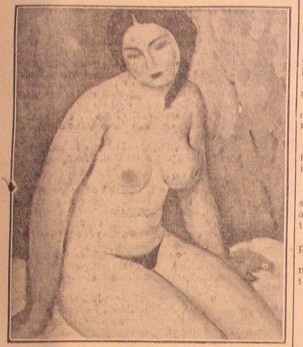
The work is reproduced and mentioned in the monograph "Tonitza", Ionel Jianu, Ed. Art House, Bucharest, 1945, at cat. 30. The work is mentioned in the inventory of Dr. Iosif Dona's collection at cat. 279, under the title "White Nude". The work is classified in the Treasury category of the Mobile National Cultural Heritage, by the order of the Minister of Culture no. 2019 of 19.01.2007.

Izlasci

1927

PODRIJETLO

Dr. Iosif Dona Collection.

DODATNE INFORMACIJE

Za pojašnjenja u vezi s postupkom licitiranja, troškovima kupnje, uvjetima jamstva, plaćanja i preuzimanja osvojenog lota preporučujemo da pažljivo pročitate/ponovno pročitate Pravilnik o licitiranju.

Za dodatne informacije o lotu i aukciji kontaktirajte Odjel umjetničkih savjetnika.

Alternativni lotovi

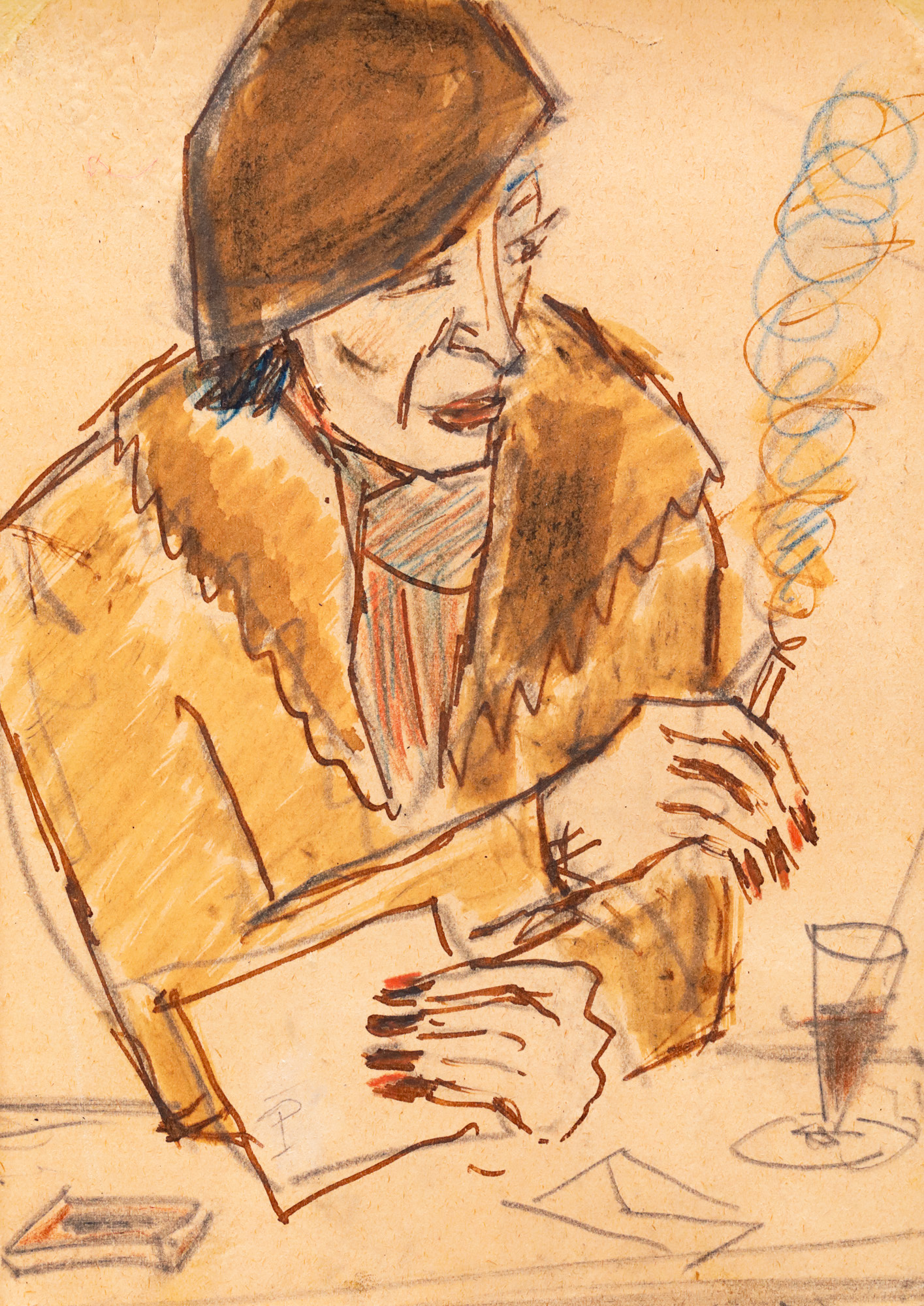
At the Cafe (Mrs. Popovici)

98. At the Cafe (Mrs. Popovici)

Theodor Pallady

    Procjena EUR 500 - 800
    Prodano EUR 2.000
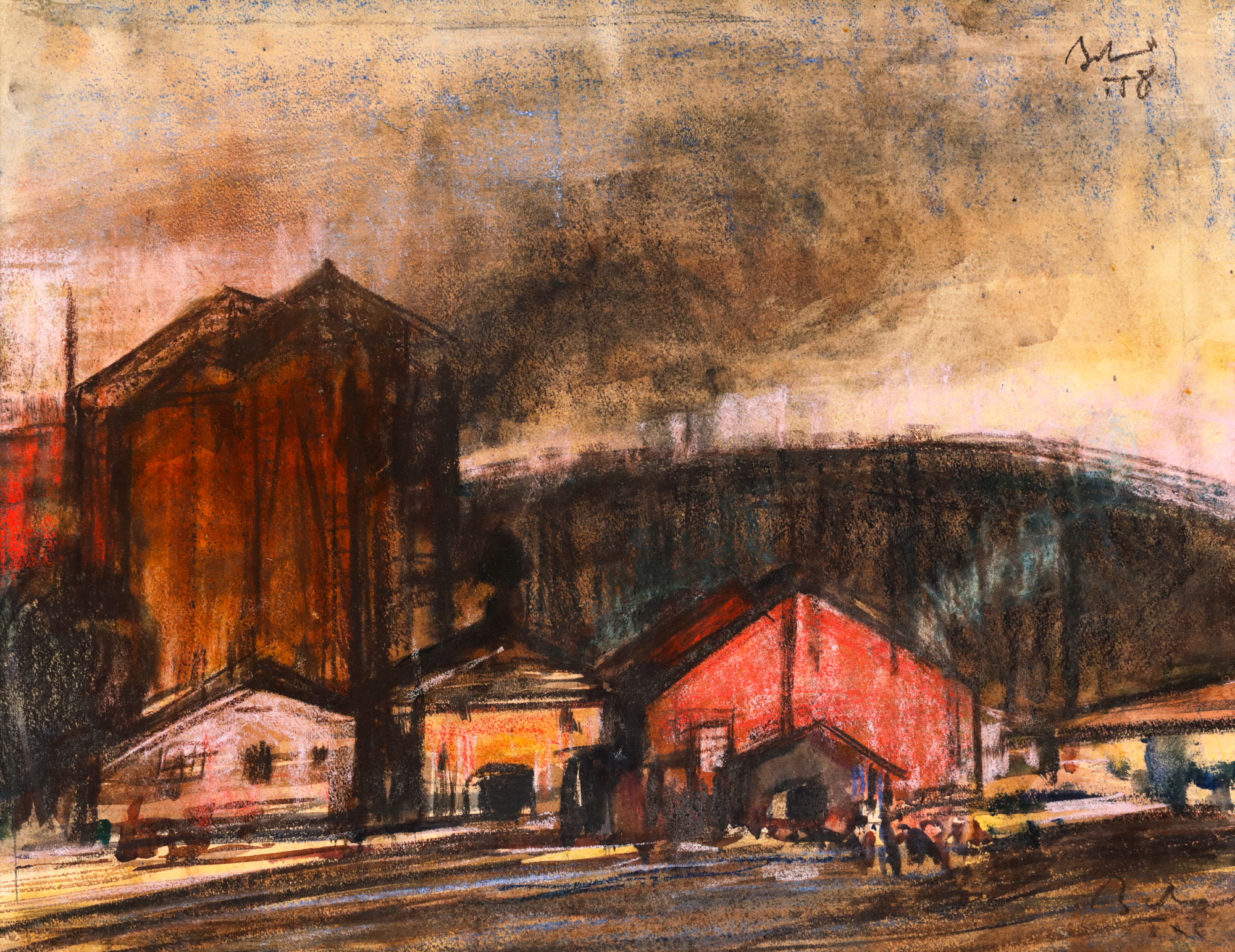
Twilight

95. Twilight [1958]

Corneliu Baba

    Procjena EUR 1.000 - 1.800
    Prodano EUR 1.600
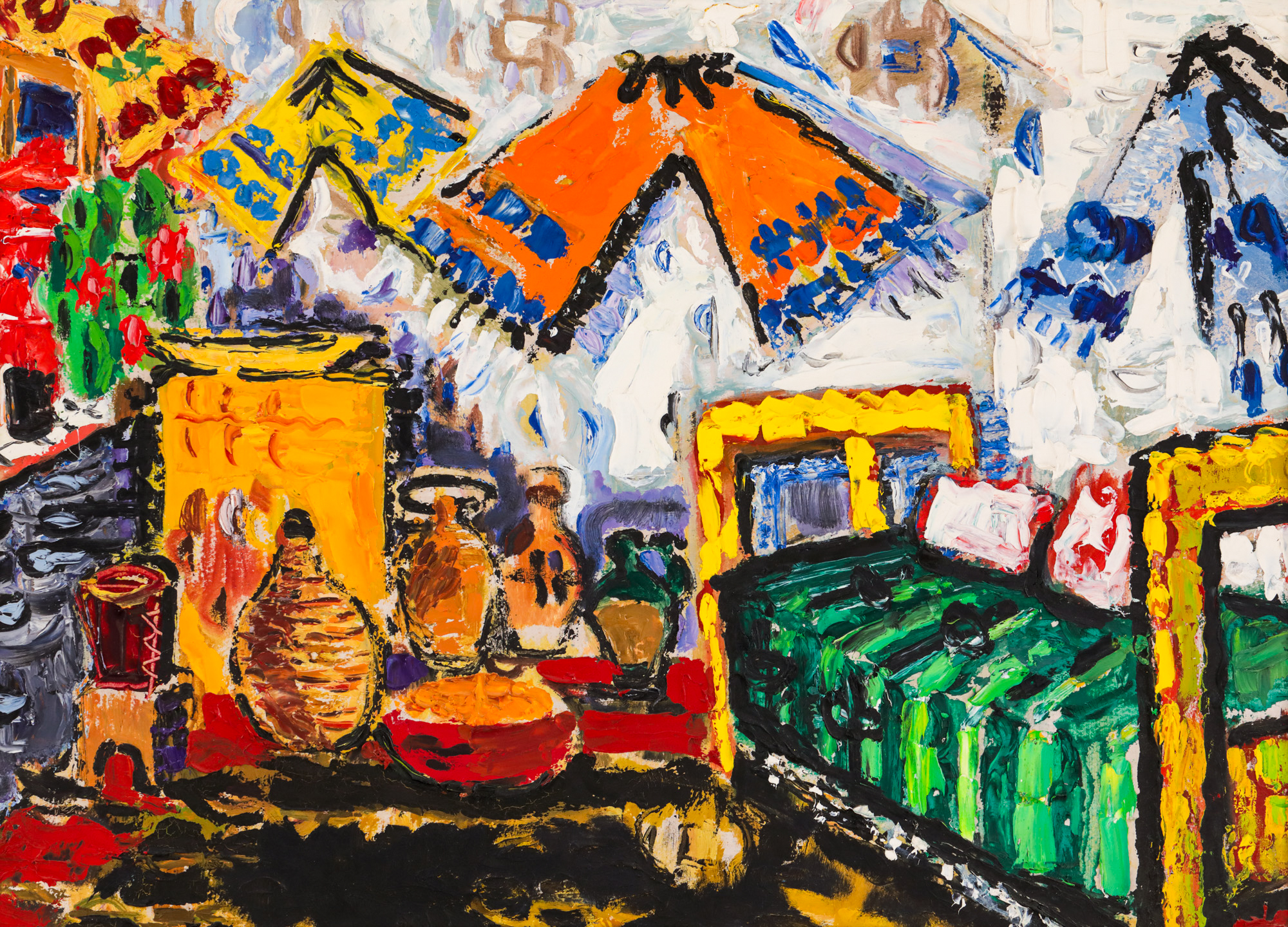
The Green Stallion

122. The Green Stallion [1939-1943]

Ion Ţuculescu

    Procjena EUR 20.000 - 35.000
    Prodano EUR 35.000