
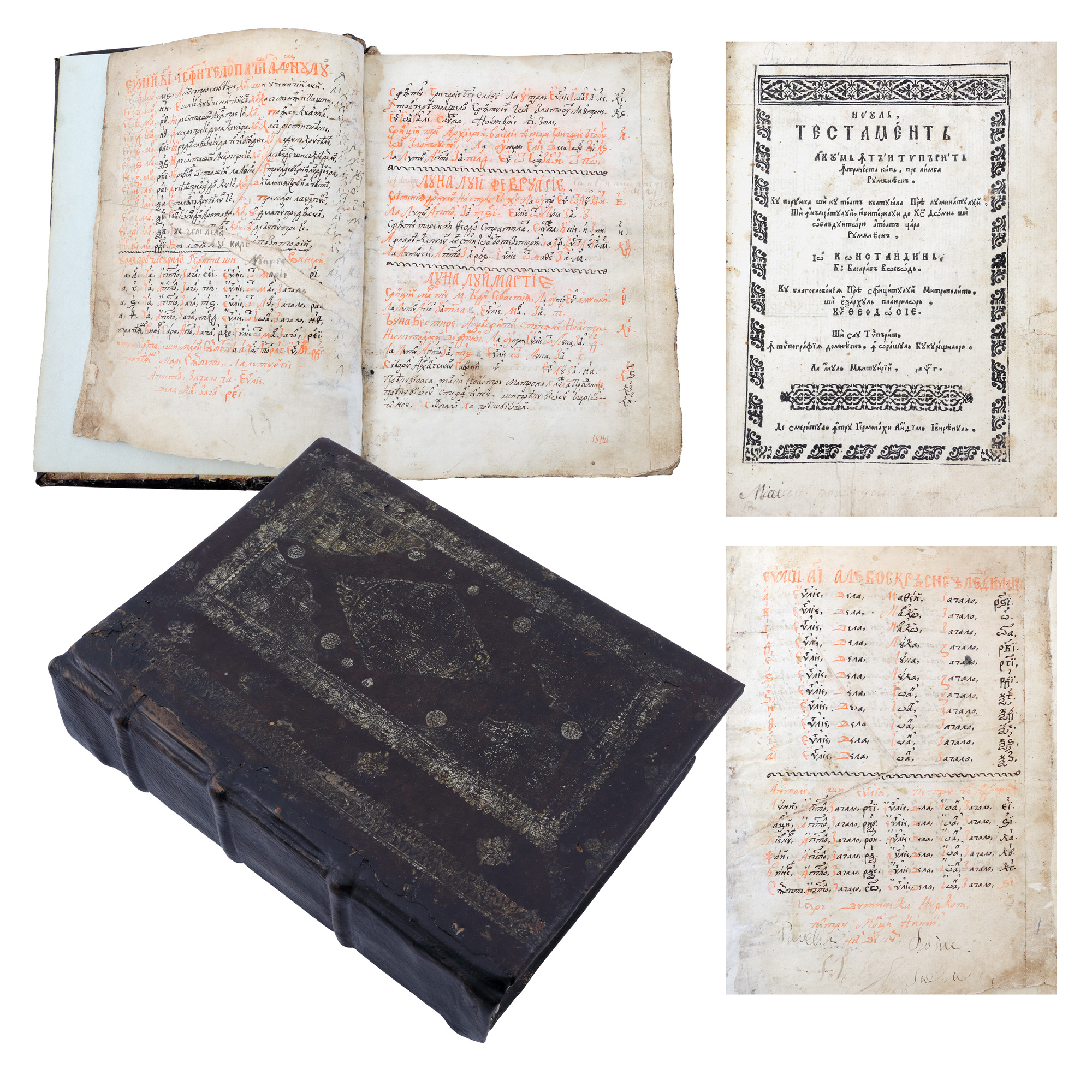
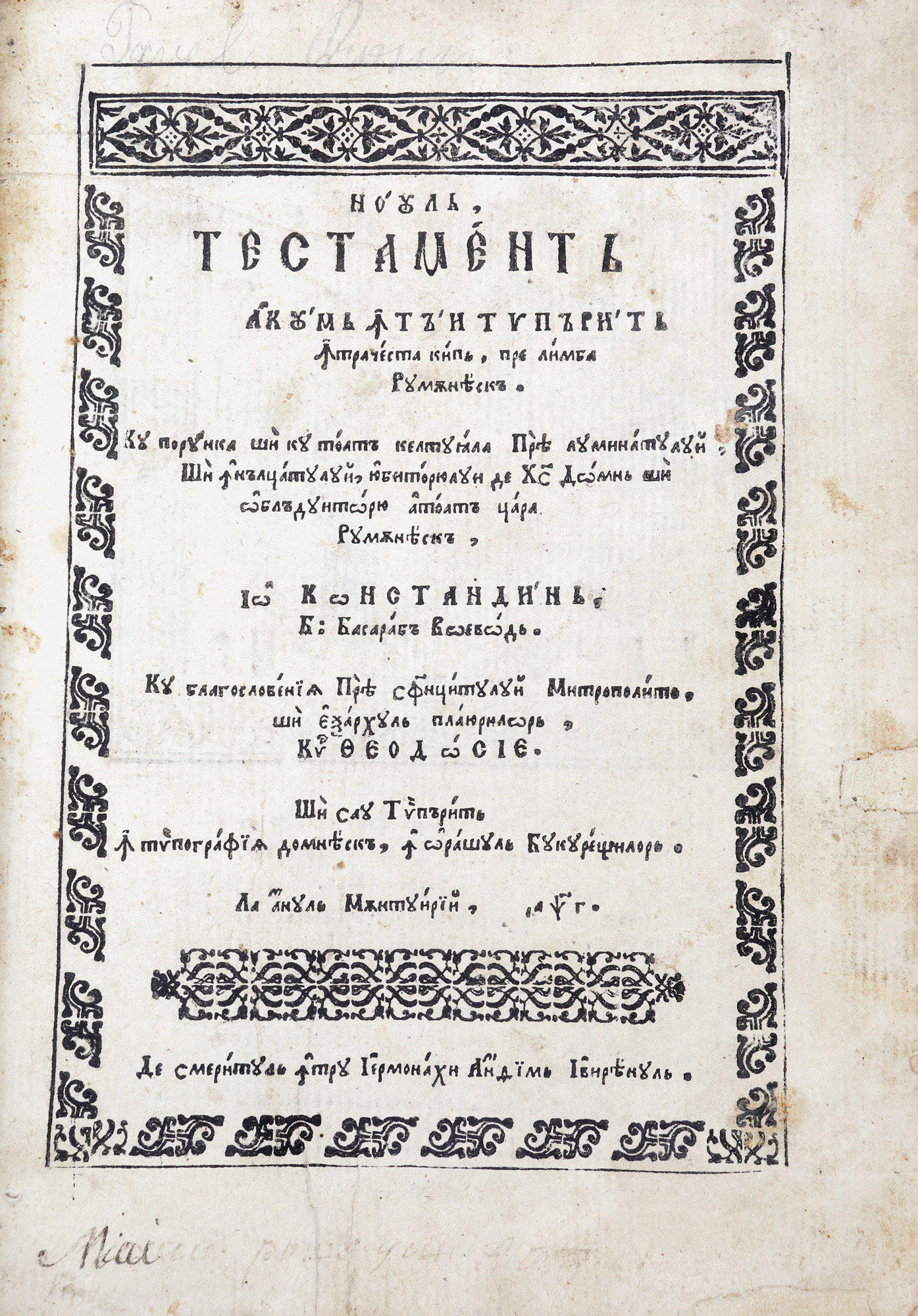
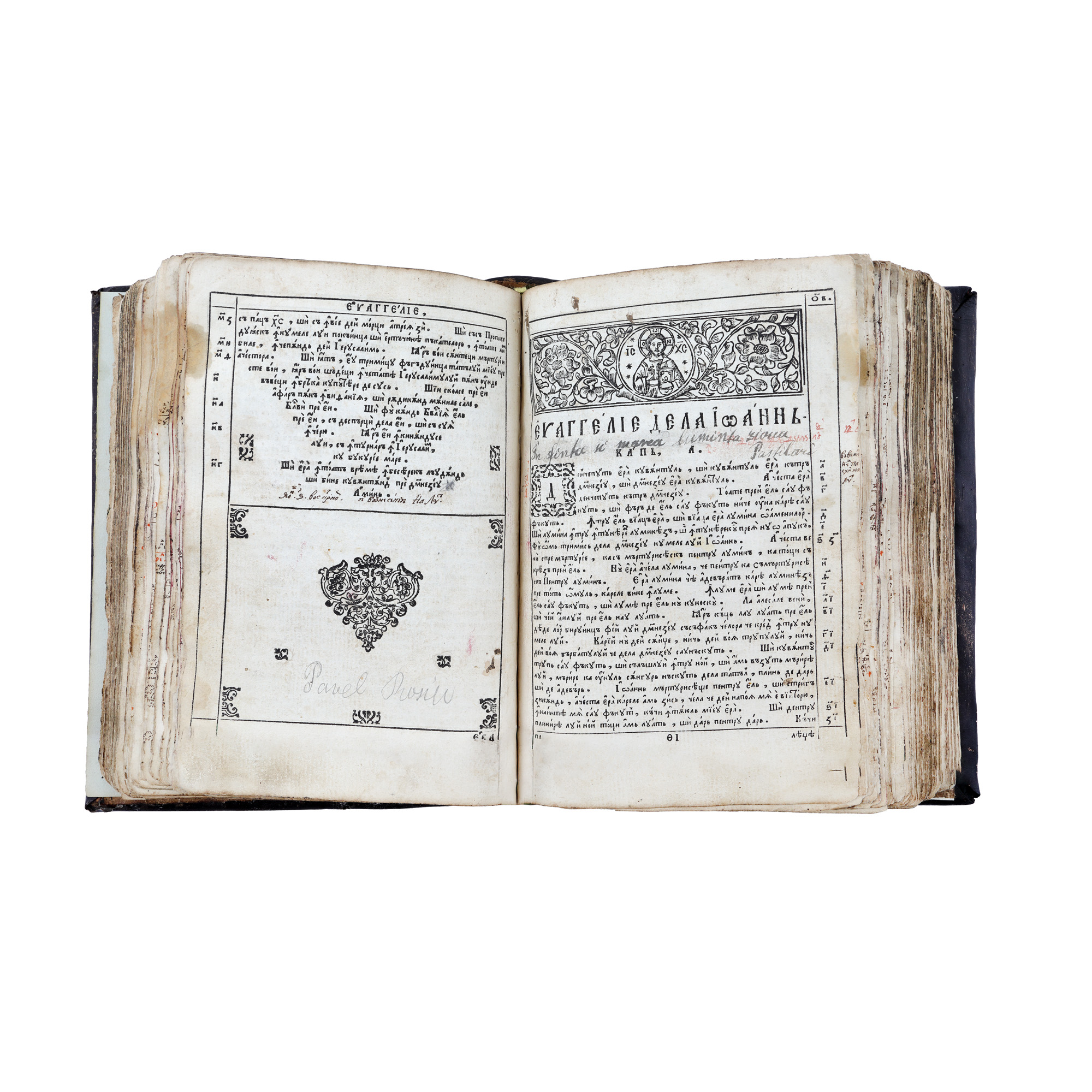
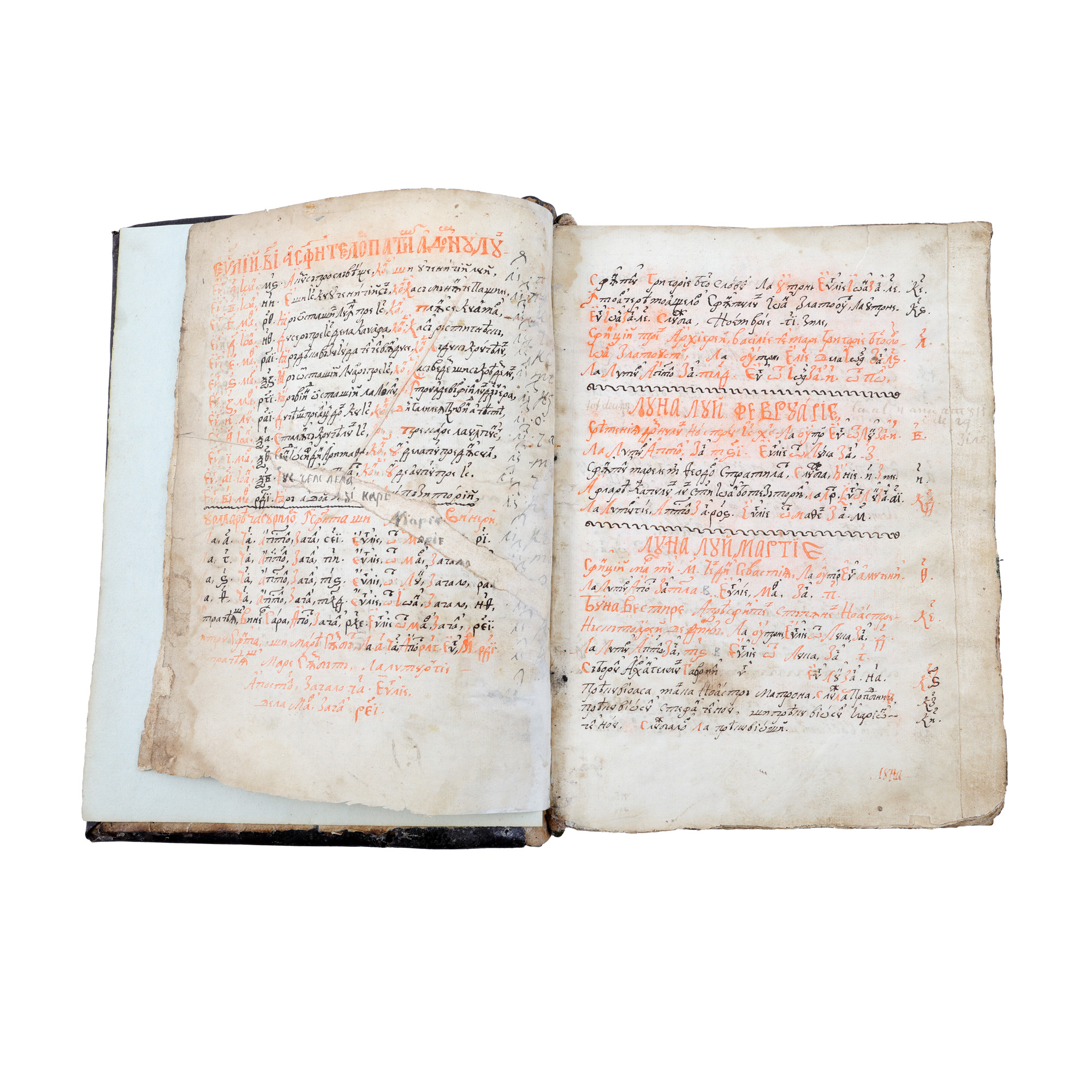
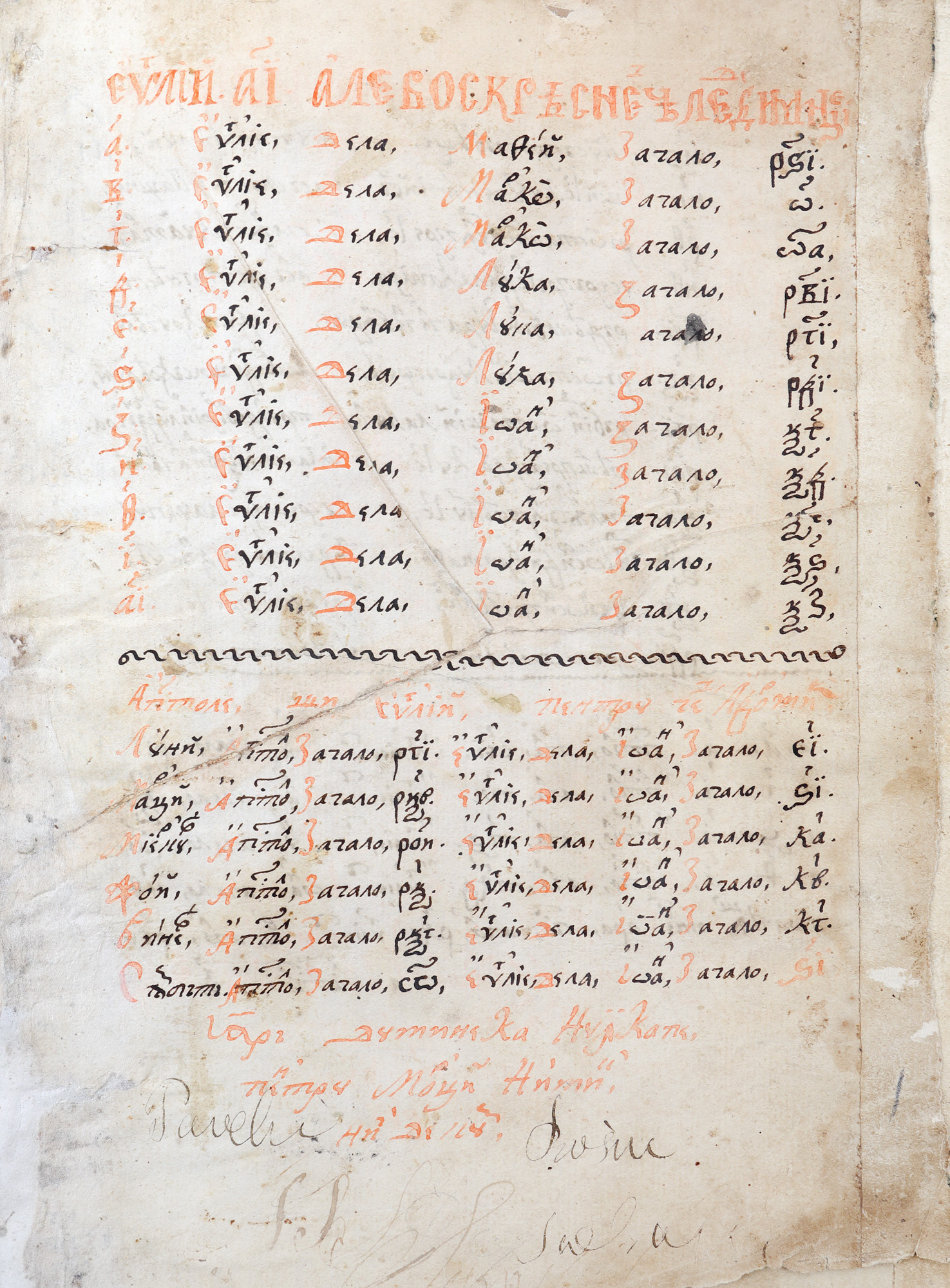
6. Connected Sbornic (18th century manuscript) and "The New Testament" of Antim Ivireanul, from the time of Constantin Brâncoveanu, Bucharest, 1703, extremely rare, collector's piece
Početna cijena
EUR 1.500
Prodano
EUR 3.500
Sesija
Čet., 3 listopada 2024 19:00
Literatura
BRV, I. p. 139
Dimenzije
width 17 cm, height 24 cm
Informacije o istraživanju
Antim Ivireanul, born in 1650, is of Georgian origin but his journey within Orthodoxism brought him to the mouths of the Danube, in Wallachia. Before this period, he lived near the Ecumenical Patriarchate in Constantinople, where he penetrated the mysteries of faith as well as those of the typographic craft in all its details, from writing, to paper making and xylography. Imbued in the erudite and cultivated atmosphere and environment patronized by the Orthodox Patriarchate, he learned several languages, Greek, Turkish-Ottoman and Arabic. The one who brought him north of the Danube was ruler Constantin Brâncoveanu who entrusted him with the development and management of the royal typography in Bucharest in 1691. Extremely active and dedicated to both books and the church, he held several ecclesiastical dignities crowned with that of Metropolitan of Wallachia in which he was installed in 1708. Using the authority that he had and the funds to which he had access, he developed the network of typographies in the country, with one in Râmnicu Vâlcea and one in Târgoviște. Through the numerous church works that he edited and supervised, Antim Ivireanul created the church language in Romanian and put into circulation the foundational works of orthodoxism transposed into a Romanian version. Exiled from the country as a result of his opposition to the Phanariot regime, he was assassinated on his way to Constantinople in circumstances still not fully elucidated. He was canonized by the Romanian Orthodox Church in 1992.
DODATNE INFORMACIJE
Za pojašnjenja u vezi s postupkom licitiranja, troškovima kupnje, uvjetima jamstva, plaćanja i preuzimanja osvojenog lota preporučujemo da pažljivo pročitate/ponovno pročitate Pravilnik o licitiranju.
Za dodatne informacije o lotu i aukciji kontaktirajte Odjel umjetničkih savjetnika.
Detalii
DODATNE INFORMACIJE
Za pojašnjenja u vezi s postupkom licitiranja, troškovima kupnje, uvjetima jamstva, plaćanja i preuzimanja osvojenog lota preporučujemo da pažljivo pročitate/ponovno pročitate Pravilnik o licitiranju.
Za dodatne informacije o lotu i aukciji kontaktirajte Odjel umjetničkih savjetnika.
Literatura
BRV, I. p. 139
Dimenzije
width 17 cm, height 24 cm
Informacije o istraživanju
Antim Ivireanul, born in 1650, is of Georgian origin but his journey within Orthodoxism brought him to the mouths of the Danube, in Wallachia. Before this period, he lived near the Ecumenical Patriarchate in Constantinople, where he penetrated the mysteries of faith as well as those of the typographic craft in all its details, from writing, to paper making and xylography. Imbued in the erudite and cultivated atmosphere and environment patronized by the Orthodox Patriarchate, he learned several languages, Greek, Turkish-Ottoman and Arabic. The one who brought him north of the Danube was ruler Constantin Brâncoveanu who entrusted him with the development and management of the royal typography in Bucharest in 1691. Extremely active and dedicated to both books and the church, he held several ecclesiastical dignities crowned with that of Metropolitan of Wallachia in which he was installed in 1708. Using the authority that he had and the funds to which he had access, he developed the network of typographies in the country, with one in Râmnicu Vâlcea and one in Târgoviște. Through the numerous church works that he edited and supervised, Antim Ivireanul created the church language in Romanian and put into circulation the foundational works of orthodoxism transposed into a Romanian version. Exiled from the country as a result of his opposition to the Phanariot regime, he was assassinated on his way to Constantinople in circumstances still not fully elucidated. He was canonized by the Romanian Orthodox Church in 1992.
Alternativni lotovi
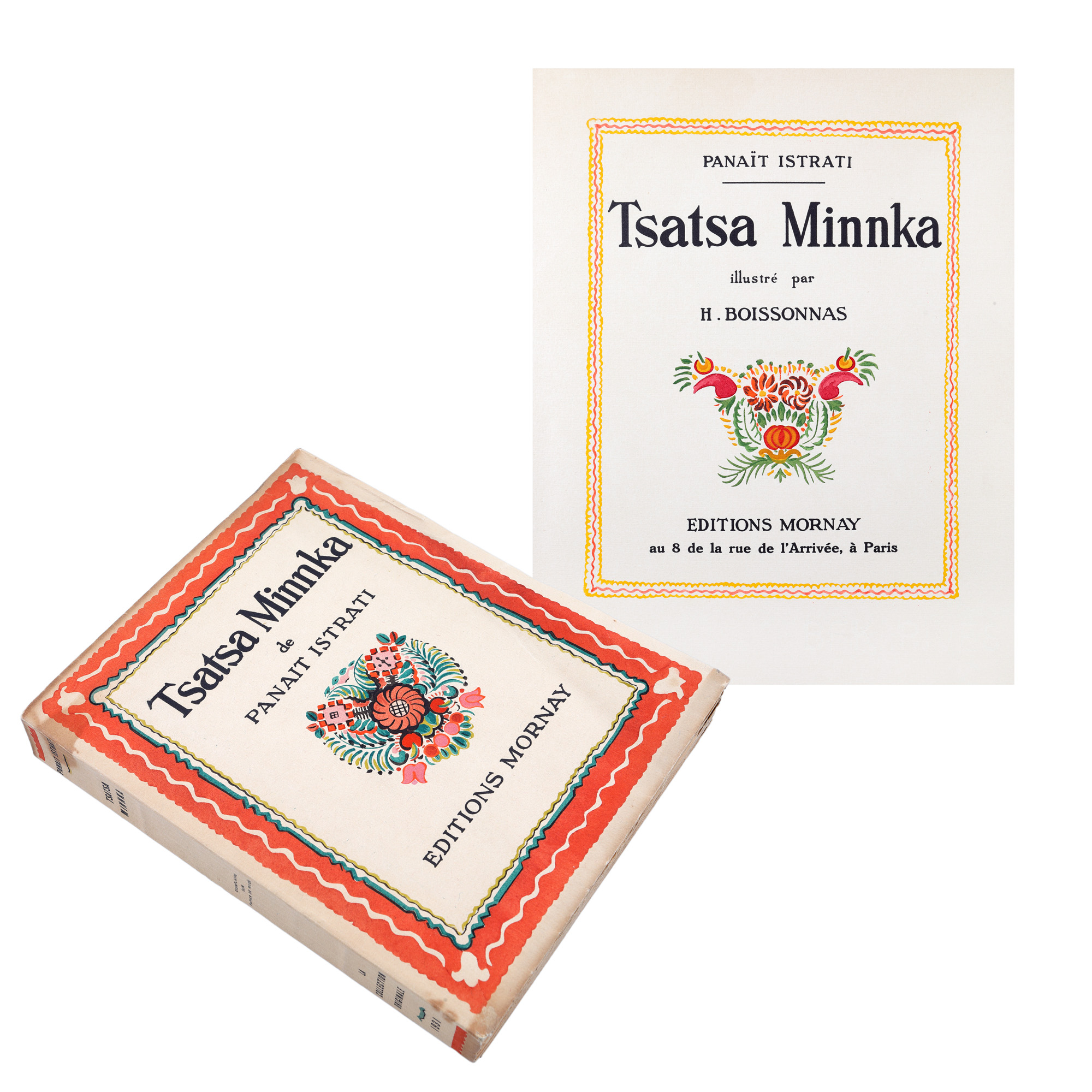
64. "Tsatsa Minnka" by Panait Istrati, with illustrations by H. Boissonnas, French, Paris, 1930, bibliophile copy, uncut, numbered 484/735