
Meniu

Hrvatski

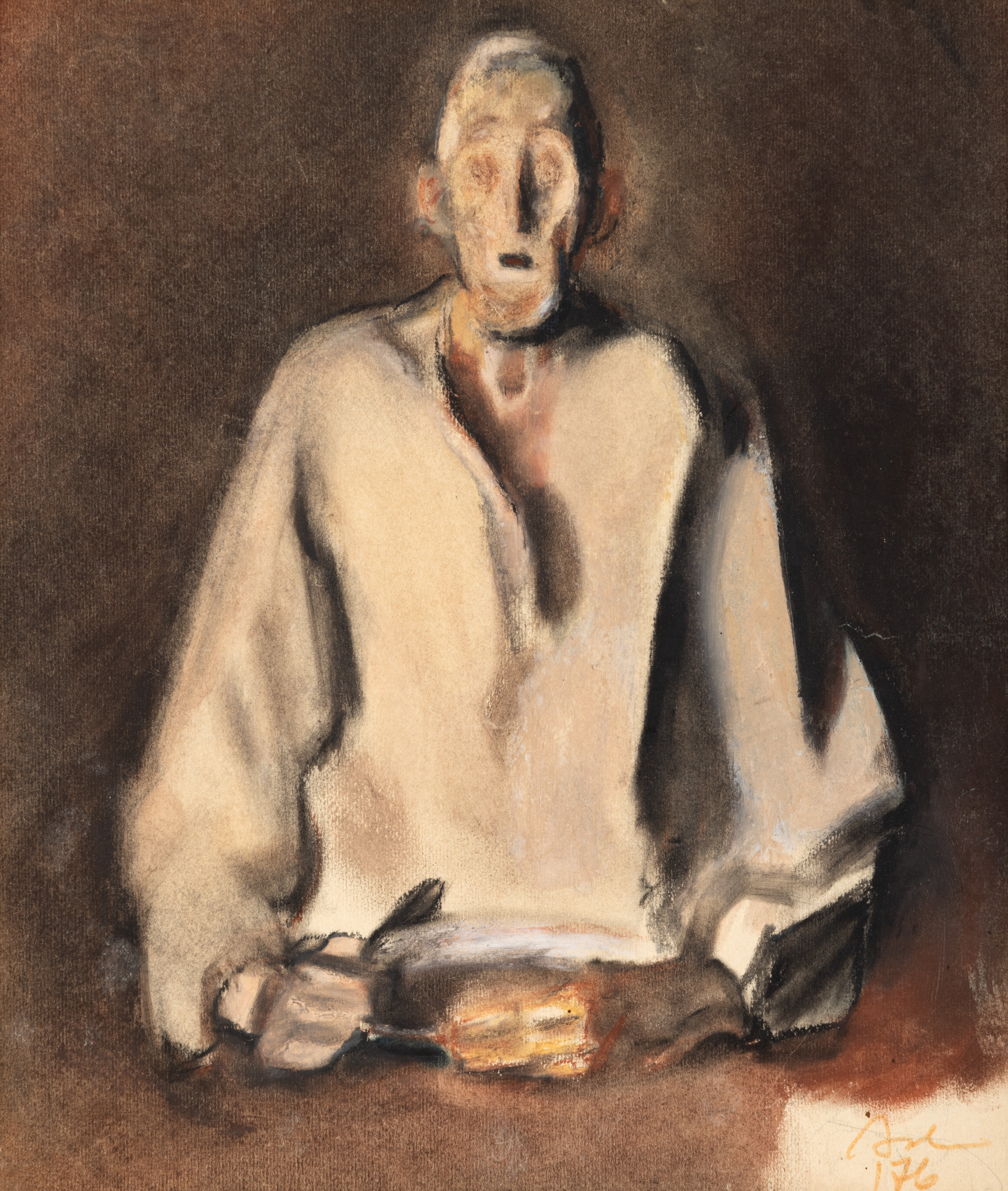
1. Man with Spoon [1976]

1906, Craiova - 1997, Bucureşti

Procjena

EUR 1.000 - 1.600

Prodano

EUR 7.000

Sesija

Čet., 19 veljače 2026 18:00

Baba's art faithfully reflects the social conditions of the time in which it was conceived. Since the late '60s, Baba decided to completely separate himself from the cultural apparatus of Romania and started reevaluating his artistic identity. In his journal, he confesses that "the idea that everything I was doing might one day be understood as a success of those who held political control over us, forced me to withdraw as far as I could, into a sort of internal exile ..." Thus, Baba sheds light on his own art as an expression of the East-European geopolitical space and the tragic condition of man, contributing substantially to the richness of the artistic and spiritual language of his contemporaries, through a strongly personal work. An avid portraitist, an important stage of Baba's painting focuses on observing and rendering people. This remains true also during the period between the '60s and '70s, with the remark that the artist abandons portraiture conventions in favour of an art that approaches more closely Goya's monsters and nightmares. These are complemented by other valences that support the affiliation to Western painting, responding with a unique creation to the influence exerted by El Greco and Rembrandt. The defining themes and motifs that bring rhythm to his late creation, from the 1960s, are almost obsessively repeated and determine the dedicated cycles born during that period: The Terror, The Mad King, The Harlequin. The characters reflect the real repressive conditions and take on the valences of the suffering and terror generated by harsh dictatorship. For Baba, the repetition of the same images, or similar ones, reveals the artist's determination to create an anonymous portrait, which does not belong to any particular person, but captures the eternal torment of human fate. For him, portraits should make you shudder, will haunt you for a long time without being able to forget them. In the last phase of anonymous portraits, images that are rather moral principles than characters, represented through a subtle metonymy found in both the portraits of harlequins and peasants, like "The Man with the Spoon" from the present work, predominate. A mention regarding the subject of the current work appears in Corneliu Baba's journal on January 17, 1972, when the artist confesses that one of the three works he was preparing for an exhibition, "Genre Scene", was exchanged for "The Man with the Spoon". The artist revisits this subject over the years: another version of the work is in the collection of the Art Museum in Timisoara, and numerous interpretations and sketches have circulated over time in the art market. In the case of our work, the representations are elementary, in broad strokes and without too many physiognomic details, pointing however towards an iconographic, existential expressionism, found in the dramatic cycle "The Mad King", which ends the series of portraits in the spirit of a tragic pathos. (L.M.)

Literatura

"Corneliu Baba", edition curated by Maria Muscalu Albani, Romanian Cultural Foundation, Bucharest, 1997 "Corneliu Baba", Publishing of the Romanian Cultural Institute, 2008 ȘUȘARĂ, Pavel, "Corneliu Baba", Parkstone Publishing, London, 2001

Dimenzije

width 27 cm, height 33 cm

Opis

Watercolor, tempera accents, wax pencils and charcoal on paper, signed and dated bottom right, in orange, "Baba, 1(9)76"

Izlasci

1976

DODATNE INFORMACIJE

Za pojašnjenja u vezi s postupkom licitiranja, troškovima kupnje, uvjetima jamstva, plaćanja i preuzimanja osvojenog lota preporučujemo da pažljivo pročitate/ponovno pročitate Pravilnik o licitiranju.

Za dodatne informacije o lotu i aukciji kontaktirajte Odjel umjetničkih savjetnika.

Alternativni lotovi

Horizon

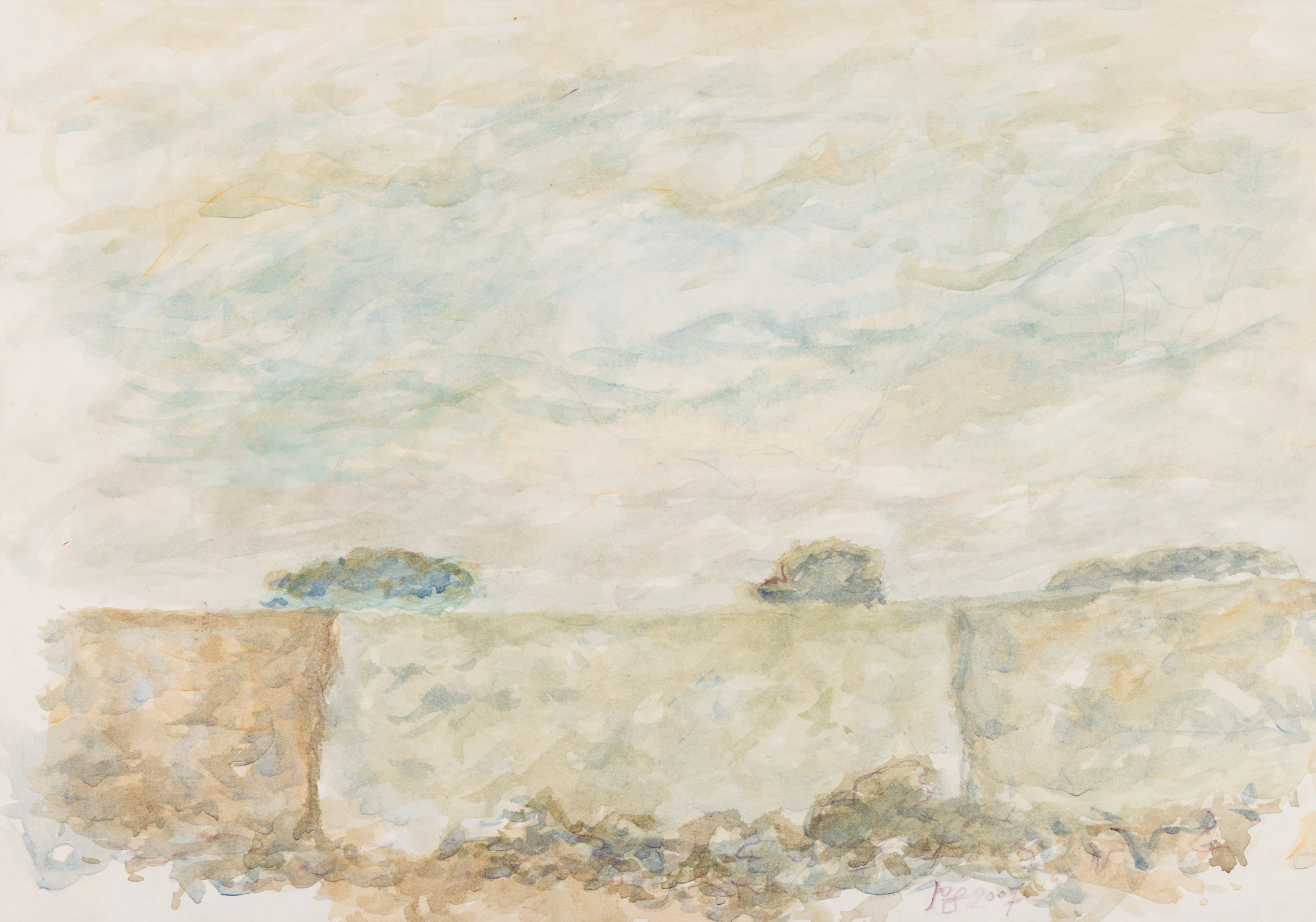
190. Horizon [2007]

Paul Gherasim

    Procjena EUR 400 - 700
    Prodano EUR 500
Song

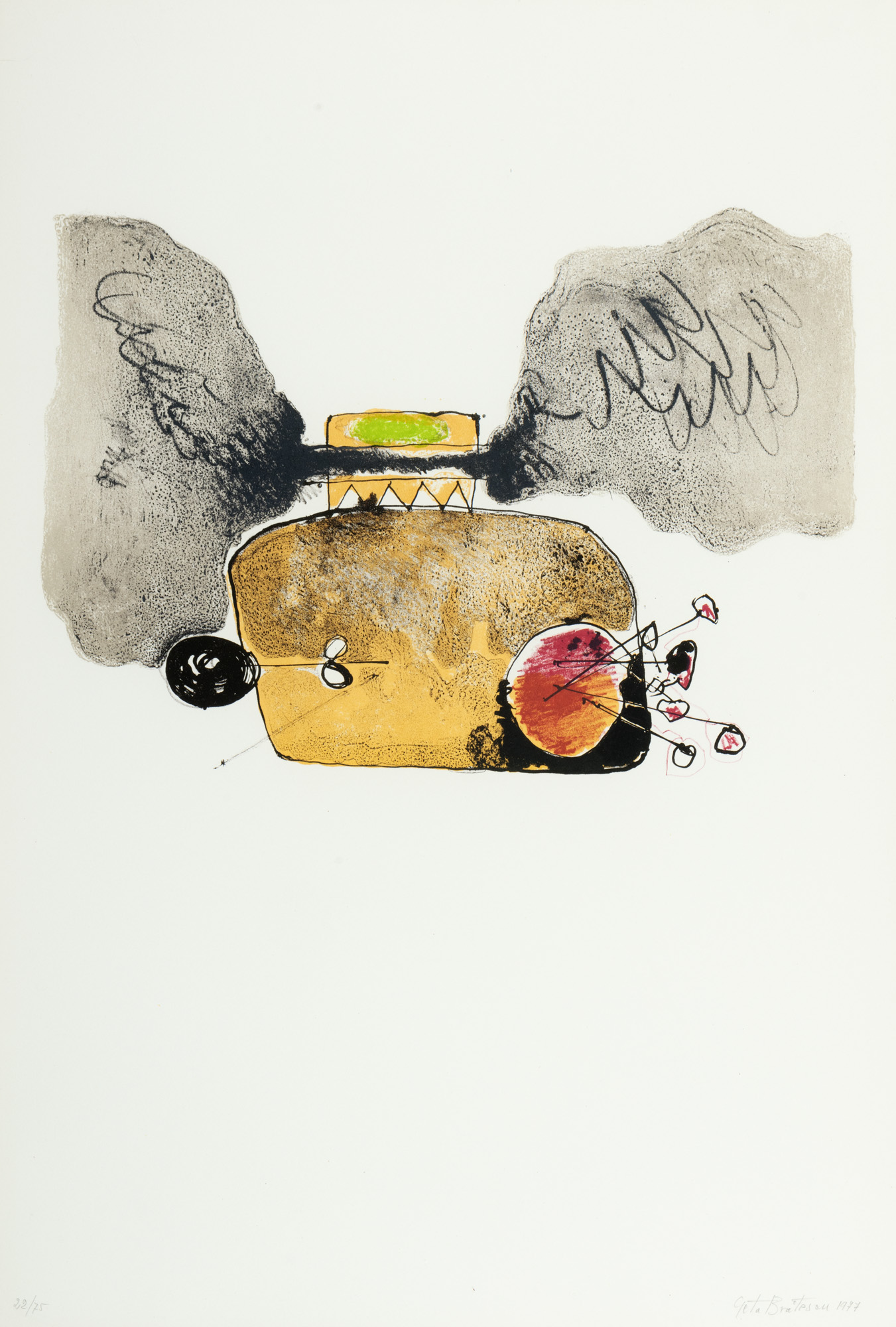
46. Song [1977]

Geta Brătescu

    Procjena EUR 500 - 900
    Prodano EUR 600