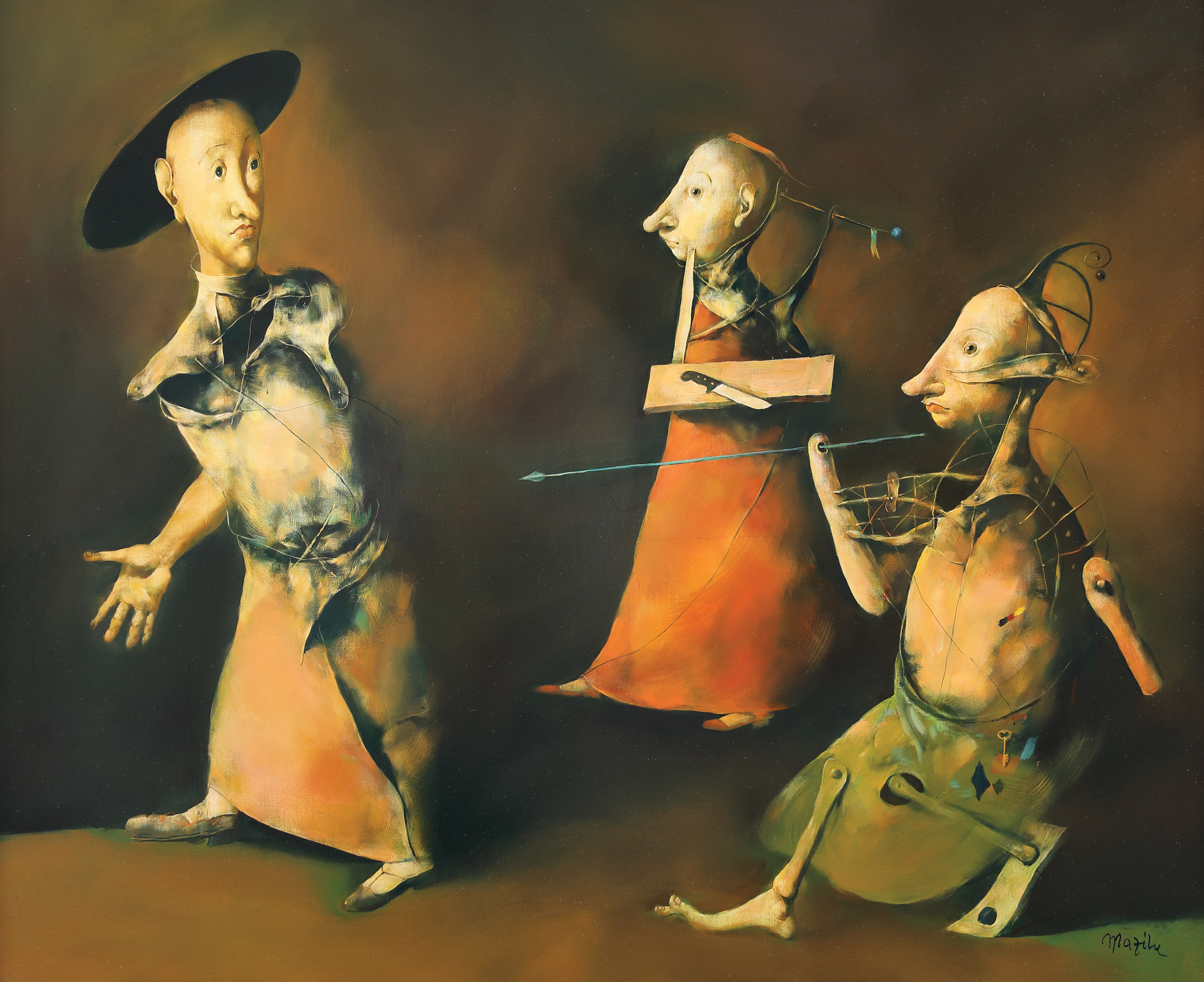

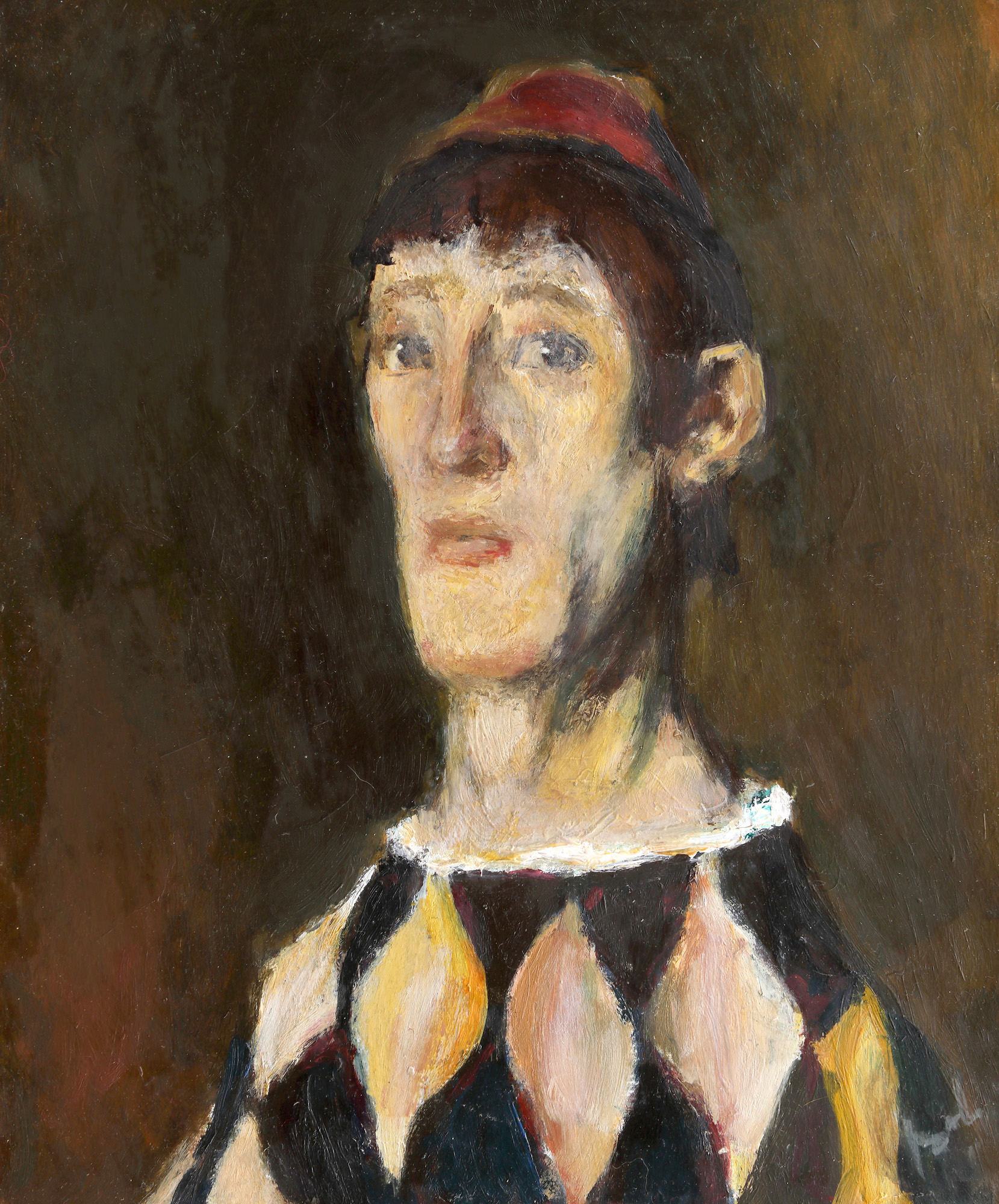
38. Harlequin [cca. 1970]
Procjena
EUR 8.000 - 15.000
Prodano
EUR 12.000
Sesija
Uto., 20 lipnja 2023 19:00
Literatura
ȘUȘARĂ, Pavel, "Corneliu Baba", Monitorul Oficial Publishing House, Bucharest, 2013.
Dimenzije
width 30 cm, height 39 cm
Opis
oil on cardboard, signed bottom right, in grey, "Baba"
Informacije o istraživanju
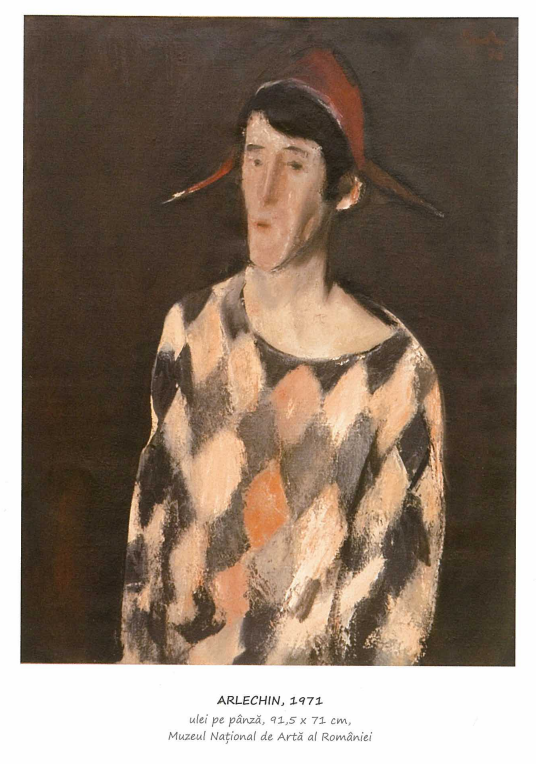
A version of the work is reproduced in the "Corneliu Baba. A European Collection" catalogue, Artmark Galleries, 2018, at page 17. A version of the work is reproduced in "Confesiuni Èi Jurnale" ("Confessions and Journals"), 2nd volume: 1965 - 1977, Corneliu Baba, National Art Museum of Romania, Bucharest, 2020, on page 147.
Izlasci
cca. 1970
DODATNE INFORMACIJE
Za pojašnjenja u vezi s postupkom licitiranja, troškovima kupnje, uvjetima jamstva, plaćanja i preuzimanja osvojenog lota preporučujemo da pažljivo pročitate/ponovno pročitate Pravilnik o licitiranju.
Za dodatne informacije o lotu i aukciji kontaktirajte Odjel umjetničkih savjetnika.
Detalii
DODATNE INFORMACIJE
Za pojašnjenja u vezi s postupkom licitiranja, troškovima kupnje, uvjetima jamstva, plaćanja i preuzimanja osvojenog lota preporučujemo da pažljivo pročitate/ponovno pročitate Pravilnik o licitiranju.
Za dodatne informacije o lotu i aukciji kontaktirajte Odjel umjetničkih savjetnika.
Literatura
ȘUȘARĂ, Pavel, "Corneliu Baba", Monitorul Oficial Publishing House, Bucharest, 2013.
Dimenzije
width 30 cm, height 39 cm
Opis
oil on cardboard, signed bottom right, in grey, "Baba"
Informacije o istraživanju
A version of the work is reproduced in the "Corneliu Baba. A European Collection" catalogue, Artmark Galleries, 2018, at page 17. A version of the work is reproduced in "Confesiuni Èi Jurnale" ("Confessions and Journals"), 2nd volume: 1965 - 1977, Corneliu Baba, National Art Museum of Romania, Bucharest, 2020, on page 147.
Izlasci
cca. 1970
Alternativni lotovi