
Meniu

Hrvatski

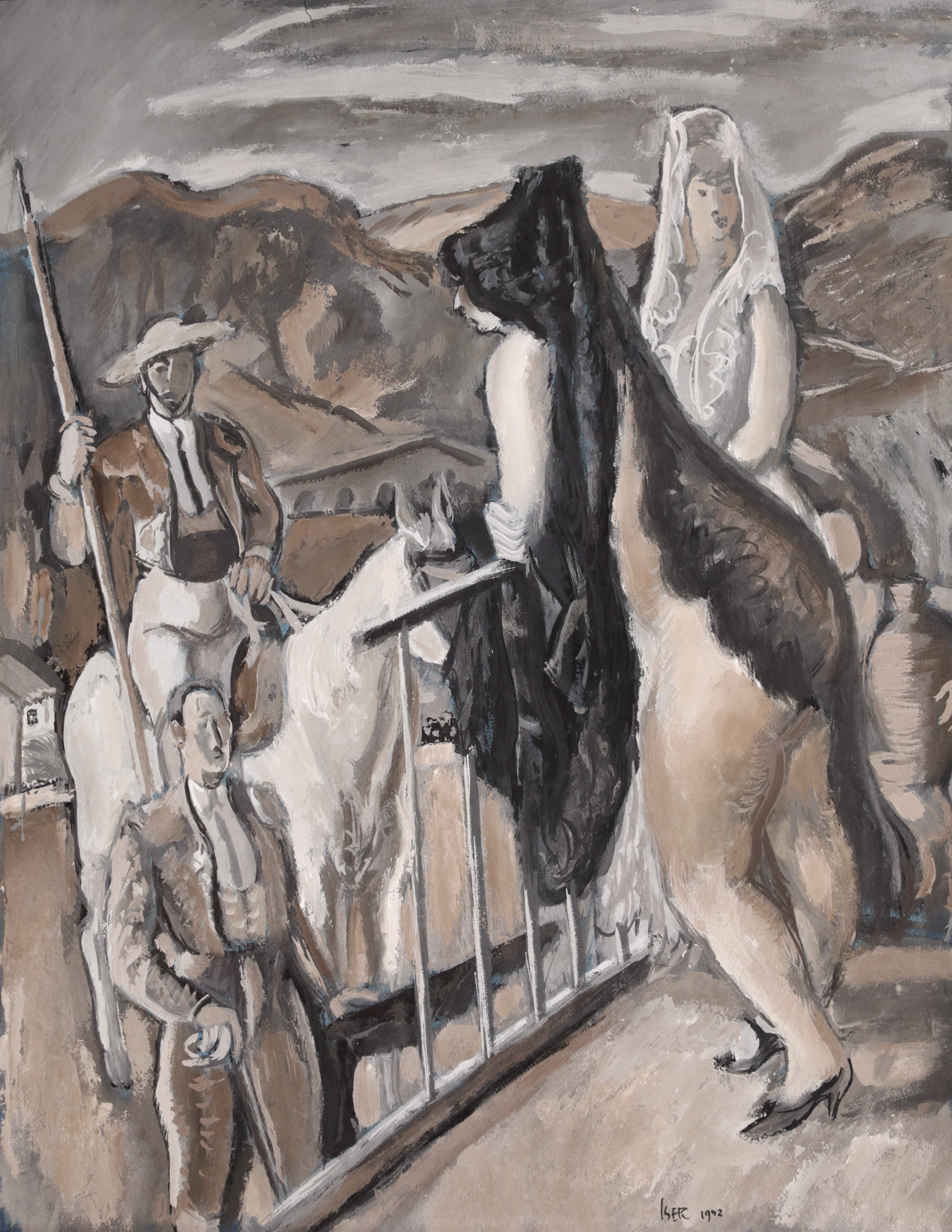
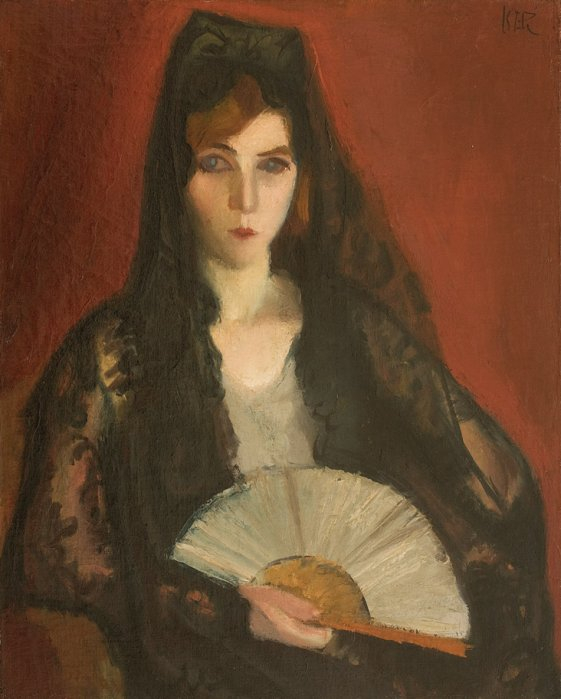
35. Serenade in Toledo [1932]

1881, București - 1958, Bucureşti

Procjena

EUR 2.500 - 3.500

Prodano

EUR 4.250

Sesija

Čet., 19 listopada 2023 19:00

The artist has a boundless ability to synthesize: he observes, analyses, and transcribes the surrounding world on his canvases. From the common countryman to the complexity of Western characters, he focused on different human typologies. From April until September 1930, Iosif Iser roamed the Iberian towns and he collected sufficient painting motifs to open his personal exhibition entitled "Spain - old and new Castille", containing as many as 74 works. A mix of sensuality and ascetism, the motif would be reflected in the ample visions of lights and shadows, in the arid colour palette, as well as in the preference for the mystery revealed by the black-and-white transpositions. Frequently remembered in the years following his trip, the Hispanic realm occurs in the artist’s work in the form of rocky mountain landscapes and hills painted in earthy shades, in the solitary trees, or in the torrid sunlight, which Iser manages to impress upon his palette. The dramatism of the geological structures and the aridity of the nature are often augmented by the presence of the characters, as well. In Madrid, Toledo, Bujedo, or Avila, Iosif Iser meets groups of women, corridas, or bullfighters, but, as usual, his attention rests on the female protagonists. In the artist's canvases, the woman representative of the Hispanic space appears covered in black lace veils, captured in contemplative poses or overflowing with latent energy, sensuality, and mystery. Whether they are portraits in which the black mantilla covers the Iberian faces, or whether the characters wear traditional attire, laying on a divan, or whether the protagonists are in the balconies of their homes, only covered by long veils painted in shades of white or black, the women in Iser’s work are a central motif, around which all the other elements gravitate. The warm Spanish welcome facilitates his artistic fulfilment. From now on, the light is embedded in colour and it is strongly influenced by chromatic contrasts. The arabesque of the lines, specific for the Hispanic eroticism, can be seen in the shapes of the models, as well as in the representation of dessert nature. In this stage, Iser no longer subjected himself to the rules of the schools he attended; instead, he created his own imitative language, specific for the areas in which he travelled. He thus diversified his painting semantics, converging towards the most truthful possible representation of the Hispanic soul and proposing style innovations. The model of the shapes without substance is clearly dismissed by the artist who, after his travels in the Spanish land, uncovered a genuine desire to live. (D.C.)

Literatura

JIANU, Ionel, "Iser", Căminul Artei Publishing House, Bucharest, 1945. MIHALACHE, Marin, "Iser", Meridiane Publishing House, Bucharest, 1982. Catalogue of the retrospective exhibition "Iser. 1881-1958", The R.P.R. Museum of Art, Bucharest, 1983.

Dimenzije

width 50 cm, height 65 cm

Opis

gouache on paper, signed and dated bottom right, in black, "Iser, 1932"

Izlasci

1932
DODATNE INFORMACIJE

Za pojašnjenja u vezi s postupkom licitiranja, troškovima kupnje, uvjetima jamstva, plaćanja i preuzimanja osvojenog lota preporučujemo da pažljivo pročitate/ponovno pročitate Pravilnik o licitiranju.

Za dodatne informacije o lotu i aukciji kontaktirajte Odjel umjetničkih savjetnika.

Alternativni lotovi