
Meniu

Hrvatski

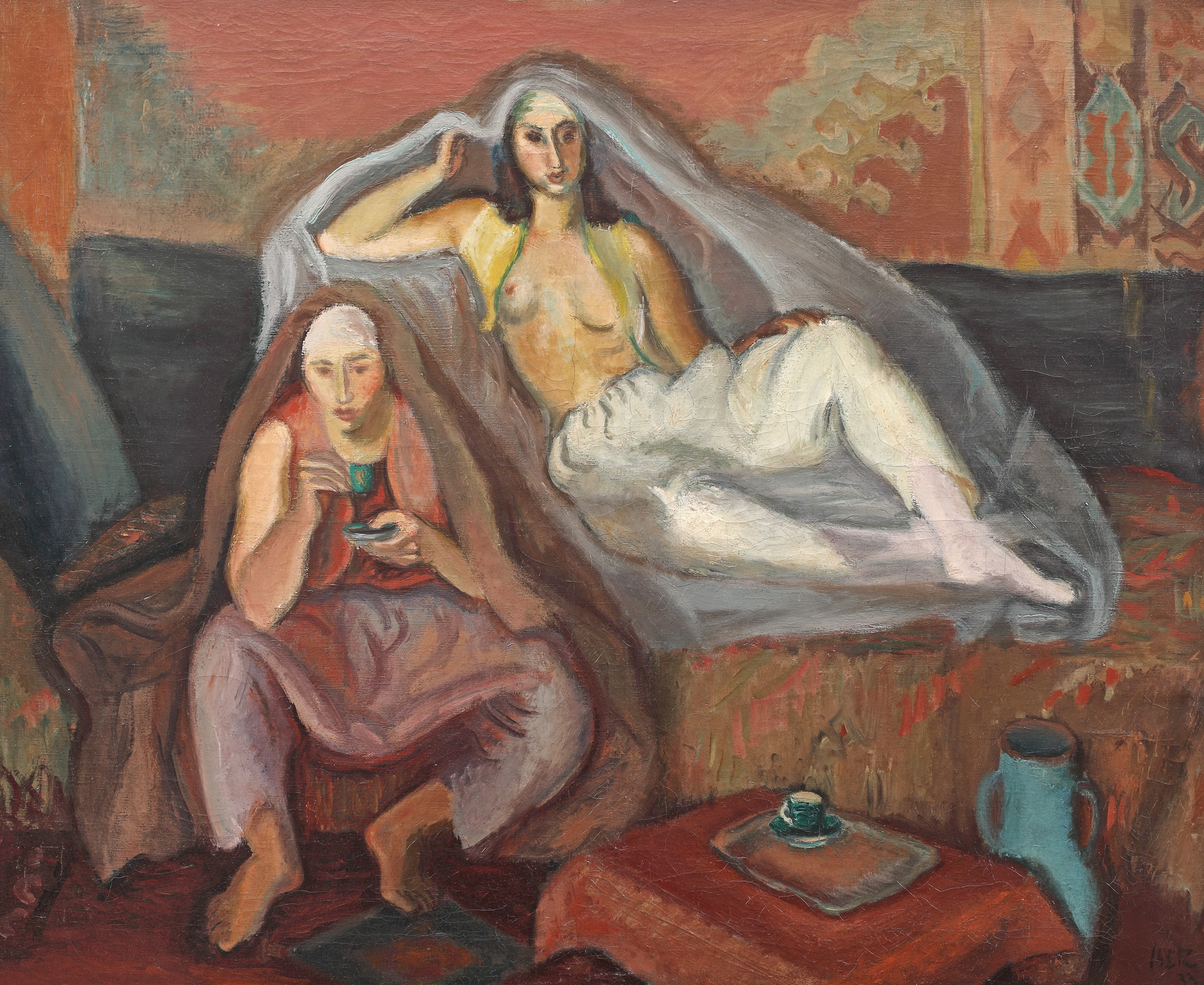
97. Tatar Interior

1881, București - 1958, Bucureşti

Prodajna cijena

EUR 33.768

Sesija

Čet., 15 prosinca 2022 19:00

The concern with the Oriental space represented for Iser one of the longest and most thoroughly worked aspects of an accomplished career. Being one of the first artists to discover Dobruja, Iser always sought to render those elements that were typical for the Dobrujan lands and inhabitants. His favourite theme moved in the direction of the common people, and in the space between the Danube and the Black Sea, those people were represented by the Turk and the Tatar, prototypes of an ancient, eternal patriarchal space. Paradoxically, the image of the woman, the odalisque, inverted the primordial masculinity, turning Iser's entire universe into something that today no longer hides too many mysteries. The typologies created by Iser not only moulded the plastic body itself, but also the way the public accepted and understood a picturesque and isolated space, at least until he discovered Balchik. The success obtained by portrait and gender painting, with a focus on the Oriental theme, turned Iser into the main translator of an unknown universe, especially as far as the Turkish interiors, spaces hardly ever touched by Romanian art, were concerned. In the fourth decade, known as a decade of full maturity, after having acquired a certain recognition in the eyes of the contemporary critique of his days, at the same time with the exhibition of the works created during his journey to Spain, Iser would move on to a new phase in his creative activity. The key moments are marked by settling in Romania permanently, by going in more depth into some favourite genres and themes, and even the creation of a new artistic group towards the late 1930s. In this context, Iser painted "Interiorul tătărăsc" ("The Tatar Interior") in 1933, a work which proves itself the milestone of an entire cycle, obviously focused around his favourite characters. We can admit this without hesitation if we analyse the output of the works he had created to that date, especially from the compositional point of view. The mere fact that Iser offers us an oil painting of an authentic Oriental interior is enough, given the fact that many of his odalisques to that date are basically portraits. In the current work, the painter makes official for the first time since the great compositions of the early 20s, the theme of the Tatar family, which is now being orchestrated exclusively from the woman's point of view. Iser combines two characteristics of the typology he creates, in order to mould a truly valuable appearance, as an odalisque's sensuality lying on the sofa meets the sobriety of a typical Tatar woman. The character in close-up is built in the already-known manner, using the pyramidal structure meant to offer compositional balance. The effective painting is made easy by the Tatar woman's clothing, lacking great chromatic exaltations, yet coherently connected to the character's stern spirit. The construction is continued by moulding the character from the superior register, which, although presented in an antagonistic spirit compared to the first Tatar woman, is not discordant with the atmosphere that the painter conceived. In a lazy atmosphere which was typical for a harem, the partially denuded odalisque draws the observer's attention both by the innovative theme, but especially by the chromatic choice. Painting this character represents the only exaltation that Iser makes recourse to, by using warmer colours and visual effects simplified by the disappearance of the white shal.

Literatura

CRĂCIUN, Eugen, "Iser", Căminul Artei Publishing House, Bucharest, 1945 MIHALACHE, Marin, "Iosif Iser", Meridiane Publishing House, Bucharest, 1982

Dimenzije

width 100.5 cm, height 81.5 cm

Opis

oil on canvas, signed and dated bottom right, with black, "ISER, (19)33"

Informacije o istraživanju

The artwork participated in the solo exhibition from Sala Hall, December 2-31, 1934, being part of a selection of 204 works in oil, gouache and etchings made by the painter mainly between 1932 and 1934. The artwork is reproduced in "Cuvântul liber" weekly magazine, 3rd series, 2nd year, no. 4, December 1, 1934, at p. 7, in an issue dedicated to the painter Iosif Iser.
DODATNE INFORMACIJE

Za pojašnjenja u vezi s postupkom licitiranja, troškovima kupnje, uvjetima jamstva, plaćanja i preuzimanja osvojenog lota preporučujemo da pažljivo pročitate/ponovno pročitate Pravilnik o licitiranju.

Za dodatne informacije o lotu i aukciji kontaktirajte Odjel umjetničkih savjetnika.

Alternativni lotovi

The Sultana's Stroll

122. The Sultana's Stroll

Theodor Aman

    Procjena EUR 500 - 800
    Prodano EUR 1.000
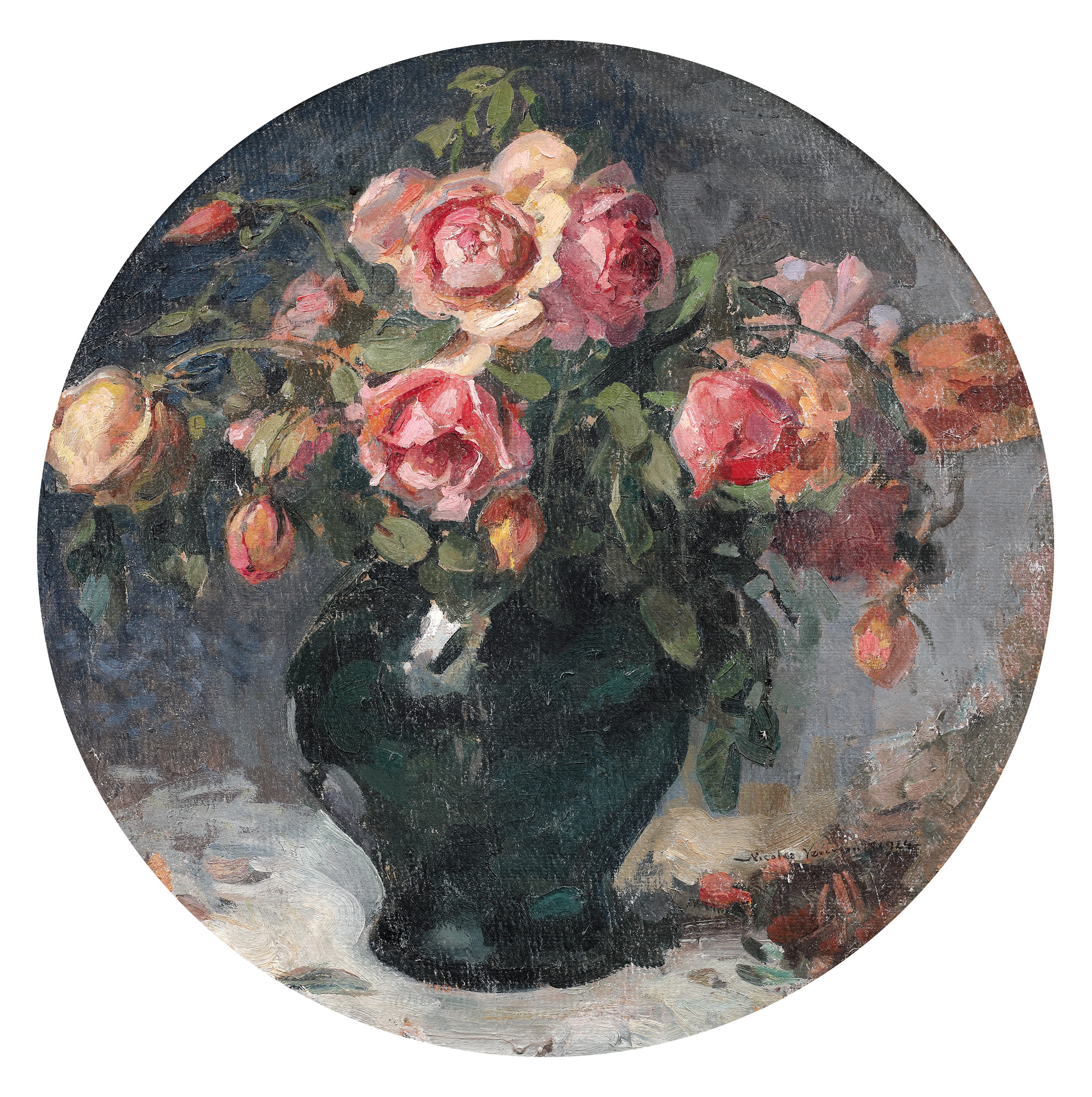
Vase with Roses

86. Vase with Roses [1924]

Nicolae Vermont

    Procjena EUR 2.000 - 3.000
    Prodano EUR 4.000
Sunday on the City Streets

81. Sunday on the City Streets [1989]

Constantin Piliuţă

    Procjena EUR 2.500 - 3.500
    Prodano EUR 3.500
Tatar Woman

125. Tatar Woman

Egon Marc Lowith

    Procjena EUR 800 - 1.200
    Prodano EUR 1.800