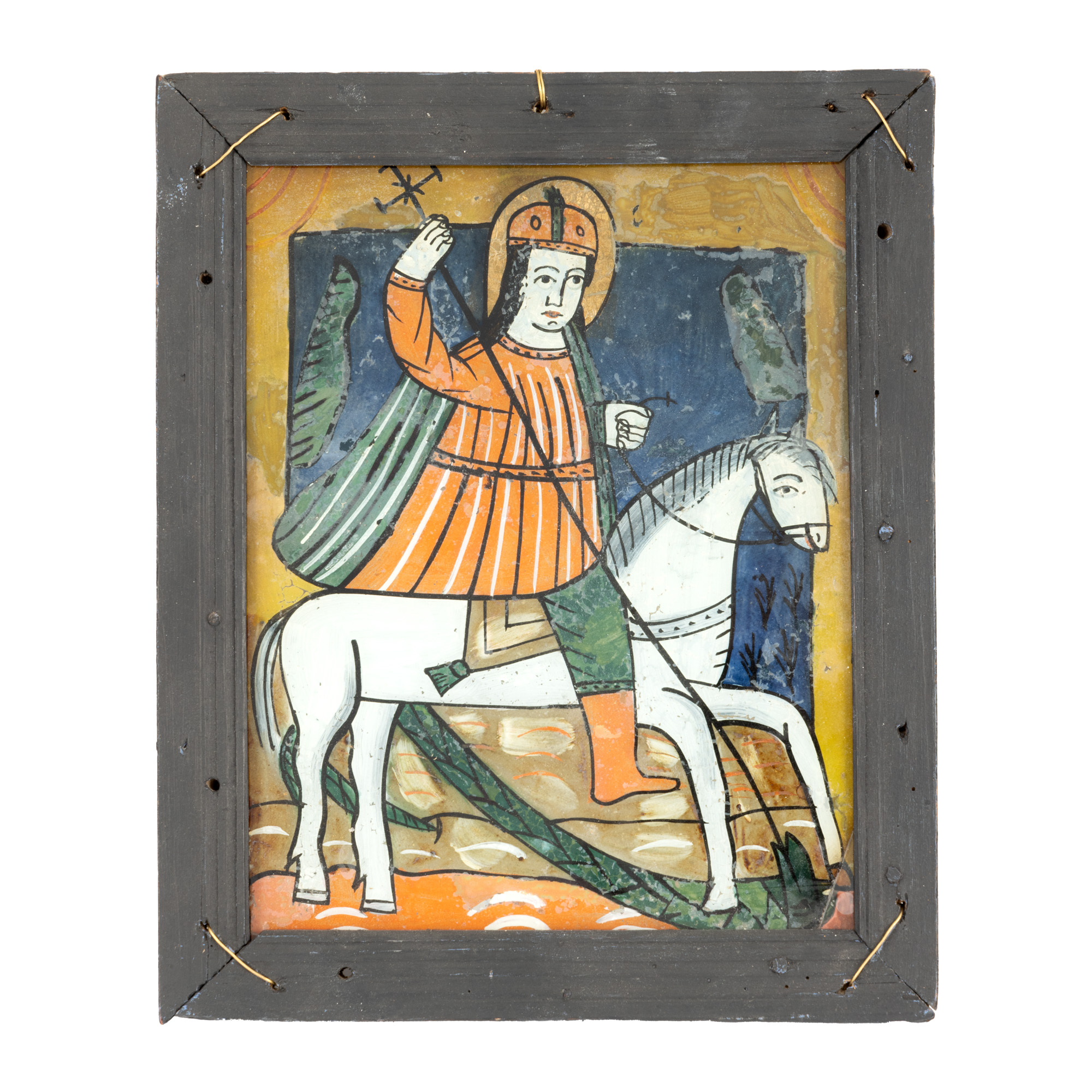

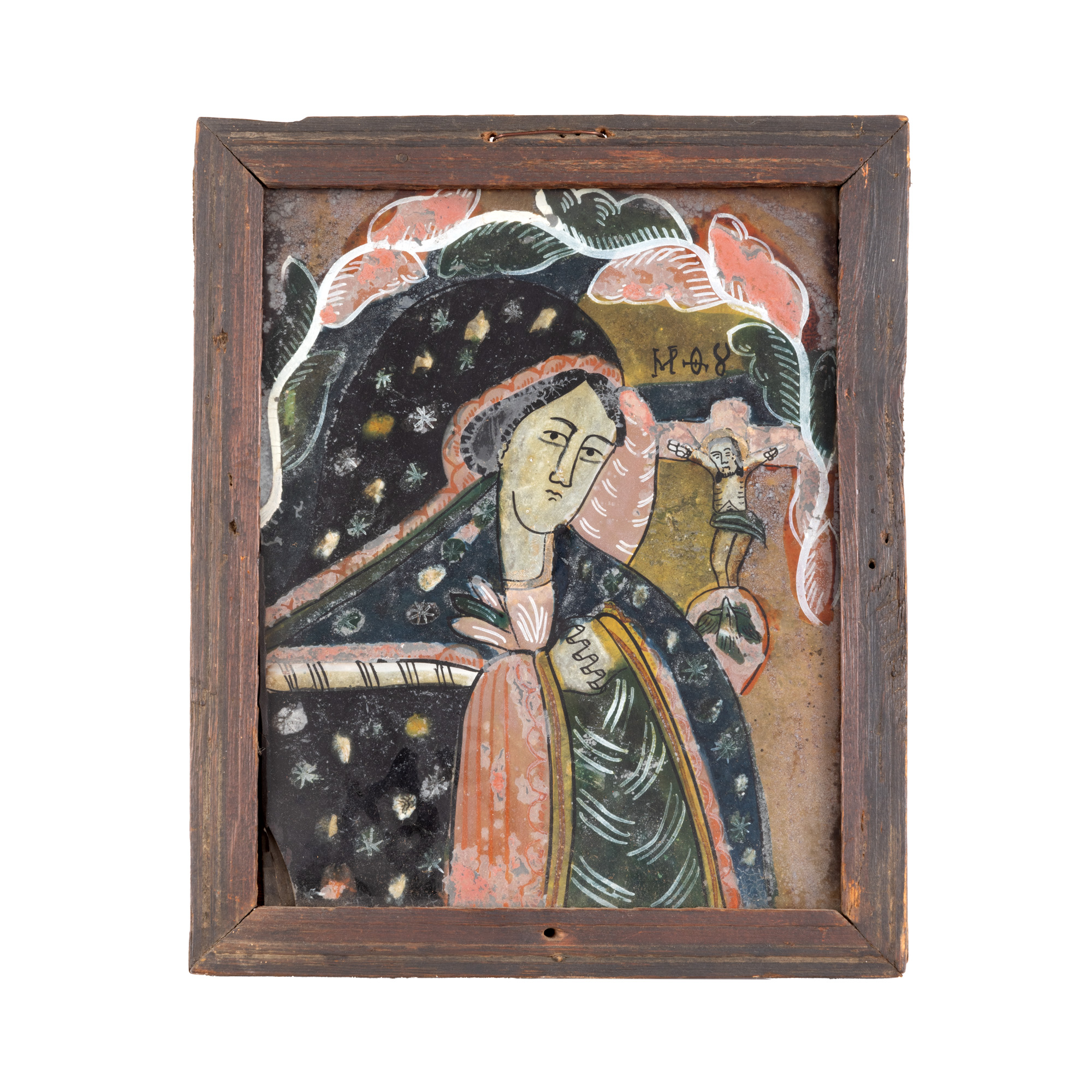
61. Icon on glass, "Sorrowful Mother of God", workshop from Nicula, mid 19th century, originates from the collection of the lawyer Constantin Vișinescu
Početna cijena
EUR 200
Prodano nakon aukcije
EUR 250
Sesija
Uto., 9 prosinca 2025 18:00
Dimenzije
width 25 cm, height 31 cm
Opis
tempera and gold foil on glaze, stained frame, with forceps
PODRIJETLO
Constantin Vișinescu was born in 1920 in Constanța. Between 1930-1937, he attended the courses of the "Gheorghe Lazăr" College in Bucharest, and in 1938 he was admitted to two faculties: Law, Letters and Philosophy. At the end of 1940, he was sent to the eastern front against the USSR, where he took part in the battles for the liberation of Bessarabia. In 1943 he was injured and declared a war invalid. He ignored this situation and continued to go to the front. In 1944, he was captured and sent to the Wosnesensk camp on the Bug, where, together with three other comrades, he escaped and arrived in the country where he was arrested by the Soviet occupation troops for desertion. The military prosecutor's office found, however, that there was no legal basis for his prosecution and he was released. As a trainee lawyer, he worked in the office of Istrate Micescu and then in the office of Ion Valjan. In 1951, being the lawyer in the defense in the trial of the Zionists from Bucharest, he was arrested by the Security of the regime. After a long investigation, he was sent to the work camp at the Danube-Black Sea Canal, from where he was released in 1954. After his release, he resumed his legal activity and in 1972 he received the "Das Verdist Kreuz" decoration from the Government of the Federal Republic of Germany for legal merits. In 1990, he founded the Romania-Israel Friendship Cultural Association. In 1996, the Romanian Presidency awarded him the "Commemorative Cross of the Second World War" for military services to the Romanian state.
DODATNE INFORMACIJE
Za pojašnjenja u vezi s postupkom licitiranja, troškovima kupnje, uvjetima jamstva, plaćanja i preuzimanja osvojenog lota preporučujemo da pažljivo pročitate/ponovno pročitate Pravilnik o licitiranju.
Za dodatne informacije o lotu i aukciji kontaktirajte Odjel umjetničkih savjetnika.
Detalii
DODATNE INFORMACIJE
Za pojašnjenja u vezi s postupkom licitiranja, troškovima kupnje, uvjetima jamstva, plaćanja i preuzimanja osvojenog lota preporučujemo da pažljivo pročitate/ponovno pročitate Pravilnik o licitiranju.
Za dodatne informacije o lotu i aukciji kontaktirajte Odjel umjetničkih savjetnika.
Dimenzije
width 25 cm, height 31 cm
Opis
tempera and gold foil on glaze, stained frame, with forceps
PODRIJETLO
Constantin Vișinescu was born in 1920 in Constanța. Between 1930-1937, he attended the courses of the "Gheorghe Lazăr" College in Bucharest, and in 1938 he was admitted to two faculties: Law, Letters and Philosophy. At the end of 1940, he was sent to the eastern front against the USSR, where he took part in the battles for the liberation of Bessarabia. In 1943 he was injured and declared a war invalid. He ignored this situation and continued to go to the front. In 1944, he was captured and sent to the Wosnesensk camp on the Bug, where, together with three other comrades, he escaped and arrived in the country where he was arrested by the Soviet occupation troops for desertion. The military prosecutor's office found, however, that there was no legal basis for his prosecution and he was released. As a trainee lawyer, he worked in the office of Istrate Micescu and then in the office of Ion Valjan. In 1951, being the lawyer in the defense in the trial of the Zionists from Bucharest, he was arrested by the Security of the regime. After a long investigation, he was sent to the work camp at the Danube-Black Sea Canal, from where he was released in 1954. After his release, he resumed his legal activity and in 1972 he received the "Das Verdist Kreuz" decoration from the Government of the Federal Republic of Germany for legal merits. In 1990, he founded the Romania-Israel Friendship Cultural Association. In 1996, the Romanian Presidency awarded him the "Commemorative Cross of the Second World War" for military services to the Romanian state.
Alternativni lotovi
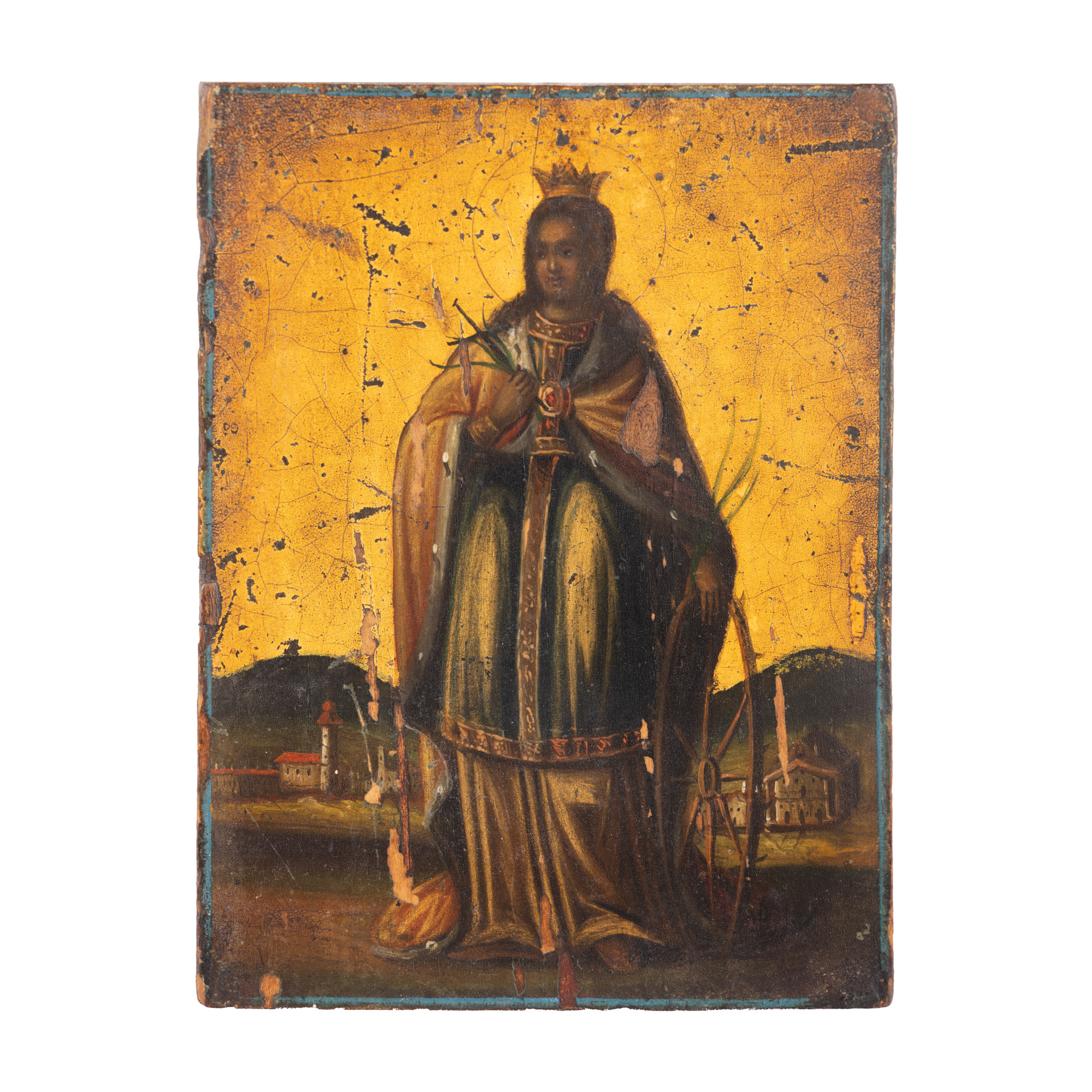
201. Icon on wood, "Saint Empress Catherine", Romanian school, mid 19th century
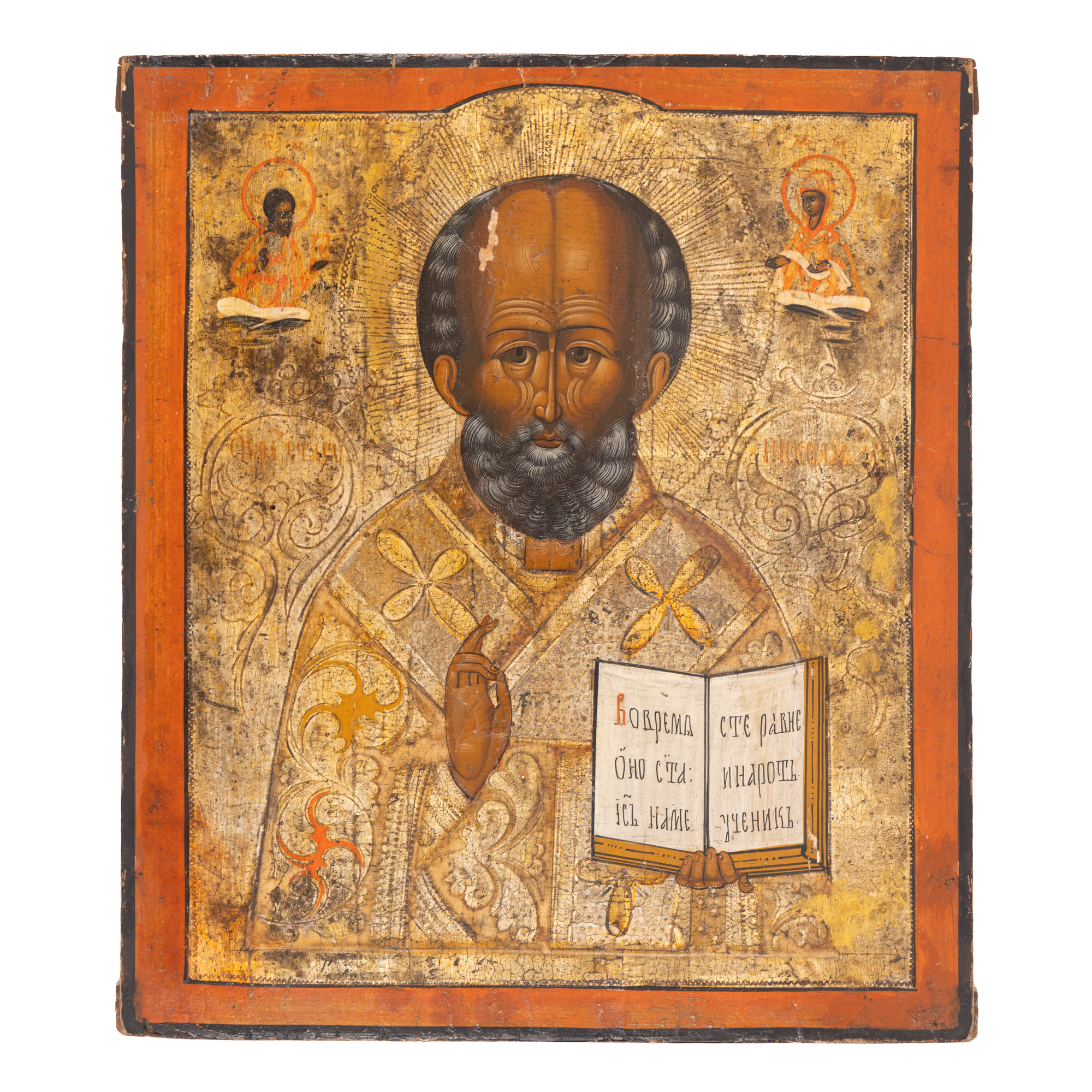
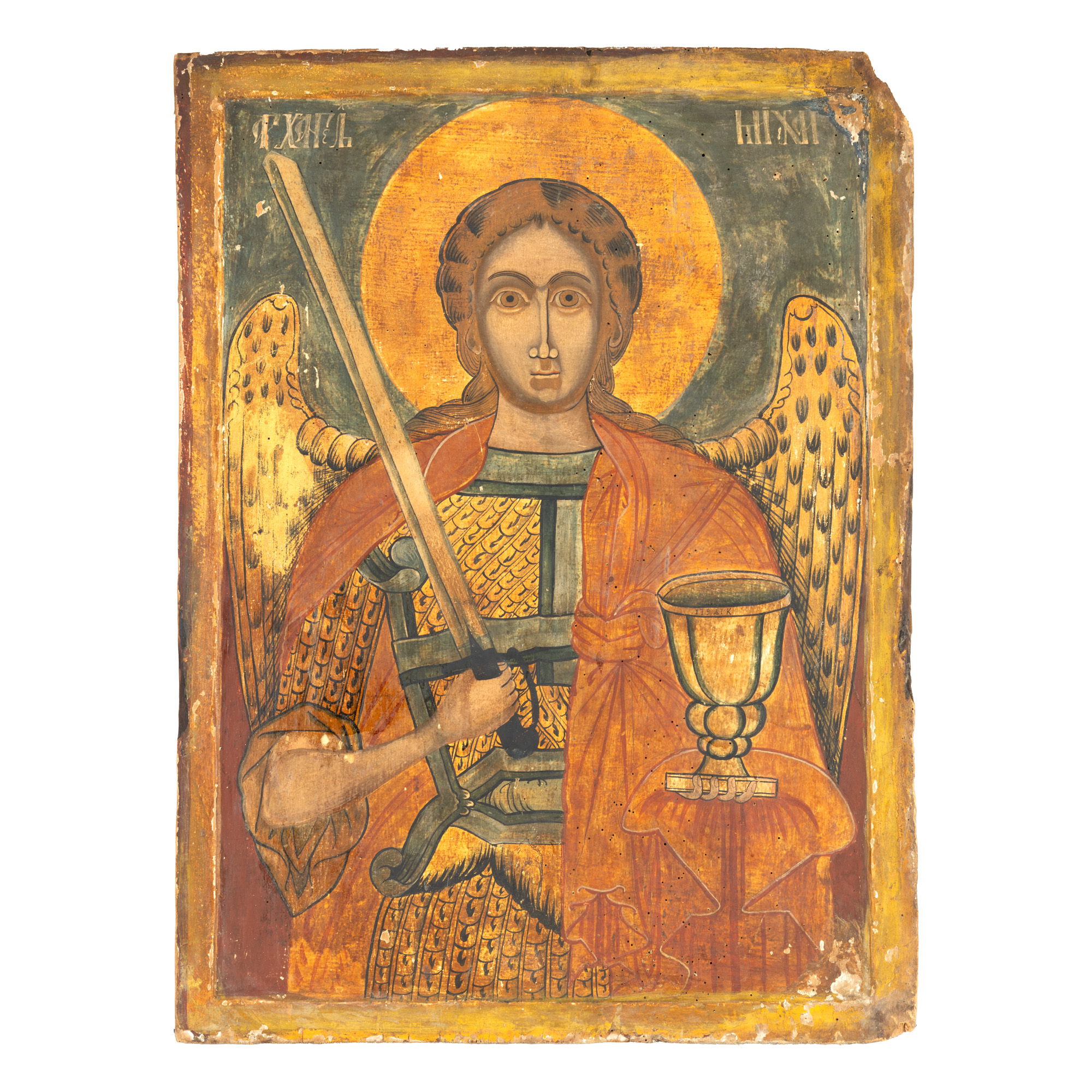
105. Imperial icon on wood, "Saint Archangel Michael", Wallachia, post-Brâncovenesc school, August 20, 1790, collectible item