
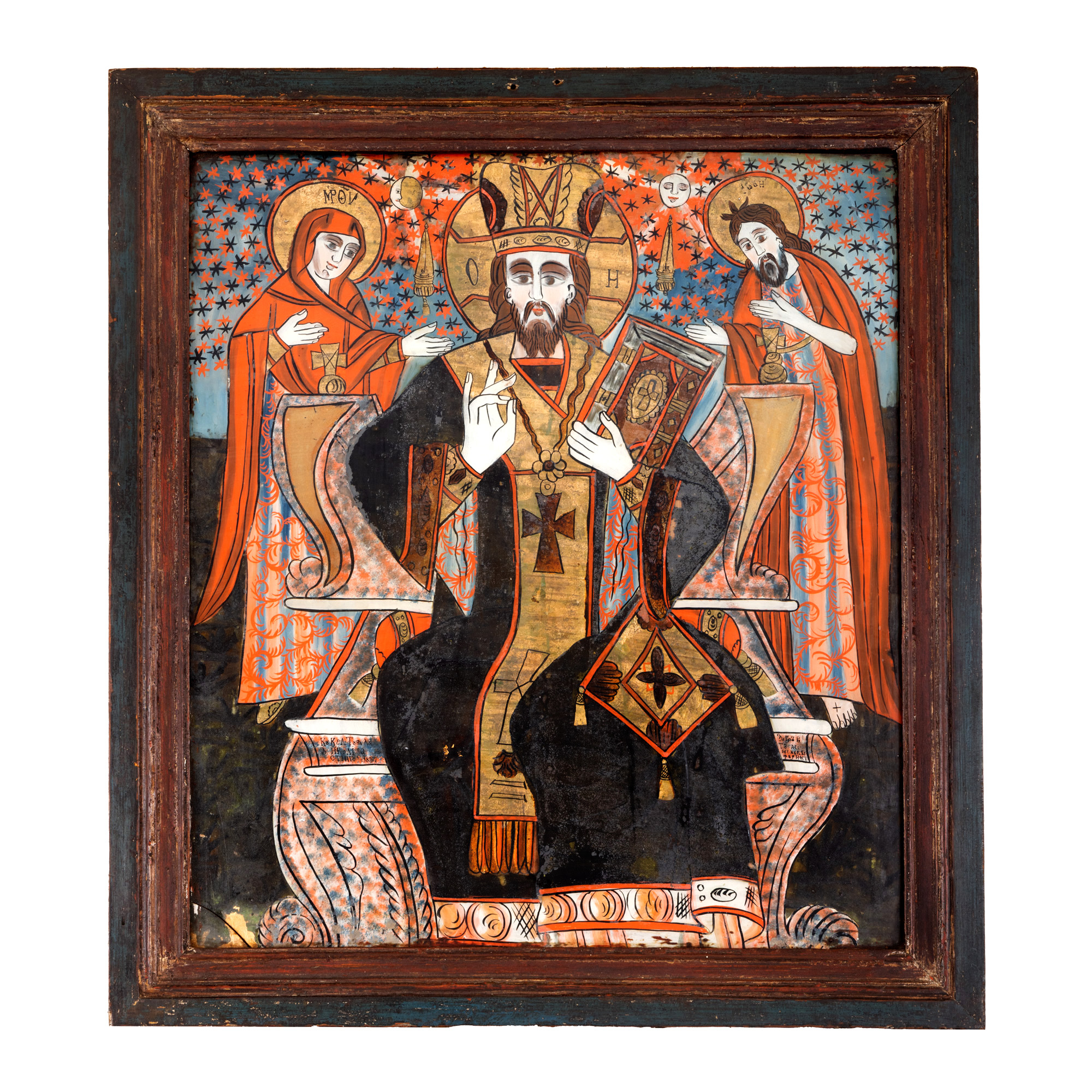
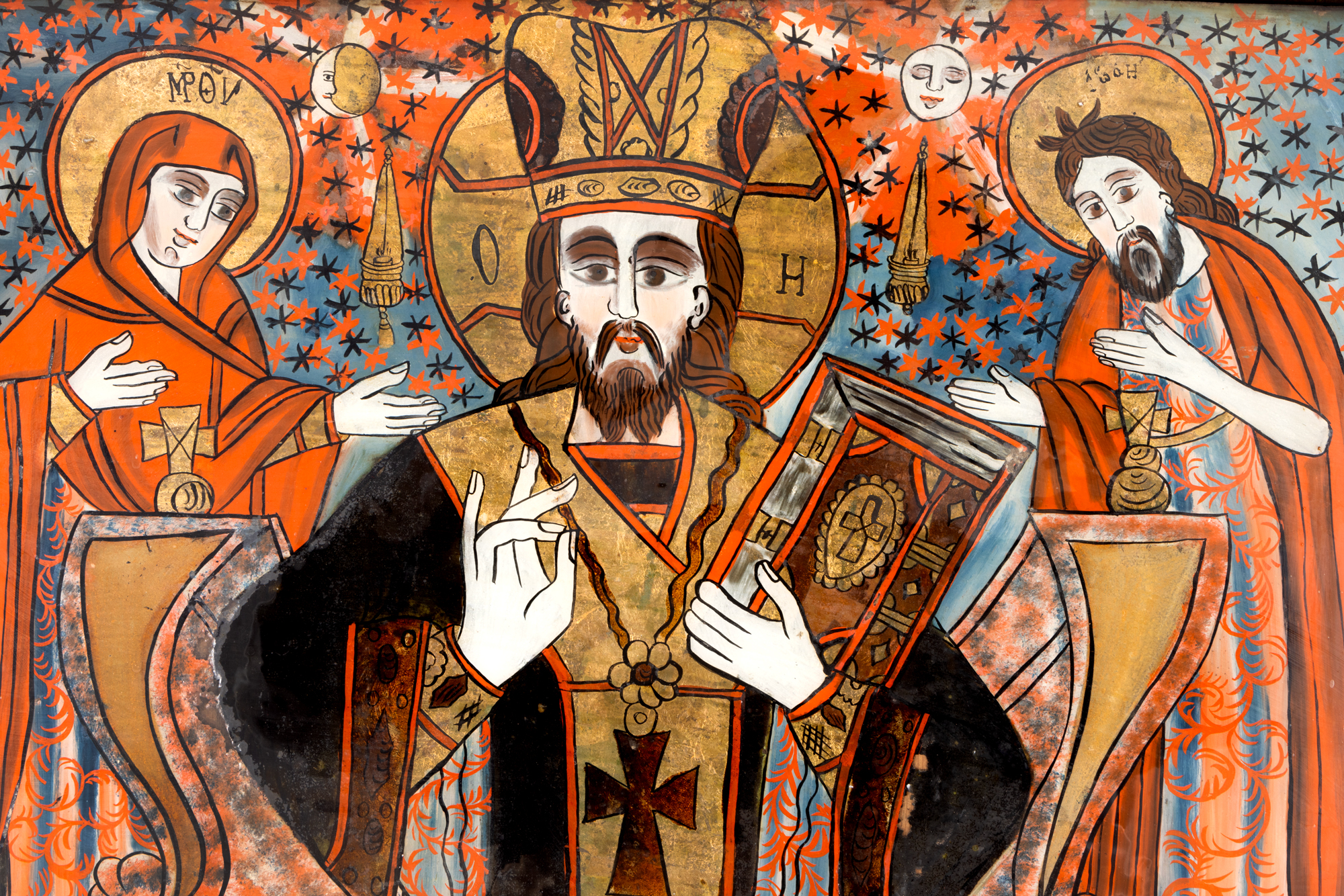
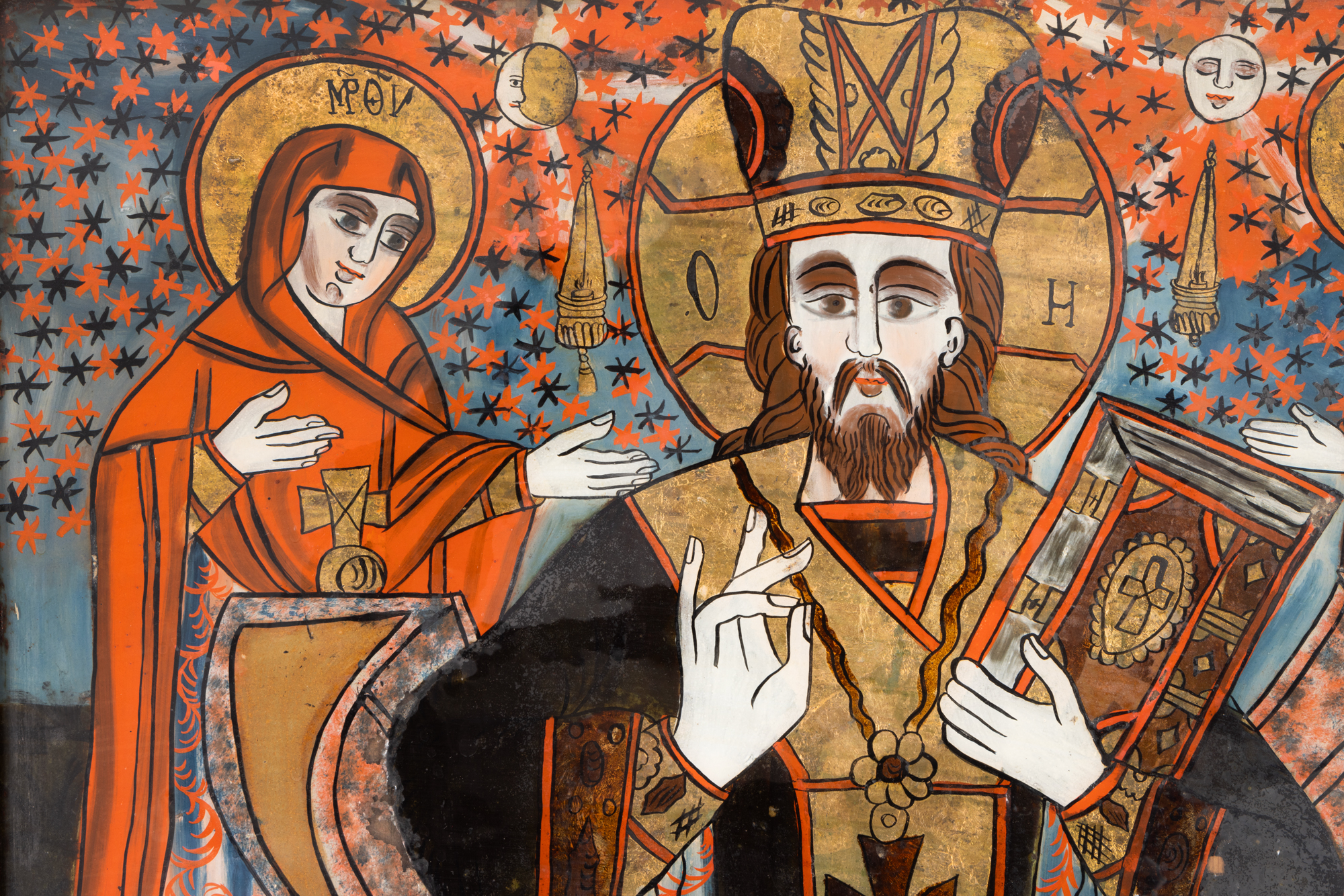
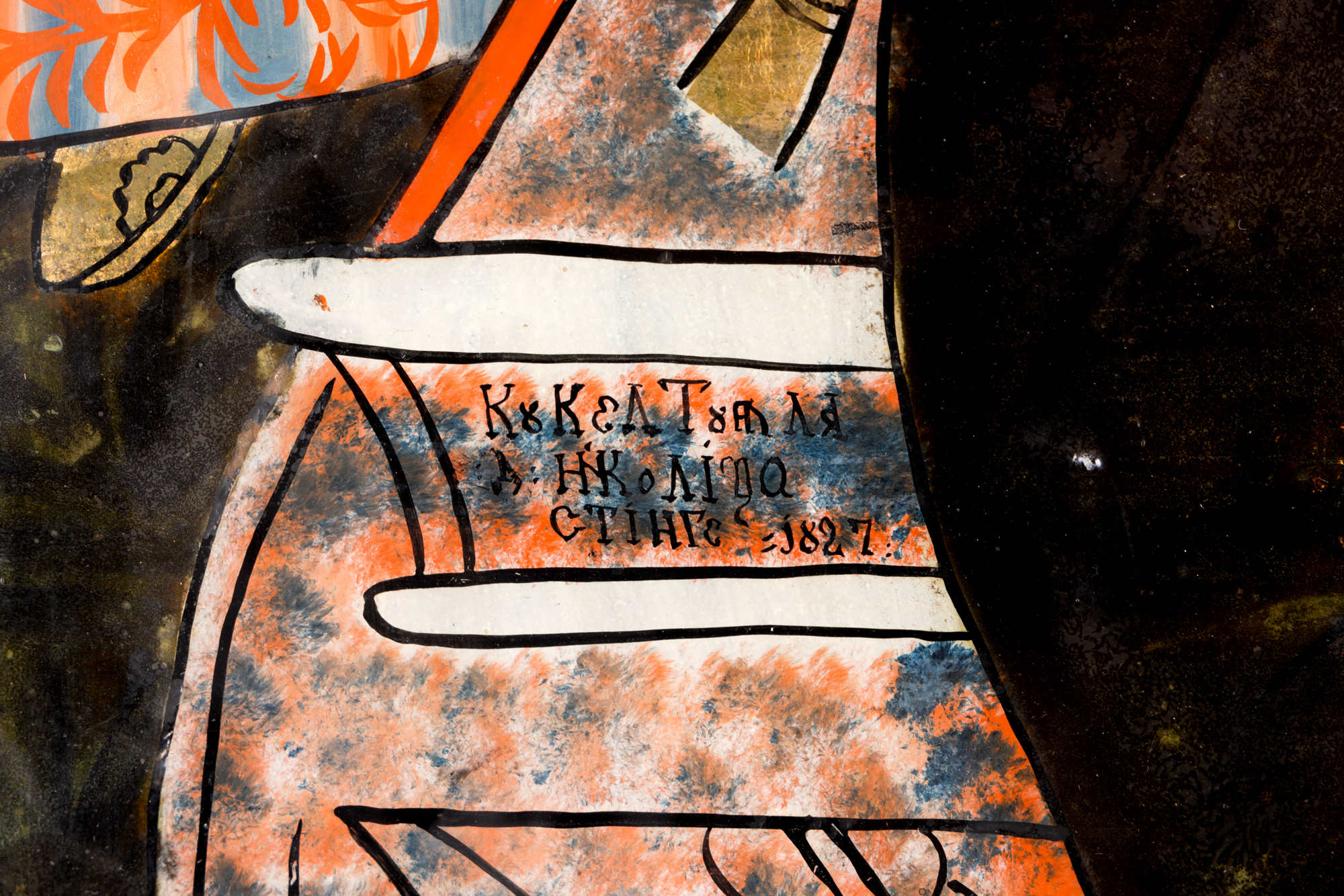
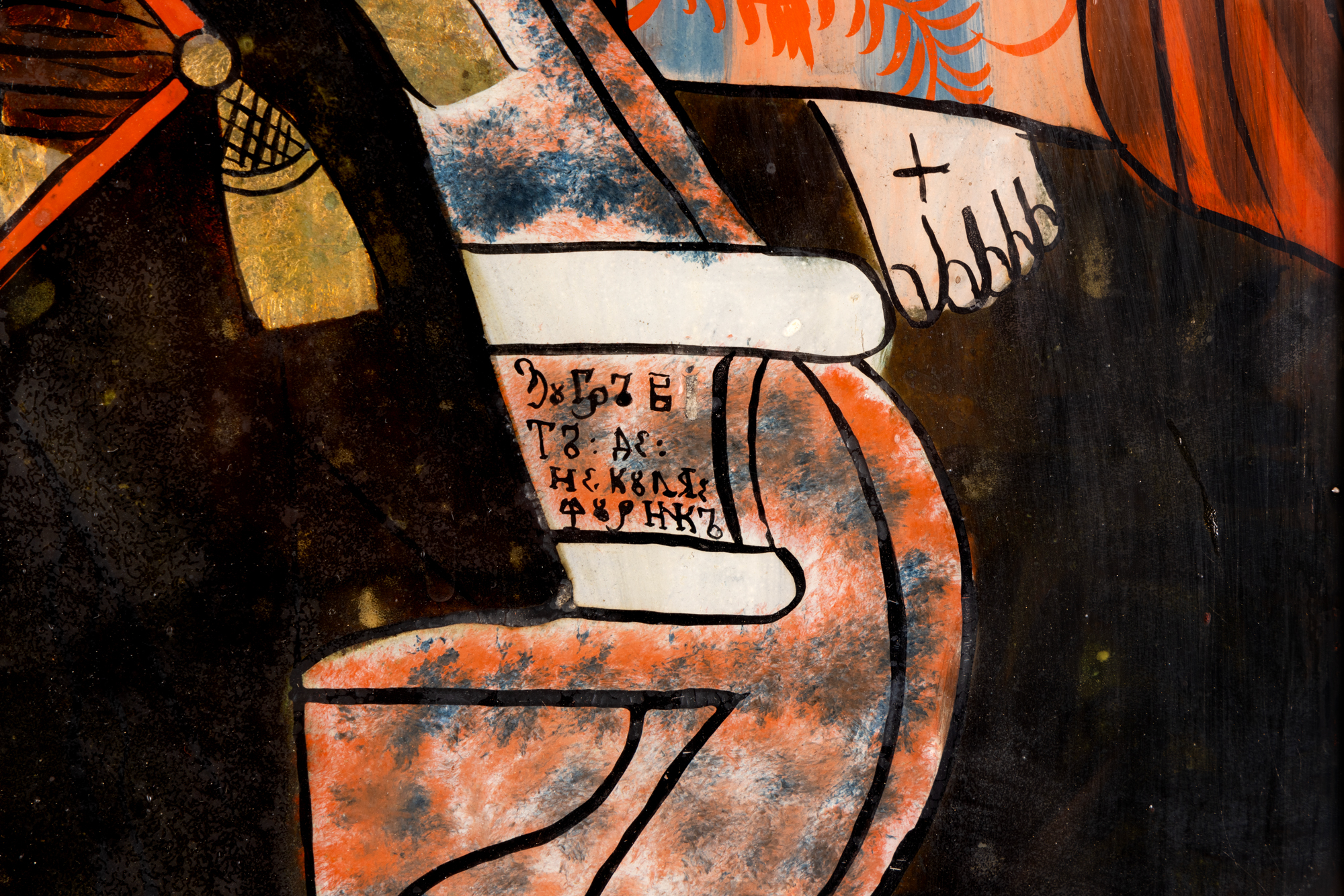
43. Icon on glass, "Deisis", painted by Nicolae Furnica, Brasov, 1827, absolute rarity, comes from the collection of lawyer Constantin Vișinescu
Početna cijena
EUR 500
Prodano
EUR 2.250
Sesija
Uto., 9 prosinca 2025 18:00
Dimenzije
width 63 cm, height 69.5 cm
Opis
tempera and gold foil on glaze, painted and baited frame, with rope
Informacije o istraživanju
In her article "Contributions to the Knowledge of Painting from the Olt Country", published in the "Museums and Monuments Magazine. Museums, 1981, no. 9", Valentina Popa mentions that artifacts from this center are found only in the western part of the Olt Country, especially around the village of Comăna de Sus (Părău, Grid, Venice de Jos, Comăna de Jos) and sporadically in neighboring areas, such as Rupea and Ţara Bîrsei. Thus, based on this distribution area, we can deduce that Neculae Furnică worked in an eastern village of the Făgăraș area. We know that during the period from the first half of the 17th century to the beginning of the 19th century, there was a pottery in the village of Comăna de Sus from where the painters sourced their raw materials. Until the discovery of the signed icon, the icons from this center were attributed to the Făgăraș-Rupea region, being recognized as the Comăna de Sus center in literature specialized. Here was also identified a part of the creation and life of this painter, as well as an icon dated 1831. So, we can assume that Neculae Furnică worked as a painter between the end of the 18th century and the beginning of the 19th century and that he was the "unknown" icon painter contemporaneous with Gheorghe Părău. The icons made by Neculae Furnică are usually medium-sized (45x40 cm), with a simple composition. The drawing is naive, with awkwardness easily noticeable, and the outlines are limited to the essential lines of the theme painted. The chromatic palette is narrowed down to a few colors: white, red, blue, and green. The painter uses pure tones: red for clothes, white for faces and hands, and black for outlines. The background of the icons does not contain decorative or architectural elements, being usually blue, with red and/or black stars, and the characters stand out very well. The characters are portrayed frontally, in compositional balance, covering almost the entire glass surface. The frame and lid are made of fir wood, about four-five centimeters thick. So as Elena Băjenaru also stated in "Icons and Icon Painters from Țara Făgărașului": "compositions, the absence of any architectural element, restricted chromatics, justify us to affirm that these pieces were made by a northern icon painter settled here, in the Făgăraș area." (M.B.)
Lot.notes
Dated, signed and located, centrally, on the throne, in black: "At the expense of D. Nicoliță Stinge 1827" and "painted by Neculae Furnică".
PODRIJETLO
Constantin Vișinescu was born in 1920 in Constanța. Between 1930-1937 he attended the courses of the "Gheorghe Lazăr" College in Bucharest, and in 1938 he was admitted to two faculties: Law, Letters and Philosophy. At the end of 1940 he was sent to the eastern front against the USSR, where he took part in the battles for the liberation of Bessarabia. In 1943 he was wounded and declared a war invalid. He ignored this situation and continued on the front. In 1944 he was captured and sent to the Wosnesensk camp on the Bug, from where, along with three other comrades, he escaped and returned to the country where he was arrested by the Soviet occupation troops, for desertion. However, the military prosecutor's office found that there was no legal basis for his trial and he was released. As a trainee lawyer, he worked in Istrate Micescu's office and then in Ion Valjan's office. In 1951, being a defense lawyer in the Zionists' trial in Bucharest, he was arrested by the Security of the regime. After a long investigation, he was sent to the labor camp at the Danube-Black Sea Canal, from where he was released in 1954. After his release, he resumed his legal activity and in 1972 he received the "Das Verdist Kreuz" decoration from the government of the Federal Republic of Germany for legal merits. In 1990 he founded the Cultural Association of Romania-Israel Friendship. In 1996, the Presidency of Romania awarded him the "Commemorative Cross of the Second World War" for military services rendered to the Romanian state.
DODATNE INFORMACIJE
Za pojašnjenja u vezi s postupkom licitiranja, troškovima kupnje, uvjetima jamstva, plaćanja i preuzimanja osvojenog lota preporučujemo da pažljivo pročitate/ponovno pročitate Pravilnik o licitiranju.
Za dodatne informacije o lotu i aukciji kontaktirajte Odjel umjetničkih savjetnika.
Detalii
DODATNE INFORMACIJE
Za pojašnjenja u vezi s postupkom licitiranja, troškovima kupnje, uvjetima jamstva, plaćanja i preuzimanja osvojenog lota preporučujemo da pažljivo pročitate/ponovno pročitate Pravilnik o licitiranju.
Za dodatne informacije o lotu i aukciji kontaktirajte Odjel umjetničkih savjetnika.
Dimenzije
width 63 cm, height 69.5 cm
Opis
tempera and gold foil on glaze, painted and baited frame, with rope
Informacije o istraživanju
In her article "Contributions to the Knowledge of Painting from the Olt Country", published in the "Museums and Monuments Magazine. Museums, 1981, no. 9", Valentina Popa mentions that artifacts from this center are found only in the western part of the Olt Country, especially around the village of Comăna de Sus (Părău, Grid, Venice de Jos, Comăna de Jos) and sporadically in neighboring areas, such as Rupea and Ţara Bîrsei. Thus, based on this distribution area, we can deduce that Neculae Furnică worked in an eastern village of the Făgăraș area. We know that during the period from the first half of the 17th century to the beginning of the 19th century, there was a pottery in the village of Comăna de Sus from where the painters sourced their raw materials. Until the discovery of the signed icon, the icons from this center were attributed to the Făgăraș-Rupea region, being recognized as the Comăna de Sus center in literature specialized. Here was also identified a part of the creation and life of this painter, as well as an icon dated 1831. So, we can assume that Neculae Furnică worked as a painter between the end of the 18th century and the beginning of the 19th century and that he was the "unknown" icon painter contemporaneous with Gheorghe Părău. The icons made by Neculae Furnică are usually medium-sized (45x40 cm), with a simple composition. The drawing is naive, with awkwardness easily noticeable, and the outlines are limited to the essential lines of the theme painted. The chromatic palette is narrowed down to a few colors: white, red, blue, and green. The painter uses pure tones: red for clothes, white for faces and hands, and black for outlines. The background of the icons does not contain decorative or architectural elements, being usually blue, with red and/or black stars, and the characters stand out very well. The characters are portrayed frontally, in compositional balance, covering almost the entire glass surface. The frame and lid are made of fir wood, about four-five centimeters thick. So as Elena Băjenaru also stated in "Icons and Icon Painters from Țara Făgărașului": "compositions, the absence of any architectural element, restricted chromatics, justify us to affirm that these pieces were made by a northern icon painter settled here, in the Făgăraș area." (M.B.)
Lot.notes
Dated, signed and located, centrally, on the throne, in black: "At the expense of D. Nicoliță Stinge 1827" and "painted by Neculae Furnică".
PODRIJETLO
Constantin Vișinescu was born in 1920 in Constanța. Between 1930-1937 he attended the courses of the "Gheorghe Lazăr" College in Bucharest, and in 1938 he was admitted to two faculties: Law, Letters and Philosophy. At the end of 1940 he was sent to the eastern front against the USSR, where he took part in the battles for the liberation of Bessarabia. In 1943 he was wounded and declared a war invalid. He ignored this situation and continued on the front. In 1944 he was captured and sent to the Wosnesensk camp on the Bug, from where, along with three other comrades, he escaped and returned to the country where he was arrested by the Soviet occupation troops, for desertion. However, the military prosecutor's office found that there was no legal basis for his trial and he was released. As a trainee lawyer, he worked in Istrate Micescu's office and then in Ion Valjan's office. In 1951, being a defense lawyer in the Zionists' trial in Bucharest, he was arrested by the Security of the regime. After a long investigation, he was sent to the labor camp at the Danube-Black Sea Canal, from where he was released in 1954. After his release, he resumed his legal activity and in 1972 he received the "Das Verdist Kreuz" decoration from the government of the Federal Republic of Germany for legal merits. In 1990 he founded the Cultural Association of Romania-Israel Friendship. In 1996, the Presidency of Romania awarded him the "Commemorative Cross of the Second World War" for military services rendered to the Romanian state.
Alternativni lotovi
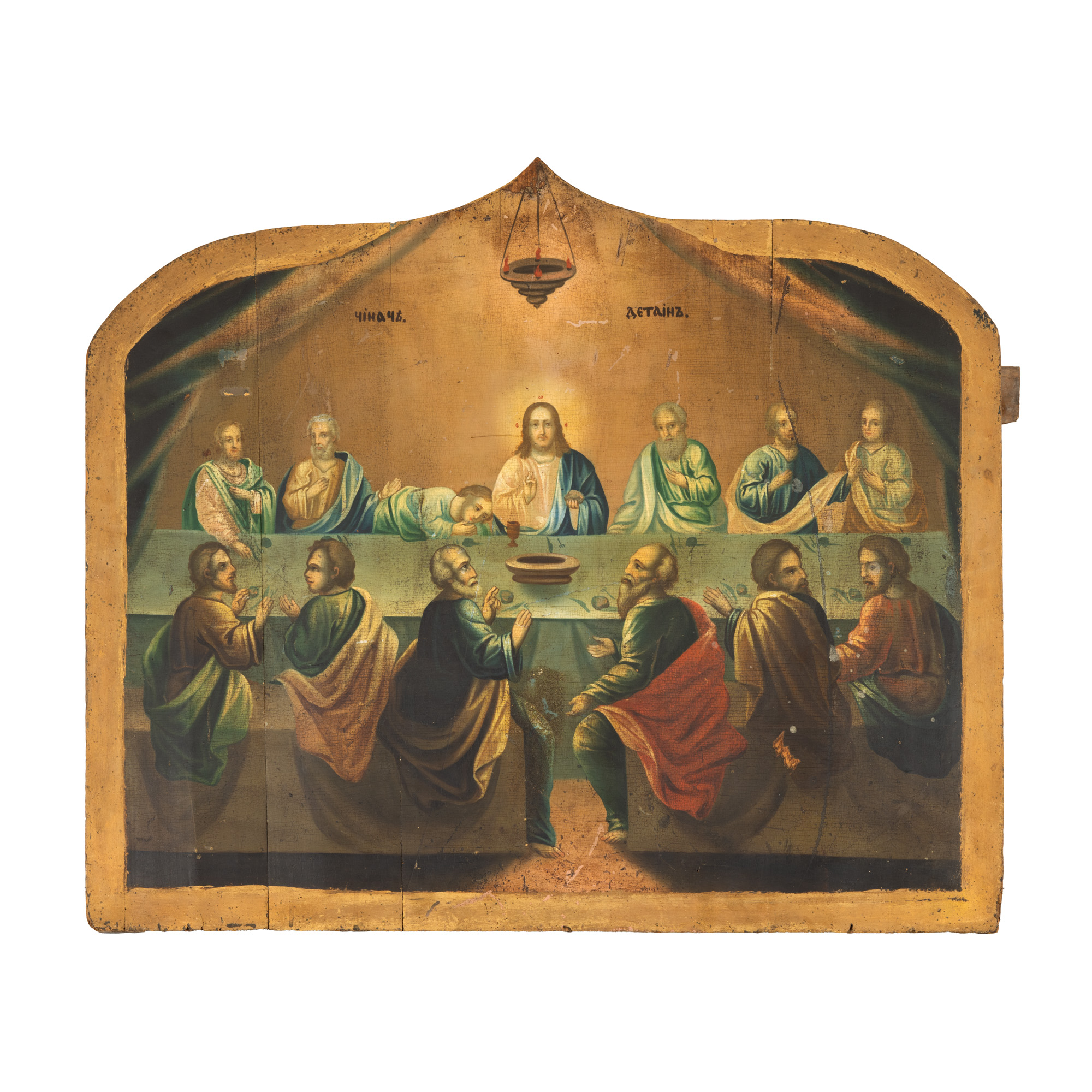
107. Imperial icon on wood, "The Last Supper", Romanian school, mid 19th century.
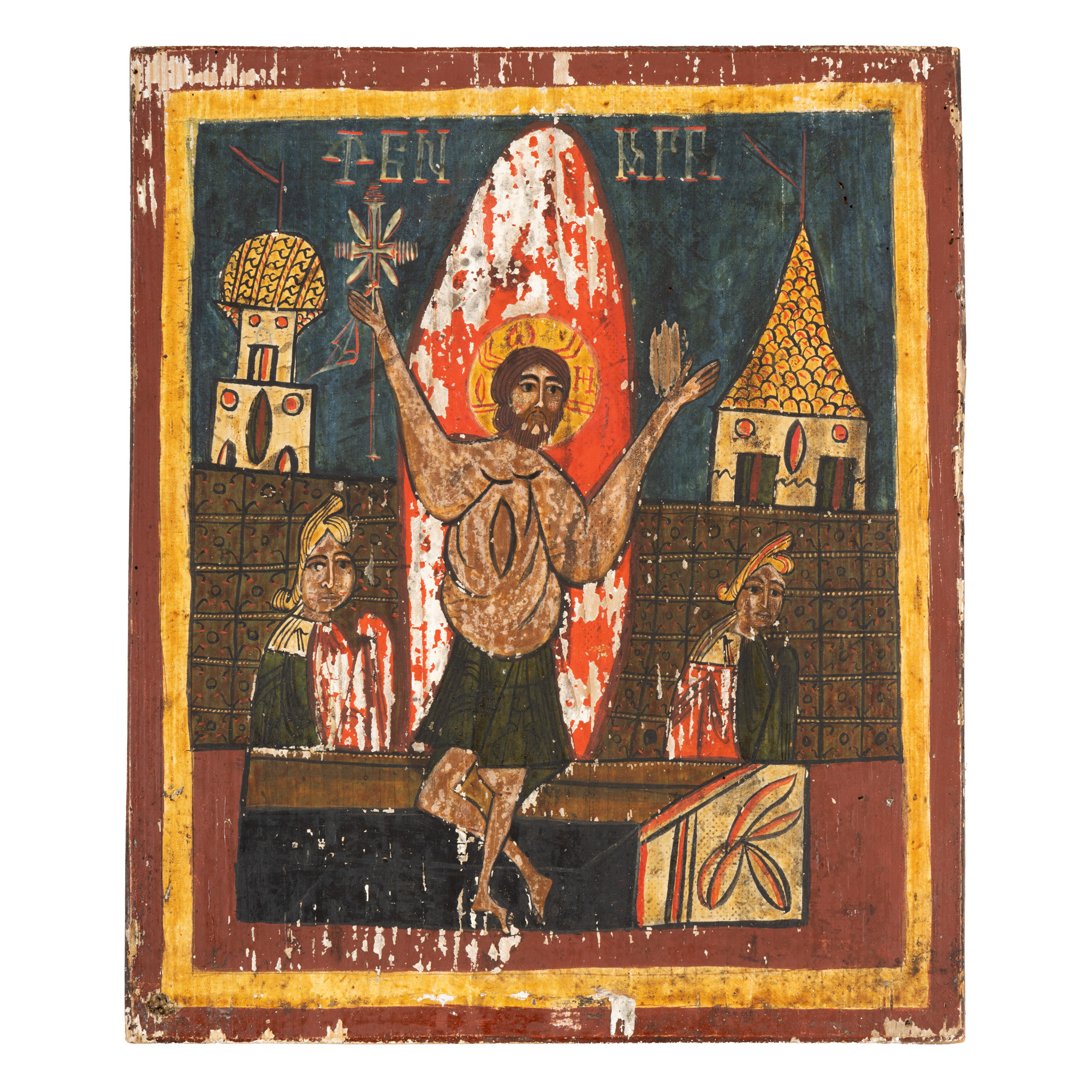
124. Icon on wood, "Resurrection of the Lord", Romanian school, late 18th-early 19th century