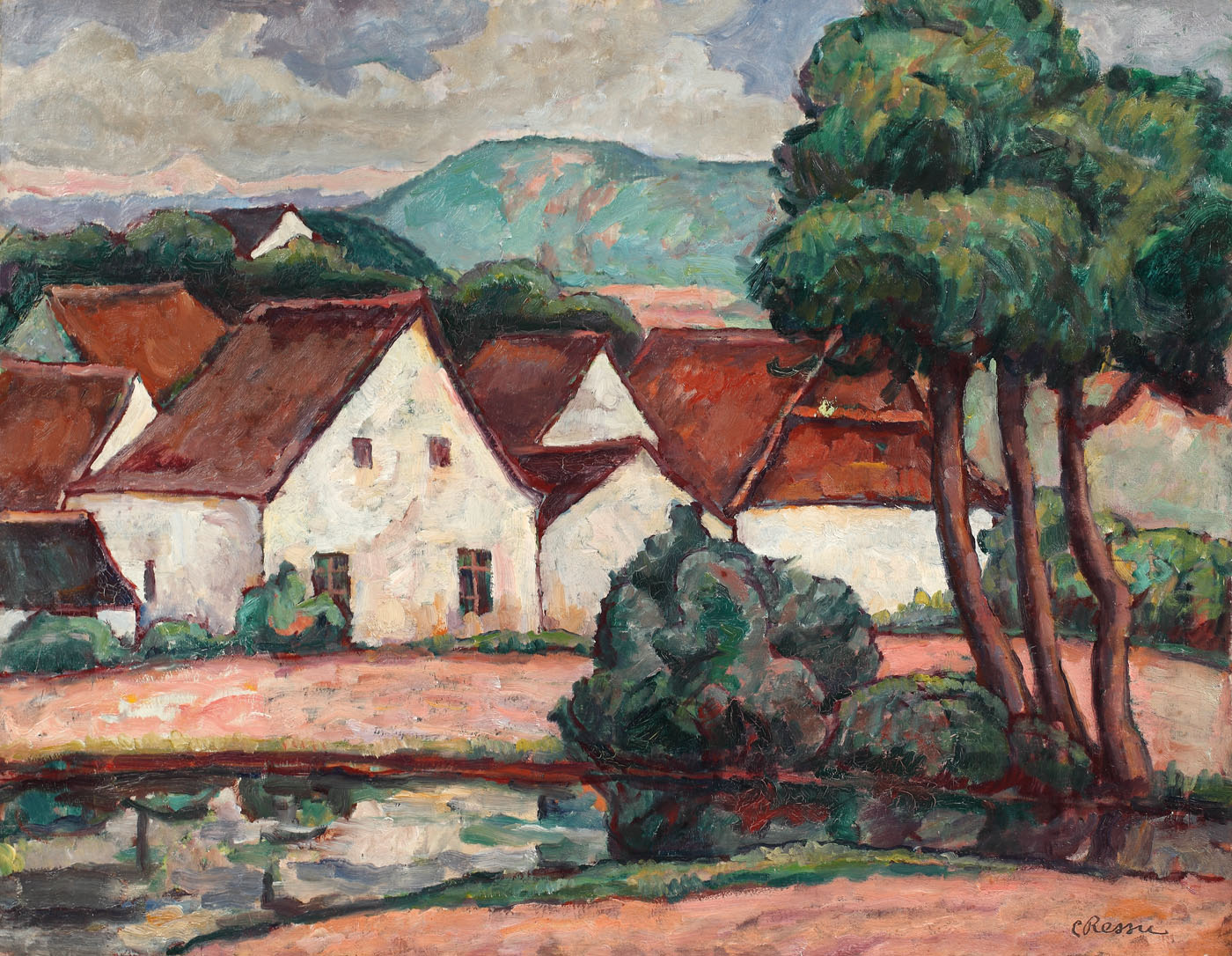
Fotografije parcele su informativne i indikativne te ne mogu pružiti vrlo detaljan prikaz objekta iz svih kutova. Preporučujemo pažljiv fizički pregled parcele prije licitiranja.
Fotografije parcele su informativne i indikativne te ne mogu pružiti vrlo detaljan prikaz objekta iz svih kutova. Preporučujemo pažljiv fizički pregled parcele prije licitiranja.
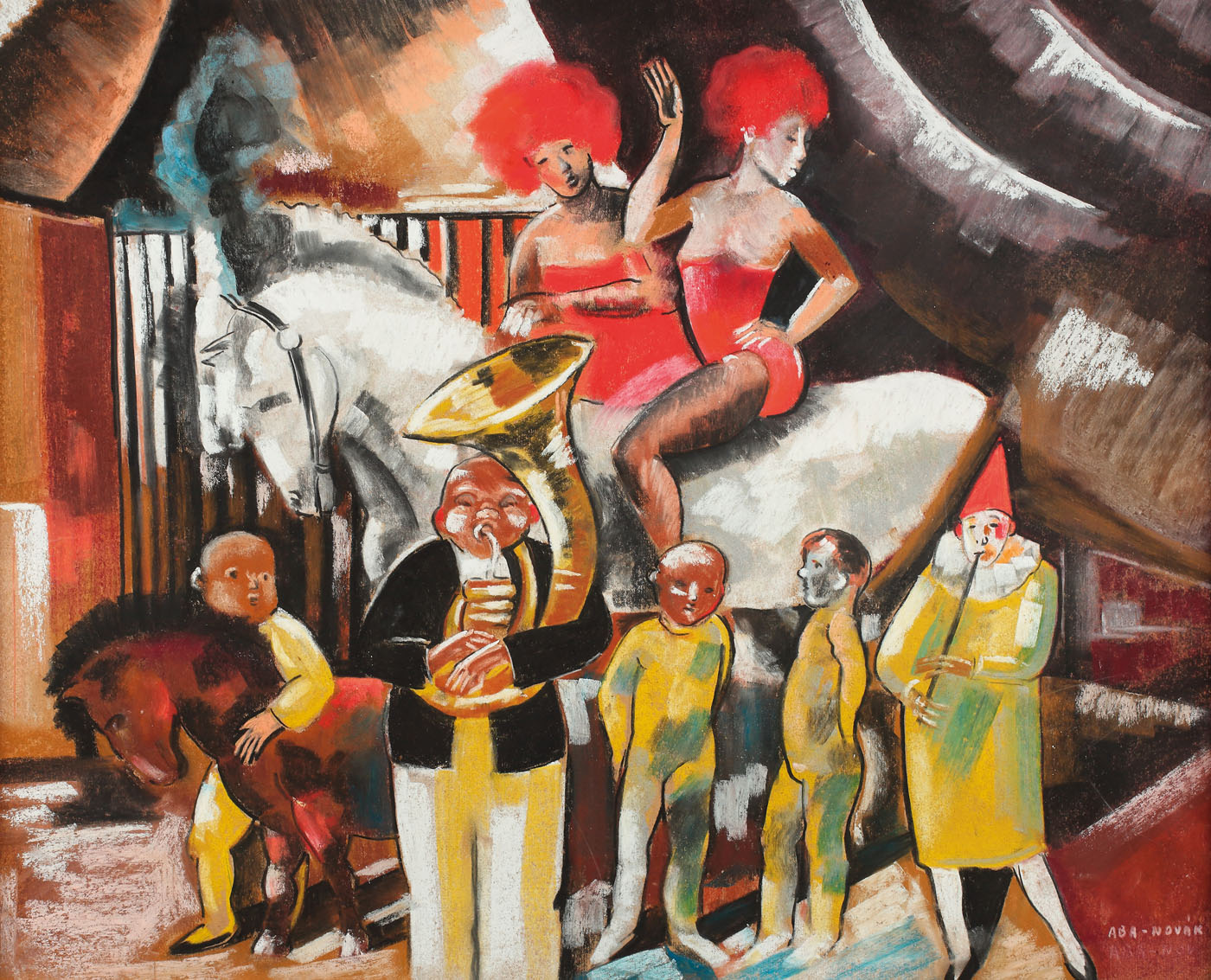
Vilmos Aba-Novák was born in the family of Gyula Novák, a railway engineer, and Waginger Rose, and Austrian woman from Vienna. He spent his childhood and his teenage years in Budapest, where he also had his first studies of fine arts. After graduating from high school, at the age of 18, he enrolled at the College of Fine Arts, where his master was Imre Revesz. Guided perhaps by his professor, he reached the Colony of Baia Mare, but the start of the war interrupted this period of studies. After 1920, Aba-Novák returned to Baia Mare, where, for 2 or 3 summers, between 1921 and 1923, he painted together with the members of the renowned colony. His contact with the Romanian space continued over the 20s, and in 1925 he settled in Baia Sprie with his wife. The artist became meanwhile the most prodigious representative of the Neoclassicist style and the most prominent figure of the School of Rome, where he was the recipient of a grant offered by the State, at the Hungarian Academy.
Attracted by monumental painting, Aba-Novák preferred great compositions, even frescoes, and he was a passionate church painter, as well. His talent and his skill were also recognised by officials, who offered him a position at the Budapest School of Arts, a job that he held for a short time until his premature death in 1941.
His own style, induced by Expressionist tendencies, and the charm of the Novecento individualised the creation of Aba-Novák and, even though he had a relatively short career, he managed to easily stand out. Attracted by human figures, particularly by the village universe and the commotion of country fairs, the imaginary world created by the artist offers dynamic and colourful themes. Towards the end of the 30s, the quality of his creation was recognised internationally; he received the Grand Jury Prize at the Universal Exhibition of 1937 and at the Venice Biennale of 1940.
Dimenzije
width 53.5 cm, height 32.5 cm
Opis
pastel on paper, signed lower right "ABA-NOVAK", in white
DODATNE INFORMACIJE
Za pojašnjenja u vezi s postupkom licitiranja, troškovima kupnje, uvjetima jamstva, plaćanja i preuzimanja osvojenog lota preporučujemo da pažljivo pročitate/ponovno pročitate Pravilnik o licitiranju.
Vilmos Aba-Novák was born in the family of Gyula Novák, a railway engineer, and Waginger Rose, and Austrian woman from Vienna. He spent his childhood and his teenage years in Budapest, where he also had his first studies of fine arts. After graduating from high school, at the age of 18, he enrolled at the College of Fine Arts, where his master was Imre Revesz. Guided perhaps by his professor, he reached the Colony of Baia Mare, but the start of the war interrupted this period of studies. After 1920, Aba-Novák returned to Baia Mare, where, for 2 or 3 summers, between 1921 and 1923, he painted together with the members of the renowned colony. His contact with the Romanian space continued over the 20s, and in 1925 he settled in Baia Sprie with his wife. The artist became meanwhile the most prodigious representative of the Neoclassicist style and the most prominent figure of the School of Rome, where he was the recipient of a grant offered by the State, at the Hungarian Academy.
Attracted by monumental painting, Aba-Novák preferred great compositions, even frescoes, and he was a passionate church painter, as well. His talent and his skill were also recognised by officials, who offered him a position at the Budapest School of Arts, a job that he held for a short time until his premature death in 1941.
His own style, induced by Expressionist tendencies, and the charm of the Novecento individualised the creation of Aba-Novák and, even though he had a relatively short career, he managed to easily stand out. Attracted by human figures, particularly by the village universe and the commotion of country fairs, the imaginary world created by the artist offers dynamic and colourful themes. Towards the end of the 30s, the quality of his creation was recognised internationally; he received the Grand Jury Prize at the Universal Exhibition of 1937 and at the Venice Biennale of 1940.
DODATNE INFORMACIJE
Za pojašnjenja u vezi s postupkom licitiranja, troškovima kupnje, uvjetima jamstva, plaćanja i preuzimanja osvojenog lota preporučujemo da pažljivo pročitate/ponovno pročitate Pravilnik o licitiranju.