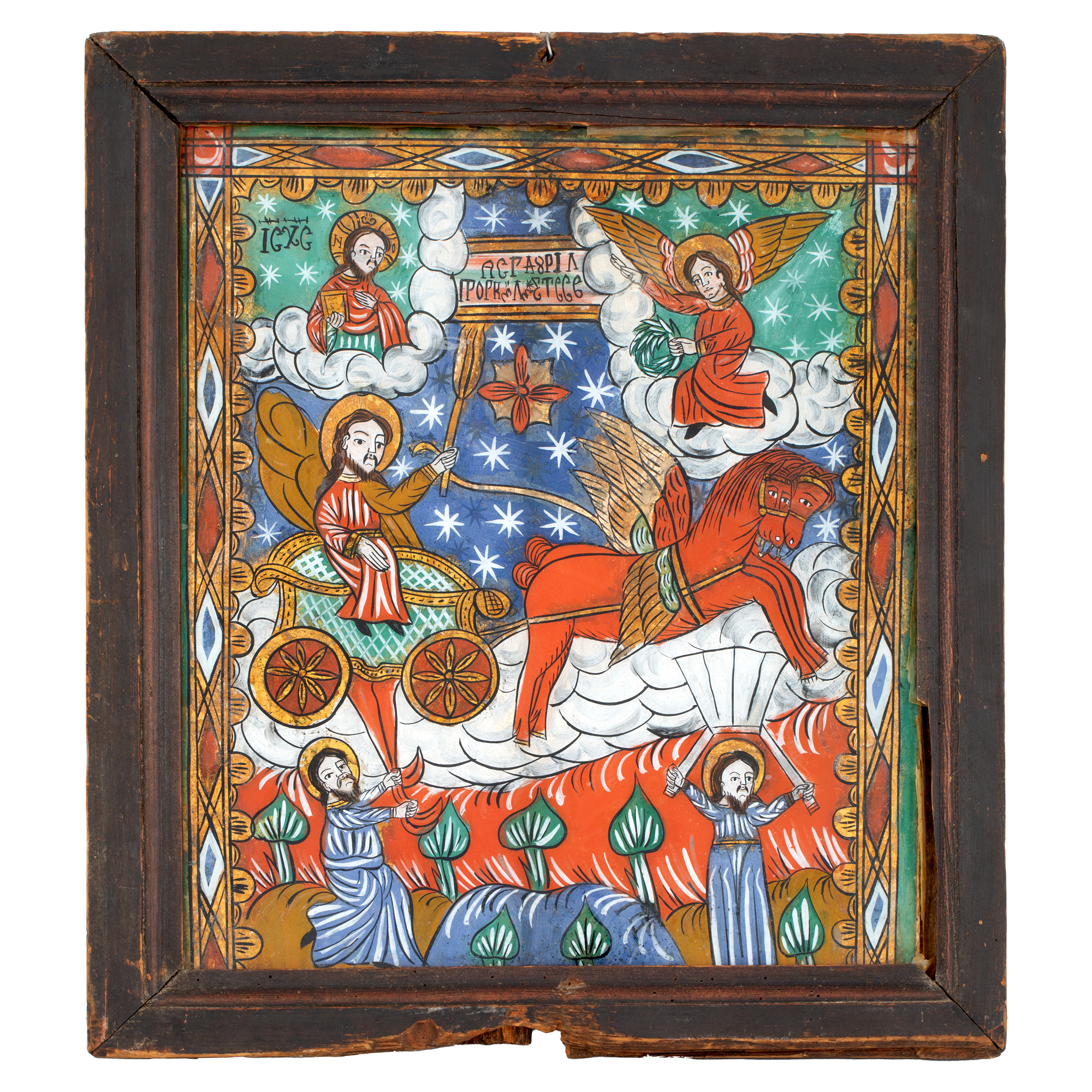

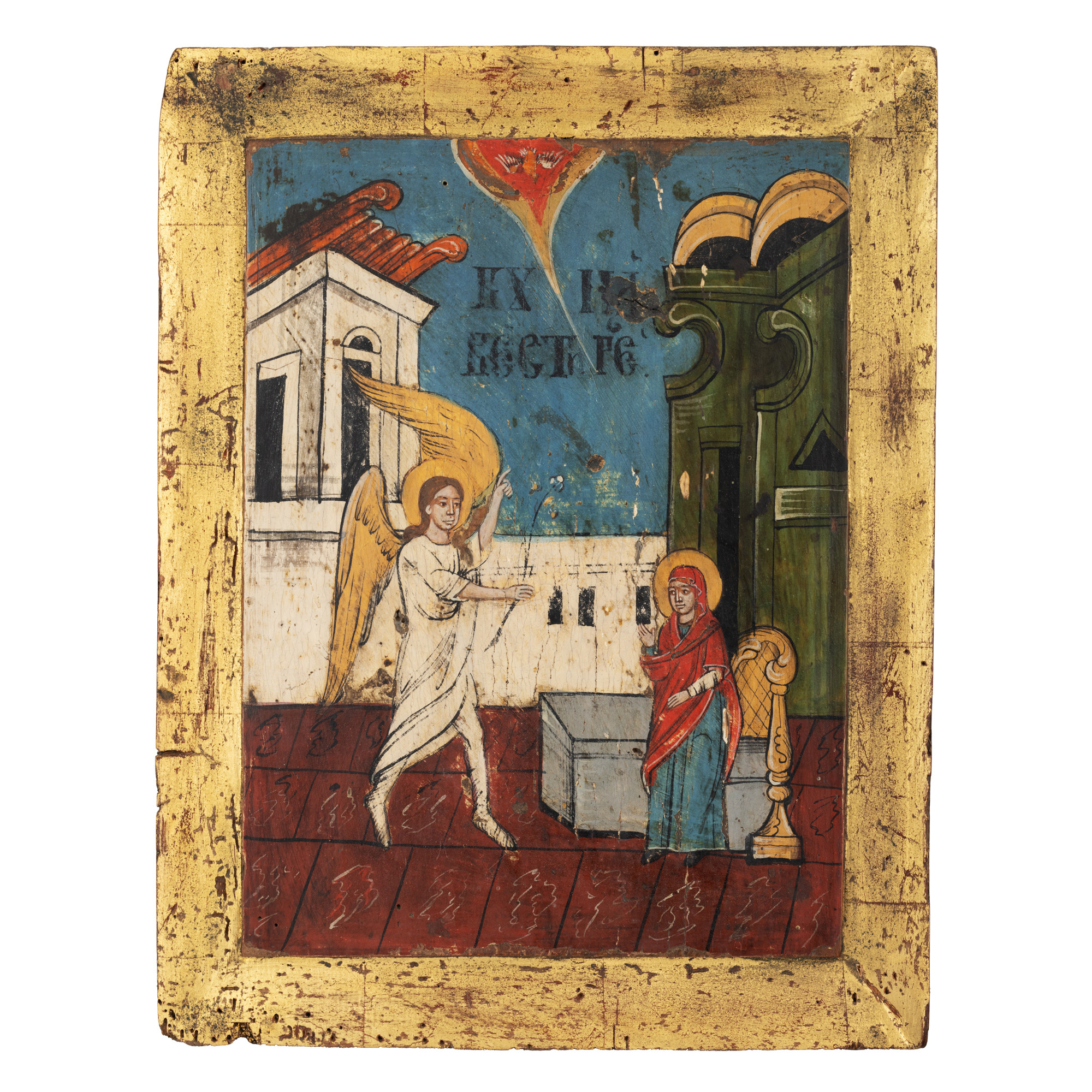
86. Icon on wood, "Annunciation", possibly painted by Simon Oprovici from Craiova, last decades of the 18th century, rare piece
Početna cijena
EUR 200
Prodano
EUR 350
Sesija
Čet., 26 lipnja 2025 18:00
Dimenzije
width 25.5 cm, height 31.5 cm
Opis
tempera pe lemn
Informacije o istraživanju
Simion Oprovici (also known as Simon Zugrav Oprovici from Craiova, Simon Zugraf ot Craiova, Simon Zugraf, Simon Zugrav from Belgrade) was a mural painter and iconographer, originally from Wallachia, from Craiova, active in the last three decades of the 18th century, in the southern parts of Transylvania. His painting is within the spirit of the post-Brâncovenesc tradition, the artist proving talent and skill in creating compositions. He arrives in Transylvania, probably through his connections with painters from the outskirts of Sibiu, where he also created his earliest known and preserved works. His icons have a personal note, through the manner of treating faces and the plasticity of their relief. He settled in Transylvania from the last decade of the 18th century, in Alba Iulia.
DODATNE INFORMACIJE
Za pojašnjenja u vezi s postupkom licitiranja, troškovima kupnje, uvjetima jamstva, plaćanja i preuzimanja osvojenog lota preporučujemo da pažljivo pročitate/ponovno pročitate Pravilnik o licitiranju.
Za dodatne informacije o lotu i aukciji kontaktirajte Odjel umjetničkih savjetnika.
Detalii
DODATNE INFORMACIJE
Za pojašnjenja u vezi s postupkom licitiranja, troškovima kupnje, uvjetima jamstva, plaćanja i preuzimanja osvojenog lota preporučujemo da pažljivo pročitate/ponovno pročitate Pravilnik o licitiranju.
Za dodatne informacije o lotu i aukciji kontaktirajte Odjel umjetničkih savjetnika.
Dimenzije
width 25.5 cm, height 31.5 cm
Opis
tempera pe lemn
Informacije o istraživanju
Simion Oprovici (also known as Simon Zugrav Oprovici from Craiova, Simon Zugraf ot Craiova, Simon Zugraf, Simon Zugrav from Belgrade) was a mural painter and iconographer, originally from Wallachia, from Craiova, active in the last three decades of the 18th century, in the southern parts of Transylvania. His painting is within the spirit of the post-Brâncovenesc tradition, the artist proving talent and skill in creating compositions. He arrives in Transylvania, probably through his connections with painters from the outskirts of Sibiu, where he also created his earliest known and preserved works. His icons have a personal note, through the manner of treating faces and the plasticity of their relief. He settled in Transylvania from the last decade of the 18th century, in Alba Iulia.
Alternativni lotovi