
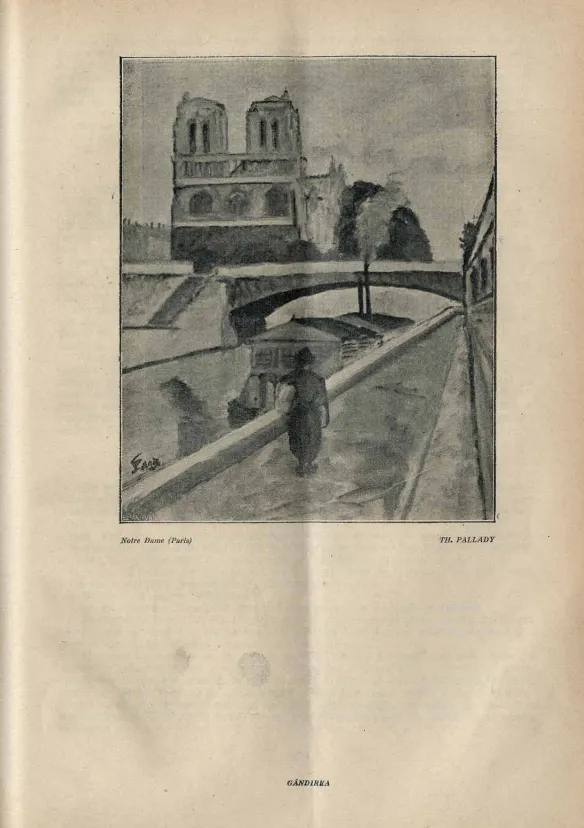
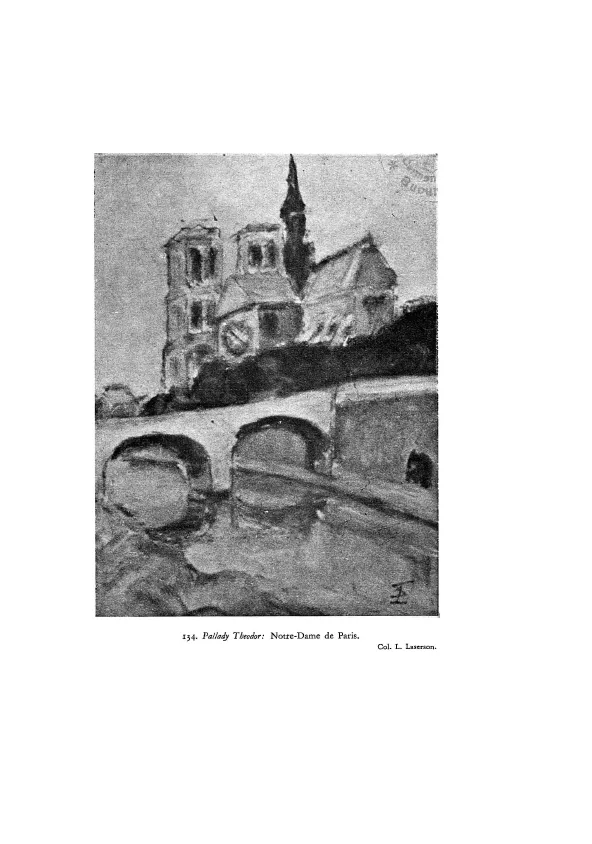
Seine to Notre Dame

Fotografije lota su informativne i orijentacijske te ne mogu pružiti izuzetno detaljan prikaz predmeta iz svih kutova. Preporučujemo pažljiv fizički pregled lota prije licitiranja.
Seine to Notre Dame
Opis
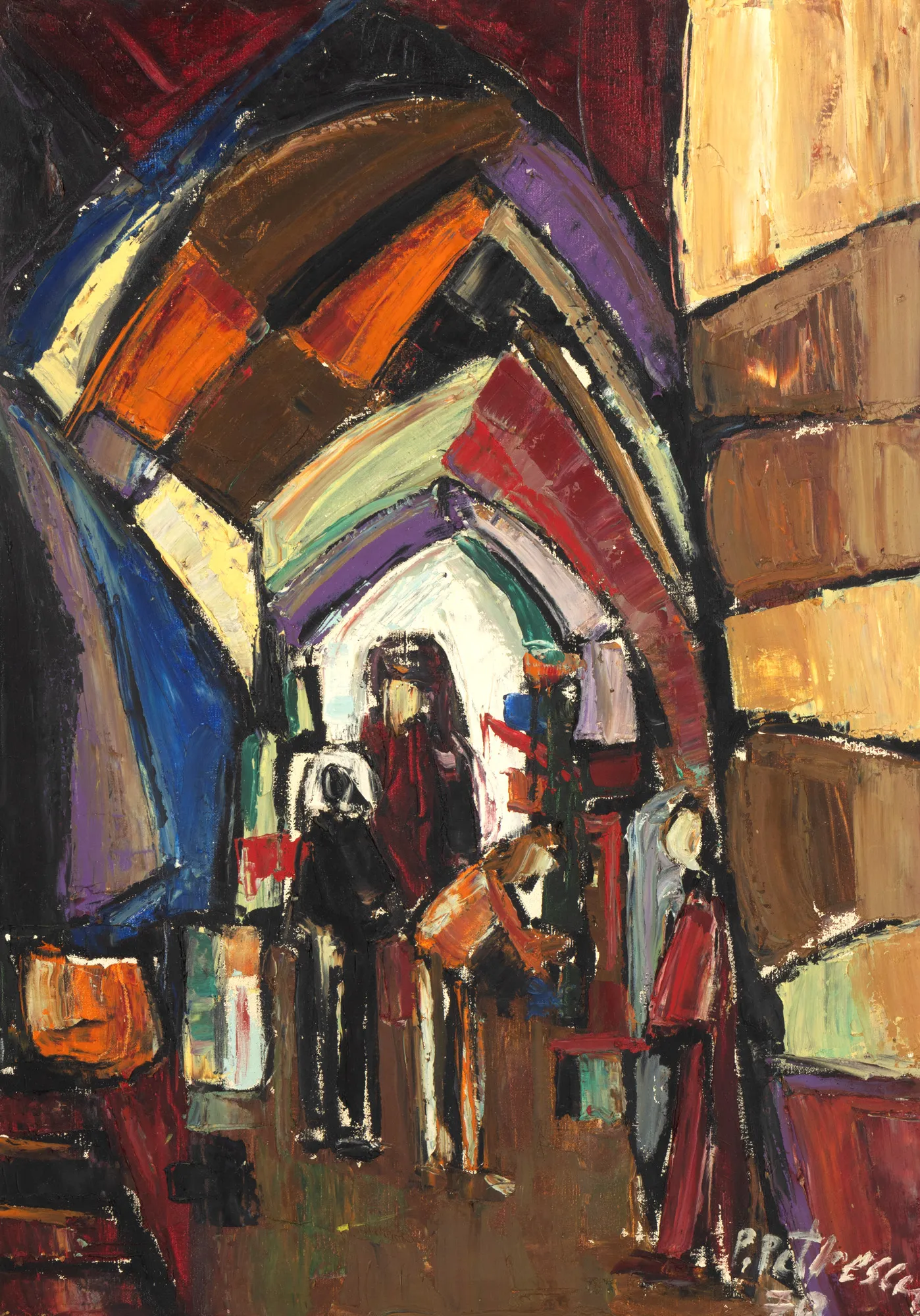
The late 19th century will find Theodor Pallady in the midst of the Parisian frenzy, where he would often return throughout his life. Inspired by the landscapes and habitants of the banks of the Seine, he will dedicate more works to this subject. He will, however, stop at his own vision and personal experiences and will not go beyond this horizon. He will meet the French aristocracy and will study with Matisse, Marquet and Rouault under the guidance of Gustave Moreau. The group he adheres to is resolutely against academism, naturalism and impressionism. In 1920, he stands out through a personal exhibition in Paris, exhibition which will consecrate him among the critics of the time. Having the chance to develop in a rich and complex cultural environment, as the Paris of the last century, Pallady will get to assimilate, gradually, the great artistic currents proposed by his predecessors in search and perfection of his own pictorial manner. The appetite for the landscape, especially the urban landscape, develops with the artist's numerous trips abroad. Pallady proves a unique refinement through the integration of certain clear, bright rhythms in the twilight atmosphere of the city. In his works, the colour is irretrievably linked to the properties of line and drawing. Notre-Dame appears here under the clear influence of nature's greys, and becomes an avid representative of the charged atmosphere. The landscape - a constant in Pallady's work - understood as a subjective interpretation of the places the artist has been in, reveals us spaces in the country, from Bucium, where he lived when he returned to the Moldova area, or expanses abroad, Parisian or Provençal views. The most valuable of his stays are in oil and reveal the artist's preference for broad perspectives and the water motif. Painting of honesty, Pallady's work has a schematism of essential characteristic and enhances the enigmatic atmosphere of urban landscapes.
Biografija
BLAZIAN, H., 'Pallady', State Publishing House for Literature and Art, Bucharest, 1957. ȘORBAN, Raoul, 'Theodor Pallady', Meridiane Publishing House, Bucharest, 1975.
Dimenzioniranje
Širina 56, Visina 73.5
Potpis
signed right side, in black, 'TP'
Datiranje
the 20s
Materijal
oil on cardboard
Lokacija
Artmark românia